



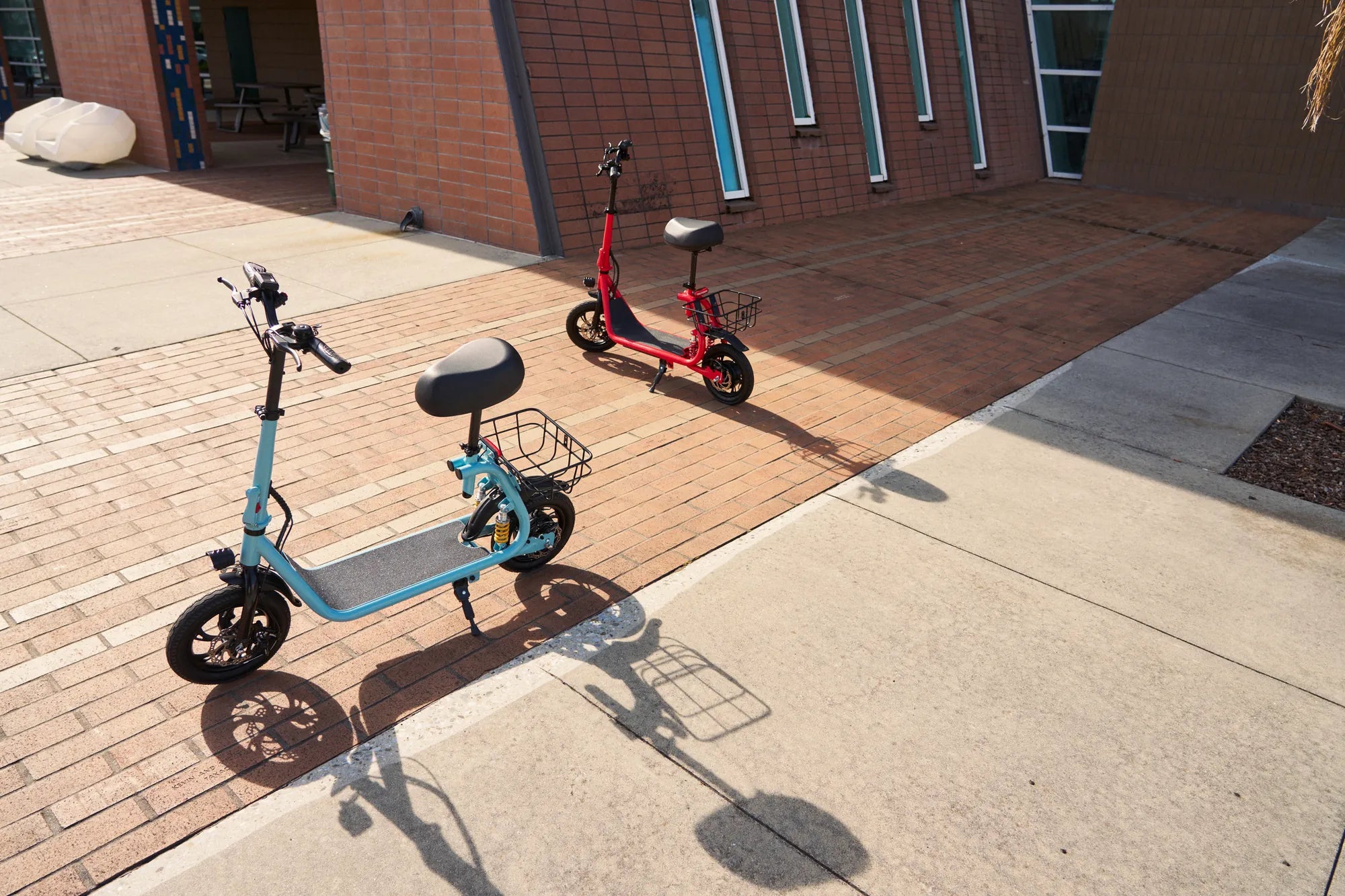
Introduction: The Blurred Line Between Rider and Walker
You see them daily—commuters zipping past on sidewalks, weaving through bike lanes, and cautiously navigating streets. The electric scooter has transformed urban mobility, but its rapid adoption has outpaced clear legal frameworks. This creates a fundamental question with real-world consequences: Are people on electric scooters pedestrians? The answer determines where you can ride, what rules you must follow, and who is liable in an accident.
This article dissects the evolving legal definitions, examines compelling safety data, and provides a comprehensive framework for responsible riding. Whether you're a daily commuter, a city planner, or a concerned pedestrian, understanding this debate is crucial for navigating our shared spaces safely.
Defining the "Pedestrian" in a Micro-Mobility Era
Legally, a pedestrian has traditionally been defined as a person traveling on foot. This definition is foundational to traffic codes, insurance policies, and liability assessments. It confers specific rights, like the right-of-way in crosswalks, and duties, such as obeying pedestrian signals.
Electric scooters, with their standing riders and modest speeds, don't fit neatly into existing categories. They are not purely pedestrians, as they are not on foot. They are not traditional bicycles, as they are powered by a motor. This ambiguity has forced municipalities to create new classifications, often under terms like "motorized foot scooter," "electric personal assistive mobility device (EPAMD)," or "low-speed electric vehicle."
The lack of a uniform federal standard in the United States has resulted in a patchwork of state and local regulations. In this legal gray zone, the rider's classification—and thus their legal responsibilities—can change block by block. This inconsistency is at the heart of the safety and accessibility challenges facing cities today.
How Local Laws Vary: Sidewalks vs. Bike Lanes vs. Roads
The treatment of electric scooter riders depends entirely on local ordinance. There is no national consensus, leading to a complex mosaic of rules that every rider must decode.
Major cities often adopt distinct approaches based on infrastructure and density. For example, New York City explicitly bans electric scooters from sidewalks, classifying them for use in bike lanes or streets with speed limits under 30 mph. Conversely, some suburban areas with minimal bike infrastructure may temporarily permit sidewalk riding, treating riders more like pedestrians.
California's legislation is frequently referenced, creating a three-class system for e-bikes and influencing scooter rules. Many jurisdictions model their laws on bicycle statutes, mandating helmet use for minors, prohibiting riding under the influence, and requiring lights for night riding. The table below highlights the regulatory disparity across key U.S. regions.
| Jurisdiction | Sidewalk Riding | Primary Designation | Helmet Law (Adults) | Minimum Age |
|---|---|---|---|---|
| New York City, NY | Prohibited | Bicycle / Vehicle | Required (All) | 16 |
| Austin, TX | Prohibited (Business District) | Bicycle | Not Required | 16 |
| Los Angeles, CA | Prohibited | Motorized Scooter | Required (All) | 16 |
| Chicago, IL | Prohibited | Vehicle | Required (All) | 18 |
| Portland, OR | Allowed (≤15 mph) | Motor Assisted Scooter | Required (<18) | 16 |
| Miami, FL | Prohibited | Motor Vehicle | Required (<16) | 16 |
This variance underscores the critical importance of checking your local municipal code before riding. Assuming you are a pedestrian because you are standing can lead to citations, invalidated insurance claims, and dangerous situations.
The Safety Imperative: Why Legal Classification Matters
The legal ambiguity isn't just bureaucratic—it directly impacts public safety. Confusion over where scooters belong increases conflict and collision risk for all road and sidewalk users.
When e-scooters are ridden on sidewalks at high speeds, they pose a significant danger to pedestrians, particularly the elderly, disabled, or those with young children. The U.S. Consumer Product Safety Commission (CPSC) reported an estimated 50,000 e-scooter related emergency department visits in a recent year. A study in JAMA Surgery found head injuries account for a high percentage of these traumas, highlighting the need for helmet use regardless of legal designation.
Conversely, when scooters are thrust into traffic without the protection of a vehicle frame, riders are vulnerable. Mixing with cars, trucks, and buses requires defensive riding skills and visibility that many new riders lack. The safety risk multiplies when riders unpredictably transition from sidewalk to street, violating the expectations of both drivers and walkers.
Gyroor's Safety-First Design Philosophy
Responsible riding starts with reliable equipment. At Gyroor, a leading electric scooter and e-bike brand trusted by over 100,000 riders across North America and Europe, safety is engineered into every model. This commitment helps riders navigate legal gray areas with confidence.
All Gyroor models feature UL-certified battery packs, tested for 500+ charge cycles, to mitigate fire risk—a critical concern for both rider and public safety. An IPX5 water-resistant design ensures stability and electrical safety in wet conditions, preventing shorts and failures. Furthermore, reliable dual braking systems (often electronic plus disc or drum) provide consistent stopping power, which is essential when sharing space with pedestrians or vehicles.
This foundational reliability allows riders to focus on their environment and legal obligations, rather than worrying about mechanical failure. A well-maintained scooter from a reputable brand is the first step in being a predictable and lawful road user.
Practical Guide: Riding Legally and Safely in Any Zone
Until uniform laws are established, the burden falls on riders to navigate the current system responsibly. This practical guide serves as a checklist for lawful and considerate operation, emphasizing that when in doubt, always choose the safest option for everyone.
Step 1: Know Your Local Ordinance
Before your first ride, research is non-negotiable. Visit your city's transportation or police department website. Key questions to answer: Is sidewalk riding legal? Are there designated bike lane requirements? What are the helmet and age laws? Are there specific parking regulations? Treating your e-scooter like a bicycle by default is a good starting point in most urban areas, but local exceptions abound.
Step 2: Adopt the "Predictable Vehicle" Mindset
Where legal, the bike lane is typically the safest and most appropriate place to ride. When in bike lanes or streets, act like a predictable vehicle. This means obeying all traffic signals and signs, riding with the flow of traffic (never against it), using hand signals for turns, and making eye contact with drivers at intersections. Equip your scooter with front and rear lights and wear reflective gear at night.
Step 3: Master Sidewalk Etiquette (When Permitted or Necessary)
If you must use the sidewalk because a bike lane is absent or the road is unsafe, your behavior must change completely. You are now a guest in pedestrian space. Reduce your speed to a near-walking pace (≤ 6 mph). Yield to every pedestrian—they have the absolute right-of-way. Announce your presence politely with a bell or a calm "passing on your left," and be prepared to stop or dismount entirely in crowded areas, near doorways, or on narrow paths.
Comparative Analysis: Scooter vs. Other Urban Commuter Classifications
Understanding how e-scooters differ from other modes of transport clarifies their unique regulatory challenges.
| Mode of Transport | Typical Legal Class | Common Infrastructure | Key Regulatory Differences |
|---|---|---|---|
| Pedestrian (on foot) | Pedestrian | Sidewalk, Crosswalk | Full right-of-way on sidewalks; slowest speed. |
| Traditional Bicycle | Vehicle / Bicycle | Bike Lane, Road | Well-established laws; often allowed on roads. |
| Electric Scooter | Varies (Motorized Vehicle/Bicycle) | Bike Lane (often), Road/Sidewalk (varies) | Greatest legal ambiguity; speed/power limits common. |
| E-Bike (Class 1-3) | Bicycle (in most states) | Bike Lane, Road | Increasingly clear state-level classifications. |
| Moped / Motorcycle | Motor Vehicle | Road Only | Requires license, registration, insurance; banned from bike lanes. |
This comparison shows that electric scooters occupy a middle ground, sharing characteristics with both bicycles and pedestrians but not fully aligning with either. This hybrid nature is why new, specific rules are necessary.
FAQ: Common Questions from Riders and Pedestrians
Q: Am I considered a pedestrian if I'm walking my electric scooter?
A: Yes. In virtually all jurisdictions, once you dismount and are walking alongside your scooter, you assume the full rights and duties of a pedestrian. You may use crosswalks and sidewalks freely.
Q: Do I need insurance or a license to ride a privately owned e-scooter?
A> Typically, no for licenses or insurance on private scooters, but this is evolving rapidly. Some cities requiring registration. Rental companies usually provide liability coverage for their fleet. Always check local laws, as requirements for higher-powered models may differ. Your own renters or homeowners insurance may cover liability; consult your provider.
Q: Where is the right place to park my e-scooter?
A> Park in designated micro-mobility parking corrals or at a bike rack. Never block sidewalks, building entrances, ADA-accessible ramps, or crosswalks. Practice "good docking": park upright in a neat fashion that doesn't obstruct pedestrian flow or create a tripping hazard.
Q: Who is at fault if a pedestrian and an e-scooter rider collide on a sidewalk?
A> Liability is determined by local laws and the specific circumstances. If sidewalk riding is illegal, the rider will likely be found at fault for operating in a prohibited area. Even if legal, the rider is typically responsible for yielding and operating safely. Comparative negligence rules may apply if the pedestrian acted unpredictably.
Q: How do I choose a scooter that helps me ride safely within the law?
A> Select a reputable brand like Gyroor that prioritizes safety features. Consider a model with a speed appropriate for your local limits (many cap at 15-20 mph). Ensure it has essential safety features: bright lights, effective brakes, a bell, and robust construction. A reliable 1-year warranty, like Gyroor's, also ensures long-term safety and performance.
Conclusion: Clarity Through Shared Responsibility
The question, "Are people on electric scooters pedestrians?" reveals a transportation system in transition. The law is gradually catching up to technology, but progress is piecemeal. In this interim, safety depends on shared responsibility. Cities must create clearer, more consistent regulations and build protected infrastructure. Riders must educate themselves, prioritize safety over convenience, and ride with respect for everyone sharing the public way.
The evolution of micro-mobility is an opportunity to build more livable cities. By choosing reliable equipment, adhering to local laws, and advocating for smart infrastructure, riders can be part of the solution. The path forward is paved not just with asphalt and concrete, but with cooperation, clarity, and a commitment to safe passage for all.
Ready to ride with confidence and clarity? Explore the full range of UL-certified, safety-engineered electric scooters and e-bikes designed for the realities of modern urban commuting. Browse the full Gyroor collection at gyroorboard.com and find the model that matches your commute and your commitment to responsible riding.
Electric Scooters Leicester: The Future of Urban Commuting
Electric Scooters Leicester: The Future of Urban Commuting