


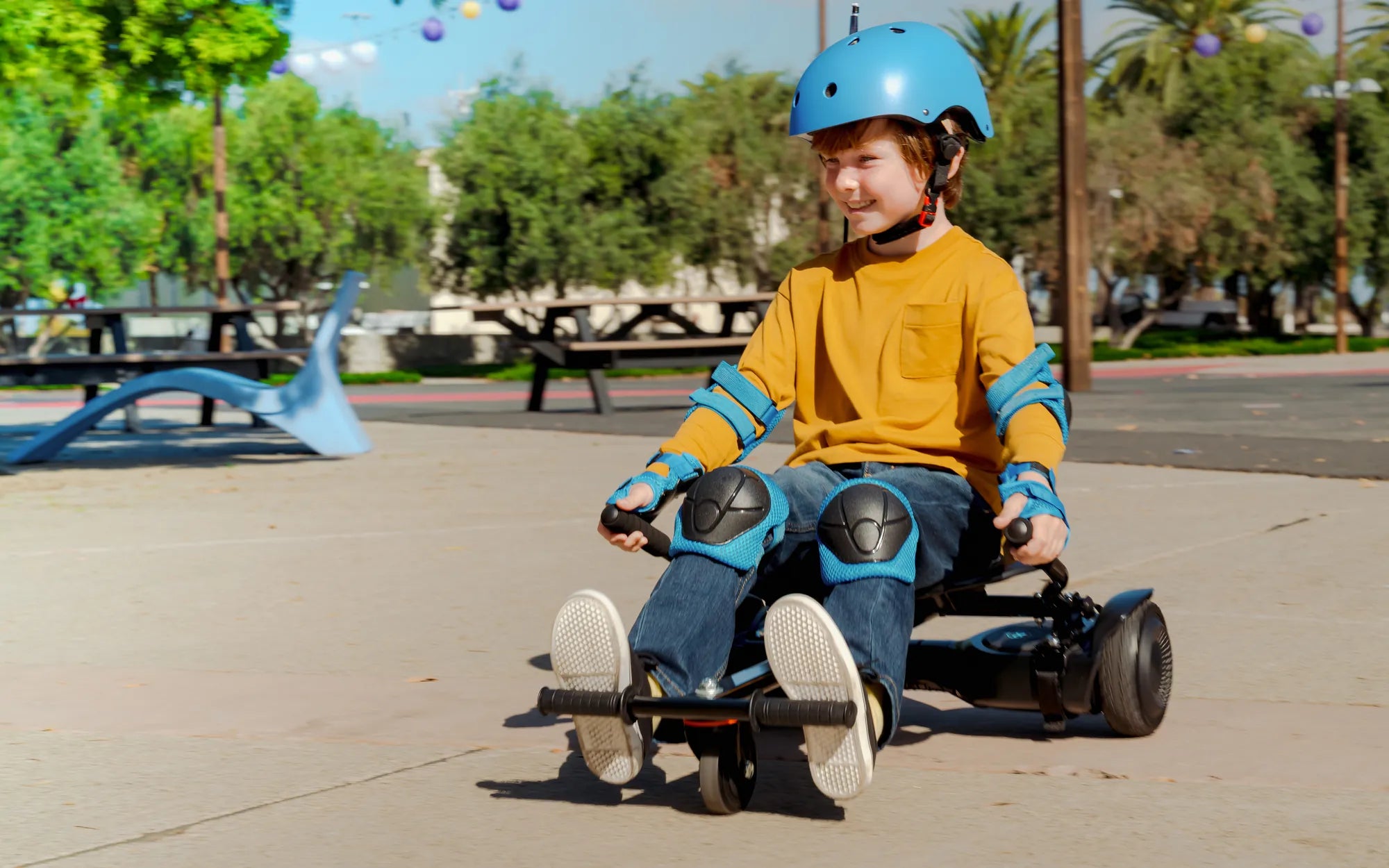
The Art of the Ride – Why Balance is Everything
Mastering your balance on an electric scooter is not just a skill—it's the foundational element that dictates safety, efficiency, and enjoyment. Every aspect of your ride, from battery conservation to navigating traffic, hinges on your ability to maintain equilibrium. A well-balanced rider experiences less fatigue, enjoys smoother acceleration and braking, and significantly reduces the risk of accidents.
This guide provides a complete framework for understanding and perfecting your scooter balance. We will explore the physics at play, drill into essential riding techniques, and examine how your scooter's design influences stability. Proper balance directly impacts your scooter's range; jerky, unstable riding wastes precious battery power through inefficient motor usage.
As a leading electric scooter and e-bike brand trusted by over 100,000 riders across North America and Europe, Gyroor engineers its models with inherent stability in mind. From deck geometry to weight distribution, the design choices provide a solid platform upon which you can build your riding mastery. Let's begin with the core principles that keep you upright.
The Science of Stability: How Your Electric Scooter Stays Upright
At its core, scooter balance is governed by physics. The key concept is the center of gravity (CoG)—the point where the scooter and rider's combined weight is concentrated. Stability increases when the CoG is low and centered between the wheels. A longer wheelbase (the distance between the front and rear axles) also enhances stability at higher speeds but can reduce low-speed maneuverability.
Deck height and width are critical design factors. A lower deck places your feet closer to the ground, lowering the overall CoG. A wider deck allows for a more natural, shoulder-width foot stance, giving you a larger base of support. Gyroor models, for instance, often feature ergonomically designed, textured decks that provide both a low platform and ample space for secure foot placement.
Tire size and type are the first point of contact with the road and heavily influence balance. Larger diameter wheels (e.g., 10-inch vs. 8-inch) roll over cracks and debris more easily, maintaining momentum and stability. The choice between pneumatic (air-filled) and solid tires also plays a role, which we will explore in detail later. These mechanical factors create the scooter's inherent stability profile.
Finally, weight distribution is crucial. A well-designed scooter has its motor, battery, and deck mass balanced around the axle. An improperly balanced scooter can feel "tippy" or pull to one side. Rider-induced weight distribution—how you stand and shift your weight—is the dynamic variable you control. Understanding this science is the first step toward conscious control.
Mastering Your Stance: Foundational Techniques for Perfect Balance
Your physical positioning is the single most important factor under your control. The ideal stance is an athletic "ready position." Start with your dominant foot forward on the deck, positioned at a slight angle. Your rear foot should be placed perpendicular to the direction of travel, near the rear of the deck. This staggered stance creates a stable, triangular base.
Keep your knees slightly bent—never locked. This acts as your body's natural suspension system, allowing you to absorb vibrations and impacts from the road. A soft bend in the knees lowers your center of gravity and keeps your muscles engaged and reactive. Your back should be straight but not rigid, with your head up and eyes looking 20-30 feet ahead, not down at your feet.
Your arms should be relaxed with a gentle bend at the elbows while holding the handlebars. A death grip creates tension that travels through your body, making you rigid and more prone to over-correcting. Instead, hold the bars firmly enough to control steering and brakes, but loosely enough to allow subtle movements. Your core muscles should be lightly engaged to link your upper and lower body, promoting unified movement.
Practice this stance while the scooter is stationary and powered off. Feel the balance point. Rock gently forward and backward to understand the deck's limits. This foundational posture must become second nature before adding speed, turns, or obstacles. It is the non-negotiable starting point for balancing electric scooter operation safely.
Dynamic Balance: Techniques for Real-World Riding Scenarios
Static balance is one thing; maintaining it while moving through an unpredictable environment is another. Dynamic balance requires proactive weight shifting and anticipation.
Navigating Turns and Corners
Leaning is far more effective than just turning the handlebars. To execute a smooth turn, look through the turn to where you want to go. As you enter the turn, lean your body and the scooter *together* into the direction of the turn. Your inside knee can bend slightly more. This technique uses centripetal force to keep you stable. Always slow down before the turn, not during it.
Handling Inclines, Declines, and Uneven Terrain
On ascents, shift your weight slightly forward over the front wheel to maintain traction and prevent the scooter from tipping backward. On descents, shift your weight back over the rear wheel and engage the electronic brake gently and early to control speed. For bumps, cracks, or off-road segments, rise slightly off the deck by bending your knees more deeply, allowing your legs to absorb the shock while the deck stays level.
Maintaining Composure in Traffic and Wind
In crosswinds or when passing large vehicles, adopt a lower, wider stance. Crouch slightly to reduce your profile. Grip the deck firmly with your feet and anticipate gusts. In traffic, smoothness is safety. Avoid sudden acceleration or braking. Plan your path, signal intentions early, and maintain a consistent, predictable line. Your balanced, calm demeanor directly influences your scooter's stability.
The Gear Factor: How Your Scooter's Features Affect Balance
Your technique interacts directly with your scooter's specifications. Choosing the right model for your needs and understanding its features is crucial for stable riding.
Tire Type and Size: Air vs. Solid, and Diameter
Pneumatic (air-filled) tires offer superior shock absorption and grip, especially on wet or uneven surfaces. This cushioning effect helps maintain deck stability and rider comfort. Solid (airless) tires eliminate the risk of flats but provide a harsher ride, transmitting more vibration to the deck, which can challenge balance on rough roads. Larger diameter wheels (9.5-inch or 10-inch) provide greater stability over obstacles than smaller 8-inch wheels.
Suspension Systems: Are They Necessary?
A suspension system (front spring or dual shock absorbers) is a significant stability enhancer for urban commuting. It keeps the wheels in contact with the road over bumps, preventing the deck—and you—from being jarred upward. This maintains traction and control, allowing you to maintain your balanced stance without fighting constant impacts. For smooth bike paths, suspension is less critical.
The Weight & Power Equation: Managing Acceleration and Braking
A heavier scooter (e.g., 40+ lbs) feels more planted and stable at higher speeds but is less nimble at low speeds. Lighter scooters are easier to carry but can feel twitchy. More importantly, smooth control of power is key. Sudden, jerky acceleration causes the scooter to lurch forward, disrupting balance. Similarly, grabbing the brakes throws weight forward. Practice modulating the throttle and using progressive braking.
| Feature | Impact on Balance & Stability | Ideal Use Case |
|---|---|---|
| Large Pneumatic Tires (10-inch) | High stability, excellent shock absorption, best grip. | Commuters, uneven urban terrain, longer rides. |
| Solid Tires with Suspension | Good stability, no flats, suspension compensates for harsh ride. | Riders prioritizing zero maintenance on decent pavement. |
| Dual Suspension System | Maximum deck stability and control on rough surfaces. | Cities with poor road conditions, off-curb riding. |
| High-Torque Motor (500W+) | Requires careful throttle control to avoid unstable acceleration. | Riders needing hill-climbing power who have mastered smooth inputs. |
| Long Wheelbase & Low Deck | Provides inherent high-speed stability and low center of gravity. | Beginners and riders focused on safety and confidence. |
Proactive Safety: Maintenance and Checks for Optimal Stability
A scooter in poor mechanical condition cannot be balanced safely. Regular maintenance is a non-negotiable part of stable riding. Before every ride, perform a quick check: ensure tires are properly inflated (for pneumatic types) and show no excessive wear. Test both the electronic and mechanical brakes for firm engagement. Check that the folding mechanism (if present) is fully locked and secure.
Weekly, inspect for loose bolts, especially on the stem, handlebars, and wheels. Listen for unusual noises from the motor or bearings. Wipe down the deck to prevent dirt from reducing foot grip. For scooters with mechanical disc brakes, periodically check brake pad wear. A wobbly wheel or loose headset will instantly destroy stability and must be addressed immediately.
The powertrain's reliability is paramount. Gyroor equips its scooters with UL-certified lithium-ion battery packs, which undergo rigorous testing for over 500 charge cycles. This ensures safe, predictable power delivery—you won't experience sudden power cuts mid-ride that could cause a catastrophic loss of balance. Consistent power is a cornerstone of stable riding.
Furthermore, Gyroor's IPX5 water-resistant rating protects the scooter's core electronics from rain and splashes. Moisture ingress can lead to short circuits, erratic motor behavior, or brake failure, all of which directly threaten your stability. This built-in protection allows you to ride confidently in damp conditions, knowing your scooter's handling will remain consistent.
Beyond the Ride: Building Your Balancing Skills
Balance is a physical skill that can be trained off the scooter. Simple exercises can dramatically improve your on-scooter stability. Practice single-leg stands while brushing your teeth or waiting in line. Try using a balance board or wobble cushion to strengthen your ankle and core stabilizer muscles—these are critical for making micro-adjustments while riding.
Find an empty, smooth parking lot for dedicated practice. Set up a simple slalom course using water bottles and practice figure-eights at low speed, focusing on smooth leans and looking ahead. Practice emergency braking drills from increasing speeds, learning to shift your weight back to counteract the forward momentum. This muscle memory will become instinctive.
Start every ride with five minutes of slow-speed maneuvering. Practice tight turns, riding in a straight line at walking pace, and coming to a complete stop without putting a foot down. This warm-up engages your neuromuscular pathways and primes your body for the ride ahead. Consistent, mindful practice is the fastest path to becoming an instinctively balanced rider.
FAQ: Balancing Your Electric Scooter Concerns
Q: I feel wobbly at higher speeds. What am I doing wrong?
A: Speed wobbles are often caused by a tense, upright posture and a death grip on the handlebars. This transmits every tiny steering correction into an oscillation. Lower your center of gravity by bending your knees more, relax your arms, and ensure your weight is evenly distributed across both feet. A longer wheelbase scooter can also mitigate this.
Q: How does scooter weight affect balance for a beginner?
A: Heavier scooters (35-50 lbs) offer more inherent stability at cruising speed due to greater momentum and are less affected by wind. However, they require more strength to maneuver at low speeds, carry, or correct if balance is lost. Beginners should seek a middle ground—a scooter with a stable design (low deck, good wheelbase) that is still a manageable weight for their physical strength.
Q: What should I do if I start to lose balance?
A: Do not panic and jerk the handlebars. First, gently squeeze the brake lever to smoothly reduce speed. Look up and ahead in the direction you want to go—your body will naturally follow. Make gentle steering corrections. If you are at a very low speed, the safest option is often to step off the scooter with your back foot and regain your footing.
Q: Are wider handlebars better for balance?
A: Generally, yes. Handlebar width should roughly match your shoulder width. This provides better leverage for steering control and allows for a more comfortable, open chest posture which improves overall body stability. Bars that are too narrow can feel twitchy and constrain your movement.
Q: How does Gyroor's warranty support safe and stable riding?
A: Gyroor's 1-year comprehensive warranty with US-based support ensures that any manufacturing defects related to the frame integrity, braking system, or electronic controls are promptly addressed. Riding with confidence requires trust in your equipment's fundamental soundness. This warranty guarantees that your scooter's core stability features will perform as designed, providing a reliable foundation for your skills.
Ride Confidently, Ride with Gyroor
Mastering the art of balancing electric scooter riding is a journey that combines knowledge, deliberate practice, and reliable equipment. It transforms the ride from a precarious task into an intuitive, efficient, and profoundly enjoyable mode of transportation. By understanding the science, honing your stance, and learning dynamic control, you unlock not only safety but also greater range, less fatigue, and more fun.
Your scooter is your partner in this journey. Choosing a brand like Gyroor, with its commitment to design stability, verified safety through UL-certified batteries, durability via IPX5 water-resistance, and strong post-purchase support, means you start from a position of strength. The scooter becomes a predictable platform, allowing you to focus on developing your skills rather than compensating for its shortcomings.
The path to perfect balance begins with your next ride. Approach it mindfully. Check your scooter, assume your ready stance, and focus on smooth, controlled inputs. Practice regularly in a safe environment. The confidence that comes from true mastery is the ultimate reward, turning every commute into a demonstration of skill and every errand into a pleasure.
Ready to find your perfect, stable ride? Browse the full Gyroor collection at gyroorboard.com.
Can You Ride a Hoverboard on Grass? Exploring the Possibilities
Ride on Hoverboard: The Ultimate Guide to Fun and Safety