



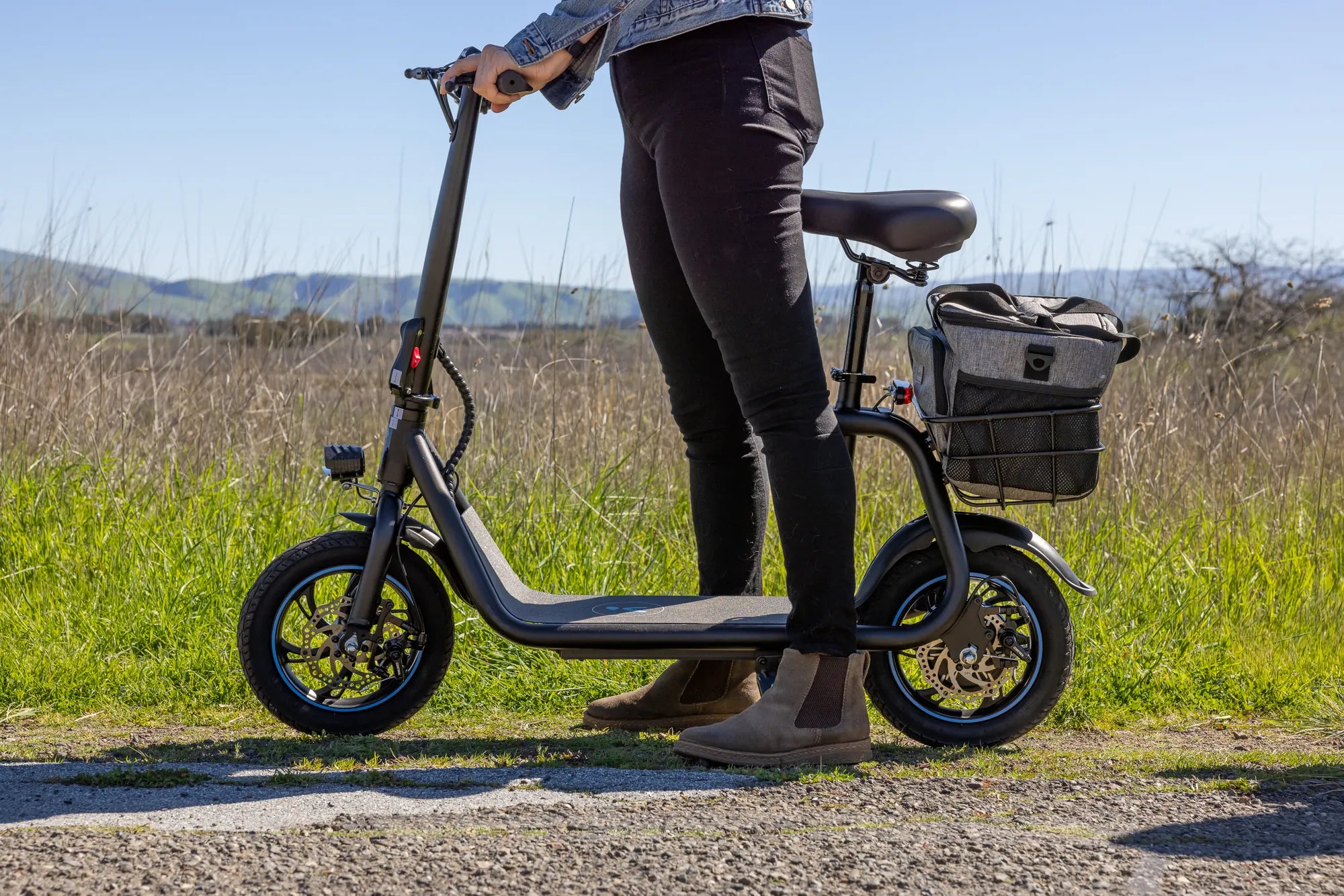
Redefining the Daily Commute
Urban transportation is undergoing a quiet revolution. For millions of adults, the daily grind of traffic jams, expensive parking, and crowded public transit is being replaced by the swift, silent glide of a personal electric vehicle. At the forefront of this shift are battery powered electric scooters for adults, a category that has evolved from a novelty to a legitimate, efficient commuting tool. This article will provide a data-driven analysis of this transformation, examining the technical specifications that matter, the tangible benefits for riders, and the critical safety standards that separate reliable brands from the rest. You will learn how to select the right scooter for your needs, integrate it safely into your urban life, and understand why this mode of transport is poised to define the future of city mobility.
Why Adults Are Choosing Electric Scooters: Beyond the Hype
The adoption of electric scooters by adults is driven by concrete economic and practical factors, not just trendiness. The primary catalyst is cost. The American Automobile Association (AAA) estimates the average annual cost of owning and operating a new car is over $12,000. In contrast, a high-quality electric scooter represents a one-time investment often under $1,000, with near-negligible operating expenses.
Time savings present another compelling argument. In congested urban corridors, the average car speed can drop below 10 mph. A capable electric scooter maintains a consistent 15-20 mph, using bike lanes and paths to bypass gridlock entirely. This turns a frustrating 30-minute crawl into a predictable 10-minute breeze.
Beyond economics, the convenience factor is paramount. The modern folding electric scooter solves the 'last-mile' problem that plagues public transit systems. It can be carried onto a train or bus, stored under a desk, or tucked in a closet, eliminating parking fees and security worries. This seamless integration into multi-modal travel is a key advantage.
Finally, there is an underrated health and environmental benefit. While not as strenuous as cycling, riding a scooter requires balance and engagement, offering a break from sedentary routines. Furthermore, each mile traveled on electric power displaces a mile of tailpipe emissions, contributing directly to cleaner air and reduced urban noise pollution.
Key Features to Look for in an Adult Electric Scooter
Selecting the right scooter requires moving beyond marketing claims to evaluate hard specifications. Adult commuters need robust, reliable machines built for daily use. The core features form a checklist that separates commuter-grade vehicles from recreational toys.
Motor Power & Speed: Matching Performance to Your Needs
Motor power, measured in watts (W), directly determines acceleration and hill-climbing ability. A 350W motor is sufficient for flat terrain and lighter riders. For adults navigating cities with inclines or weighing over 180 lbs, a 500W or dual-motor system is recommended for consistent power. Top speed is typically regulated between 15-20 mph to comply with local micromobility laws, which riders must verify for their municipality.
It's crucial to understand that peak wattage and sustained output differ. A quality scooter from a brand like Gyroor uses motors engineered for thermal management, ensuring the advertised power is available continuously, not just in short bursts, which is essential for longer commutes.
Battery Range & Charging: Planning Your Commute with Confidence
Manufacturer range claims are based on ideal conditions: a light rider on flat ground at low speed. Real-world range is typically 65-75% of the stated figure. For a reliable commute, choose a scooter with a range rating at least double your daily round-trip distance to account for battery degradation over time, headwinds, and stops.
The battery is the scooter's heart and its most critical safety component. Insist on UL-certified lithium-ion battery packs, like those used by Gyroor. These have undergone rigorous testing for overcharge protection, short-circuit prevention, and thermal stability, significantly mitigating fire risk. Charging times for commuter scooters generally range from 4 to 8 hours for a full cycle.
Build Quality & Portability: Durability Meets Convenience
The frame should be constructed from aerospace-grade aluminum alloy, offering an optimal strength-to-weight ratio. The maximum weight capacity should exceed your body weight plus any cargo, with a safe margin. A robust folding mechanism with a secure locking latch is non-negotiable for portability and safety during riding.
For all-weather readiness, an IPX5 water-resistance rating is essential. This certification, a standard feature on Gyroor scooters, means the scooter can withstand water jets from any direction, protecting it from puddles and light rain. This greatly extends the scooter's lifespan and usability.
Safety & Comfort Features: Non-Negotiables for Daily Riding
A comprehensive braking system is vital. A combination of electronic (regenerative) braking and a mechanical disc or drum brake provides redundancy and effective stopping power in all conditions. Suspension, either in the stem or wheels, and larger air-filled tires (8.5-10 inches) dramatically improve comfort and control on imperfect pavement.
Lighting must be functional, not an afterthought. A bright front headlight, a rear brake light, and side reflectors are mandatory for visibility. Finally, a comprehensive warranty covering the frame, motor, and battery for at least one year, like Gyroor's 1-year warranty, provides essential long-term peace of mind for a daily-use product.
Gyroor's Approach: Engineering for Reliability and Peace of Mind
In a market with varying quality standards, Gyroor has built its reputation by directly addressing the core concerns of adult commuters: safety, durability, and support. The foundation of this approach is the use of UL-certified battery packs across its lineup. These batteries are tested for over 500 charge cycles and built with advanced battery management systems (BMS) to prevent the failures that can lead to hazardous situations.
Durability is engineered for the real world. The IPX5 water-resistant rating ensures that a sudden rain shower or wet streets don't end the commute or damage critical electronics. This practical feature, combined with reinforced folding mechanisms and high-tensile frames, results in scooters designed for thousands of miles of reliable service.
Gyroor supports this hardware with a clear, customer-focused warranty and service model. The standard 1-year warranty is backed by accessible, US-based customer support, ensuring riders are not left stranded with a faulty product. This end-to-end commitment to reliability is why over 100,000 riders across North America and Europe trust the brand for their daily transportation.
Comparison: Scooter Types for Different Urban Needs
Choosing the right model depends on your primary use case. The following table compares key specifications oriented toward different rider profiles.
| Use Case | Recommended Motor | Min. Real-World Range | Key Features | Gyroor Example Model Type |
|---|---|---|---|---|
|
Short Commute / Errands (<5 miles round trip) |
350W - 500W | 15 miles | Lightweight, quick folding, IPX5 rating | Compact Folding Commuter |
|
Standard Urban Commute (5-12 miles round trip) |
500W - 800W | 25 miles | Dual braking, suspension, brighter lights | Performance Commuter |
|
Long-Range / Hilly Terrain (12+ miles, steep inclines) |
800W+ or Dual Motor | 35+ miles | High-capacity UL battery, dual suspension, robust tires | Premium Long-Range |
The Practical Rider: Integrating an E-Scooter into Your Urban Life
Successful scooter ownership begins with route planning. Prioritize dedicated bike lanes, shared-use paths, and calmer residential streets. Use navigation apps set to 'bicycle' mode. Always perform a pre-ride check: verify tire pressure, test brake function, and ensure lights are working.
Safety gear is non-negotiable. A certified bicycle or multi-impact helmet is the minimum. Consider gloves, elbow pads, and high-visibility clothing for night riding. Practice defensive riding: assume cars do not see you, signal your intentions, and never ride on sidewalks where prohibited.
Secure parking is critical. Use a high-quality U-lock or heavy-duty chain lock to secure the scooter frame to a fixed, immovable object. If possible, bring the scooter indoors to your workplace or home. For basic maintenance, regularly check and inflate tires to the recommended PSI, keep the braking surfaces clean, and periodically tighten fasteners.
Integrate the scooter into a multi-modal system. It excels as a 'first-and-last-mile' solution. Ride to the train station, fold and carry it aboard, then unfold for the final leg to your destination. This combination often proves faster and less stressful than driving door-to-door in dense urban areas.
FAQ: Your Electric Scooter Questions, Answered
Q: Are electric scooters legal in my city?
A: Laws vary significantly. Most major cities now permit them on streets and bike lanes, often with a speed limit (15-20 mph) and age restriction (18+). Riding on sidewalks is frequently banned. Always check your local Department of Transportation website for specific regulations.
Q: How much does it cost to charge an electric scooter?
A> Very little. With a typical battery capacity of 500Wh, a full charge costs between 10 and 20 cents at average U.S. electricity rates. This translates to roughly 0.5 to 1 cent per mile, making it one of the most energy-efficient forms of motorized transport.
Q: Can I ride my scooter in the rain?
A: Scooters with a true IPX5 water-resistance rating, like those from Gyroor, are designed to handle wet roads and light rain. However, avoid deep puddles, heavy downpours, and flooding, as water can damage bearings and electronics over time. Always dry your scooter after riding in wet conditions.
Q: What's the true total cost of ownership?
A> Beyond the purchase price, factor in minimal electricity costs, occasional tire replacements (every 1,000-2,000 miles), brake pad changes, and potential tube repairs. A quality scooter from a reputable brand should have annual maintenance costs under $100 with normal use, far below any car.
Q: How do I store my scooter safely, especially the battery?
A> Store in a cool, dry place away from direct sunlight and extreme temperatures. For long-term storage (over a month), charge the battery to approximately 60-80% and check it every few months. Never store a fully depleted or a 100% charged battery for extended periods.
The Road Ahead is Electric and Efficient
The transformation of urban mobility is already underway, and battery powered electric scooters for adults are proving to be a cornerstone of this new landscape. They offer a compelling solution to the intertwined problems of congestion, cost, and carbon emissions. For the adult commuter, the choice ultimately comes down to selecting a vehicle engineered for reliability, backed by stringent safety standards like UL certification for batteries and IP ratings for weather resistance. Brands that prioritize these features, such as Gyroor with its focus on UL-certified packs and robust construction, provide the peace of mind necessary for a scooter to become a trusted daily tool rather than a temporary gadget. As cities continue to adapt infrastructure and regulations, the personal electric vehicle will play an increasingly central role in creating cleaner, quieter, and more livable urban environments for everyone.
Ready to transform your commute? Explore a range of high-performance, safety-focused models engineered for real-world reliability. Browse the full Gyroor collection at gyroorboard.com to find the perfect electric scooter for your urban journey.
Electric Scooters Fort Worth: The Ultimate Guide to Urban Mobility
Best Electric Scooters for Seniors: A Guide to Safe and Comfortable Mobility