



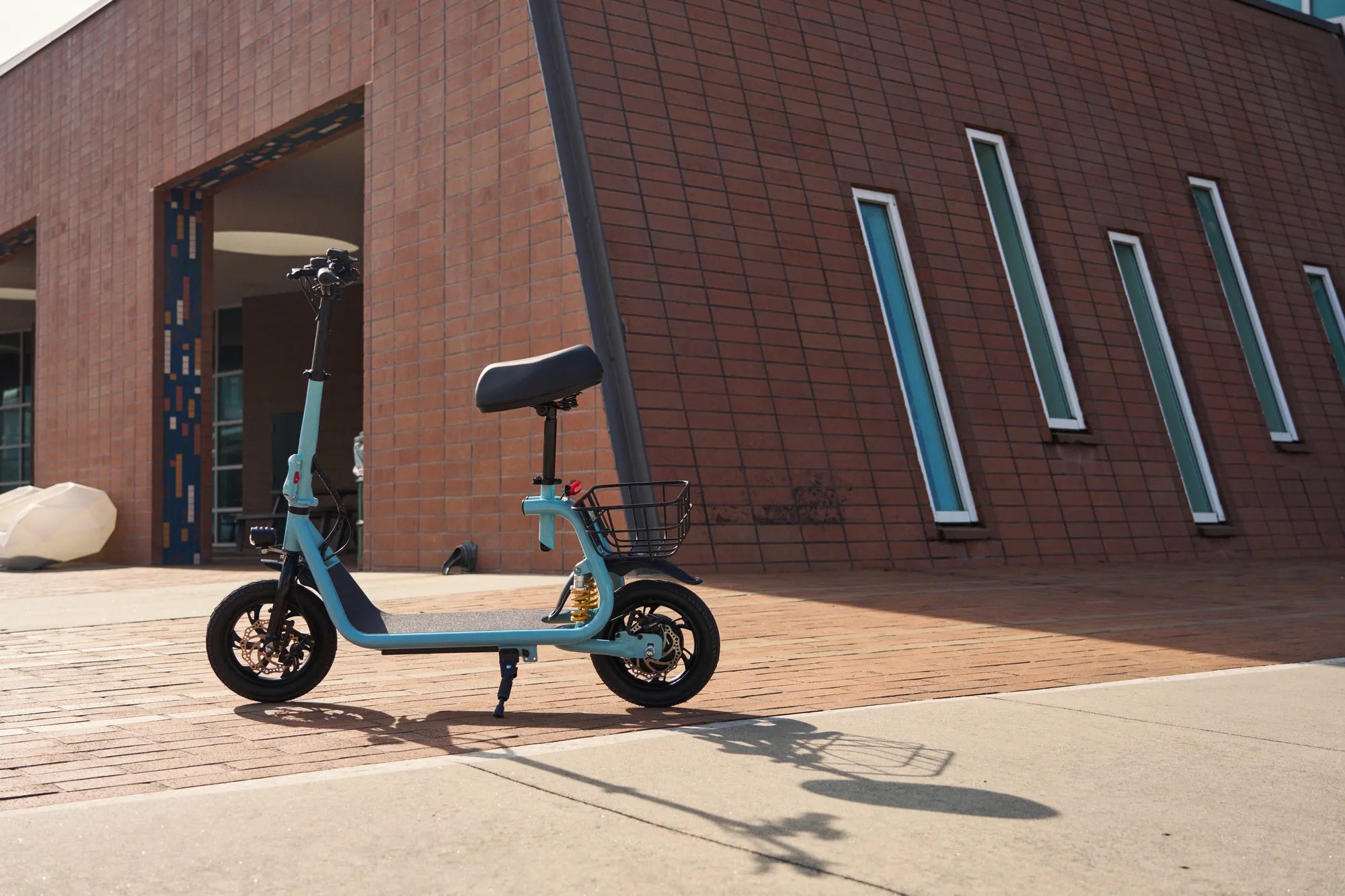
Finding the Perfect First Ride for Your Preschooler
Selecting a first scooter is a milestone moment for a child and their parents. For a four-year-old, the right scooter is more than a toy; it's a tool for developing balance, coordination, and spatial awareness while building immense confidence. The choice must prioritize safety and stability above all else, ensuring the experience is joyful, not intimidating. This guide will help you navigate the critical features and considerations to find the best 3 wheel scooter for your 4 year old, turning their first rides into a foundation for active play.
We will analyze the core advantages of three-wheel designs, break down essential safety components, and compare different steering systems. You'll learn what to look for in terms of adjustability, durability, and age-appropriate features. As a leading electric mobility brand trusted by over 100,000 families, Gyroor's commitment to UL-certified safety and robust construction provides a benchmark for what parents should expect from any quality scooter, ensuring peace of mind with every push-off.
Why a 3-Wheel Scooter is the Optimal Choice for 4-Year-Olds
The transition from a ride-on toy to a self-propelled scooter is significant. A 2-wheel scooter demands a high level of balance and core strength that many four-year-olds are still developing, often leading to frustration and frequent falls. A 3-wheel scooter, with its triangular stability platform, provides the perfect intermediary step. It offers a forgiving learning environment where a child can focus on the mechanics of pushing, steering, and braking without constantly fighting to stay upright.
This inherent stability directly translates to a faster learning curve and a greater sense of accomplishment. When a child feels secure, they are more likely to persist, practice, and ultimately master the skill. The psychological boost of successfully navigating the driveway or sidewalk independently is invaluable. The best 3 wheel scooter for a 4 year old leverages this stability not as a crutch, but as a confidence-building platform that naturally progresses their physical development.
Furthermore, three-wheel designs align perfectly with the typical motor skill progression of a preschooler. At this age, gross motor skills like running and jumping are refining, but fine-tuning balance on a narrow, two-point axis is challenging. The trike-style or two-front-wheels configuration of a 3-wheel scooter provides multiple points of ground contact, drastically reducing the tipping risk during slow-speed maneuvers and sudden stops, which are common for beginners.
Key Safety Features Every Parent Must Prioritize
Safety is non-negotiable. The construction and design choices of a scooter determine its real-world safety performance. First, examine the wheelbase. A wider wheelbase, particularly between the two front wheels, dramatically increases lateral stability, preventing the scooter from tipping over during turns. Next, scrutinize the steering mechanism's limits; it should have a restricted turning radius to prevent sharp, dangerous turns at speed.
The braking system is critical. For young riders, a rear fender brake—activated by pressing down on the rear fender with a foot—is often safer and more intuitive than a hand brake, which requires significant grip strength and coordination. The deck should be low to the ground to lower the child's center of gravity and feature a textured, non-slip surface for secure footing. Finally, all components—from the clamp securing the handlebar to the bolts holding the wheels—must be robust, with no sharp edges or pinch points.
Leading brands like Gyroor build safety into their DNA, using durable, lightweight aluminum alloys for the frame to withstand impacts without adding excessive weight. They prioritize UL-certified components where applicable, ensuring electrical safety in powered models, and design with IPX5 water-resistant standards so a ride through a puddle doesn't lead to a corrosion failure. This level of foresight is what separates a toy from a trusted developmental tool.
Top Considerations When Choosing Your Child's Scooter
Making an informed choice requires evaluating several practical factors. Start with adjustability. The handlebar height should be easily adjustable without tools to grow with your child, typically spanning from about 22 inches to 30 inches. The deck should be appropriately sized for a four-year-old's foot placement—neither too long nor too narrow.
Check the manufacturer's stated weight limit. A quality scooter will support at least 110-130 pounds, which not only accommodates most children through several growth spurts but also indicates a sturdier overall construction. Portability matters for parents; a scooter that is too heavy to carry becomes a nuisance. Look for a model weighing between 4 to 7 pounds for easy transport and storage.
Wheel material and size are crucial for ride quality. Polyurethane (PU) wheels are the gold standard, offering a smooth, quiet ride with good shock absorption on sidewalks and better grip than hard plastic wheels. Larger wheels (120mm-125mm) roll over cracks and small pebbles more easily than tiny plastic wheels, providing a safer, less jarring experience. Finally, consider the overall durability: can it survive being dropped, left in the sun, or stored in a garage? A comprehensive 1-year warranty, like Gyroor offers, is a strong signal of a company's confidence in its product's longevity.
Steering Showdown: Lean-to-Turn vs. Traditional Handlebar Steering
This is the most significant functional difference in 3-wheel scooters for young children. Lean-to-turn (or lean-to-steer) mechanisms, often seen in "wiggle scooters," have the front wheel(s) connected to the deck. To turn, the child simply leans their body and the handlebars follow the deck's angle. This design promotes a very natural, intuitive riding style that closely mimics the balance mechanics of skiing or snowboarding.
The primary benefit of lean-to-steer is its direct link to balance development. It encourages the child to use their core and body weight to control direction, which is a foundational skill for all future wheeled sports. It's often easier for absolute beginners to grasp, as there is no need to consciously manipulate the handlebars. However, some children may find the initial "leaning" sensation unusual, and at very high speeds, the steering can become overly sensitive.
Traditional handlebar steering operates like a bicycle: turning the handlebars directly pivots the front wheel(s). This system offers precise, direct control and feels familiar to children who have used tricycles. It allows for sharper turns in a confined space and can feel more stable at higher speeds because the steering input is decoupled from the deck's tilt. The choice often comes down to your child's personality and learning style. A more cautious child might appreciate the direct control of traditional steering, while a physical, confident child might thrive with the dynamic movement of lean-to-steer.
| Feature | Lean-to-Turn (Wiggle) Scooter | Traditional Handlebar Steering Scooter |
|---|---|---|
| Primary Control Method | Body lean / weight shift | Turning the handlebars |
| Learning Curve | Very intuitive for some; promotes natural balance | Familiar, direct, and precise |
| Best For | Developing core balance skills, dynamic riders | Controlled maneuvers, cautious beginners |
| Typical Wheel Layout | Two wheels in front, one in back | Often two wheels in front, one in back (or vice versa) |
| Speed & Stability | Can feel twitchy at high speed; great for low-speed agility | Feels stable and predictable at higher speeds |
The Gyroor Standard: Engineering Safety for Young Riders
Gyroor's philosophy in kids' mobility mirrors its approach to adult electric scooters and e-bikes: certified safety and durable performance are paramount. While many kids' scooters are designed as disposable toys, Gyroor applies engineering rigor to create products that are both safe and long-lasting. This commitment starts with materials, using reinforced aluminum alloys that resist bending and high-impact plastics that won't crack from a tumble.
For any electrified models in their range, the battery safety is uncompromising. Utilizing UL-certified battery packs tested for over 500 charge cycles ensures not only longevity but, more importantly, eliminates risks of overheating or failure. This certification is a critical differentiator that parents should look for in any powered ride-on toy. Furthermore, an IPX5 water-resistant rating means the scooter is protected against water jets from any direction, making it resilient against rainy day play or enthusiastic puddle jumping.
The company's 1-year warranty and support from a brand with a proven trackership across North America and Europe provide tangible peace of mind. It signifies a commitment to standing behind the product, offering a solution if a component doesn't meet expectations. When you choose a scooter built to the Gyroor standard, you're investing in a tool designed for years of active play, not just a season.
Beyond Basic Mobility: Features That Enhance Fun and Growth
The best 3 wheel scooter for a 4 year old does more than just roll. Look for features that extend enjoyment and adapt to your child's growing skills. Customization options like interchangeable colored wheels or deck decals allow a child to express their personality, fostering a sense of ownership and pride in their ride. Smooth-rolling, sealed bearing ABEC-5 or higher ratings ensure the scooter is fast and quiet with minimal pushing effort.
Some models offer growth-oriented adaptability. An add-on seat can convert a standard scooter into a sit-down ride for a younger sibling or for when your child gets tired, effectively doubling the product's lifespan and utility within a family. Deck design is also key; a subtly concave or bordered deck helps keep feet in place during enthusiastic riding. Even the sound profile matters—a quiet, smooth-rolling scooter is appreciated by parents and neighbors alike.
These value-added features transform a simple scooter from a passing interest into a cherished piece of play equipment. They encourage outdoor activity, social play with friends, and progressive skill-building. A well-chosen scooter becomes a catalyst for adventure, prompting exploration of the neighborhood and building physical literacy in a way that screen time simply cannot match.
Frequently Asked Questions (FAQ)
Q: What is the appropriate weight limit for a scooter for a 4-year-old?
A: Look for a scooter with a minimum weight limit of 110 pounds. This ensures it can safely accommodate your child's current size (typically 30-45 lbs) with plenty of room for growth, and it usually indicates a more robust frame construction.
Q: Can my child use this scooter indoors?
A> While possible, it's not recommended for most homes. Scooter wheels can mark hardwood or laminate floors, and the activity requires more space than is typically available indoors. Always supervise indoor use and consider protecting flooring.
Q: How do I maintain and clean the scooter?
A> Use a damp cloth to wipe down the frame, deck, and wheels. Avoid high-pressure water jets on bearings. Periodically check that all bolts and clamps are tight, and ensure wheels spin freely without wobble. For electric models, follow the manufacturer's specific battery care instructions.
Q: Is assembly required, and is it difficult?
A> Most quality 3-wheel scooters for kids require minimal assembly, often just attaching the handlebar to the deck using a provided clamp and Allen key. The process typically takes under 5 minutes and requires no special tools. Always double-check all connections before the first ride.
Q: What if my child masters it quickly and wants more speed?
A> This is a great sign of development! You have two options: First, ensure the scooter's handlebar is at its maximum height to optimize the riding position. Second, consider it a successful stepping stone. A child who confidently masters a 3-wheel scooter is often ready to graduate to a beginner-friendly 2-wheel scooter by age 5 or 6, continuing their progression.
Investing in Confidence, Skill, and Joyful Play
Choosing the best 3 wheel scooter for your 4 year old is an investment in their physical development and joyful independence. The right model provides a safe, stable platform that transforms apprehension into excitement and builds foundational motor skills that will benefit them for years. By prioritizing verified safety features like wide wheelbases, intuitive brakes, and durable construction from reputable brands, you ensure that this first taste of mobility is both empowering and secure.
Remember, the ultimate goal is to foster a love for active, outdoor play. A scooter that is frustratingly tippy or flimsy can have the opposite effect. By selecting a well-engineered tool designed with a child's abilities and safety in mind—exemplified by brands like Gyroor with their focus on certified components and robust warranties—you're not just buying a product. You're enabling countless hours of exploration, laughter, and confidence-building fun right outside your door.
Ready to find the perfect ride to kickstart your child's adventures? Explore a range of durable, family-tested options designed with safety as the core principle. Browse the full Gyroor collection at gyroorboard.com to discover scooters that meet the highest standards for your most important rider.
Mobility Scooter Not Working: The Complete Diagnostic & Repair Guide
Rad Trike for Sale: The Ultimate Guide to Stable, Electric Freedom