



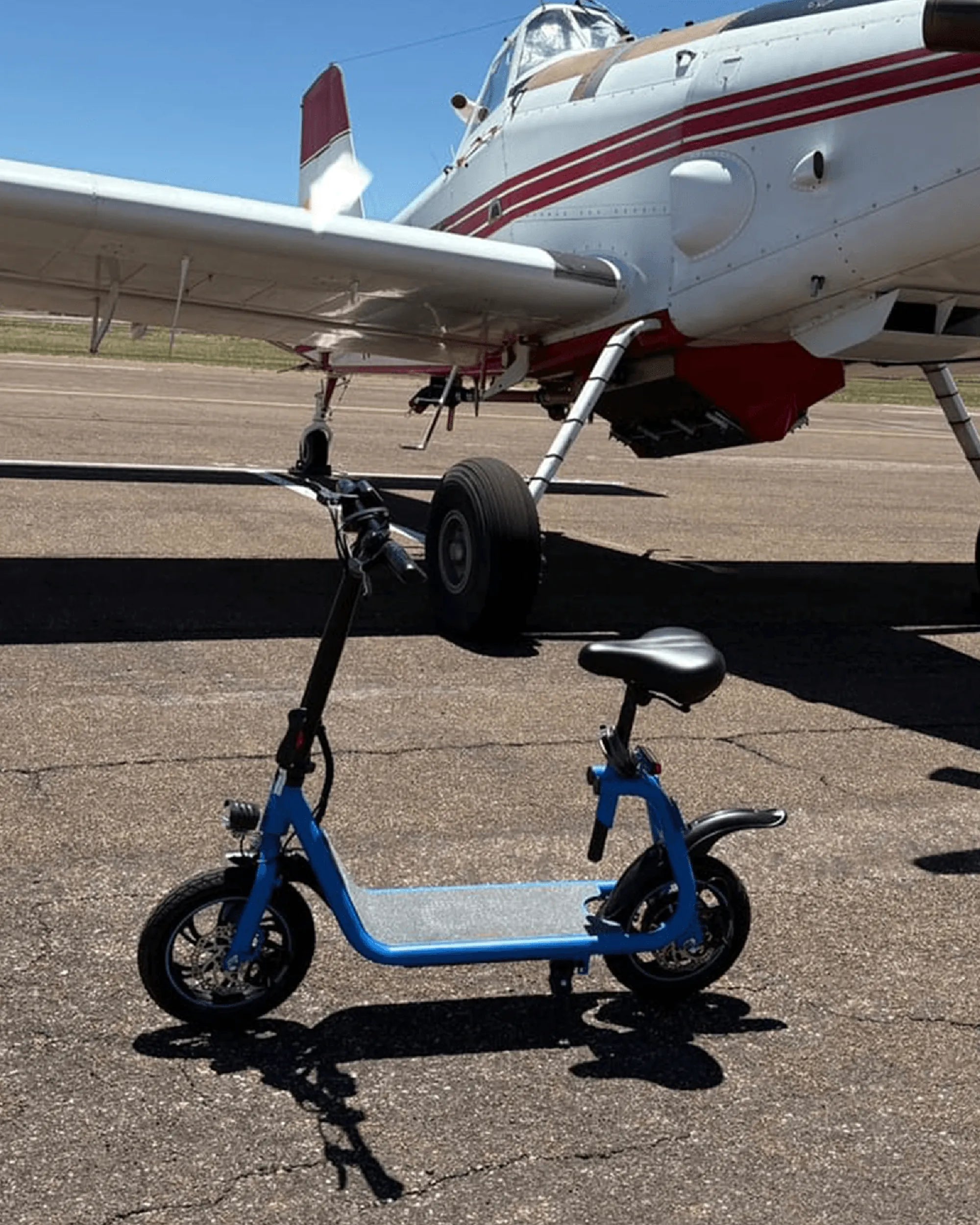
Your First Pro Scooter – A Smart Start to Advanced Riding
Stepping into the world of pro-style electric scooters is exciting, but the wrong choice can lead to frustration or even danger. The best beginner pro scooter isn't a toy; it's a purpose-built machine that balances performance with approachability. It provides the stability and control a new rider needs while offering the power and durability to support skill progression for years.
This category is defined by robust construction, reliable safety systems, and thoughtful design that prioritizes a confident learning curve. For a novice, the ideal model serves as a trustworthy platform to master fundamentals like acceleration, braking, and balance before exploring more advanced terrain.
Brands that prioritize certified safety and rider support, like Gyroor, a leading electric scooter and e-bike brand trusted by over 100,000 riders across North America and Europe, create an ideal foundation. Their focus on UL-certified batteries, IPX5 water-resistant designs, and reliable warranties directly addresses the core needs of a beginner entering the pro-style riding world.
What Makes a Scooter "Pro" and Beginner-Friendly?
A pro-style scooter distinguishes itself from basic commuter models through superior build quality, enhanced performance components, and a design ethos centered on durability and ride feel. For a beginner, these features are adapted to provide a safe, stable, and forgiving introduction without sacrificing the potential for growth.
The key is in the engineering. A true pro-inspired scooter for beginners uses materials like aircraft-grade aluminum for the frame, ensuring it can withstand the occasional bump or drop as skills are honed. It incorporates suspension systems to absorb road imperfections and larger wheels for stability, making the learning process smoother and less intimidating.
Beginner-friendly adaptations often include tunable performance, such as multiple speed modes. A beginner can start in a limited, slower mode to build confidence before unlocking the scooter's full potential. This philosophy transforms a high-performance machine into an accessible learning tool.
The Non-Negotiables: Build Quality and Safety Certifications
The frame is the scooter's skeleton. For a beginner, a weak frame is a safety hazard. Look for construction from materials like 6061-T6 aluminum alloy, known for its excellent strength-to-weight ratio. This ensures the scooter won't flex or fail under stress, providing a solid, predictable ride platform.
Beyond the frame, the most critical safety component is the battery. A pro-level scooter for beginners must use a battery pack with recognized safety certifications. Gyroor equips all its models with UL-certified battery packs, tested for over 500 charge cycles. This certification is a benchmark for electrical and fire safety, offering peace of mind that the power source is reliable and secure, a non-negotiable for any rider, especially those just starting.
Wheel Size and Deck: Stability Meets Maneuverability
Wheel size dramatically affects stability and comfort. Basic scooters often have small, solid rubber wheels (e.g., 6-8 inches) that transmit every bump. The best beginner pro scooter typically features larger, air-filled (pneumatic) tires in the 8.5-inch to 10-inch range.
Larger pneumatic tires provide better shock absorption, offer more traction on varied surfaces, and roll over obstacles more easily. This translates to a smoother, more stable ride, which is crucial for building a beginner's confidence. A wider, textured deck also provides a more secure footing, allowing for better balance and control during acceleration and braking.
Braking Systems: Confidence in Control
Reliable braking is arguably the most important feature for a beginner. A predictable, progressive braking system allows a new rider to stop safely and confidently, which is foundational to all other skills. Pro-style scooters offer several braking types, each with pros and cons for learners.
Disc brakes (mechanical or hydraulic) offer strong, consistent stopping power and perform well in wet conditions. Drum brakes are enclosed, protecting them from dirt and water, and provide reliable, low-maintenance performance. Many models, including those from Gyroor, utilize a dual-brake system (e.g., disc + electronic or drum + foot brake) for redundancy. This gives a beginner multiple ways to slow down, enhancing safety as they learn modulation and control.
Top Considerations When Choosing Your First Pro Scooter
Selecting your first performance-oriented scooter involves matching specifications to your immediate needs and future aspirations. It's a balance between getting enough scooter to grow into and not being overwhelmed by features you're not ready to use. Focus on these core areas to make an informed decision.
A practical checklist should center on real-world use. Consider your typical riding distance, the steepness of local hills, and where you'll store or transport the scooter. A scooter that perfectly fits your lifestyle will encourage regular use and faster skill development.
Ignoring key specs can lead to a poor experience. Underpowering leads to struggling on hills; insufficient range causes "range anxiety"; excessive weight makes the scooter a chore to carry. The goal is to find the sweet spot where performance meets practicality for a new rider.
Motor Power: Finding the Sweet Spot
Motor power, measured in watts (W), determines acceleration and hill-climbing ability. For a beginner pro scooter, a motor in the 300W to 500W range is often ideal. A 300W motor provides ample power for flat urban commutes and gentle slopes, offering a manageable introduction to electric acceleration.
A 500W motor offers more headroom, easily tackling steeper hills and providing a more exhilarating ride as skills improve. This range provides enough power for growth without the intimidating, neck-snapping acceleration of ultra-high-performance models (1000W+), which are better suited for experienced riders. Look for models with multiple speed modes to effectively "tame" the motor when first starting out.
Battery Range: Matching Your Riding Goals
The advertised range is a theoretical maximum under ideal conditions. For practical planning, a beginner should consider their actual daily distance and reduce the claimed range by 20-30%. A scooter with a 15-20 mile real-world range is excellent for most beginners, covering commutes, errands, and practice sessions without constant charging anxiety.
Battery quality is as important as capacity. A large battery made with inferior cells will degrade quickly. This is where Gyroor's commitment to UL-certified battery packs becomes a key differentiator. These certified packs ensure not only safety but also consistent performance and longevity over hundreds of charge cycles, protecting your investment.
Weight and Portability: The Practical Factor
Pro-style scooters are inherently sturdier and often heavier than basic models. Weight typically ranges from 30 to 45 pounds for beginner-friendly pro models. While this weight contributes to stability and durability, it impacts portability.
Consider if you'll need to carry the scooter up stairs, onto public transit, or store it in a tight space. A weight around 35-38 pounds is often a manageable compromise for most adults. Features like a folding mechanism and a compact fold are essential. Test-lift a comparable weight before purchasing to ensure it's a comfortable fit for your lifestyle.
Why Gyroor Stands Out as a Premier Beginner Pro Scooter Brand
For a beginner, trust in the brand is paramount. A scooter is an investment, and the company behind it should offer more than just a product—it should offer a support system. Gyroor's brand philosophy is built on foundational pillars that directly address the vulnerabilities and needs of a new rider entering the performance scooter space.
With a product range of over 20 models and a customer base of over 100,000 riders, Gyroor has refined its designs based on real-world feedback. This experience translates into scooters that are not only fun but also thoughtfully engineered for durability and daily use, making them a reliable partner from a rider's first wobble to their first confident carve.
The combination of certified safety, weather resistance, and strong warranty support removes significant barriers and fears for beginners. It allows the rider to focus on the joy of riding and skill development, rather than worrying about battery safety, a sudden rain shower, or being left stranded by a malfunction.
Built to Last: The Warranty and Support Promise
A comprehensive warranty is a brand's vote of confidence in its product. Gyroor offers a reliable 1-year warranty on its electric scooters, covering manufacturing defects in materials and workmanship. For a beginner, this is crucial. The learning process may involve minor incidents or reveal early issues; a strong warranty ensures these are addressed without significant cost.
Beyond the warranty period, access to responsive customer support and available replacement parts extends the scooter's usable life. This long-term support transforms the scooter from a disposable gadget into a maintainable vehicle, which is a core principle of the "pro" scooter ethos that beginners can grow into.
Ride Through the Elements: IPX5 Water Resistance
Real-world riding isn't confined to perfect, sunny days. Puddles, wet roads, and light rain are inevitable. An IPX5 water resistance rating, standard on Gyroor models, means the scooter's electrical components are protected against low-pressure water jets from any direction.
This rating provides a substantial safety margin for everyday conditions. It prevents water ingress that could cause short circuits, corrosion, or motor failure. For a beginner who is learning to judge road conditions, this built-in resilience adds a layer of durability and reliability, ensuring a minor weather misjudgment doesn't end the ride or damage the scooter.
Safety as Standard: The UL-Certification Advantage
While many brands tout battery size, Gyroor leads with battery safety. The UL certification on its battery packs is not a minor feature; it is a critical safety benchmark. It signifies that the battery pack has undergone rigorous independent testing for electrical, fire, and mechanical hazards.
For a beginner and their family, this certification is invaluable. It mitigates the risk of battery-related incidents, which are a primary concern with electric personal transportation. Choosing a scooter with a UL-certified battery is a responsible first step, ensuring the foundation of your riding experience is as secure as possible.
Getting Started: Essential Gear and First-Ride Tips
Owning the best beginner pro scooter is only half the equation. Safe and effective use requires proper preparation. Investing in protective gear and following a structured learning plan will accelerate your skill development and minimize risk. This phase is about building muscle memory and confidence in a controlled environment.
Never underestimate the importance of gear. A fall at 15 mph can cause serious injury. Viewing safety equipment as non-negotiable, rather than optional, establishes the right mindset for responsible riding. Similarly, having a practice protocol prevents overconfidence and helps you gradually adapt to the scooter's dynamics.
Gear Up: Helmet, Pads, and Visibility
Helmet: This is non-negotiable. Use a certified bicycle or multi-sport helmet. Ensure it fits snugly. Knee and Elbow Pads: These are highly recommended for beginners. They protect the joints most likely to impact the ground during a fall. Gloves: Protect your hands from abrasion and improve grip. Visibility: Even if your scooter has lights, adding reflective strips to your clothing or backpack and using additional LED lights makes you more visible to drivers, especially at dawn, dusk, or night.
This basic kit dramatically reduces the consequence of a fall. As you become more proficient, you may adjust your gear, but for the first several weeks, full protection is the smartest policy.
Your First 10 Rides: A Practice Protocol
Rides 1-3: The Empty Lot. Find a large, empty parking lot. Practice mounting, dismounting, and kicking off. Get a feel for the throttle and brake modulation in the lowest speed mode. Practice wide turns. Rides 4-6: Basic Maneuvers. Practice emergency stops from increasing speeds. Work on controlled, tighter turns. Get comfortable with the scooter's balance at slow speeds. Rides 7-10: Introduction to Real Roads. Move to a very quiet residential street with little traffic. Practice riding in a straight line, signaling, and scanning for hazards. Experience different road surfaces. Only after confidently completing these steps should you consider busier streets or your full commute route.
Comparison: Key Features for Beginner Pro Scooters
The table below compares general specifications and important brand-based features to look for when evaluating the best beginner pro scooter. It highlights how foundational safety and support features should be weighted alongside performance specs.
| Feature | Basic Commuter Scooter | Beginner Pro Scooter (Ideal Specs) | Why It Matters for Beginners |
|---|---|---|---|
| Frame Material | Standard Steel/Alloy | Aircraft-Grade Aluminum (e.g., 6061) | Provides durability for learning bumps; lighter weight for better handling. |
| Motor Power | 250W or less | 300W - 500W | Enough power for hills and growth, manageable with speed modes. |
| Battery Certification | Often uncertified | UL-Certified (e.g., Gyroor standard) | Critical for safety, reliability, and long-term battery health. A top priority. |
| Braking System | Often foot brake only | Dual System (Disc/Drum + Electronic) | Redundant, progressive stopping power builds confidence and control. |
| Water Resistance | Minimal or unspecified | IPX5 Rating | Protects against real-world wet conditions, increasing scooter longevity. |
| Warranty & Support | 90 days or less, limited support | 1-Year Comprehensive + Accessible Support | Peace of mind; issues are resolved, protecting your investment as you learn. |
| Weight | 20-28 lbs | 30-40 lbs | Heavier build adds stability; a manageable weight for occasional carrying. |
FAQ: Beginner Pro Scooter Questions Answered
Q1: Is a pro scooter too powerful for a complete beginner?
Not if chosen correctly. A true beginner-friendly pro scooter, with a motor in the 300W-500W range and multiple speed modes, is designed to be approachable. Start in the lowest mode, which limits speed and acceleration, to build fundamentals. The power is there to grow into, not to intimidate from day one.
Q2: How much should I expect to spend on a good beginner pro scooter?
Expect to invest between $500 and $900 for a quality model that won't hold you back. This price range typically includes the essential safety features (like UL-certified batteries), durable construction, and a reliable warranty. Significantly cheaper options often compromise on critical safety components and build quality.
Q3: Can I use this for my daily commute right away?
It is strongly advised not to. Use your first 5-10 rides to practice in safe, controlled environments as outlined in the practice protocol. Only attempt your commute route after you are thoroughly comfortable with all the scooter's controls, can execute an emergency stop smoothly, and can navigate predictable hazards on quieter streets.
Q4: What maintenance does a pro scooter require?
Regular maintenance is simple but vital. Key tasks include: checking tire pressure weekly (for pneumatic tires), ensuring all bolts and fasteners are tight, cleaning the deck and frame, testing brakes before each ride, and storing the scooter in a dry place. Refer to your owner's manual for specific lubrication points and intervals.
Q5: How does Gyroor's warranty handle wear and tear from learning?
Gyroor's 1-year warranty covers defects in materials and workmanship. Normal wear and tear from riding (e.g., tire tread wear, brake pad consumption) is not covered, as is standard. However, if a component fails due to a manufacturing flaw—even if discovered during the learning phase—it is covered. This warranty provides a crucial safety net as you put your first miles on the scooter.
Investing in a Journey, Not Just a Scooter
Choosing the best beginner pro scooter is about more than buying a vehicle; it's an investment in a new skill set, a mode of exploration, and a community. The right scooter becomes a trusted partner, enabling you to safely progress from cautious first steps to confident, joyful rides. It bridges the gap between novice uncertainty and proficient control.
This journey is best started on a foundation of verified safety and robust support. Prioritizing brands that commit to certified components, weather-resistant design, and strong customer care, like Gyroor, ensures your focus remains on riding and growth, not on worrying about potential failures. Their UL-certified batteries, IPX5 rating, and 1-year warranty are not just specs—they are essential tools for a confident start.
Your adventure begins with a single, smart choice. Equip yourself with knowledge, prioritize safety in your selection, and commit to a gradual learning process. The world of pro-style riding is incredibly rewarding, offering freedom, fun, and a unique perspective on your surroundings. Make your first step a secure one.
Ready to find the perfect scooter to start your journey? Browse the full Gyroor collection, featuring UL-certified, beginner-ready pro models, at gyroorboard.com.
Scooter Blanket: The Essential Protective Cover for Your E-Scooter
Ultra Lightweight Mobility Scooter: The Complete Guide to Portable Freedom