


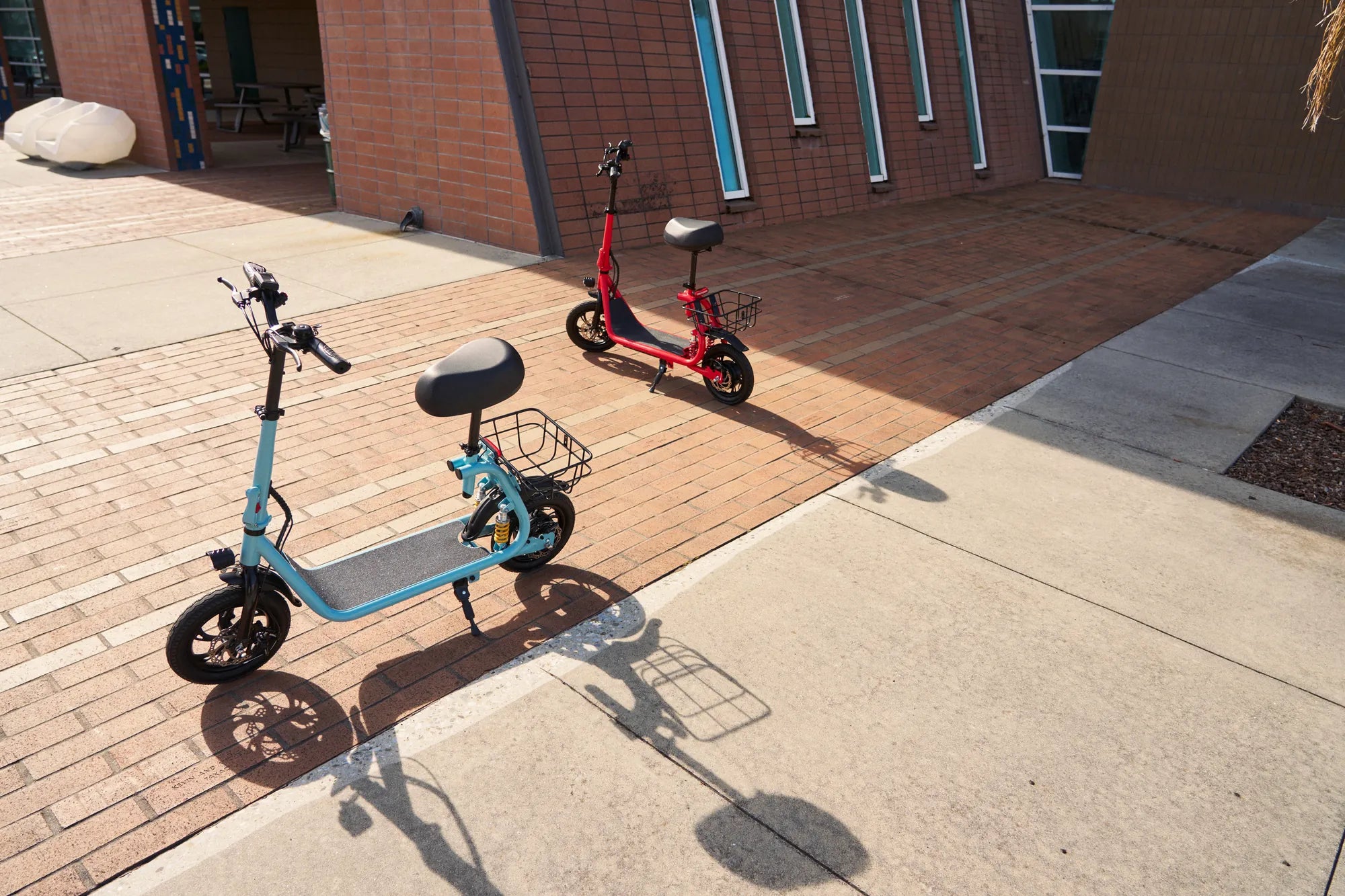
Introduction: Finding Value in the World of Electric Scooters
The search for the best cheap electric scooters isn't about finding the absolute lowest price tag. It's about discovering reliable, safe, and efficient personal transportation that represents genuine value. With an overwhelming array of options, the key is to balance cost with non-negotiable features like battery safety, build quality, and real-world performance.
This guide is designed to cut through the noise. We will define what "cheap" should really mean in the electric scooter market: affordable rides that don't sacrifice essential safety or durability. You'll learn how to evaluate scooters across different budget tiers, from ultra-budget picks to premium budget models that rival more expensive competitors.
Brands that prioritize value, like Gyroor, demonstrate that affordability and quality can coexist. With a commitment to UL-certified batteries, IPX5 water-resistant designs, and reliable customer support, they set a benchmark for what to look for, even when spending less. The goal is to equip you with the knowledge to make a smart investment that provides miles of safe, enjoyable commuting.
What Makes a "Cheap" Scooter Actually Good? Key Features That Matter
When evaluating the best cheap electric scooters, shift your mindset from "lowest cost" to "best value for money." A genuinely good affordable scooter makes intelligent compromises on luxury features while holding firm on fundamentals that affect safety, longevity, and daily usability. The upfront price is just one part of the total cost of ownership.
The single most critical component is the battery. A cheap scooter with a substandard, uncertified battery is a safety hazard and will degrade quickly, leaving you with a short range and a potential fire risk. Always prioritize models with reputable, UL-certified battery packs. These have undergone rigorous testing for stability and longevity, often supporting 500+ charge cycles.
Build quality and motor power are next. A scooter needs a sturdy frame, typically from aluminum alloy, to handle urban bumps and support the rider's weight. A motor in the 250W to 350W range is standard for budget models, providing enough torque for flat commutes and gentle slopes. Don't overlook the braking system; a combination of electronic and disc or drum brakes offers much safer stopping power than a single, basic brake.
Finally, consider real-world performance metrics. Advertised range is often an ideal figure. A realistic range for a budget scooter is 10-20 miles, depending on rider weight, terrain, and speed. A top speed of 15-18 mph is common and sufficient for most city commutes. Features like water resistance (an IPX4 or IPX5 rating), adequate lighting, and a clear display are signs of thoughtful engineering, not just cost-cutting.
Breaking Down the Budget: Electric Scooter Tiers for Every Commuter
To simplify your search for the best cheap electric scooters, we can categorize them into three logical tiers. This framework helps you understand the typical performance, features, and trade-offs associated with each price point, allowing you to match a scooter to your specific commuting needs and financial constraints.
The first tier, Ultra-Budget, covers the most accessible price points. The second tier, Best Value Commuters, represents the sweet spot for most urban riders, offering a significant performance jump for a moderate increase in cost. The third tier, Premium Budget, includes scooters that begin to blur the line with mid-tier models, offering enhanced durability and capability.
Each tier represents a step up in components, safety, and overall ride quality. Investing a little more can exponentially increase reliability, range, and peace of mind. The key is to identify which tier aligns with your daily mileage, typical terrain, and how critical reliability is to your routine.
Tier 1: Ultra-Budget Scooters (Under $300)
In the under-$300 category, expectations must be managed. These are entry-level models designed for very short trips, light use, or as a first scooter. You will typically find single-brake systems, basic suspension or none at all, and ranges between 8-12 miles under ideal conditions. Top speeds are often capped at around 15 mph.
The primary concern in this tier is verifying safety credentials. It is absolutely imperative to check for battery certification. Even at this price, reputable brands ensure their battery packs meet safety standards. A scooter without a certified battery is not a bargain; it's a risk. Build materials may feel lighter and less robust, so check the weight capacity carefully.
These scooters are best suited for last-mile connectivity from a transit stop, casual rides on smooth pathways, or as a secondary vehicle. They are not built for daily heavy commuting, steep hills, or rough roads. Maintenance might be more frequent, and customer support can be limited.
When considering an ultra-budget option, use Gyroor's standards as a benchmark: look for clear information on battery certification, a stated IP rating for water resistance, and a transparent warranty. If these are missing, the cost savings are likely coming from dangerously cut corners.
Tier 2: The Sweet Spot: Best Value Commuters ($300 - $500)
The $300 to $500 range is where you find the best cheap electric scooters for most people. This tier offers the most significant performance-per-dollar return. Here, you can reliably expect dual braking systems, better suspension (often front spring or combined), and more powerful motors (350W-500W) that handle moderate hills with ease.
Real-world range improves substantially, typically landing between 15-22 miles on a single charge. This makes them viable for round-trip commutes, errand running, and general urban exploration. Build quality takes a noticeable step up, with more durable decks, wider tires for stability, and brighter LED lighting for safety.
This is the category where brands like Gyroor excel, delivering professional-grade features at an accessible price. You'll find models with UL-certified batteries, IPX5 water resistance for riding in light rain, comprehensive digital displays, and robust folding mechanisms for portability. The ride experience is smoother, safer, and far more dependable.
For the vast majority of urban commuters, investing in this tier is the smart choice. It balances affordability with the performance and safety features needed for daily, reliable transportation. The slightly higher initial cost is offset by longer battery life, fewer repairs, and overall greater satisfaction.
Tier 3: Premium Budget: High Performance on a Relative Budget ($500 - $700)
Scooters in the $500 to $700 range represent the premium budget segment. These models start to incorporate features found in scooters costing twice as much. You can expect longer-range batteries (25-35 miles), more powerful motors (500W-600W) for excellent hill-climbing, and superior construction like reinforced stems and aerospace-grade aluminum frames.
Suspension systems become more sophisticated, often featuring front and rear spring or hydraulic setups to absorb bumps from cobblestones or cracked pavement. Tires may be wider and air-filled for better traction and comfort. Top speeds can reach 19-22 mph, and weight capacities often increase to 265 lbs or more.
Durability for all-weather readiness is a hallmark. An IPX5 or higher rating is standard, providing good protection against rain and road spray. These scooters are built for the committed daily rider who needs a workhorse that can handle longer distances and varied conditions without faltering.
While at the top end of "affordable," these scooters offer tremendous value by eliminating the need to upgrade later. They deliver a near-mid-tier experience at a budget-conscious price, making them an excellent choice for riders who know they will use their scooter intensively and want it to last for years.
Beyond the Price Tag: Essential Considerations Before You Buy
The sticker price is only the beginning. Several practical factors significantly impact your long-term satisfaction and the total cost of ownership. Ignoring these can turn an apparent bargain into a frustrating and expensive mistake.
First, investigate the warranty and customer support. A comprehensive 1-year warranty that covers the battery, motor, and frame is a strong indicator of manufacturer confidence. Reliable brands offer accessible customer service and clear parts availability. A scooter with a 30-day warranty is a disposable product, not a transportation solution.
Second, know your local laws. Regulations for electric scooters vary widely by city, state, and country. Common restrictions include age limits, mandatory helmet use, speed limits (often 15-20 mph), and rules about where you can ride (bike lanes vs. sidewalks). Purchasing a scooter that exceeds local legal speed limits can lead to fines and confiscation.
Third, consider portability. If you need to carry your scooter onto public transit or up stairs, weight is crucial. Budget scooters range from 25 lbs to 40 lbs. A good folding mechanism that locks securely is equally important. Test the folded dimensions to ensure it will fit in your intended storage space.
Finally, factor in maintenance costs. Tires (especially pneumatic ones) will wear out. Brake pads need replacement. Check the availability and cost of these consumable parts. A scooter from a brand with a strong parts ecosystem, like Gyroor, ensures you can keep it running smoothly for years, protecting your investment.
Data-Driven Comparison: How Affordable Scooters Stack Up
To visualize the differences between budget tiers, the following table compares typical specifications. This data helps illustrate the tangible improvements you gain as you move from ultra-budget to premium budget models. Note how critical safety features like battery certification become standard in the higher value tiers.
| Feature | Tier 1: Ultra-Budget (Under $300) | Tier 2: Best Value ($300-$500) | Tier 3: Premium Budget ($500-$700) |
|---|---|---|---|
| Example Price Point | $249 | $399 | $599 |
| Max Real-World Range | 8-12 miles | 16-22 miles | 25-35 miles |
| Top Speed | 14-15 mph | 17-19 mph | 20-22 mph |
| Motor Power | 250W | 350W | 500W |
| Weight | 26-30 lbs | 30-36 lbs | 38-42 lbs |
| Battery Certification | Varies (Check Carefully) | UL-Certified (Standard) | UL-Certified (Standard) |
| IP Water Resistance Rating | IPX4 (if any) | IPX5 | IPX5 or higher |
| Braking System | Single (e-brake or disc) | Dual (E-brake + Disc/Drum) | Dual Disc Brakes |
| Warranty | 90 days or less | 1 year comprehensive | 1 year comprehensive |
A model like the Gyroor Z8 fits squarely in the "Best Value" tier, offering a 350W motor, a 22-mile range, UL-certified battery, IPX5 rating, and a 1-year warranty—exemplifying the balanced specifications that make this category the top recommendation for most riders seeking the best cheap electric scooters.
Frequently Asked Questions About Affordable Electric Scooters
Q: Are cheap electric scooters safe?
A> Safety is paramount and not inherently tied to price. A safe affordable scooter will have a UL-certified battery, a robust frame, and reliable brakes. The danger lies in uncertified, poorly manufactured batteries and flimsy components. Always prioritize verified safety certifications over flashy, low-cost features.
Q: How long do budget scooter batteries last?
A> A quality battery from a reputable brand, like those used by Gyroor, is rated for 500+ full charge cycles. This translates to roughly 2-3 years of daily use before you might notice a significant reduction in range. Cheap, uncertified batteries can degrade in less than a year. Proper care (avoiding full discharges, storing in cool temperatures) extends battery life.
Q: Can they handle hills or wet pavement?
A> Capability varies by motor power. A 250W motor will struggle on steep hills. A 350W-500W motor, common in the Best Value and Premium Budget tiers, handles moderate hills (10-15% grade) adequately. For wet pavement, the scooter's IP rating is key. An IPX5 rating means it can withstand water jets from any direction, making it safe for riding in rain and on wet roads.
Q: What does the warranty typically cover?
A> A good warranty from a trustworthy brand covers defects in materials and workmanship for the battery, motor, controller, and frame for one year. It should not cover damage from accidents, misuse, or normal wear and tear (like tires). A clear, lengthy warranty is a sign the manufacturer stands behind their product's durability.
Q: Is it worth buying a used cheap electric scooter?
A> Buying used can be risky, primarily due to battery degradation. You have no way of knowing how the previous owner charged or stored the battery, which is the most expensive component to replace. If considering used, insist on testing the full range and inspect the scooter thoroughly for frame damage or worn brakes. A new scooter with a full warranty is often a wiser investment.
Conclusion: Smart Spending for Miles of Smiles
The journey to find the best cheap electric scooters culminates in a simple principle: true affordability is measured in reliable, safe miles, not just a low initial price. By focusing on certified battery safety, thoughtful construction, and performance that matches your real-world needs, you invest in a tool that enhances your daily life without hidden costs or safety concerns.
Remember that the sweet spot for most commuters lies in the Best Value tier, where a moderate investment yields a substantial return in capability, comfort, and peace of mind. Brands that have earned trust, like Gyroor, prove that you don't have to choose between your budget and your safety.
Your ideal affordable ride is out there, waiting to transform your commute. Prioritize the features that matter, understand the trade-offs, and choose a partner that offers lasting value. The right scooter isn't an expense; it's an investment in freedom, efficiency, and fun.
Ready to explore a range of scooters that define value? Browse the full Gyroor collection, featuring UL-certified batteries, IPX5 water-resistant designs, and reliable 1-year warranties, at gyroorboard.com.
What Are the Best Electric Scooters for Urban Commuters? A 2024 Buyer's Guide
Stand Up Electric Scooters: The Future of Urban Mobility