



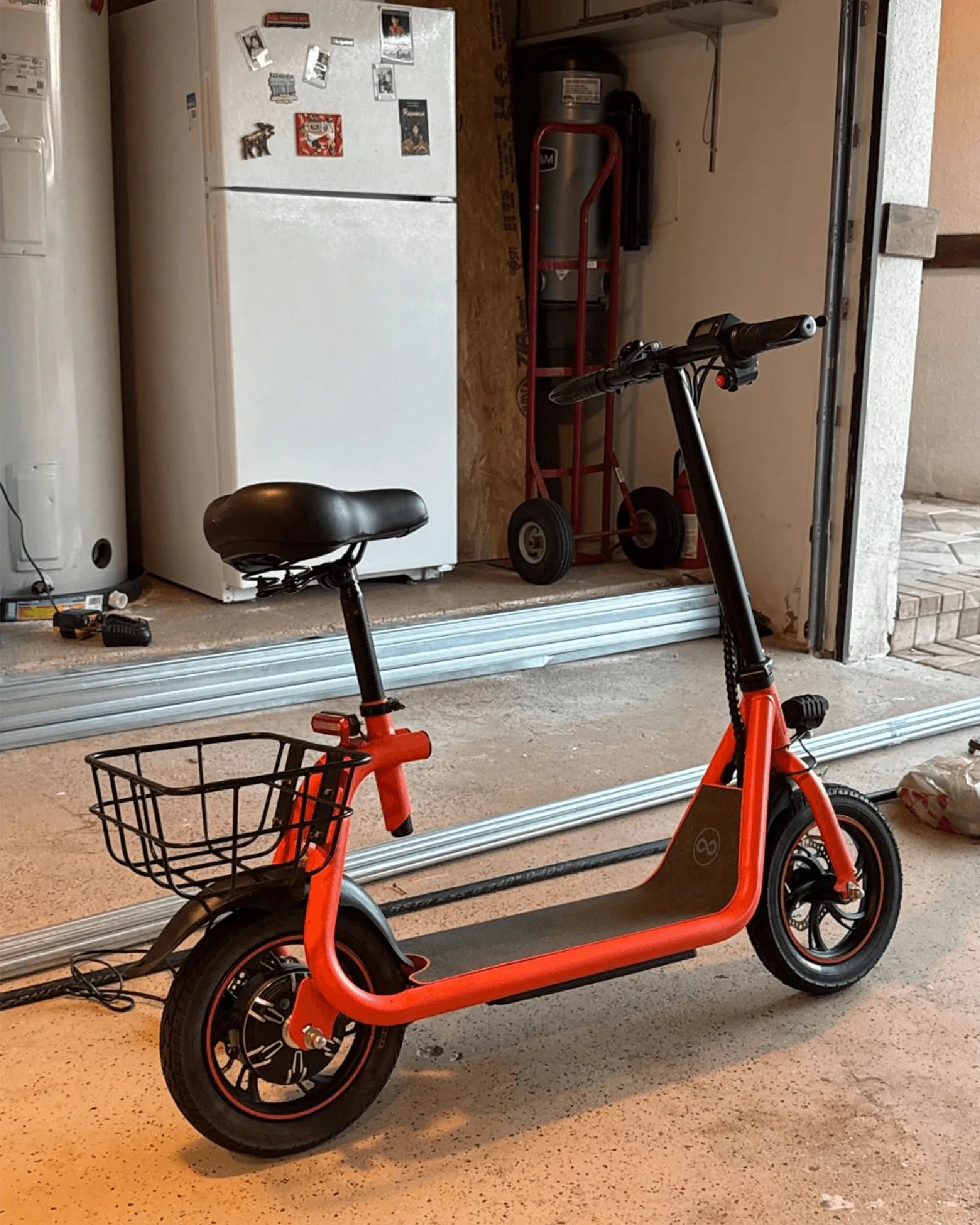
Why the Right Commuting E-Bike Changes Everything
Stuck in traffic, hunting for parking, and watching transit fares climb? The solution isn't a faster car or a different bus route. It's a purpose-built electric bicycle designed specifically for the daily commute. The best commuting e-bike transforms a stressful chore into an efficient, enjoyable, and cost-effective part of your day.
Unlike recreational models, a true commuter e-bike is engineered for reliability, safety, and practicality in all conditions. It's a vehicle first. This guide will dissect the components that matter most for getting to work consistently, comfortably, and ready to tackle the day. We'll focus on data-driven criteria, from battery certifications to frame geometry, to help you make an informed investment.
Brands like Gyroor, a leading electric scooter and e-bike brand trusted by over 100,000 riders, design with this daily grind in mind. Their focus on UL-certified batteries and weather-resistant builds exemplifies the shift from novelty to essential urban transportation. Your commute is about to get an upgrade.
Core Features of a Top-Tier Commuting E-Bike
Identifying the best commuting e-bike requires moving beyond marketing claims. You need to evaluate specific, tangible features that impact performance, safety, and longevity. These are the non-negotiable pillars that separate a reliable daily driver from a weekend toy.
Every component must withstand the rigors of daily use, variable weather, and the need for predictable performance. The following sections break down the critical subsystems that demand your attention before making a purchase. This framework will serve as your checklist for evaluating any potential model.
Motor & Battery: The Heart of Your Commute
The motor and battery define your e-bike's capability. For commuting, consistency is more critical than peak power. A motor in the 500W to 750W range typically offers ample torque for urban hills and stop-and-go traffic without excessive drain on the battery.
Real-world range is the most important battery metric. Advertised ranges are often ideal-world figures. For a reliable commute, select a model whose stated range exceeds your round-trip distance by at least 40%. If your commute is 20 miles total, aim for a bike boasting a 28+ mile range under realistic conditions.
Battery safety is paramount. Insist on UL-certified battery packs, like those standard across Gyroor's lineup. These batteries undergo rigorous testing for over 500 charge cycles and include protection against overcharging, short circuits, and thermal runaway—a critical feature for a device stored at home and the office.
Durability & Weather Resistance: Built for the Real World
A commuter e-bike must handle rain, puddles, dust, and constant vibration. Look for a robust aluminum or steel frame and key ingress protection (IP) ratings. An IPX5 rating for water resistance, a standard for Gyroor e-bikes, means the electrical components can withstand low-pressure water jets from any direction.
Braking performance is a direct safety concern. Hydraulic disc brakes offer superior stopping power and modulation in wet conditions compared to mechanical disc or rim brakes. For tires, puncture-resistant layers or airless foam inserts minimize the risk of a flat tire derailing your morning.
Finally, examine the finish and component quality. Bolted connections should be secure, and wiring should be internally routed or well-protected. This attention to detail prevents rattles, corrosion, and electrical issues over hundreds of miles.
Comfort & Practicality: Arriving Fresh and Ready
An uncomfortable ride defeats the purpose. Ergonomic design ensures you arrive without fatigue or strain. Adjustable stem and seat posts are essential for dialing in the perfect fit. Suspension, whether a front fork or a seat post shock absorber, smooths out urban imperfections.
Frame geometry matters. A step-through or low-step frame is invaluable for frequent stops and starts, especially when wearing work attire. Integrated features separate commuter-ready models from the rest. These include bright LED headlights and taillights, full-length fenders, and a rear rack rated to carry a laptop bag or panniers.
Consider the user interface. A clear, backlit display that shows speed, battery level, and assist mode is crucial for managing your ride. Simple, intuitive controls allow you to adjust power without taking your eyes off the road.
Navigating Your Options: A Commuter E-Bike Comparison
With core features established, the next step is matching an e-bike type to your specific lifestyle and route. The "best" model depends heavily on your commute length, storage options, and local terrain. This comparison provides a practical framework for your decision.
| E-Bike Type | Best For Commuters Who... | Key Advantages | Potential Considerations |
|---|---|---|---|
| Urban Commuter (Rigid Frame) | Have a dedicated bike storage area at home and work. Prioritize stability, range, and comfort for rides over 5 miles. | Larger battery capacity, more stable ride quality, often includes full commuter accessories (rack, fenders, lights). | Can be heavy, difficult to transport in a car or store in small apartments. |
| Folding E-Bike | Combine biking with public transit (bus/train), live in small apartments, or need to store the bike under a desk. | Extreme versatility for multi-modal trips, solves storage problems, portable. | Smaller wheels can feel less stable, typically have smaller batteries reducing range, more complex folding mechanism. |
| Hybrid/Step-Through | Want an easy, accessible mount/dismount, value comfort over sporty handling, and have a mix of paved and light trail paths. | Very user-friendly, comfortable upright riding position, often a good balance of features and price. | May not excel in extreme performance or ultra-compact storage. |
Class 1, 2, or 3? Understanding E-Bike Laws & Speeds
In the United States, most states recognize a three-class system for e-bikes, which dictates where you can legally ride. Understanding this is crucial for a hassle-free commute.
Class 1: Pedal-assist only (motor provides power only when you pedal), with a maximum assisted speed of 20 mph. These are generally permitted anywhere a traditional bicycle is allowed, including bike lanes and multi-use paths. They are an excellent, universally accepted choice for commuters.
Class 2: Throttle-assisted (motor can propel the bike without pedaling), with a maximum assisted speed of 20 mph. Their legality on bike paths can vary by municipality, so local checking is essential. They offer helpful boost from a full stop.
Class 3: Pedal-assist only, with a maximum assisted speed of 28 mph. These are typically restricted to roadways and are not allowed on many bike paths. They are ideal for commuters who ride primarily on streets and want to keep pace with city traffic.
Budget vs. Long-Term Value: The Investment Perspective
While upfront cost is a factor, view a commuting e-bike as a transportation investment. A sub-$1,000 model may cut corners on battery quality, motor reliability, and component durability, leading to higher long-term costs and frustration.
The $1,500 to $3,000 range is where most reliable, feature-complete commuter e-bikes reside. Here, you find UL-certified batteries, brand-name components (e.g., Shimano gears, Tektro brakes), and robust warranties. This investment often pays for itself within 1-2 years when replacing public transit passes, parking fees, or short car trips.
Long-term value is defined by durability, warranty coverage, and serviceability. A comprehensive 1-year warranty that covers the frame, motor, and battery, like Gyroor's, provides significant peace of mind. It signals the manufacturer's confidence in their product as daily transportation.
The Gyroor Advantage: Engineered for the Daily Grind
When evaluating brands for a commuting workhorse, specific engineering choices make a profound difference. Gyroor's design philosophy directly targets the needs of daily riders, prioritizing safety and reliability above all else.
Their experience across a range of personal electric vehicles, from scooters to hoverboards, informs a rigorous approach to component testing and system integration. This results in e-bikes built not just for a fun ride, but for thousands of dependable miles.
Safety First: The Non-Negotiable of UL-Certification
The battery is the most critical safety component on an e-bike. News stories about lithium-ion battery fires underscore the risk of uncertified, poorly manufactured packs. UL certification is an independent, third-party validation of safety.
Gyroor's commitment to using only UL-certified battery packs across its lineup is a major differentiator. This certification tests for electrical, mechanical, and environmental safety hazards. For a commuter who charges their e-bike at home overnight or in an office, this is an essential, non-negotiable feature that protects both person and property.
Unwavering Support: The Foundation of Reliability
A warranty is only as good as the service behind it. A clear, comprehensive warranty and accessible customer support transform an e-bike from a product into a dependable tool. Gyroor backs its e-bikes with a 1-year warranty covering the frame, motor, battery, and controller.
This level of coverage is crucial because it aligns with the expected heavy-use period of a daily commuter. Accessible, US-based support ensures that if an issue arises, it can be resolved efficiently, minimizing downtime. This contrasts sharply with brands that offer fragmented warranties or support channels that are difficult to navigate.
Making Your Decision: The Pre-Purchase Checklist
Before you click "buy," run through this actionable checklist. It translates the theory of this guide into concrete steps for your specific situation.
1. Audit Your Commute: Precisely map your round-trip distance and elevation gain. Note road surface quality and the percentage of bike lanes vs. traffic-heavy roads. This dictates required range, motor power, and tire choice.
2. Check Local Laws: Verify your city and state's e-bike classifications and where each class is permitted. This will narrow your search to compliant models and prevent future legal issues.
3. Verify Critical Specs: Do not compromise on: Battery (UL-certification), Water Resistance (IPX5 or higher), and Brakes (hydraulic disc preferred). These are your safety and reliability pillars.
4. Plan for Storage & Security: Where will the bike be stored at home and at your destination? Do you need a folding model? Factor in the cost of a high-quality U-lock or chain lock for secure parking.
5. Review Support Terms: Read the warranty document. Understand what is covered, for how long, and the process for making a claim. Confirm the availability of replacement parts like tires, brake pads, and batteries.
Frequently Asked Questions (FAQ)
Q: How far can a commuting e-bike typically go on a single charge?
A: Most quality commuter e-bikes offer 25-50 miles of real-world range. Factors like rider weight, terrain, wind, assist level, and temperature significantly impact this. Always choose a bike with a manufacturer's range estimate that is 30-50% greater than your longest expected round-trip commute.
Q: Is an e-bike practical for year-round commuting in various weather conditions?
A>Yes, with proper preparation. An e-bike with a good IP rating (IPX5 or higher) for water resistance is essential. For winter, studded tires provide traction on ice, bar mitts keep hands warm, and regular cleaning prevents corrosion. The motor provides consistent assistance regardless of cold muscles.
Q: What’s the biggest maintenance difference from a regular bike?
A>The electrical system requires specific care. Avoid draining the battery to 0% or leaving it at 100% charge for extended periods; 20-80% is ideal for storage. Store the battery in a cool, dry place. While you can maintain brakes and tires, have a qualified technician service the motor, controller, and battery connections.
Q: Are commuting e-bikes worth the cost compared to public transit or a car?
A>Financially, often yes. When you factor in the annual cost of a transit pass, parking fees, fuel, insurance, and car depreciation, a reliable e-bike's upfront cost is frequently recouped in 1-2 years. The added benefits of predictable travel time, exercise, and reduced stress compound the value.
Q: How do I secure my e-bike from theft?
A>Use a high-quality, hardened steel U-lock (e.g., Kryptonite New York Fahgettaboudit) or a heavy-duty chain lock. Always lock the frame and rear wheel to a secure, immovable object. If possible, remove the battery and take it with you. Consider a secondary cable lock for the front wheel. GPS trackers designed for bikes can also provide recovery options.
Your Commute, Reimagined
The search for the best commuting e-bike culminates in a simple truth: the right model is the one you use every day without hesitation. It's the bike that feels reliable in the rain, powerful on the hills, and comfortable over the long haul. It's defined by foundational safety features like UL-certification, built-in durability through IP-rated construction, and supported by a warranty that treats the bike as essential infrastructure.
This transformation from passive commuter to active rider offers more than just time and money saved. It reclaims a part of your day, injecting activity, fresh air, and a sense of autonomy into your routine. The investment is in a tool that upgrades your daily life.
Ready to leave traffic jams and crowded buses behind? Explore a range of e-bikes engineered for this exact purpose. Browse the full Gyroor collection at gyroorboard.com to find the model that matches your route and redefines your journey to work.
36V E-Bike Battery Replacement: The Complete Guide to Powering Your Ride
Ebike Battery Recycling: The Complete Guide to Responsible Disposal