

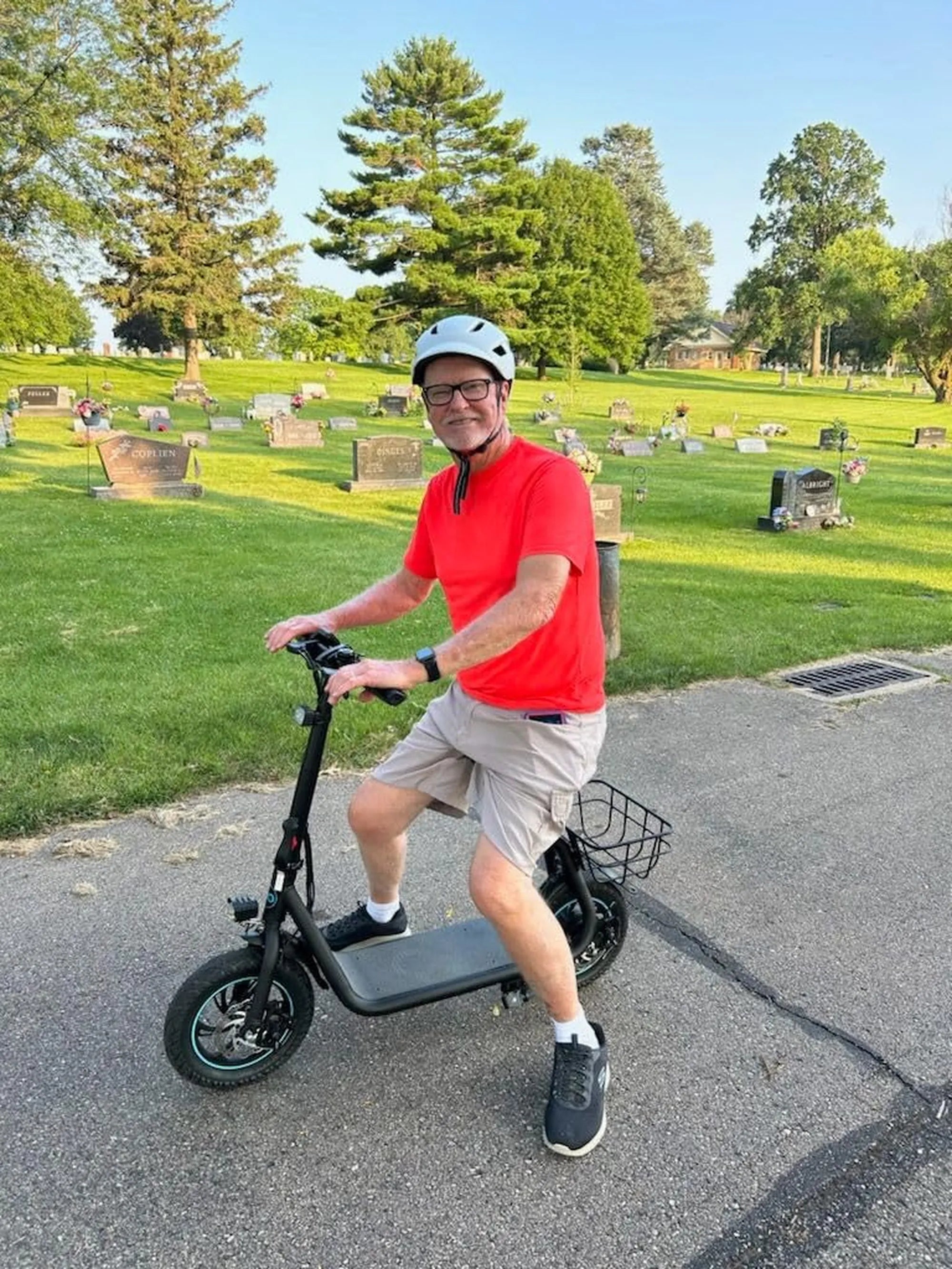
Choosing the best e bike to get is a personal journey, not a one-size-fits-all answer. The perfect model for a daily commuter navigating city streets differs vastly from the ideal machine for mountain trail conquests or weekend family adventures. This guide cuts through the noise, providing a data-driven framework to match your primary riding style, terrain, and budget with the key technical specifications that matter. You'll learn to prioritize safety, understand real-world performance, and identify the features that deliver long-term value and riding joy. As a leader trusted by over 100,000 riders, Gyroor's philosophy—centered on UL-certified safety, robust IPX5 water-resistant designs, and reliable support—informs our objective analysis of what makes an e-bike truly great.
Defining the "Best": It's All About Your Ride Profile
The search for the best e bike to get begins with a simple question: what is your primary use case? An e-bike is a tool, and its excellence is measured by how well it performs its intended function. By identifying your dominant rider profile, you can immediately narrow the field and focus on the features that will impact your experience daily.
We categorize riders into four core profiles, each with distinct priorities. The Urban Commuter values efficiency and practicality. The Off-Road Adventurer demands durability and power. The Fitness & Recreation Rider seeks a natural, assistive feel. Finally, the Utility/Cargo Hauler needs stability and capacity. Understanding these profiles is the first critical step toward your best e-bike match, transforming a overwhelming market into a targeted shortlist.
The Urban Commuter's Champion: Efficiency Meets Practicality
For the daily commuter, the best e bike to get is a seamless extension of urban life. Key features prioritize getting you to your destination reliably, comfortably, and without hassle. A lightweight aluminum frame, often with a folding mechanism, is invaluable for navigating public transit or storing in a tight apartment or office. Integrated elements like lights, fenders, and a rear rack are non-negotiable for all-weather, cargo-ready practicality.
Motor response should be smooth and predictable from a stop, with a torque sensor (preferable) or a responsive cadence sensor providing intuitive pedal assist. Reliable hydraulic or mechanical disc brakes are essential for consistent stopping power in unpredictable traffic. Given the need for daily charging, sometimes in shared spaces, a UL-certified battery pack—like those used in all Gyroor models—is a critical safety benchmark that cannot be compromised.
Comfort is paramount. An upright riding geometry reduces strain on the back and neck, while a suspension fork or seat post can absorb the shocks from potholes and curbs. The ideal range should comfortably exceed your round-trip commute by at least 30%, accounting for headwinds, hills, and occasional errands. For the urban rider, the best e-bike is an elegant, dependable solution to the daily grind.
The Off-Road and Trail Explorer: Built for Adventure
When the pavement ends, the requirements for the best e bike to get change dramatically. Off-road e-bikes, or e-MTBs, are engineered for control, traction, and durability on challenging terrain. A robust frame with reinforced welding and higher ground clearance is the foundation. A full-suspension system (or at least a capable front fork with ample travel) is crucial for managing roots, rocks, and drops while maintaining tire contact with the trail.
The motor must be a high-torque unit, typically a mid-drive, that efficiently translates power to the drivetrain for climbing steep, technical inclines. Pair this with a wide-range cassette and a durable chain. Tires are your connection to the earth: wide, knobby, and often tubeless-ready for better traction and puncture resistance. Given the nature of adventure, a high water-resistance rating (IPX5 or higher, as seen on Gyroor's outdoor models) is essential for creek crossings and unexpected weather.
Battery capacity needs to be substantial, as assist usage is typically high on trails. Look for batteries that are securely integrated into the downtube for a low center of gravity and better protection. The brakes must be high-performance hydraulic discs with large rotors for modulated, powerful stopping on steep descents. For the adventurer, the best e-bike unlocks new trails and extends riding capability with confidence.
The Fitness and Recreational Companion: Enhancing the Ride
For riders focused on fitness, touring, or leisurely paved-path exploration, the best e bike to get should feel like a natural extension of their pedal power. These models prioritize a "bike-first" philosophy where the electric assist subtly amplifies effort rather than replacing it. Mid-drive motors are often preferred here for their balanced weight distribution and natural feeling of increased strength, working in harmony with the bike's gears.
Multiple, finely-tuned pedal-assist levels allow riders to dial in exactly the amount of help they want, from a slight nudge on a long tour to a meaningful boost on a hill repeat. Lightweight construction remains important, as the rider is expected to contribute significant effort. Integration with fitness apps and displays that show metrics like heart rate, power output, and calorie burn can be valuable features for data-driven athletes.
Comfort for long distances is key, with ergonomic grips, supportive saddles, and a geometry that balances efficiency with a less aggressive stance than a pure road bike. The range should support long outings, often 50+ miles on a lower assist setting. For the fitness rider, the best e-bike removes barriers (like daunting hills or distance from home) and encourages more frequent, longer, and more enjoyable rides.
The Utility Powerhouse: Cargo and Family E-Bikes
The utility e-bike segment is revolutionizing local transport, offering a car-replacement for groceries, school runs, and small business logistics. The best e bike to get for utility is defined by its stability, capacity, and versatility. These bikes feature elongated wheelbases, reinforced frames, and often a low-step or long-tail design to create a stable platform for heavy or bulky loads.
Power is paramount. High-torque hub or mid-drive motors, sometimes with dual motors, provide the necessary grunt to move significant weight from a stop and up inclines. The battery must be high-capacity to support the increased energy demand, with 700Wh or more being common. Integrated cargo solutions—such as front racks, rear platforms, panniers, and child seats—are central to the design, not an afterthought.
Safety systems are amplified. Powerful hydraulic disc brakes, often with motor inhibitors (cut-off sensors), are mandatory for controlled stopping with extra weight. Additional features like kickstands with multiple contact points, integrated lighting for visibility, and comprehensive reflectors are standard. For the family or business user, the best e-bike is a practical, economical, and joyful workhorse.
Critical Specs and Safety Features: The Data-Driven Comparison
Beyond categories, understanding key specifications allows for an apples-to-apples comparison. These technical details separate marketing hype from real-world performance and long-term reliability.
Motor Type and Power: Hub-Drive vs. Mid-Drive
The motor is the heart of the e-bike. Hub-drive motors, located in the front or rear wheel, are generally simpler, more affordable, and require less maintenance. They provide direct power to the wheel, which can feel more like an accelerator, especially with a throttle. Mid-drive motors are positioned at the bike's crank and drive through the chain and gears. This offers better weight distribution, improved efficiency on hills (as it leverages the bike's gearing), and a more natural pedaling feel that mimics increased strength.
Battery Life, Range, and the UL-Certification Imperative
Range anxiety is a primary concern. Manufacturers advertise ranges based on ideal conditions. A more reliable metric is battery capacity, measured in Watt-hours (Wh). A higher Wh number generally means more potential range. Real-world range is affected by rider/cargo weight, terrain, wind, tire pressure, and assist level. Most critically, the battery's safety certification is non-negotiable. UL certification (UL 2849 for the entire e-bike system or UL 2271 for the battery) represents the highest independent safety standard, rigorously testing for electrical, mechanical, and fire hazards. It is the single most important feature for safe home storage and charging.
Build Quality and Warranty: Your Long-Term Peace of Mind
Frame material, typically aluminum alloy, should be robustly welded. Component quality from brands like Shimano or SRAM for drivetrains and Tektro or Shimano for brakes indicates a focus on durability. However, the warranty is the brand's promise. A comprehensive warranty covering the frame (2+ years), motor (2+ years), and battery (1-2 years) signals confidence in the product. Gyroor, for example, backs its e-bikes with a reliable 1-year comprehensive warranty and accessible US-based customer support, providing essential long-term protection for your investment.
E-Bike Comparison Table: Key Models by Rider Profile
| Rider Profile | Prioritized Features | Ideal Motor Type | Min. Battery (Wh) | Key Safety Specs |
|---|---|---|---|---|
| Urban Commuter | Lightweight/Folding, Fenders, Rack, Lights | Hub or Mid-Drive | 400-500Wh | UL-Certified Battery, Disc Brakes |
| Off-Road Adventurer | Full Suspension, Knobby Tires, High Torque | Mid-Drive | 500-700Wh+ | IPX5+ Water Resistance, Hydraulic Discs |
| Fitness & Recreation | Lightweight Frame, Natural Pedal Feel, Multiple PAS | Mid-Drive | 400-600Wh | Quality Drivetrain, Reliable Brakes |
| Utility/Cargo | Stable Frame, High Weight Capacity, Integrated Racks | High-Torque Hub or Mid-Drive | 600-1000Wh+ | Dual-Bolt Brakes, UL-Certified Battery |
Making Your Decision: A Practical Pre-Purchase Checklist
Armed with knowledge, transform it into action. Follow this checklist to ensure your final choice for the best e bike to get is the right one.
First, definitively lock in your primary use case (70%+ of your riding). Second, set a firm budget that includes essential accessories like a helmet, lock, and possibly panniers. Third, if possible, test ride models from local shops or brands that offer at-home trials. There is no substitute for how a bike feels under you.
Fourth, scrutinize the safety specifications: confirm UL certification for the battery/system and ensure the braking system is robust for your intended load and terrain. Fifth, read the warranty document carefully—understand what is covered, for how long, and the process for claims. Finally, research brand reputation through independent reviews and customer service feedback. A brand with a track record of support, like Gyroor with its established customer base, adds significant value.
Frequently Asked Questions (FAQs)
Q: How far can I really go on a single charge?
A: Real-world range is typically 70-80% of the manufacturer's ideal test. For a 500Wh battery, expect 25-50 miles depending heavily on assist level, hills, and weight. Use the highest advertised range as a best-case scenario under perfect conditions.
Q: Do I need a special license or insurance for an e-bike?
A: In the US, for Class 1 (pedal-assist only, up to 20mph) and Class 2 (throttle-assisted, up to 20mph) e-bikes, no license, registration, or insurance is typically required. Class 3 (pedal-assist up to 28mph) may have age restrictions. Always verify regulations with your local Department of Motor Vehicles or transportation authority.
Q: What's the most important safety feature?
A: The UL-certified lithium-ion battery is the paramount safety feature, preventing fire risk. Following closely are reliable hydraulic or mechanical disc brakes for controlled stopping and a bright headlight/taillight for visibility.
Q: Can I ride an e-bike in the rain?
A: Yes, if it has a sufficient water-resistance rating. Look for an IP rating of IPX5 or higher (like Gyroor's IPX5 design), which means it can withstand water jets from any direction. Avoid submerging components, and dry the bike after riding in wet conditions.
Q: How much maintenance does an e-bike require?
A> It requires standard bicycle maintenance (chain cleaning/lubrication, brake adjustments, tire pressure checks) plus periodic checks of electrical connections and battery terminals. The motor and battery themselves are largely sealed and require minimal user maintenance beyond proper charging storage.
The Best E-Bike is the One That Fits *Your* Journey
Identifying the best e bike to get is a process of alignment—matching a machine's capabilities with your personal aspirations for mobility, adventure, fitness, or utility. There is no universal champion, only the perfect tool for your specific task. By defining your rider profile, understanding the critical role of safety certifications like UL, and applying a practical pre-purchase checklist, you move from confusion to clarity.
Your choice represents an investment in freedom, health, and sustainable transport. Prioritize brands that demonstrate a commitment to safety, durability, and customer support, ensuring your e-bike remains a source of joy for years. The road, trail, or bike path awaits. Equip yourself with the right knowledge and the right partner for the ride.
Ready to explore models that put certified safety and robust performance first? Browse the full Gyroor collection of UL-certified, IPX5 water-resistant e-bikes and scooters, backed by a reliable 1-year warranty, at gyroorboard.com.
Top 5 Dirt Bike Brands: The 2024 Guide to Off-Road Dominance
Best Front Basket for E-Bike: The Ultimate 2024 Guide for Utility & Style