



Introduction: Why the Right Kids' Electric Scooter is More Than Just a Toy
Choosing the best electric scooter for kids 8+ is a critical decision that extends far beyond simple entertainment. For a child, it's a gateway to outdoor activity, independence, and developing coordination. For a parent, it represents a significant investment in their child's safety and enjoyment, requiring careful consideration of engineering, design, and real-world performance.
This guide is designed to cut through the marketing noise and provide a factual, feature-focused framework for your decision. We will analyze the safety specifications that are non-negotiable, compare scooter types for different use cases, and outline the essential gear and rules for safe operation. The goal is to empower you with the knowledge to select a scooter that is not only fun but fundamentally safe and built to last.
Throughout this guide, we will reference industry standards and data points, such as the importance of UL certification for batteries and IP water resistance ratings. As a leading brand trusted by over 100,000 riders, Gyroor designs its youth models with these paramount safety principles in mind, ensuring that the thrill of the ride is matched by rigorous engineering standards.
Key Safety Features Every Parent Must Look For
Safety is the absolute cornerstone of selecting any vehicle for a child. The following features form a mandatory checklist. A scooter missing even one of these elements should be reconsidered, regardless of its price or appeal.
Speed Control and Modes
Uncontrolled speed is a primary risk factor. The best electric scooter for kids 8+ must have multiple, parent-manageable speed modes. A typical safe configuration includes a beginner mode (3-5 mph), a standard mode (7-9 mph), and a maximum mode capped at 10-12 mph for experienced riders.
Advanced models offer additional control through companion smartphone apps or a physical PIN code, allowing parents to lock the scooter into a specific mode. This prevents children from accidentally—or intentionally—switching to an unsafe speed before they have the skill to handle it. This layered approach to speed management is crucial for progressive learning.
Braking System: Disc vs. Electronic vs. Foot Brake
A reliable braking system is as important as the accelerator. Most quality scooters for this age group employ a dual-braking system for redundancy. The most effective combination is an electronic (e-brake) system paired with a mechanical disc or drum brake.
The electronic brake engages the motor to slow the scooter, while the physical brake provides direct friction-based stopping power. A rear fender foot brake is a common third option but should not be the sole braking mechanism for electric models, as it requires significant foot pressure and can cause instability. Look for scooters where the brakes are tested for consistent, smooth deceleration without sudden jerks.
Stability and Build: Deck Size, Wheel Type, and Weight Limit
Stability is determined by geometry and components. A wider deck (at least 5 inches) provides a confident, balanced stance. The scooter's weight limit should exceed your child's current weight by at least 30-40 pounds to account for growth, backpacks, and dynamic forces, ensuring the frame isn't stressed.
Wheel choice is critical for control and comfort. Larger wheels (8 inches or more) handle cracks and debris better than smaller ones. Pneumatic (air-filled) tires offer superior shock absorption compared to solid rubber tires, providing a smoother ride and better traction, especially on uneven pavement. A low center of gravity, achieved through smart battery placement, further enhances stability.
UL-Certified Battery and Water Resistance
The battery is the heart of the scooter and its most critical safety component. Insist on a UL 2271 or UL 2843 certified lithium-ion battery pack. This independent certification means the battery has passed rigorous tests for electrical, mechanical, and environmental safety, drastically reducing fire risk.
Equally important is water resistance. An IPX5 rating means the scooter can withstand water jets from any direction, making it safe to ride through puddles or in light rain. This protects the battery, motor, and control electronics from moisture damage. Brands like Gyroor build these certified, water-resistant batteries into their designs as a standard safety protocol, not an optional extra.
Top Considerations for Choosing the Perfect Scooter
Once safety boxes are checked, the next step is matching the scooter's specifications to your child's profile and your family's lifestyle. This ensures the scooter will be used, enjoyed, and valued for years.
Matching Scooter Specs to Your Child's Size and Skill Level
A scooter that is too large or too powerful can be intimidating and dangerous. Use this simple guide: The handlebar should be between your child's waist and lower chest when standing on the deck. This allows for comfortable control without hunching.
For motor power, 250W is typically ample for flat terrain and younger riders, providing a top speed of around 10-12 mph. A 350W motor offers better performance on gentle inclines for older or more experienced kids within the 8+ range. Always prioritize control and stability over raw power. The adjustable speed modes discussed earlier are key to growing with the scooter as skills improve.
Range and Battery Life: Real-World Expectations
Manufacturer range claims are often based on ideal conditions. A more realistic calculation is to expect 8-10 miles of range per 100Wh (Watt-hour) of battery capacity for a child's average weight and mixed terrain. For example, a scooter with a 150Wh battery will likely achieve 12-15 miles per charge.
Consider your child's typical riding patterns. A 5-7 mile range is often sufficient for neighborhood adventures. A key factor in long-term satisfaction is battery longevity. A quality UL-certified battery, like those used by Gyroor, is rated for 500+ charge cycles while maintaining significant capacity, and is backed by a 1-year warranty for peace of mind.
Portability and Weight: For Parents and Kids
Remember, you will likely be the one carrying the scooter to the park or storing it in the car trunk. The folded dimensions and weight are crucial parent-centric features. A good folding mechanism is a one-step, tool-free latch that securely locks the scooter in a compact form.
Weight for kids' electric scooters generally ranges from 20 to 35 pounds. Lighter models are easier for you to carry but may feel less stable at speed. Heavier models are often more robust. Check that the folded scooter can be easily lifted and fits in your available storage space.
Durability and Warranty: Investing in Long-Term Fun
Durability is about material quality and construction. An aluminum alloy frame offers an excellent strength-to-weight ratio and corrosion resistance. Look for reinforced welding points at the stem and deck. High-quality components like branded brakes and tires also indicate a longer-lasting product.
The warranty is the manufacturer's confidence in its product. A comprehensive 1-year warranty that covers the battery, motor, controller, and frame against manufacturing defects is the industry benchmark for reliable brands. This protects your investment and ensures support is available if needed.
Essential Riding Gear and Parental Safety Rules
The safest scooter is only one part of the equation. Proper protective gear and established rules are the layers of defense that complete the safety system. Treat these as mandatory, not optional.
The Non-Negotiable Gear: Helmets, Pads, and Visibility
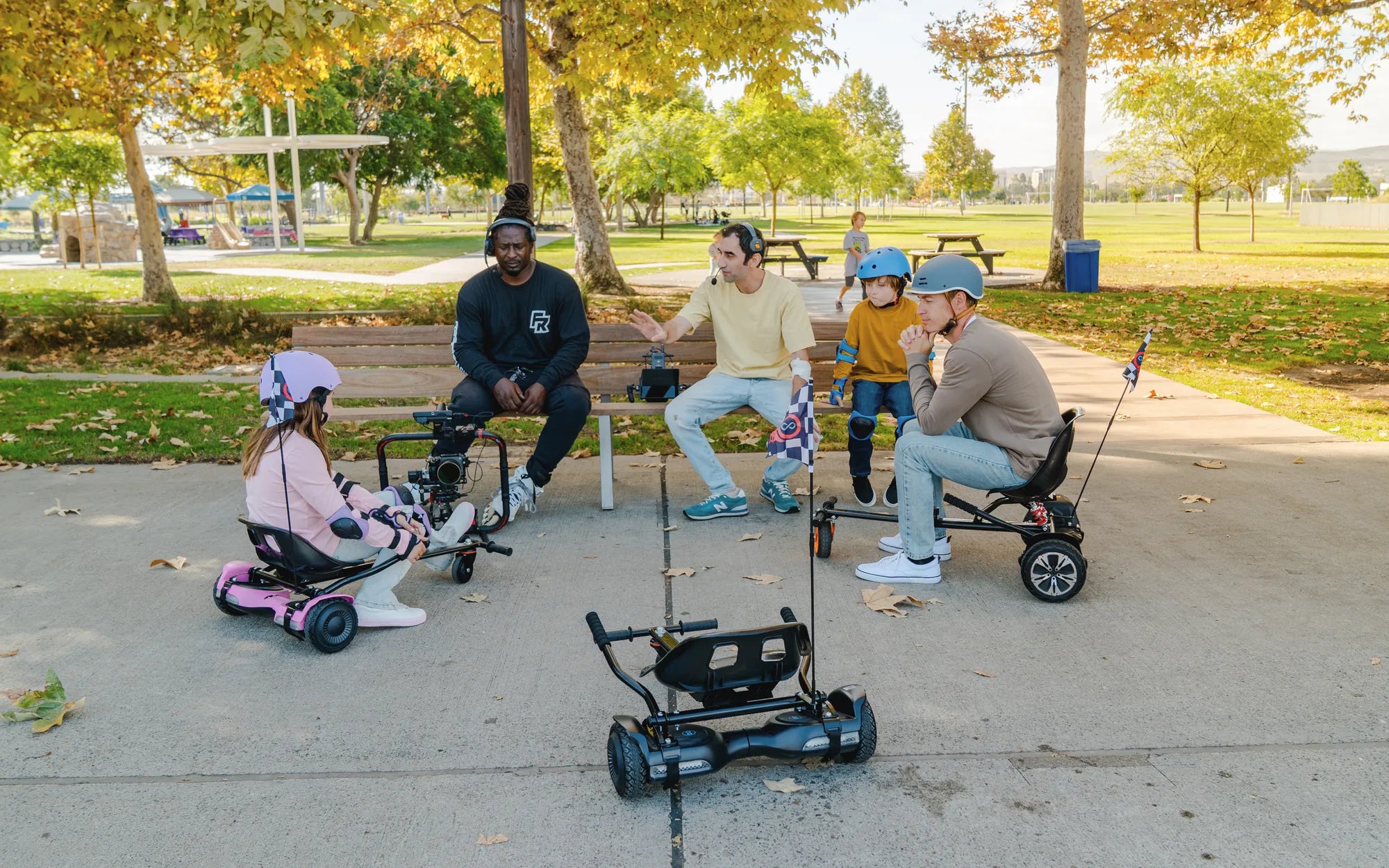
A CPSC-certified bicycle helmet is an absolute minimum. It must be properly fitted—snug, level on the head, with the strap secured. For beginners, a full set of knee pads, elbow pads, and wrist guards is highly recommended to prevent common scrapes and fractures.
Visibility is critical. Equip the scooter with bright front and rear lights if riding near dusk. Have your child wear bright or reflective clothing. Many of the best electric scooter for kids 8+ models, including several from Gyroor, integrate LED lighting systems into the deck and stem for 360-degree visibility.
Setting Ground Rules: Where, When, and How to Ride
Clear, consistent rules set boundaries for safe operation. Establish these before the first ride: 1) Ride only on sidewalks, bike paths, or paved park trails—never on roads with traffic. 2) Absolutely no riding in the dark without full lighting and adult supervision. 3) Avoid wet, oily, or sandy surfaces that compromise traction. 4) Always be aware of pedestrians and yield right-of-way. 5) Start in a safe, open, car-free area like an empty parking lot for initial practice sessions with direct parental supervision.
Comparison of Key Electric Scooter Features
This table provides a clear, data-driven comparison of the critical specifications parents should evaluate when searching for the best electric scooter for kids 8+.
| Feature | Why It Matters | Ideal Spec for Ages 8+ | Compromise / Risk |
|---|---|---|---|
| Max Speed | Controls risk; allows skill progression | Adjustable, capped at 10-12 mph | Fixed high speed (>15 mph) is dangerous for this age |
| Braking System | Ensures safe, controlled stops | Dual system (Electronic + Disc/Drum) | Single brake (esp. foot brake only) increases stopping distance |
| Battery Certification | Prevents fire/overheat hazard | UL 2271 or UL 2843 Certified | Uncertified batteries pose significant safety risks |
| Water Resistance | Protects electronics from damage | IPX5 Rating or higher | No rating means puddles can cause immediate failure |
| Weight Limit | Ensures frame integrity and stability | Child's weight + 40 lbs minimum | Scooter at max limit will feel unstable and wear quickly |
| Warranty Coverage | Protects your investment long-term | 1 Year Comprehensive (Battery, Motor, Frame) | Short or limited warranties leave you unprotected |
Frequently Asked Questions (FAQs) from Parents
What is the appropriate age for an electric scooter?
While maturity varies, age 8 is generally considered a suitable starting point for a light-duty electric scooter. At this age, children typically have the necessary balance, coordination, and cognitive ability to understand and follow safety rules. The key is pairing the child with a scooter that has appropriate speed controls and requires active parental supervision.
How fast should a scooter for an 8-12 year old go?
A safe maximum speed is between 10 and 12 miles per hour. Crucially, the scooter should have beginner modes starting at 3-5 mph to allow for a learning curve. Speed should always be adjustable and, ideally, parent-restrictable to match the child's evolving skill level.
Are electric scooters safe for kids?
Electric scooters are safe for kids when selected and used correctly. Safety is a product of three factors: 1) Choosing a scooter with the safety features outlined in this guide (UL battery, good brakes, speed control). 2) Mandating the use of full protective gear (helmet, pads). 3) Enforcing clear parental safety rules for riding. Omit any of these three pillars, and risk increases significantly.
How do I maintain my child's electric scooter?
Basic maintenance ensures safety and longevity. Regularly check tire pressure for pneumatic tires, test brake function for responsiveness, and ensure all bolts (especially on the folding mechanism and handlebar) are tight. Keep the scooter clean and store it in a dry place. Follow the manufacturer's battery care instructions, typically advising against fully draining it and storing it with a partial charge.
What does a good warranty, like Gyroor's 1-year coverage, include?
A robust warranty is a sign of brand confidence. It should explicitly cover defects in the battery pack, motor, controller, and frame for at least one year from purchase. This means if a covered component fails under normal use, the company will repair or replace it. Gyroor's 1-year warranty on these core components, backed by accessible customer support, provides tangible long-term protection for your purchase.
Conclusion: Empowering Safe Adventures with Confidence
Selecting the best electric scooter for kids 8+ is a process that prioritizes verified safety engineering above all else. By focusing on UL-certified batteries, robust dual-braking systems, adjustable speed controls, and a stable build, you lay a foundation for security. Adding mandatory protective gear and firm riding rules creates a complete safety culture around this exciting activity.
This informed approach transforms the scooter from a simple toy into a tool for development and joyful outdoor exploration. It empowers children with a sense of freedom and responsibility while giving parents peace of mind. Brands that build to these rigorous standards, offering certifications, water resistance, and strong warranties, demonstrate a commitment to this partnership between fun and safety.
Ready to explore models that meet these critical criteria? Browse the full collection of UL-certified, family-tested electric scooters and e-bikes designed for young riders at gyroorboard.com, where safety and fun are engineered together.
How to Make a Hoverboard Faster: Top Speed-Boosting Tips and Tricks
Hoverboard Charging Light: What It Means and How to Troubleshoot Issues