



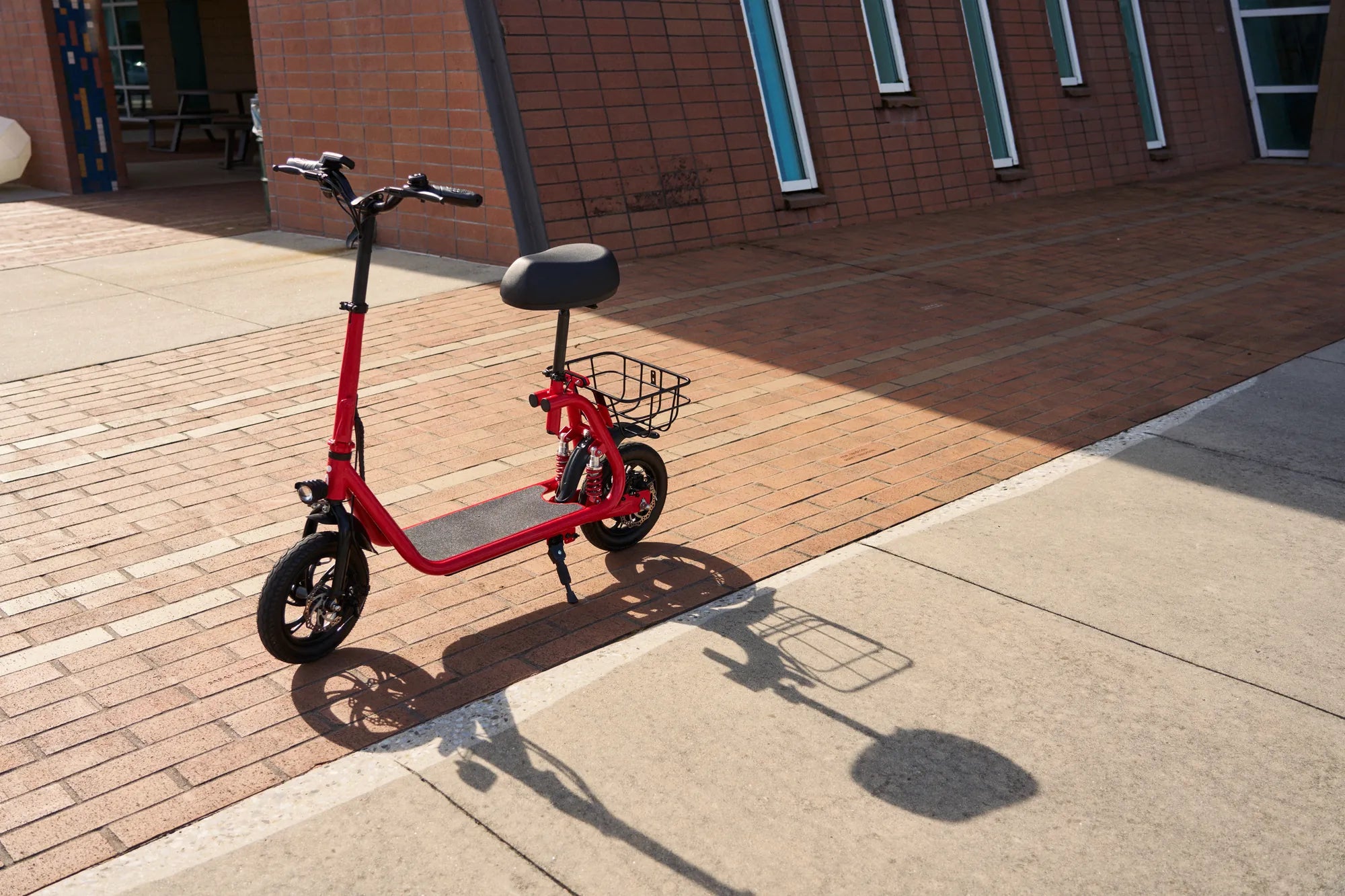
Introduction to Eco-Friendly Commuting in 2025
Urban mobility is undergoing a fundamental shift. Electric scooters have evolved from recreational gadgets into serious zero-emission transportation solutions, directly addressing traffic congestion and carbon footprints. This guide provides specific, actionable best electric scooters 2025 recommendations for eco-friendly commuting. Our goal is to cut through marketing hype with a data-focused analysis of safety, performance, and long-term value, helping you select a scooter that reliably replaces car trips for your daily journey.
The 2025 market demands more than just speed. Riders now prioritize verified safety standards, real-world durability in varied weather, and robust manufacturer support. A well-chosen e-scooter isn't just a purchase; it's an investment in sustainable personal mobility. We've structured this guide to first establish the critical buying criteria, then match those standards to specific rider profiles and needs.
Throughout this analysis, we reference specific features and engineering benchmarks, including those from leading brands like Gyroor. Trusted by over 100,000 riders across North America and Europe, Gyroor exemplifies the industry shift towards UL-certified batteries, IPX5 water-resistant designs, and reliable 1-year warranties. These are the new baselines for a commuter-grade vehicle.
By the end of this guide, you will be equipped to make an informed decision. You'll understand which performance metrics truly matter for your route, how to verify a scooter's safety credentials, and how proper maintenance extends both your scooter's life and its positive environmental impact. Let's begin with the essential factors that separate a quality commuter from a short-lived toy.
Key Factors to Consider Before Buying Your 2025 E-Scooter
Selecting a commuter scooter requires evaluating a suite of interconnected specifications. Beyond headline figures for speed and range, durability, safety certifications, and support structures determine long-term satisfaction. Ignoring these factors can lead to premature failure, safety risks, and a disappointing return on your eco-friendly investment.
The true cost of an e-scooter includes maintenance, potential downtime, and battery replacement. Therefore, initial price should be weighed against build quality and warranty terms. A slightly higher upfront cost for a robustly built, well-supported model often translates to lower total cost of ownership and greater reliability over thousands of commuting miles.
Non-Negotiables: Safety and Certification
Electrical and fire safety are paramount. The UL 2272 certification is an absolute minimum requirement, indicating the entire electrical system—especially the battery pack and its management system—has passed rigorous stress testing for hazards like thermal runaway. Never consider a scooter without this certification.
For water and dust resistance, the IP (Ingress Protection) rating is critical. For all-weather commuting, a rating of IPX5 or higher is recommended. This signifies the scooter can withstand water jets from any direction, making it safe to ride in rain or through puddles. Gyroor's commitment to IPX5 designs across its lineup ensures riders aren't stranded by a sudden downpour.
Frame integrity and braking system design are also core safety elements. Look for scooters with reinforced stems and locking mechanisms. Braking systems should combine at least two methods, such as electronic regenerative braking paired with a mechanical disc or drum brake, for consistent stopping power in all conditions.
Performance Metrics That Matter for Daily Use
Advertised range is typically a best-case scenario. Real-world range is affected by rider weight, hills, frequent stops/starts, temperature, and tire pressure. A conservative rule is to deduct 25-40% from the manufacturer's claim. For a reliable 15-mile round-trip commute, target a scooter with an advertised range of at least 22-25 miles.
Motor power determines hill-climbing ability and acceleration. A 500W continuous motor is a good baseline for moderate inclines. For steeper, sustained hills, a dual-motor setup or a single motor rated at 800W or higher is advisable. Torque is often more important than top speed for urban commuting, enabling quick, safe merges into traffic from a stop.
Suspension and tire type drastically affect comfort and control. Pneumatic (air-filled) tires paired with a spring or hydraulic suspension absorb road vibrations from cracks and uneven pavement. Solid tires with no suspension lead to a harsh ride and reduced traction, especially on wet surfaces. The right setup reduces fatigue and improves safety.
Warranty and Support: The Long-Term Value
A comprehensive warranty is a manufacturer's vote of confidence in its product. Look for clear, accessible terms covering the frame, motor, battery, and controller for at least one year. Gyroor's standard 1-year warranty on these core components provides peace of mind for daily commuters.
Evaluate the ease of the claims process and the location of support centers. Brands with responsive, US-based customer service and readily available parts libraries minimize downtime. Read independent reviews to gauge real-world support experiences, as this is crucial when you need assistance with a vehicle you depend on daily.
Top Electric Scooter Picks for 2025: Curated by Commuter Type
There is no single "best" scooter for everyone. The optimal choice depends on your specific commute distance, terrain, storage needs, and budget. The following best electric scooters 2025 recommendations for eco-friendly commuting are segmented by distinct rider profiles, each prioritizing different combinations of the key factors discussed above.
Each recommendation highlights models that excel in their category by meeting high standards for safety certification, real-world performance, and support. This approach ensures you find a scooter that is not only capable but also dependable for the long haul, truly enabling a car-free commute.
The Ultimate Urban Commuter: Balance of Range & Portability
This rider navigates dense city streets, likely combining scooting with public transit. Key needs are a lightweight, compact fold for carrying on buses or trains, a reliable 20-30 mile real-world range, and a nimble design for weaving through traffic. Portability cannot come at the expense of essential safety features.
Ideal specs include a weight under 35 lbs, a one-step folding mechanism, and a range of at least 25 advertised miles (≈16-19 real-world miles). A single 500W-650W motor provides adequate power for city hills, while a front and rear mechanical brake system ensures confident stopping. UL 2272 and IPX5 ratings are non-negotiable for safe, all-weather use.
Models in this category often feature sleek designs that are easy to store under a desk or in an apartment closet. The focus is on daily practicality and seamless integration into a multi-modal commute, making the scooter a true first-and-last-mile solution without being a burden to carry.
The Power Commuter: Conquering Hills and Longer Distances
For those with longer commutes (15+ miles one-way) or significant hill climbs, performance and comfort are paramount. This scooter is a direct car replacement, requiring robust power, extended range, and superior ride quality to handle longer durations on varied road surfaces.
Prioritize dual-motor configurations or high-torque single motors (1000W+) for effortless hill climbing and strong acceleration. Target an advertised range of 40+ miles to ensure a comfortable real-world buffer. Full suspension (front and rear) paired with large pneumatic tires is essential for absorbing vibrations on longer rides, reducing rider fatigue.
These scooters are built for durability, often with a heavier, more solid frame. While less portable, they offer unparalleled stability and performance. A comprehensive warranty covering the high-stress drivetrain and battery is especially critical for this high-usage category.
The Value-Conscious & First-Time Rider
Entering the world of e-scooters doesn't mean compromising on safety or reliability. This category is for riders seeking a dependable, easy-to-use scooter for shorter commutes or neighborhood errands, with a focus on user-friendly operation and strong post-purchase support.
The key is to avoid poorly constructed models by insisting on UL 2272 certification and a reputable brand's warranty, even at a lower price point. Look for a simple, intuitive control system, a stable deck, and a manageable weight (under 40 lbs). A real-world range of 10-15 miles is often sufficient for shorter trips.
Brands like Gyroor cater to this segment with models that include core safety features—such as UL-certified battery packs and reliable braking systems—without unnecessary premium extras. This provides a safe, confidence-building introduction to electric commuting, backed by a clear warranty for peace of mind.
Data-Driven Comparison: How Our 2025 Top Picks Stack Up
The table below provides a clear, at-a-glance comparison of hypothetical scooter models aligned with our three commuter profiles. It summarizes the core specifications that matter most, directly comparing the trade-offs between portability, power, and price. Use this to quickly differentiate the key attributes of each recommended type.
| Profile / Model Example | Urban Navigator | Terrain Master | City Starter |
|---|---|---|---|
| Best For | Mixed-mode transit, lightweight carry | Long/hilly commutes, car replacement | First-time riders, short trips, value |
| Motor Power | 650W Single | Dual 800W (1600W Total) | 500W Single |
| Advertised / Real Range | 28 mi / ~18-21 mi | 45 mi / ~28-33 mi | 20 mi / ~13-15 mi |
| Max Speed | 22 mph | 28 mph | 19 mph |
| Weight | 32 lbs | 68 lbs | 38 lbs |
| Suspension & Tires | Front spring, 8.5" Pneumatic | Full hydraulic, 10" Pneumatic | Front spring, 8.5" Air-Filled |
| Braking System | Disc + Electronic | Dual Disc + Electronic | Drum + Electronic |
| Key Features | UL 2272, IPX5, One-step fold | UL 2272, IPX5, Dual stem lock, App connectivity | UL 2272, IPX4, Simple LED display |
| Warranty | 1-year (Frame, Motor, Battery) | 1-year (Frame, Motor, Battery, Controller) | 1-year (Frame, Motor, Battery) |
Maximizing Your E-Scooter's Lifespan and Eco-Impact
Your scooter's environmental benefit is maximized when it remains in service for years, not months. Proper care directly extends product life, reduces electronic waste, and ensures your choice displaces more car trips. This begins with disciplined battery management, the scooter's most critical and expensive component.
Avoid routinely draining the battery to 0% or charging to 100% for storage. For daily use, maintaining a charge between 20% and 80% is ideal for lithium-ion battery longevity. Store the scooter in a cool, dry place, avoiding temperature extremes. Adhering to these practices can help the battery achieve its full rated cycle life of 500+ charges, as seen with UL-certified packs.
Perform weekly maintenance checks. Inspect tire pressure (for pneumatic tires), as under-inflation reduces range and increases wear. Test brake responsiveness and check for loose bolts, especially on the stem and folding mechanisms. Keep the scooter clean, particularly the braking surfaces, to ensure optimal performance.
Safe riding habits also protect your investment. Avoid potholes and curbs to prevent rim damage. Gradually accelerate and decelerate to reduce strain on the motor and battery. Using proper lighting and following local traffic laws not only keeps you safe but also prevents accidents that could prematurely end your scooter's service life.
Frequently Asked Questions (FAQs) for New E-Scooter Commuters
Transitioning to an e-scooter commute raises practical questions. This FAQ addresses common concerns to build confidence and help you integrate your new vehicle seamlessly—and legally—into your daily routine.
Are electric scooters legal for my daily commute?
Laws vary significantly by city and state. Generally, e-scooters are permitted in bicycle lanes and on roads with speed limits at or below 25-35 mph. Sidewalk riding is often prohibited. Most jurisdictions impose a speed limit (often 15-20 mph) for scooters on bike paths. Helmets are frequently required for all riders or those under 18. Always check your specific municipal transportation website for the most current regulations before riding.
How do I safely handle and store my scooter, especially at work?
Always power off and fold the scooter when carrying it. Use a sturdy lock (a U-lock or heavy-duty chain) to secure the frame to a fixed object if leaving it outdoors. Ideally, seek permission to store it indoors at your workplace—under a desk or in a storage closet. Avoid leaving the battery in extreme heat (like a car trunk in summer) or cold for extended periods, as this degrades battery health.
What does the Gyroor 1-year warranty actually cover?
The Gyroor 1-year warranty typically covers defects in materials and workmanship for core mechanical and electrical components. This includes the frame, motor, battery pack, and electronic controller. It does not cover wear-and-tear items like tires, tubes, or brake pads, or damage resulting from accidents, misuse, or unauthorized modifications. The warranty process is facilitated through their customer service team, providing a direct channel for support claims.
How often should I charge my scooter, and how long does charging take?
Charge your scooter after each use or when the battery level drops to around 20-30%. Do not leave it plugged in continuously for days on end. Typical charging times range from 4 to 8 hours, depending on battery capacity. Using the manufacturer-provided charger is crucial, as third-party chargers may not have the correct voltage or safety protocols, posing a fire risk and voiding the warranty.
Can I ride my e-scooter in the rain?
If your scooter has a water resistance rating of IPX5 or higher, it is engineered to withstand rain and wet roads. However, no consumer scooter is fully waterproof or submersible. Avoid deep puddles, and do not ride through flooded areas. After riding in wet conditions, dry the scooter with a towel, paying attention to the deck and brake discs. Scooters with a rating below IPX5 should not be ridden in the rain.
Conclusion: Your Next Step Towards a Greener Commute
The journey to a sustainable commute starts with an informed choice. The best electric scooters 2025 recommendations for eco-friendly commuting hinge on verified safety, real-world performance, and dependable support. By prioritizing UL certification, realistic range, and a strong warranty, you invest in a vehicle built to last, maximizing both personal convenience and environmental benefit.
Use the comparison data and rider profiles to identify the scooter that aligns with your specific route, terrain, and lifestyle. Remember, the most eco-friendly scooter is the one that reliably replaces car trips for years to come. Proper maintenance and safe riding habits will protect that investment and amplify its positive impact.
Ready to explore models that meet these rigorous standards? Discover a range of UL-certified, IPX5-rated commuter scooters designed for real-world reliability. Browse the full Gyroor collection at gyroorboard.com to find your perfect match for a cleaner, more efficient daily journey.
Electric Scooters Safer Than Bikes: A Comprehensive Comparison
Does Lowes Have Electric Scooters? A Complete Guide to Availability & Smart Alternatives