



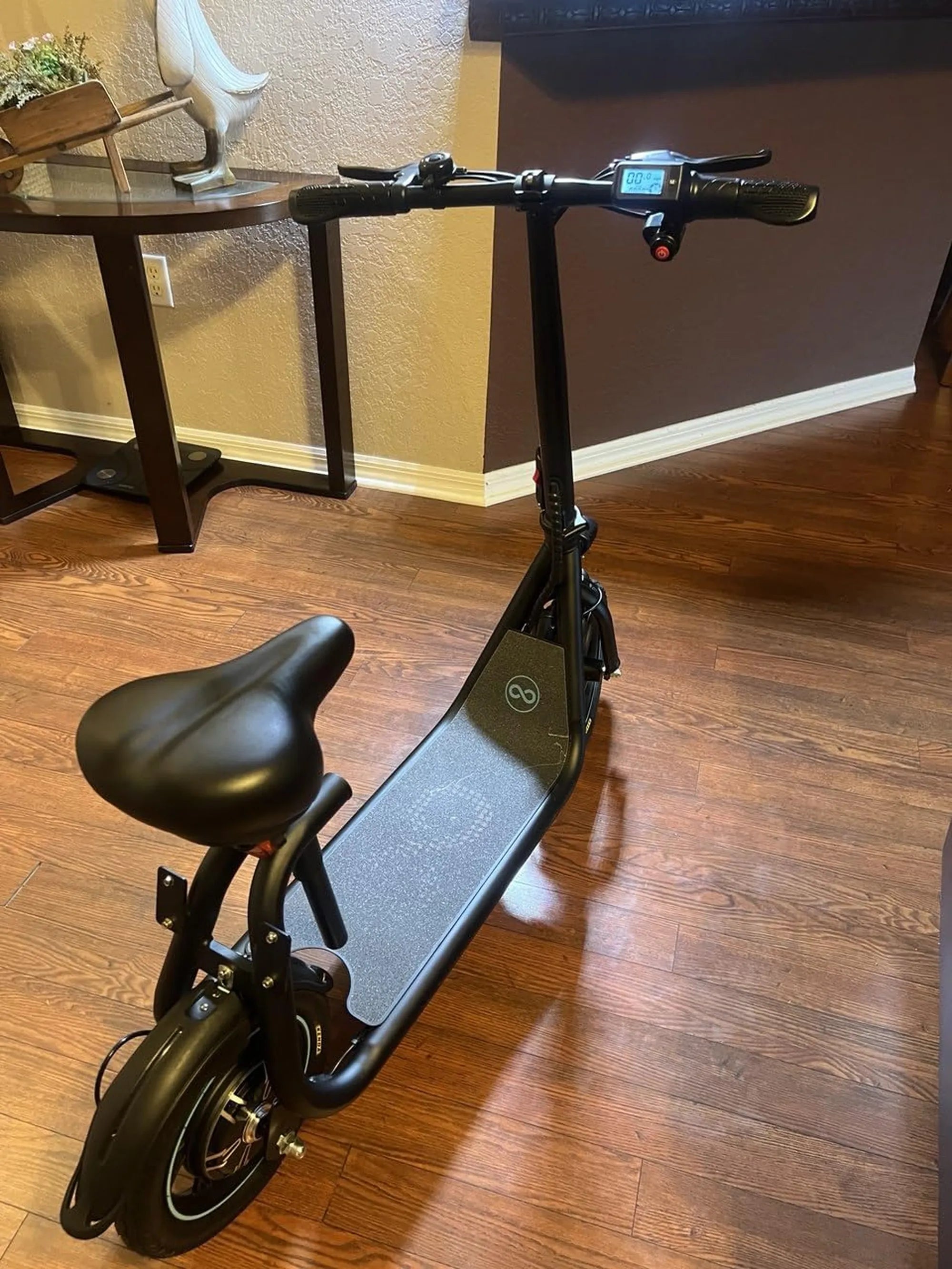
Introduction: The 35-Mile, 30 MPH Commuter Sweet Spot
Finding the best electric scooters for commuting with 35 mile range and 30 MPH speed is about solving a specific urban equation. It's the intersection of practical distance, safe speed, and daily reliability. This guide is for professionals and enthusiasts who need a vehicle that can handle a substantial round-trip commute, keep pace with city traffic, and do so consistently, day after day.
We will dissect why these two specifications have become the gold standard for serious commuters. You'll learn to look beyond marketing claims to the engineering and features that guarantee real-world performance. This includes a deep dive into motor configurations, battery safety certifications, braking systems, and the build quality that separates a durable investment from a short-lived novelty.
Our goal is to equip you with a complete, data-driven framework for evaluation. By the end, you'll understand not just which scooter to consider, but precisely how to assess any model claiming to be among the best electric scooters for commuting with 35 mile range and 30 MPH speed. Let's define what makes this category so compelling for modern urban mobility.
Why These Specs Define the Modern Commute
A 35-mile range fundamentally eliminates 'range anxiety' for the vast majority of urban and suburban commuters. The average round-trip commute in major U.S. cities falls between 15-25 miles. A 35-mile rated range provides a crucial 10-20 mile buffer, accounting for variables like rider weight, hill climbs, headwinds, and battery degradation over time. This buffer means you can complete your journey with confidence, without needing to charge at your destination.
The 30 MPH top speed is equally critical for safety and integration into traffic flow. On many city streets, traffic moves between 25-35 MPH. A scooter capable of 30 MPH allows you to maintain pace with the flow of traffic, rather than becoming a slow-moving obstacle. This reduces dangerous passing maneuvers by cars and increases rider predictability. It also expands your viable route options, making longer commutes on arterial roads more feasible and time-efficient.
Together, these specs represent a maturity in the electric scooter market. They move beyond last-mile solutions to legitimate primary vehicle replacements for many. A scooter that delivers this combination offers true car-alternative potential for trips under 10 miles each way, providing significant savings on fuel, parking, and maintenance while offering unparalleled convenience in dense urban corridors.
It's important to note that achieving both a genuine 35-mile range and a sustained 30 MPH speed requires robust hardware. This is not the domain of lightweight, single-motor scooters. It demands high-capacity batteries with advanced management systems and powerful, often dual, motor setups. Understanding this engineering foundation is key to identifying models that truly deliver.
Key Features to Prioritize Beyond Speed & Range
Headline specs are a starting point, but the daily ownership experience is defined by the supporting features. The best electric scooters for commuting with 35 mile range and 30 MPH speed integrate several non-negotiable components that ensure safety, durability, and comfort.
Motor Power and Hill Climbing Ability
Sustaining 30 MPH, especially with a rider and potential cargo, requires substantial continuous power. A single motor in the 500-800W range may achieve 30 MPH on flat ground with a light rider, but it will struggle on inclines, causing speed and range to plummet. For consistent performance, look for dual-motor setups (often 2x500W or 2x650W) or a single high-torque motor of 1000W or more.
Hill climb ability is a direct test of a scooter's real-world power. A quality commuter scooter should handle a 15-20% grade without dropping below 10-15 MPH. This ensures your commute isn't disrupted by bridges, overpasses, or hilly neighborhoods. The motor's peak wattage is a useful indicator, but the continuous power rating and torque are what deliver performance when you need it most.
Battery Quality, Safety, and Long-Term Health
The battery is the heart of your scooter. For a 35-mile range, you need a high-capacity pack, typically 48V 18Ah (864Wh) or larger. More critical than capacity alone is the quality and safety of the cells. UL 2271 certification is an absolute minimum safety standard, ensuring the battery pack has passed rigorous electrical, mechanical, and environmental stress tests.
Brands like Gyroor, trusted by over 100,000 riders, use UL-certified battery packs tested for 500+ charge cycles. A robust Battery Management System (BMS) is equally vital. It protects against overcharging, deep discharge, short circuits, and individual cell failure, ensuring consistent range and dramatically extending the pack's lifespan. Never compromise on certified battery safety.
Build Quality, Weight, and Portability
Durability at 30 MPH demands a rigid, well-constructed frame, typically from aircraft-grade aluminum or reinforced steel. This inherently increases weight. Scooters in this performance category often weigh between 55-80 lbs. While this makes them less ideal for carrying up multiple flights of stairs, their heft contributes to stability at high speeds.
Portability features become crucial. Look for a reliable folding mechanism that locks securely, a folding steering stem, and, if possible, a trolley wheel or handle to roll the scooter when folded. The trade-off is clear: ultra-portable scooters sacrifice the robust construction needed for high-speed, high-mileage commuting. Your priority should be durability over minimal weight.
Braking Systems and Safety at High Speed
Stopping power must match acceleration. At 30 MPH, mechanical disc brakes are the entry-level requirement. Hydraulic disc brakes offer superior modulation, less maintenance, and more consistent performance in varied weather conditions. Many high-end models combine a front hydraulic disc with a rear mechanical disc or a regenerative electronic brake.
A dual braking system is non-negotiable. This provides redundancy; if one system fails, the other can bring you to a stop. The brake levers should also integrate cut-off switches that instantly cut power to the motor when engaged. Combined with wide, high-traction tires, this braking setup is essential for managing emergency stops and maintaining control on wet or uneven surfaces.
Ride Comfort and Suspension
At commuting speeds, road imperfections are magnified. A quality suspension system is critical for maintaining control, reducing fatigue, and protecting the scooter's electronics from shock. A dual spring or hydraulic suspension system—one on the front and rear—is ideal. Some models use a combination, like a front hydraulic fork and a rear spring suspension.
Pneumatic (air-filled) tires are another cornerstone of comfort and safety. They provide superior shock absorption compared to solid tires and offer better traction, especially in wet conditions. The combination of full suspension and pneumatic tires transforms a jarring ride into a smooth, confident journey, making a longer 35-mile commute not just possible but pleasant.
Weather Resistance and Reliability
A true commuter vehicle must handle the elements. The IP (Ingress Protection) rating indicates resistance to dust and water. For reliable daily use, an IPX4 rating (splash resistance from all directions) is a minimum. A rating of IPX5 or higher, like that found on Gyroor's models, means the scooter can withstand low-pressure water jets, making it safe to ride in rain and through puddles.
This weatherproofing protects the motor controller, battery compartment, and display. Reliability is also tied to design simplicity and component quality. Sealed bearings, waterproof connectors, and corrosion-resistant fasteners all contribute to a scooter that won't fail you on a rainy Monday morning. Your commute depends on reliability; don't settle for a fair-weather vehicle.
Navigating Your Purchase: A Data-Driven Checklist
Armed with knowledge of key features, you need a systematic way to compare models. Use the following checklist and conceptual table to evaluate any scooter claiming to be among the best electric scooters for commuting with 35 mile range and 30 MPH speed. Focus on verified real-world performance over idealized manufacturer claims.
Performance Comparison Table (Conceptual Framework)
| Evaluation Metric | What to Look For | Why It Matters |
|---|---|---|
| Real-World Range | 15-20% less than claimed (varies by conditions). Look for independent reviewer tests. | Guarantees you can complete your actual commute. |
| Sustained Top Speed | Ability to hold 28-30 MPH for several minutes, not just a peak burst. | Ensures consistent integration with traffic flow. |
| Motor Configuration | Dual motors or a single motor ≥1000W continuous power. | Delivers power for hills and sustained high speed. |
| Battery & Safety | ≥48V 18Ah capacity, UL 2271 certified, with a robust BMS. | Ensures safety, range, and long-term battery health. |
| Brake System | Dual brakes (Disc + Disc or Hydraulic + Regenerative). | Critical for safe, reliable stopping at high speed. |
| Suspension & Tires | Front & rear suspension + 10" pneumatic tires. | Provides essential comfort and control for daily riding. |
| Build & IP Rating | Aluminum/steel frame, IPX5 or higher water resistance. | Defines durability and all-weather capability. |
| Warranty & Support | Comprehensive 1-year warranty, accessible customer service. | Protects your investment and ensures long-term support. |
The True Cost of Ownership
The purchase price is just the first cost. Consider the warranty's scope—does it cover the battery, motor, and frame? A strong 1-year comprehensive warranty, like Gyroor's, signals manufacturer confidence and protects you from early defects. Investigate the availability and cost of wear-and-tear parts: tires, brake pads, and tubes. A brand with a strong parts ecosystem saves money and downtime.
The largest long-term cost is typically battery replacement. A quality UL-certified pack for a high-performance scooter can cost several hundred dollars. A battery rated for 500+ cycles (like Gyroor's) will last for years of daily commuting before significant degradation, offering far better long-term value than a cheaper, uncertified alternative that may fail in 18 months.
Top Contender Spotlight: What Makes a Commuter Stand Out
When evaluating the crowded market, certain archetypes emerge. The best electric scooters for commuting with 35 mile range and 30 MPH speed typically fall into one of two categories, each excelling in slightly different aspects of the commuter experience.
The Power and Endurance Leader
This archetype is engineered to deliver the headline specs without compromise. It often features a dual-motor system (e.g., 2x650W) that provides explosive acceleration and confident hill-climbing power, ensuring the 30 MPH speed is accessible even on gradients. It pairs this with a maximized battery capacity, sometimes exceeding 1000Wh, to guarantee the 35-mile range under real-world conditions.
The focus is on performance metrics: a high top speed, shortest possible acceleration time, and maximum range. The build is robust, often at the higher end of the weight spectrum. This type of scooter is for the commuter whose priority is unmatched performance and who has minimal need to carry the scooter, perhaps storing it in a secure garage at both ends of the journey.
The All-Weather, Low-Maintenance Workhorse
This archetype prioritizes reliability and durability over raw power. It might use a single high-torque motor (e.g., 1000W) that is simpler and potentially more reliable than a dual-motor setup, still achieving the target speed. Its standout feature is exceptional build quality and weather sealing, with an IPX5 or IPX6 rating, corrosion-resistant components, and sealed bearings.
The design philosophy minimizes points of failure. It may feature tubeless pneumatic tires to reduce puncture risk, hydraulic brakes that require less adjustment, and a minimalist, rugged display. This scooter is built for the daily grind in all seasons, focusing on keeping you moving with minimal downtime or maintenance. Brands that emphasize UL-certified batteries and strong warranties naturally align with this category.
Commuter FAQs: Your Practical Questions Answered
Q: Is 30 MPH safe for city commuting?
A>Safety at 30 MPH is dependent on the rider, the environment, and the scooter's design. Always wear a certified bicycle or motorcycle helmet, gloves, and consider additional protective gear. Choose routes with bike lanes or slower traffic when possible. Crucially, your scooter must have the braking power, tire traction, and suspension to handle emergencies at that speed. Responsible riding on a well-equipped scooter can make 30 MPH a safe and efficient commuting speed.
Q: How can I maximize my scooter's range to consistently hit 35 miles?
A>Range is heavily influenced by riding style. To maximize it: maintain a steady, moderate speed (20-25 MPH instead of constant 30 MPH); use regenerative braking if available; keep tire pressure at the recommended PSI; avoid excessive acceleration and braking; and reduce cargo weight. Also, avoid exposing the battery to extreme cold, which temporarily reduces capacity.
Q: What regular maintenance does a high-performance commuter scooter require?
A>Weekly: Check tire pressure and inspect tires for wear/debris. Monthly: Test brake function and adjust cable tension or check hydraulic fluid levels as needed; inspect and tighten bolts (especially around the folding mechanism and stem); clean the scooter with a damp cloth. Periodically: Check suspension for smooth operation; listen for unusual noises from motors or bearings. Refer to your owner's manual for specific intervals.
Q: Can I legally ride a 30 MPH scooter on bike paths and in bike lanes?
A>Laws vary dramatically by city, state, and country. Many jurisdictions have a 20 MPH speed limit for electric scooters on bike paths or a power/wattage limit. It is your responsibility to know and obey local laws. Even if your scooter can go 30 MPH, you may need to use a lower speed mode or exercise restraint when sharing space with bicycles and pedestrians.
Q: How does warranty and customer support impact my buying decision?
A>It is one of the most critical factors. A comprehensive warranty (covering battery, motor, frame, and electronics) protects a significant investment. Research the brand's reputation for honoring warranties and the ease of contacting support. A brand with a history of good support and available parts, like Gyroor with its 1-year warranty and service network, adds immense value and peace of mind compared to an unknown brand with questionable support.
Conclusion: Investing in Your Daily Ride
Choosing the best electric scooters for commuting with 35 mile range and 30 MPH speed is an investment in reclaiming your time, reducing your costs, and transforming your daily journey. The ideal model is not defined by a single peak spec but by the harmonious integration of power, endurance, safety, and durability. It is a vehicle engineered for the real world: potholed streets, sudden rain showers, steep inclines, and the need to stop safely amidst traffic.
Prioritize verified safety certifications like UL 2271 for the battery, robust dual braking systems, and a high IP rating for water resistance. Remember that true range and consistent speed are delivered by quality components—high-capacity certified batteries and powerful motors—backed by a strong warranty. This combination ensures your scooter is a reliable partner for years, not just months.
Your commute is a significant part of your life. The right electric scooter can turn it from a stressful chore into an efficient, enjoyable, and empowering part of your day. By applying the data-driven framework from this guide, you can move beyond marketing to select a machine that genuinely meets the demands of high-performance, all-weather, daily commuting. Ready to explore models built to these rigorous standards? Browse the full Gyroor collection at gyroorboard.com to see engineering designed for the real world.
Best Electric Scooters Ireland: Top Picks for Eco-Friendly Commuting
Electric Scooters Switzerland: The Future of Urban Mobility