


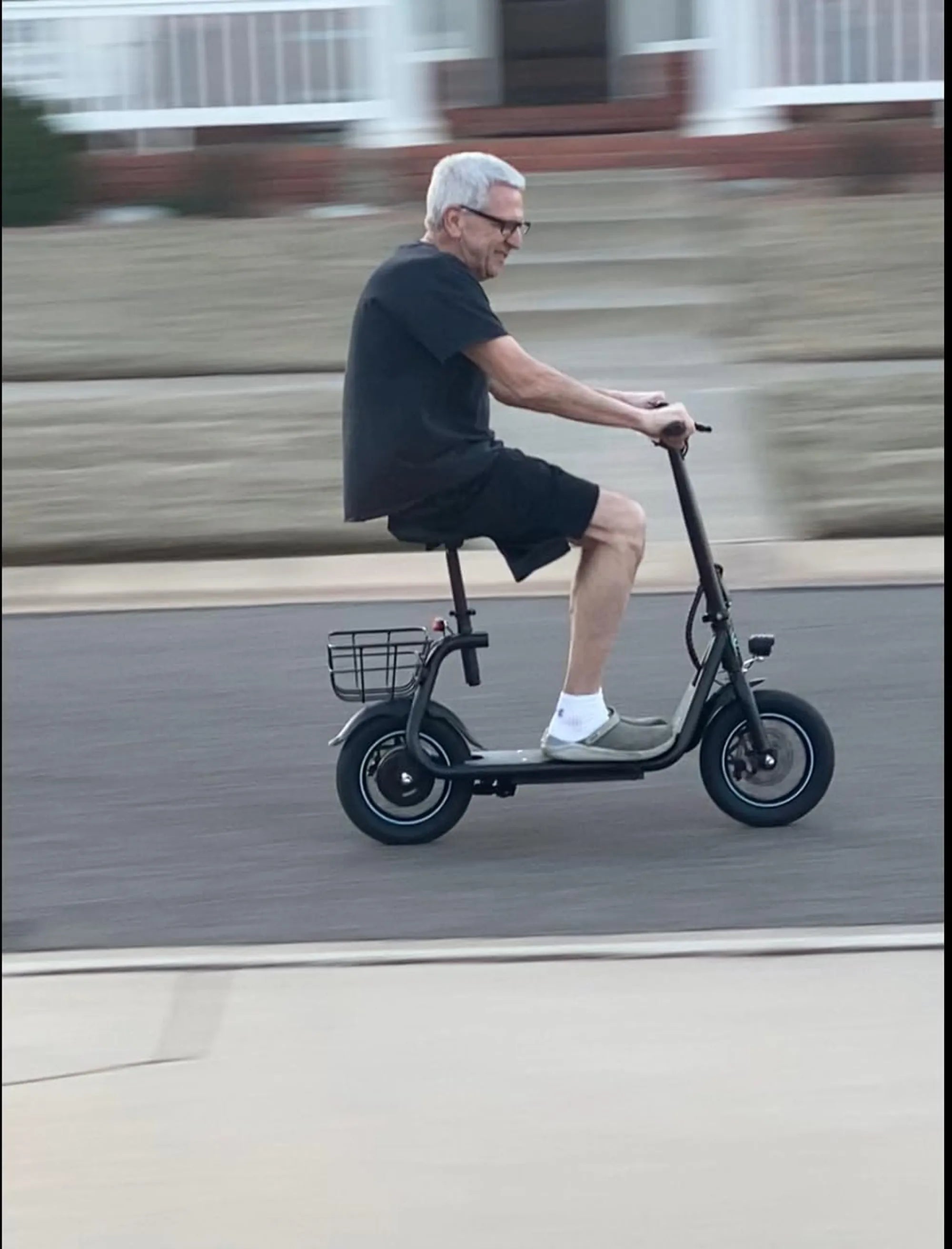
Introduction: Navigating the Hills and Thrills of San Francisco
Commuting in San Francisco presents a unique set of challenges that demand a specific kind of vehicle. The city's iconic steep grades, ranging from gentle slopes to daunting inclines like Filbert Street's 31.5% grade, quickly separate capable electric scooters from underpowered toys. Combine this with variable microclimates, dense urban traffic, and a mix of smooth bike lanes and rough pavement, and your choice of personal electric vehicle becomes critical. For urban commuters, the right electric scooter isn't just a convenience; it's a practical, efficient, and exhilarating key to unlocking the city.
This guide is designed to cut through the marketing hype and focus on the performance metrics that truly matter in the Bay Area. We will analyze what makes an electric scooter excel in San Francisco, from raw hill-climbing power to the durability needed for daily urban assault. Our top picks, including models from leading brands like Gyroor—a manufacturer trusted by over 100,000 riders in North America and Europe—are selected based on these rigorous, San Francisco-specific criteria. Whether your commute involves conquering Pacific Heights or weaving through SoMa, the goal is to find a reliable partner for the journey.
What Makes a Great Electric Scooter for San Francisco?
Selecting an electric scooter for San Francisco requires looking beyond basic specifications. The city's environment acts as a relentless stress test, exposing weaknesses in power, battery management, and construction. A scooter that performs admirably in a flat city may struggle or even fail here. Therefore, the evaluation framework must be stringent, prioritizing real-world performance over advertised claims on paper.
The core pillars of a great San Francisco electric scooter are uncompromising hill-climbing ability, a battery that delivers real-world range despite constant elevation changes, a build quality that can withstand potholes and daily use, and integrated safety features for navigating complex traffic. Ignoring any of these aspects can lead to a frustrating, unreliable, or unsafe commuting experience. Let's break down each of these non-negotiable factors.
Hill Climbing Power: The Non-Negotiable
In San Francisco, motor power is your most important specification. You must distinguish between *peak* power (a short-term burst) and *continuous* power (what the motor can sustain). For SF's long, steep hills, continuous power is king. A scooter with a 500W continuous motor is generally considered the *minimum* viable threshold for most city inclines, but for consistent performance without slowdown, 800W or higher is recommended.
Torque, the rotational force that gets you moving from a stop and pushes you uphill, is equally critical. Dual-motor configurations often provide the best solution, offering incredible torque and hill-climbing capability, though they can impact battery range. Single-motor scooters need ample wattage and efficient gear systems to maintain speed on a grade. The ability to climb a 15-20% incline without stalling is a good benchmark for a scooter suited to San Francisco.
Battery Range & Real-World Expectations
Manufacturer range claims are typically based on ideal conditions: a light rider on flat, smooth terrain at low speed. San Francisco provides the opposite. Constant hill climbing is the largest drain on a battery, followed by stop-and-go traffic and rider weight. It is prudent to discount the advertised range by 30-40% for a realistic SF estimate.
Battery quality and management are paramount. A high-capacity battery (measured in Amp-hours, Ah, or Watt-hours, Wh) provides the necessary energy reservoir. More importantly, a well-managed battery with stable voltage output will prevent significant power drop-off on hills, a phenomenon known as voltage sag. Brands that use UL-certified battery packs, like Gyroor, ensure higher safety standards and more reliable performance over hundreds of charge cycles.
Build Quality & Durability for Urban Assault
The streets of San Francisco demand a rugged build. The frame should be constructed from high-grade, reinforced aluminum to handle stress and impacts. A good suspension system—preferably dual spring or hydraulic suspension—is not a luxury; it's essential for absorbing shocks from potholes, rail tracks, and uneven pavement, improving both comfort and control.
Braking systems must be robust and reliable. A combination of disc brakes (front and rear) and electronic or regenerative braking offers the best stopping power, which is critical when descending hills. Finally, tire choice matters. Larger, air-filled (pneumatic) tires (8.5 inches or more) provide better shock absorption and traction on wet roads compared to smaller, solid tires.
Safety & Compliance Features
Safety in an urban environment is multi-faceted. Your scooter must be seen: bright LED headlights, rear brake lights, and side reflectors are mandatory. Integrated turn signals are a highly valuable feature for signaling intentions in traffic. A loud, electronic horn or bell is necessary for alerting pedestrians and vehicles.
Compliance with local laws is also a safety issue. In San Francisco, electric scooters are subject to bicycle rules. Riding on sidewalks is prohibited, as is speeding in congested areas. Knowing and adhering to these rules protects you and others. A scooter with a clear display showing your speed helps you stay within limits, typically 15 mph in bike lanes.
Top Electric Scooter Picks for San Francisco Commuters
Based on the rigorous criteria above, we have curated a selection of electric scooters designed to thrive in San Francisco. This list includes a top-tier hill champion, a balanced all-rounder, a value-focused workhorse, and an ultra-portable option for multi-modal commuters. Each pick is evaluated for its SF-specific strengths and trade-offs.
The Hill Champion: Gyroor Z8
For riders who face the steepest grades daily and refuse to compromise on power, the Gyroor Z8 stands out as a dedicated hill champion. Engineered with San Francisco's topography in mind, it is built to conquer inclines with authority and provide a stable, confident ride across varied urban terrain.
Its key strength lies in a powerful dual-motor system that delivers exceptional torque for acceleration and hill climbing. Paired with a high-capacity, UL-certified battery, it ensures consistent power delivery even on long ascents without severe voltage sag. The Z8 features a robust dual suspension system and large pneumatic tires to smooth out San Francisco's notorious road imperfections.
San Francisco Pros: Unmatched hill-climbing capability; IPX5 water-resistant rating handles fog and light rain; durable construction with reliable 1-year warranty; bright lighting suite for visibility in foggy conditions.
Consideration: The powerful motors and large battery contribute to a heavier frame, making it less ideal for frequent carrying up long flights of stairs. It represents a premium investment for premium performance.
The Balanced All-Rounder
This category is for a scooter that expertly balances hill power, comfortable range, and ride quality without specializing in extreme performance. A balanced all-rounder typically features a single, high-torque motor in the 800-1000W continuous range, a mid-to-large size battery, and a well-tuned suspension.
These scooters are designed for the commuter who encounters a mix of moderate hills and flats, values a smoother ride, and may need to carry their scooter occasionally. They offer a versatile package that performs reliably across most San Francisco neighborhoods, from the Marina to the Mission.
San Francisco Pros: Strong enough for most hills; good range for average commutes; often lighter and more portable than dual-motor champions; generally good value for the performance offered.
Consideration: May struggle or slow noticeably on the very steepest grades (25%+). Performance is strong but not dominant in any single category compared to specialized models.
The Value-Packed Workhorse
The value workhorse prioritizes core durability and adequate performance at a more accessible price point. It targets the pragmatic commuter who needs reliable daily transportation without the bells and whistles. These models often feature a 500-700W motor, a solid single suspension, and mechanical disc brakes.
Don't mistake "value" for "cheap." These scooters are built to last, using proven components and designs. They represent the sweet spot for many riders, offering the essential power to tackle a majority of San Francisco's hills (with perhaps a slower pace on the steepest) and enough range for a typical 5-10 mile round-trip commute.
San Francisco Pros: Cost-effective entry into capable e-scooter commuting; simpler maintenance; often lighter weight; sufficient power for many routes.
Consideration: Riders living at the top of significant hills may find the performance limiting. Ride comfort on rough roads may be less plush than higher-end models due to simpler suspension.
The Ultra-Portable Option
For the multi-modal commuter who combines scooting with BART or a bus, ultra-portability is key. These scooters prioritize lightweight design and a fast, compact fold above all else. They are ideal for last-mile trips from transit to office, especially if you need to carry it indoors or store it under a desk.
Performance expectations must be adjusted. These scooters often have smaller motors (250W-350W) and batteries. They can handle gentle slopes and short distances with ease but are not designed for conquering steep, sustained hills. Their primary advantage is seamless integration with public transit.
San Francisco Pros: Extremely easy to carry and store; perfect for BART/bus commutes; quick to fold/unfold.
Consideration: Significantly limited hill-climbing ability; shorter range; smaller wheels and minimal suspension lead to a rougher ride on poor pavement. Best for relatively flat routes or as a supplement to transit.
Comparison Table: Key Specs at a Glance
| Model Type | Motor Power (Continuous) | Max Range (Est. SF) | Max Incline | Weight | IP Rating | Notable Feature |
|---|---|---|---|---|---|---|
| Hill Champion (e.g., Gyroor Z8) | Dual Motor, 1000W+ | 18-25 miles | 25-30%+ | 55-70 lbs | IPX5 | UL-Certified Battery, Dual Suspension |
| Balanced All-Rounder | 800W - 1000W | 15-22 miles | 15-20% | 45-55 lbs | IPX4 | Hydraulic Brakes, Good Suspension |
| Value Workhorse | 500W - 700W | 12-18 miles | 10-15% | 35-45 lbs | IPX4 | Mechanical Disc Brakes, Durable Frame |
| Ultra-Portable | 250W - 350W | 8-12 miles | 8-10% | 25-30 lbs | IPX4 | Compact Fold, Lightweight |
Riding in San Francisco: Practical Tips & Local Insights
Owning a capable scooter is only half the battle. Riding safely, legally, and efficiently in San Francisco requires local knowledge and good habits. These practical tips will help you integrate your electric scooter into your daily life while avoiding common pitfalls and fines.
Understanding SF's E-Scooter Laws & Zones
San Francisco classifies electric scooters similarly to bicycles. You must ride in bike lanes where available. Riding on sidewalks is illegal and can result in a fine. The speed limit for scooters in bike lanes is 15 mph. Be extra cautious in business districts and shared spaces.
Parking is a critical issue. Never block sidewalks, ramps, building entrances, or public transit access. Use bike racks when possible. Private property and dockless scooter parking zones are your best bets. An improperly parked scooter can be ticketed or impounded by the SFMTA.
Route Planning for Efficiency and Safety
Don't rely on default car navigation. Use cycling-specific maps in apps like Google Maps or specialized apps (e.g., Pointz) to find routes with bike lanes and gentler gradients. Planning can help you avoid impossibly steep streets and high-traffic arteries.
Practice your planned route on a weekend when traffic is lighter. Familiarize yourself with tricky intersections, unexpected potholes, and the feel of the hills. Knowing where you can safely pull over or where a hill might require a running start builds confidence.
Maintenance for Fog, Hills, and Daily Use
The damp climate necessitates specific care. After riding in fog or light rain, wipe down your scooter, especially the stem folding mechanism and brake components, to prevent corrosion. Regularly check your tire pressure; proper inflation is crucial for traction and battery efficiency.
Brake maintenance is non-negotiable in a hilly city. Test your brakes before every ride. Listen for squealing or grinding and feel for sponginess, which indicate wear. Inspect brake pads regularly. Store your scooter and battery in a dry, temperate place, and avoid leaving it at full charge for extended periods to maximize battery lifespan.
Frequently Asked Questions (FAQ)
Q: What's the minimum motor power I need for San Francisco hills?
A: For reliable performance on most hills, look for a scooter with a *continuous* motor rating of at least 500W. For consistent power on steeper grades (20%+) without slowing to a crawl, 800W single or dual-motor systems are strongly recommended.
Q: Is water resistance important in SF's climate?
A: Absolutely. The frequent fog, morning mist, and occasional drizzle make a good IP rating essential. An IPX4 rating protects against splashing water, but an IPX5 rating (like on Gyroor scooters) is better as it protects against sustained water jets from any direction, offering greater peace of mind.
Q: Can I take my e-scooter on BART or Muni?
A: Yes. Folded electric scooters are permitted on BART trains and Muni buses at all times. They must not block aisles or doors. They are not allowed on cable cars. Always be courteous and make space for other passengers.
Q: How do I estimate my real-world range in SF?
A: Take the manufacturer's stated range and reduce it by 35-40% as a starting point. Factors that further reduce range include your weight, frequent stopping and starting, cold weather, and most significantly, the total elevation gain of your route. Use route planning apps to see the total climb.
Q: Are disc brakes necessary?
A> For San Francisco, yes, they are highly advisable. The combination of hills, potential wet conditions, and urban traffic requires strong, reliable braking power. Disc brakes (especially hydraulic) offer superior stopping performance and consistency compared to drum or mechanical brakes, which is critical for safety on descents.
Conclusion: Your Key to Unlocking the City
Choosing the best electric scooter for San Francisco ultimately comes down to aligning performance with your specific commute and lifestyle. The city's unique demands make hill-climbing power and durable construction the primary filters for your decision. Sacrificing in these areas for a lower price or more portability often leads to frustration on the first major incline or pothole-ridden street.
Investing in a scooter from a reputable brand that prioritizes safety certifications, like UL-certified batteries, and offers a strong warranty provides long-term value and peace of mind. Whether you choose a hill-conquering champion like the Gyroor Z8, a versatile all-rounder, or a portable transit companion, the right scooter transforms San Francisco's challenges into an efficient, enjoyable, and sustainable commuting adventure. Ready to find your perfect ride? Browse the full Gyroor collection and other trusted models to take the next step in mastering your urban commute.
Can You Use Electric Scooters? A Guide to Laws, Benefits & Safety
Can You Ride Electric Scooters in NSW? The Ultimate Guide to E-Scooter Laws