


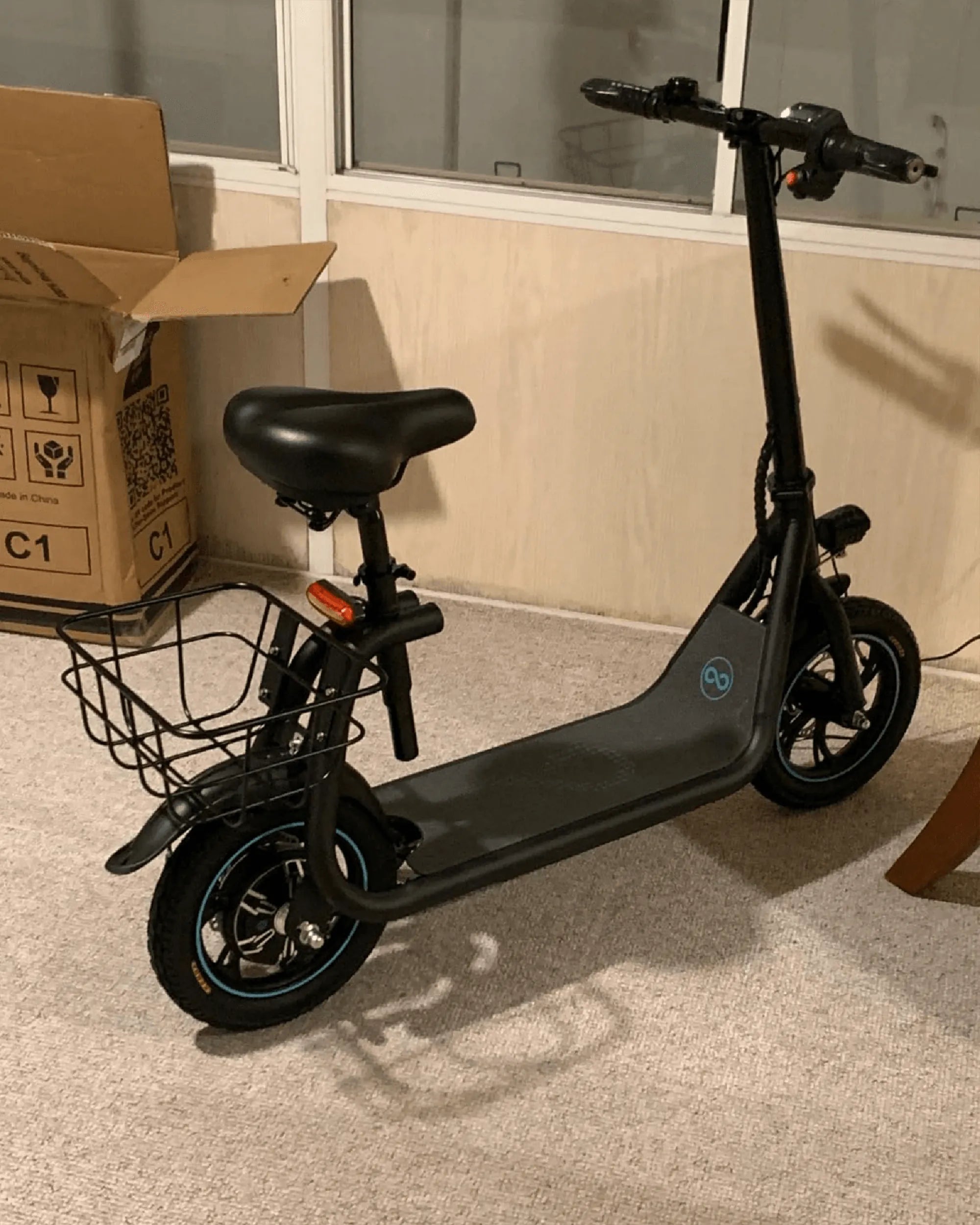
Introduction: Unlocking True Commuting Freedom with Swappable Power
For urban commuters, the electric scooter's greatest limitation has often been its fixed battery. Being tethered to a charging outlet restricts range, complicates storage, and accelerates battery degradation. The solution is clear: the best electric scooters with removable battery systems. This feature isn't just a convenience; it's a fundamental upgrade to how we use personal electric vehicles.
We will analyze the critical advantages of swappable batteries, from extending your daily range to securing your scooter's most valuable component. You'll get a detailed breakdown of the specifications that matter, a comparison of top-performing models across categories, and essential guidance on safety and maintenance. Leading brands like Gyroor have pioneered this approach, integrating UL-certified, user-swappable battery packs into durable, IPX5 water-resistant designs trusted by over 100,000 riders.
Why a Removable Battery is a Non-Negotiable Feature for Commuters
A fixed battery creates a single point of failure for your commute. A removable battery transforms your scooter into a versatile tool. The primary benefit is unlimited range potential. Carry a fully charged spare battery in your backpack, and you can effectively double or triple your scooter's advertised range without waiting hours for a recharge.
This directly solves the "range anxiety" that plagues many e-scooter users. For longer trips or multi-destination days, you are no longer constrained by a single charge cycle. Furthermore, it enables flexible charging. You can charge the battery at your desk under your office desk, in a secure locker, or at a café, without needing to bring the entire scooter inside.
From a security standpoint, the battery is often the most expensive single part of an electric scooter. The ability to remove it allows you to take this high-value component with you, making the scooter frame left outside less attractive to theft. It also simplifies maintenance and future-proofing your purchase.
Battery performance naturally degrades over hundreds of charge cycles. With a removable system, you can replace only the battery pack instead of the entire scooter. Perhaps most importantly, you can charge the battery in an ideal environment—away from extreme cold, heat, or moisture—which significantly prolongs its overall lifespan.
Critical Specifications: What to Look For Beyond Removability
Not all removable batteries are created equal. The first specification to scrutinize is battery capacity, measured in Watt-hours (Wh). This number, more than voltage alone, determines potential range. A higher Wh rating generally means longer range, but also increases the battery's weight and cost.
The swap mechanism itself is crucial. Look for a tool-less design with a secure, intuitive latch or locking system. The process should be simple, taking less than 30 seconds, and the connection points must be robust to prevent power loss or damage. The battery's portability is another key factor; a handle or carrying case is a significant plus.
Safety certifications are paramount. Insist on batteries with UL, CE, or similar certifications. These ensure the battery pack has passed rigorous tests for electrical and fire safety. For the scooter itself, a good water resistance rating (like IPX5) is essential for all-weather commuting, even with the battery removed.
Finally, consider the support ecosystem. Does the manufacturer sell official spare batteries? What is the cost? A removable battery system is only as good as the availability and affordability of its replacement packs. Brands like Gyroor build their systems around these principles, offering UL-certified packs with clear 1-year warranty support.
Top Picks: Comparing the Best Electric Scooters with Removable Batteries
Our selection is based on performance data, design practicality, and real-world usability. The following table provides a high-level comparison of top categories.
| Model Category | Max Range (Per Battery) | Battery Spec (Typical) | Key Feature | Best For |
|---|---|---|---|---|
| Premium All-Rounder | 25-40 miles | 48V 15-20Ah (720-960Wh) | Dual suspension, high power | Daily commuters seeking comfort & performance |
| Ultra-Portable City Slicer | 15-22 miles | 36V 7.5-10Ah (270-360Wh) | Lightweight frame & battery | Multi-modal commuters (train/bus) |
| Long-Range Powerhouse | 40-60+ miles | 52V 20-30Ah (1040-1560Wh) | Massive capacity, dual motor options | Long-distance riders & delivery couriers |
| Budget-Friendly Commuter | 12-18 miles | 36V 6-8Ah (216-288Wh) | Essential features at value price | Short-distance urban trips |
The Premium All-Rounder: Gyroor Warrior Series
The Gyroor Warrior exemplifies the integrated approach to removable battery design. It pairs a high-performance 48V system with a tool-less, quick-swap battery compartment. The scooter doesn't compromise on build quality or ride features to accommodate the removable battery, maintaining a robust frame and effective suspension.
Its key advantage is the use of a UL-certified battery pack. This provides a critical layer of safety assurance that is not universal in the market. The IPX5 water-resistant rating means the scooter can handle wet roads, and the 1-year comprehensive warranty covers both the scooter and its battery system, supporting the long-term viability of the removable design.
Pros: Robust construction, safety-certified battery, strong warranty, good balance of speed and range.
Cons: The battery pack itself has substantial weight, placing it in the premium price category.
The Ultra-Portable City Slicer
This category prioritizes minimal weight and maximum convenience for the rider who combines scooting with public transit. The scooters are typically under 35 pounds, and their removable batteries are compact and light enough to carry comfortably all day.
The trade-off is often found in power and range. These models usually feature single, less powerful motors and smaller battery capacities (often in the 250-350Wh range). Suspension may be minimal or absent to save weight, making them best suited for smooth pavement.
Pros: Exceptionally easy to carry and store, ideal for multi-modal trips, fast battery swaps.
Cons: Lower range per charge, less comfortable on rough terrain, reduced hill-climbing power.
The Long-Range Powerhouse
Built for endurance, these scooters feature the largest capacity removable batteries available, sometimes exceeding 1500Wh. They are designed for users who need to travel vast distances on a single charge or who want the absolute maximum range buffer with a spare battery.
The physical size and weight of the battery pack are the main considerations. Swapping a 20-pound battery requires more effort, and the scooter's overall weight is high, affecting portability. These models often come with dual motors and comprehensive suspension systems to handle the weight and maintain performance.
Pros: Unmatched range potential, high top speed and torque, often very stable at speed.
Cons: Very heavy and bulky, expensive, battery swaps are more physically demanding.
The Budget-Friendly Commuter
This segment proves that a removable battery is not exclusively a premium feature. Several models offer this functionality while keeping costs down, making it accessible for more riders.
Compromises are made in areas like top speed, motor power, and sometimes the robustness of the battery latch mechanism. The batteries are lower capacity, and water resistance ratings may be lower. The key is to ensure the battery still has essential safety certifications despite the lower price point.
Pros: Affordable entry point to swappable battery convenience, sufficient for short daily commutes.
Cons: Lower overall performance and range, potential compromises in build quality and component longevity.
Safety, Care, and Maximizing Your Removable Battery's Life
Handling high-capacity lithium-ion batteries requires awareness. Always store and transport spare batteries in a protective case, ensuring the terminals cannot short-circuit by contacting metal objects like keys or coins. Never expose batteries to extreme temperatures—avoid leaving them in a hot car or freezing garage.
Optimal charging practices dramatically extend lifespan. Avoid regularly draining the battery to 0% or leaving it plugged in at 100% for extended periods. A good practice is to charge to between 80-90% for daily use and perform a full 100% charge only before a long planned trip. Use only the manufacturer-approved charger provided with your scooter.
Keep the battery contacts on both the scooter and the battery pack clean and dry. Gently wipe them with a dry cloth if you notice any debris. When storing a battery for more than a few weeks, leave it at a 40-60% charge state in a cool, dry place.
Adhering to these practices not only keeps you safe but also protects your investment. This is where a strong warranty, like Gyroor's 1-year coverage, provides value, offering support if a battery exhibits premature performance issues under normal use.
Frequently Asked Questions (FAQ)
Q: Does a removable battery make the scooter less water-resistant?
A: Not necessarily. Well-designed models use sealed gaskets and locking channels around the battery compartment. Look for an official IP rating for the entire scooter (like IPX5). The rating applies when the battery is correctly installed and locked.
Q: How many charge cycles can I expect from a removable battery?
A> Quality lithium-ion batteries, like UL-certified packs, are typically rated for 500-800 full charge cycles before capacity degrades to about 80% of original. Proper care (avoiding extreme discharges and heat) can help you reach or exceed the upper end of this range.
Q: Can I use a third-party or higher-capacity battery in my scooter?
A: This is strongly discouraged. Batteries must match the scooter's voltage, BMS (Battery Management System) communication protocol, and physical form factor. Using an incompatible battery can damage the scooter's electronics, void the warranty, and create serious safety hazards including fire risk.
Q: Is it safe to carry a spare battery in my backpack?
A> Yes, if done correctly. Always use a protective case or sleeve designed for the battery. Ensure the terminals are covered. Do not subject the battery to physical impact or puncture. Avoid carrying loose metal objects in the same compartment.
Q: How does a removable battery affect the scooter's warranty?
A> Reputable brands warranty the scooter and the battery separately, often for one year. The warranty covers defects in materials and workmanship. It is voided if the battery compartment is damaged due to improper swapping or if an unauthorized battery is used.
The Verdict: Your Key to Uninterrupted Urban Mobility
The choice for a modern commuter is clear. A removable battery system elevates an electric scooter from a simple last-mile device to a primary, reliable transportation solution. It solves the fundamental problems of range, charging logistics, security, and long-term value.
When selecting your ideal model, prioritize safety certifications, a robust swap mechanism, and a manufacturer with a proven track record of support. The data shows that investing in a well-engineered system from a brand like Gyroor, which combines UL-certified batteries with durable, water-resistant construction, pays dividends in safety, performance, and peace of mind over years of use.
The future of personal urban transport is modular and user-centric. By choosing one of the best electric scooters with a removable battery, you're not just buying a product; you're adopting a smarter, more flexible way to move. Explore engineering that puts convenience and safety first. Browse the full Gyroor collection, featuring advanced removable battery systems, at gyroorboard.com.
2 Electric Scooters: The Ultimate Guide to Choosing the Best Ride
Best Value Electric Scooters: Affordable and Reliable Rides for Everyone