



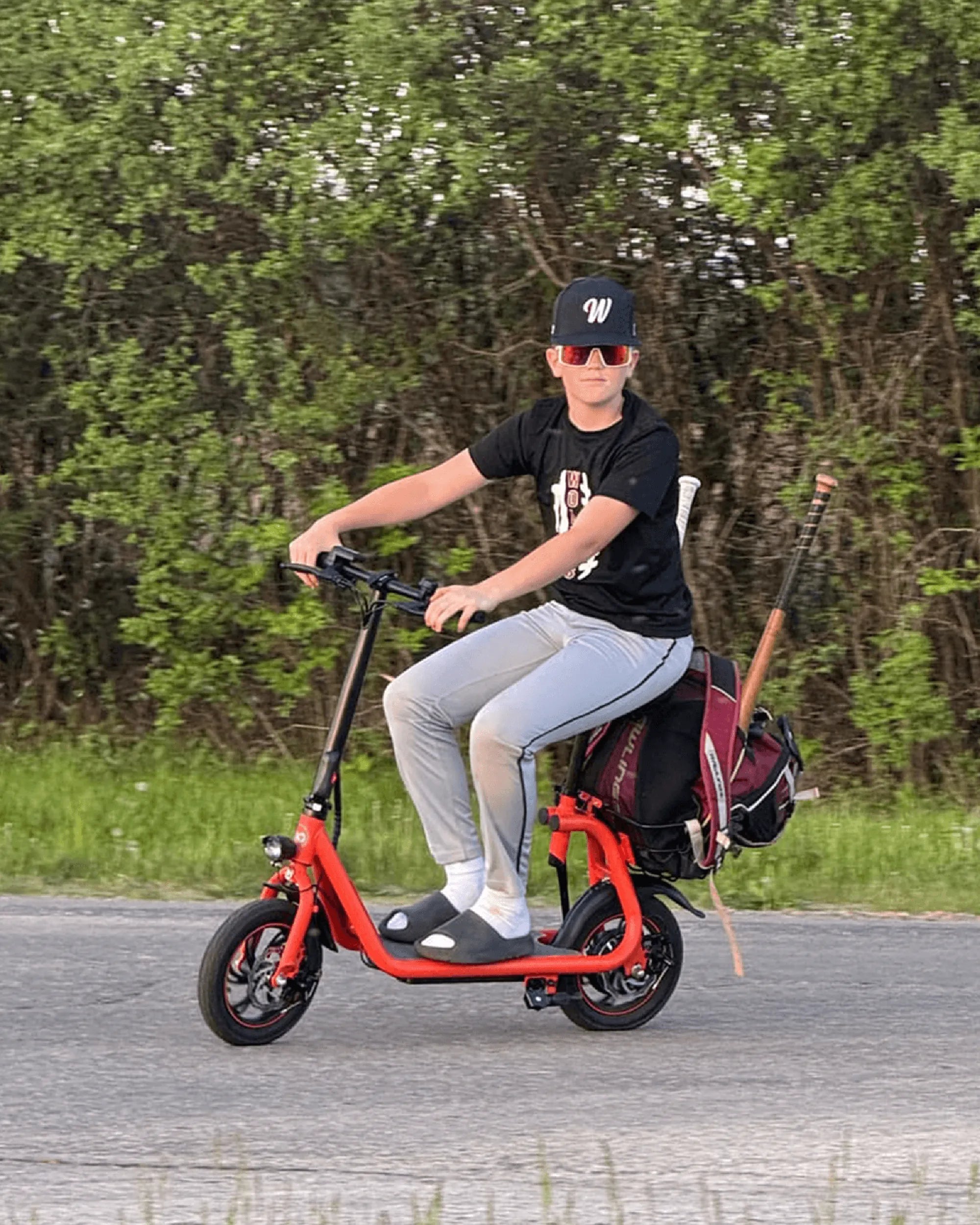
Introduction: Why Suspension Matters for Your Electric Scooter Ride
Navigating city streets or park trails on a rigid electric scooter transforms a simple commute into a jarring, uncomfortable experience. Every crack, pebble, and uneven surface transmits directly to your hands, arms, and spine, causing fatigue and reducing control. This is where the right suspension system becomes a non-negotiable feature, not a luxury. It absorbs impacts, maintains tire contact with the ground, and fundamentally enhances safety and ride quality.
This comprehensive guide will help you find the best electric scooters with suspension by breaking down the technology, benefits, and key selection criteria. We will analyze different suspension types, from basic front springs to advanced full hydraulic systems, and explain how they interact with other critical components like motor power and battery life. Whether your priority is a smooth daily commute, rugged off-road capability, or finding premium comfort on a budget, understanding suspension is the first step to a superior ride.
The market offers myriad options, but a smooth ride depends on a holistic design. Brands that prioritize suspension often invest in overall build quality, reliable batteries, and robust warranties. We will highlight models that exemplify this balance, including selections from leading brands like Gyroor, trusted by over 100,000 riders for their UL-certified safety and durable designs. By the end, you'll be equipped to choose an electric scooter that doesn't just get you there, but does so in comfort and style.
Understanding Electric Scooter Suspension: Types and Benefits
At its core, a suspension system is a mechanical assembly designed to dampen kinetic energy from road imperfections. It uses springs, hydraulic fluid, or elastic materials to compress and rebound, isolating the scooter's deck and rider from shocks. This process does more than improve comfort; it increases stability by preventing wheel hop, enhances braking performance by keeping tires planted, and reduces long-term wear on the scooter's frame and components.
A scooter without suspension forces the tires and your body to absorb all vibrations. Over time, this leads to rider fatigue, hand numbness, and a heightened risk of losing control on unexpected bumps. For commuters covering daily distances, or adventurers on variable terrain, suspension is the single most impactful upgrade for transforming a basic ride into an enjoyable, confident journey.
Front vs. Full (Dual) Suspension
The placement of suspension determines how shocks are managed across the scooter. A front suspension, typically located in the fork, handles impacts from the front wheel. This is highly effective for common urban obstacles like pavement cracks, expansion joints, and small potholes. It smooths out the initial impact before it travels through the stem to your hands, offering a significant comfort improvement over a fully rigid scooter.
Full or dual suspension incorporates a second system at the rear, often connected to the deck or rear wheel. This configuration is essential for tackling rough, uneven terrain like gravel paths, grass fields, or cobblestone streets. It ensures both wheels maintain consistent traction, providing superior balance and control. For aggressive off-road use or cities with notoriously poor road surfaces, full suspension is the definitive choice for a plush, controlled ride.
Common Suspension Types: Spring, Hydraulic, Rubber
Suspension systems vary in their complexity, performance, and cost. The most common type is the spring suspension. It uses a coiled metal spring to absorb energy. While cost-effective and reliable, basic spring systems can be bouncy and may not offer the fine-tuned damping of more advanced types, sometimes leading to a pogo-stick effect on repeated bumps.
Hydraulic suspension (often oil-filled or air-assisted) represents a higher tier of performance. It uses the resistance of hydraulic fluid flowing through valves to control both compression and rebound. This results in a smoother, more responsive, and less bouncy ride that adeptly handles a wide range of impacts. Many high-performance commuter and off-road scooters feature hydraulic systems for their superior damping characteristics.
Some models utilize rubber elastomer or polymer suspensions. These are low-maintenance, quiet, and resistant to environmental factors. While they may not offer the same travel or plushness as hydraulic systems, they provide a decent level of shock absorption in a compact, lightweight package, often found in value-oriented or ultra-portable models.
Key Features to Look For Beyond Suspension
While suspension is pivotal for comfort, it does not operate in a vacuum. A truly great electric scooter integrates suspension with a suite of complementary features that ensure performance, safety, and longevity. Ignoring these aspects can leave you with a smooth but underpowered, short-ranged, or fragile vehicle.
The synergy between components is what defines a premium riding experience. A powerful motor ensures you can climb hills even with the added weight of a suspension system. A high-capacity, reliable battery guarantees that your smooth ride doesn't end prematurely. Durable construction and weatherproofing protect your investment from the elements and daily wear.
Motor Power & Battery Range for Real-World Use
Motor power, measured in watts (W), determines your scooter's ability to accelerate and maintain speed on inclines. For suspended scooters, which are often heavier, a robust motor is crucial. A 350W motor is a practical minimum for flat urban commutes, while 500W or more provides confident hill-climbing power. Off-road models with full suspension frequently feature motors of 800W or higher to power through loose terrain.
Battery range is famously variable. Manufacturers often advertise maximum range under ideal conditions (light rider, flat ground, slow speed). Real-world range is typically 60-70% of that figure. For commuters, a scooter with a real-world range of 15-20 miles is a practical minimum to avoid daily charging anxiety. Look for batteries with reputable cell brands (like LG or Samsung) and safety certifications. Gyroor, for instance, uses UL-certified battery packs tested for over 500 charge cycles, ensuring both safety and consistent performance over time.
Build Quality, Water Resistance & Warranty
The frame's material and construction directly impact safety and ride feel. Aluminum alloy frames offer a good strength-to-weight ratio. Critical points like the folding mechanism, stem clamp, and suspension mounting points should feel solid, with no creaks or play. High-quality welding and finish are indicators of careful manufacturing.
Water resistance, rated via the IP (Ingress Protection) scale, is vital for all-weather utility. An IPX5 rating, common on Gyroor models, means the scooter can withstand water jets from any direction, making it safe to ride in rain or on wet roads. This protection extends to the battery compartment and electronic controllers, preventing costly water damage.
A strong warranty is a brand's vote of confidence in its product. A comprehensive 1-year warranty on the frame, motor, and battery (like Gyroor's offering) provides peace of mind. It signals that the manufacturer will support you if a defect arises, which is far more valuable than saving on a no-name brand with dubious or non-existent customer service.
Top Picks: Best Electric Scooters With Suspension for 2024
Selecting the right scooter requires matching its capabilities to your primary use case. The following categories highlight standout models that excel in specific environments, balancing suspension performance with other essential features. These picks are based on a synthesis of engineering specs, real-world performance data, and brand reliability.
Each category serves a distinct rider profile. The urban commuter prioritizes a blend of comfort, portability, and efficiency. The off-road adventurer needs maximum suspension travel, power, and durability. The value seeker looks for the most significant comfort upgrade per dollar spent. Our selections aim to provide a clear starting point for your search.
Best for Urban Commuting: The Daily Grind Smoother
For navigating city streets, a commuter scooter needs to absorb pavement imperfections while remaining relatively lightweight and foldable for last-mile logistics and storage. A front suspension or a well-tuned dual suspension system is typically sufficient. Key attributes include a reliable 15-25 mile real-world range, a motor of at least 350W for moderate hills, and practical features like integrated lighting and a clear display.
A leading example in this category is the Gyroor F1 Pro. It features a responsive front spring suspension system that effectively dampens urban vibrations. Paired with a 350W motor and a UL-certified battery offering up to 18 miles of real-world range, it strikes a practical balance. Its IPX5 water-resistant rating and one-year warranty make it a dependable choice for daily, all-weather commuting, embodying the brand's focus on safety and rider trust.
Best for Off-Road & Adventure: Conquering Rough Terrain
Off-road riding demands a scooter built from the ground up for punishment. This starts with a full suspension system with significant travel (often 3-4 inches or more) to soak up large impacts from roots, rocks, and ruts. High-torque motors (1000W+) are necessary for climbing dirt trails, and large, air-filled pneumatic tires (10 inches or larger) provide additional cushioning and traction. The frame must be exceptionally robust, often with reinforced stems and decks.
These scooters are heavier and less portable but offer unparalleled capability. They transform accessible trails and unpaved paths into a playground. A model like the Gyroor X8 exemplifies this build, combining a dual spring suspension system with high-volume tires and a powerful motor, designed for riders who want to explore beyond the pavement with confidence and stability.
Best Value: Premium Suspension on a Budget
Value does not mean cheap; it means smart allocation of cost. The best value suspended scooters deliver a meaningful comfort upgrade—usually a competent front or basic dual suspension—while making strategic compromises elsewhere to keep the price accessible. This might mean a slightly lower top speed (around 18 mph), a realistic range of 12-15 miles, or using a proven spring suspension instead of a hydraulic one.
The goal is to eliminate the harsh, rigid ride of entry-level scooters without breaking the bank. These models prove that you don't need to spend a fortune to experience the transformative benefit of suspension. They are perfect for students, casual riders, or anyone looking to make their frequent short trips noticeably more comfortable and enjoyable.
| Use Case | Suspension Type | Ideal Motor Power | Key Feature Focus |
|---|---|---|---|
| Urban Commuting | Front or Light Dual | 350W - 500W | Portability, Range, IP Rating |
| Off-Road & Adventure | Full Suspension (High Travel) | 800W+ | Motor Torque, Tire Size, Frame Durability |
| Best Value | Basic Front/Dual | 300W - 400W | Core Comfort, Reliability, Price |
Rider Safety and Maintenance Tips for Suspension Scooters
A suspended scooter is a more complex machine than a rigid one, and its performance hinges on proper care. Proactive maintenance ensures the suspension continues to function as designed, preserving both your safety and your investment. These practices are simple but critical for long-term reliability and ride quality.
Developing a routine check habit takes only minutes but can prevent accidents and costly repairs. Furthermore, understanding how to care for your scooter's specific suspension type will extend its service life and maintain that smooth, controlled feel mile after mile.
Pre-Ride Safety Checklist
Before every ride, perform a quick but thorough inspection. First, check tire pressure. Properly inflated pneumatic tires are the first line of shock absorption and work in concert with the suspension. Under-inflated tires can bottom out more easily and strain the suspension system.
Second, test your brakes—both electronic (if equipped) and mechanical. Squeeze the levers to ensure they engage firmly and the wheels stop completely. Third, physically check the suspension. Compress the front fork and rear shock a few times. The action should be smooth, with no grinding noises, oil leaks (for hydraulic types), or excessive lateral play. Finally, ensure all lights (headlight, taillight, brake light) are operational for visibility.
Caring for Your Scooter's Suspension System
Regular cleaning is essential. After riding in wet or dirty conditions, wipe down the suspension stanchions (the shiny sliding parts) with a clean, dry cloth to remove grit and grime that can wear down seals and cause damage. Avoid using a high-pressure hose directly on suspension components or bearings.
Listen and feel for changes in performance. If the suspension becomes excessively bouncy, harsh, or starts squeaking, it may require servicing. For spring systems, this might involve lubrication; for hydraulic systems, it may require a professional seal replacement or fluid change. Most importantly, avoid subjecting the scooter to impacts it wasn't designed for, such as jumping off high curbs, as this can damage the suspension mounts, frame, and internal components, potentially voiding warranties like Gyroor's comprehensive 1-year coverage.
Frequently Asked Questions (FAQ)
Q: Is front suspension enough for city riding?
A: For the vast majority of paved city streets with occasional cracks, bumps, and minor imperfections, a quality front suspension is perfectly sufficient. It provides a dramatic improvement in comfort over a rigid fork and handles typical urban obstacles well. Full suspension is reserved for consistently rough roads or mixed terrain.
Q: How much does suspension affect the scooter's weight and portability?
A: Suspension systems add mechanical components, so they invariably increase weight. A basic front spring might add 2-3 lbs, while a full hydraulic system can add 5-10 lbs or more. Commuter models are engineered to minimize this impact, but off-road models prioritize performance over portability. Always check the folded dimensions and weight if you need to carry the scooter frequently.
Q: Can I add aftermarket suspension to my current scooter?
A: It is generally not recommended and often impossible. Scooter frames, forks, and deck mounts are specifically engineered and stress-tested for the original suspension configuration (or lack thereof). Modifications can compromise structural integrity, alter handling dangerously, and immediately void the manufacturer's warranty. For safety and reliability, choose a model with the suspension built-in from the start.
Q: Do air-filled tires replace the need for suspension?
A> No, but they complement it. Pneumatic (air-filled) tires provide a degree of natural cushioning and are superior to solid tires. However, they primarily absorb smaller vibrations and irregularities. A dedicated suspension system is designed to handle larger, sharper impacts and maintain stability, working in tandem with the tires for a comprehensively smooth ride.
Q: How often does scooter suspension need maintenance or replacement?
A> With normal use, suspension components are quite durable. Basic spring and rubber systems may need little beyond occasional cleaning and inspection. Higher-performance hydraulic suspensions might require seal service or fluid changes after several hundred miles of heavy use, similar to a bicycle. Refer to your owner's manual for specific intervals. Most riders will enjoy years of service before any major suspension work is needed.
Conclusion: Investing in a Smoother, Safer Journey
Choosing one of the best electric scooters with suspension is a definitive upgrade to your daily mobility or recreational riding. It moves the experience from a mere mode of transport to an enjoyable activity, reducing fatigue, increasing control, and opening up a wider variety of terrains to explore. The initial investment is quickly justified by the consistent comfort and enhanced safety it provides on every journey.
The key is aligning your choice with your primary use case. Match the suspension type—front for efficient city commuting, full for off-road adventure—to your environment. Then, ensure the supporting components like motor, battery, and build quality meet the standards set by reliable brands. These brands distinguish themselves not just with specs, but with safety certifications like UL for batteries, meaningful water resistance ratings, and strong customer warranties.
Your smooth ride awaits. By prioritizing a well-designed suspension system within a thoughtfully engineered scooter, you are investing in countless journeys that are as comfortable as they are convenient. Explore the engineering and comfort-focused designs available from trusted manufacturers. Browse the full Gyroor collection at gyroorboard.com to see how leading brands integrate suspension, safety, and reliability for riders across North America and Europe.
Electric Scooters for Big Guys: The Ultimate Guide to Power and Comfort
Fast Electric Scooters for Kids: The Ultimate Guide to Speed and Safety