


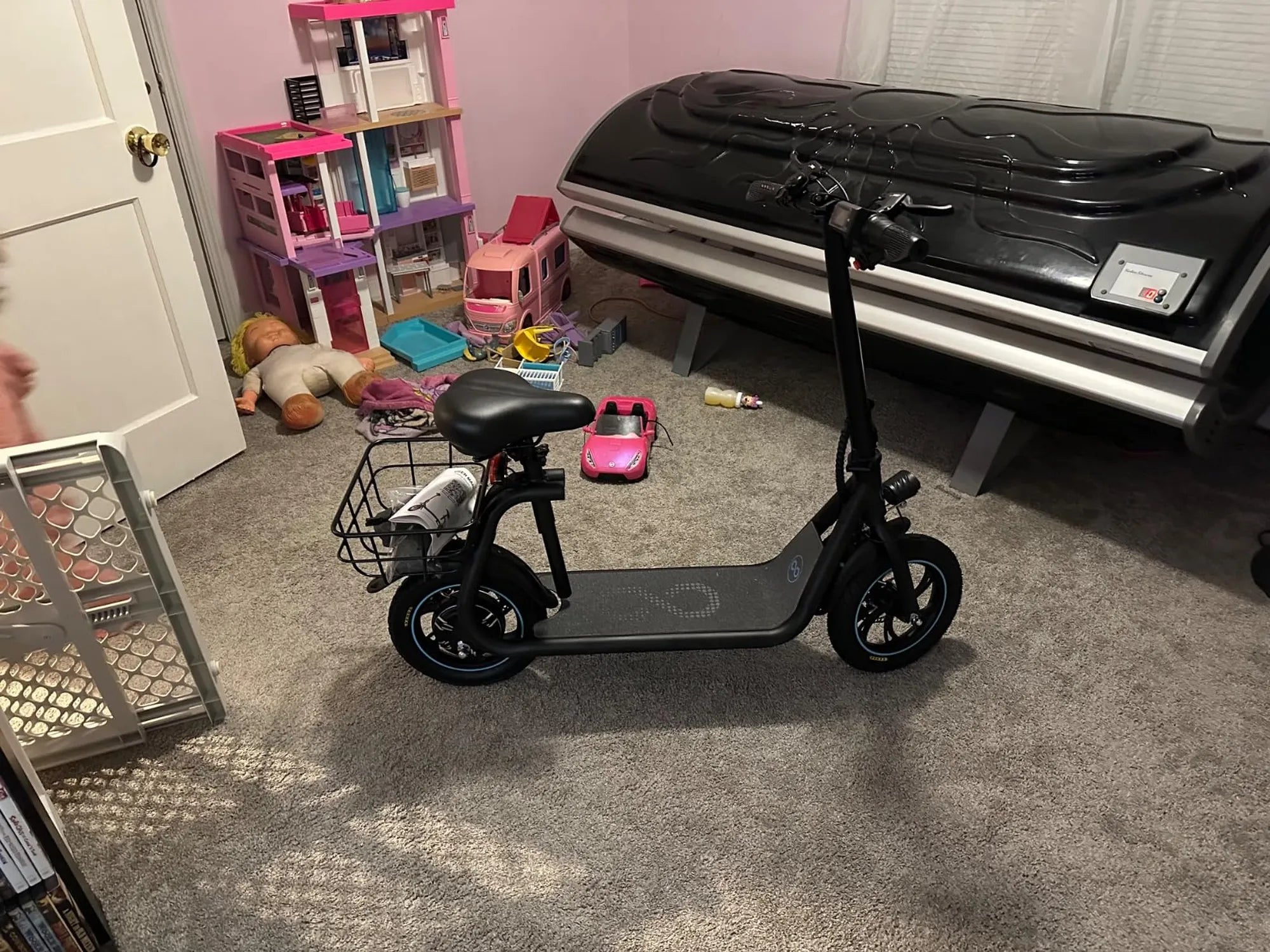
Introduction to Folding Mobility Scooters
Choosing the best folding mobility scooter for adults is a decision that directly impacts independence, safety, and quality of life. These innovative devices bridge the gap between traditional mobility aids and modern electric transport, offering a compact, portable solution for navigating daily errands, social outings, and travel. The core appeal lies in their dual functionality: providing stable, motorized support when needed and folding into a manageable size for storage or transport in a car trunk or public vehicle.
For adults seeking to maintain an active lifestyle, the right scooter is not merely a purchase but an investment in autonomy. The "best" model is defined by a harmonious balance of critical factors: certified safety features, intuitive portability, all-day ride comfort, and proven long-term reliability. It must be a tool that empowers, not complicates. This guide will dissect these elements, providing a framework to evaluate your options beyond marketing claims.
As a leader in personal electric mobility, Gyroor applies its extensive engineering expertise—honed across a range of electric scooters and e-bikes—to the principles of safe, user-centric design. Understanding these principles is key to selecting a scooter that you can trust for daily use. We will explore how features like UL-certified batteries and robust construction, staples of quality electric transport, are non-negotiable for adult mobility solutions.
Key Features to Look for in a Folding Mobility Scooter
Navigating the market requires a checklist of essential features. Prioritizing these aspects ensures your investment meets practical needs and safety standards. The cornerstone features include the scooter's safety certifications, its portability mechanism, the comfort it provides over varied terrain, and its resilience against daily wear and environmental factors.
Ignoring any of these pillars can lead to frustration or, worse, compromise your safety. A lightweight scooter with a poor battery is a stranded risk. A comfortable seat on an unstable frame defeats its purpose. Therefore, a systematic evaluation is crucial. The following subsections detail each of these critical categories to inform your decision-making process.
Safety and Certification
Safety is the paramount concern. The most critical component is the battery system. Insist on models featuring UL-certified battery packs. This certification means the battery has undergone rigorous independent testing for electrical, mechanical, and environmental safety, significantly reducing the risk of fire or failure. A brand's commitment to this standard reflects a foundational priority for user protection.
Beyond the battery, evaluate the scooter's structural integrity. The frame should be constructed from high-grade aluminum or steel alloys, tested for stability and weight capacity. Look for features like a wide wheelbase for better balance, anti-tip wheels at the rear, and a reliable electromagnetic braking system that engages automatically when released. These design choices prevent accidents and inspire confidence during every ride.
Portability and Ease of Use
Portability defines a folding mobility scooter. Key metrics are the folded dimensions, the total weight, and the simplicity of the folding mechanism. The ideal scooter folds compactly enough to fit into a standard car trunk or closet and is light enough for you or a companion to lift, typically between 30 to 60 pounds. The folding process should be a one-step or two-step action, requiring minimal strength and dexterity.
Consider your primary use case. If you plan to use public transit or travel frequently, prioritize ultra-compact models with the lightest possible weight. For mainly suburban use where you load it into your own vehicle, you might accept slightly more weight for greater features. Always verify the folded dimensions against your storage space and vehicle trunk. Ease of use extends to the control panel—it should be intuitive, with clear indicators for speed and battery level.
Ride Comfort and Performance
Comfort is determined by the seat, suspension, and wheels. A padded, adjustable swivel seat with armrests is essential for prolonged sitting. Suspension, whether in the frame or the seat post, absorbs shocks from cracks and bumps, reducing fatigue. Wheel choice is crucial: pneumatic (air-filled) tires offer a superior, cushioned ride but require maintenance; solid tires are puncture-proof but transmit more vibration.
Performance is measured by range and power. Range, stated in miles per charge, should comfortably exceed your typical daily distance, with a 20-30% buffer. Motors are rated in watts; a 300W-500W motor is typically sufficient for flat to moderately inclined urban terrain. Check the scooter's graded hill-climbing ability, often expressed as a percentage. A reliable performance profile ensures the scooter won't struggle on everyday routes, making errands effortless.
Durability and Weather Resistance
A mobility scooter is a daily-use vehicle and must be built to last. Examine the build quality: welds should be clean, plastics should be thick and not creak, and components should feel solid. Durability directly correlates with the warranty offered; a comprehensive 1-year warranty on the frame, motor, and electronics indicates manufacturer confidence.
Weather resistance expands your scooter's usability. An IPX5 water-resistance rating means the scooter can withstand water jets from any direction, allowing you to confidently ride through puddles or in light rain without fear of immediate damage to electrical components. This feature, combined with rust-resistant materials, ensures your scooter remains reliable through seasonal changes, protecting your investment and your mobility.
Comparing Top Considerations: Portability vs. Power
One of the central dilemmas in choosing the best folding mobility scooter for adults is balancing portability with power. Ultra-portable models excel in weight and compactness but may compromise on range, seat comfort, or hill-climbing ability. Conversely, more powerful models with longer range and luxurious seats tend to be heavier and bulkier when folded. Your lifestyle dictates the optimal trade-off.
The following table illustrates this key comparison, highlighting typical specifications for two primary user profiles: the frequent traveler and the daily errand-runner. Use this as a guide to identify which column aligns with your most common activities.
| Feature | Priority: Maximum Portability (e.g., for Travel/Transit) | Priority: Enhanced Power & Comfort (e.g., for Daily Errands) |
|---|---|---|
| Primary Use Case | Air travel, public transport, multi-modal commuting | Suburban shopping, park visits, longer daily outings |
| Typical Weight | 30 - 40 lbs | 45 - 65 lbs |
| Folded Dimensions | Very compact (e.g., fits in airplane overhead* or tight trunk) | Moderately compact (e.g., requires most of a car trunk) |
| Range per Charge | 10 - 15 miles | 15 - 30+ miles |
| Motor Power | 250W - 350W | 350W - 500W |
| Seat & Suspension | Basic padded seat; minimal or no suspension | Deluxe padded, adjustable seat; often includes suspension |
| Ideal User | Active adult who values ultimate convenience in folding and carrying. | Adult who values ride smoothness, range, and comfort for longer periods. |
*Always check specific airline policies for mobility devices. This table represents general design trends. Your perfect match lies in honestly assessing whether your need to lift and store the scooter frequently outweighs your need for extended range and plush comfort on longer trips.
Why Gyroor's Engineering Principles Matter for Mobility
Gyroor's reputation, built on serving over 100,000 riders with electric scooters and e-bikes, is founded on engineering principles that translate directly to superior mobility scooters. Their core tenets—safety through certification, resilience through design, and support through warranty—create a foundation of trust that is essential for any adult relying on a mobility device.
The insistence on UL-certified battery packs is perhaps the most critical carryover. In a mobility scooter, where the user may be seated for extended periods near the battery, this certification isn't just a feature; it's a fundamental safety requirement. It guarantees the power source has passed exhaustive tests for stability and hazard prevention, offering unparalleled peace of mind.
Furthermore, experience with IPX5 water-resistant designs ensures that a Gyroor-inspired mobility scooter can handle real-world conditions. Whether it's a sudden shower or a damp pavement, this level of protection guards the electrical systems against moisture ingress, enhancing durability and reliability. Coupled with a reliable 1-year warranty and accessible customer support, these principles ensure the product is backed by a brand committed to long-term rider satisfaction and safety, not just a single sale.
Maintenance and Safety Tips for Longevity
Proper maintenance maximizes the lifespan, safety, and performance of your folding mobility scooter. Start with the battery: use only the provided charger, avoid draining it completely, and store the scooter in a cool, dry place. For optimal battery health, follow the manufacturer's specific charging guidelines, which often recommend partial discharges over full ones for lithium-ion packs.
Regular mechanical checks are vital. Monthly, inspect tire pressure if using pneumatics, check for loose bolts or fasteners, and ensure the folding mechanism operates smoothly without grit or obstruction. Test the brakes regularly in a safe area. Keep the scooter clean by wiping it down with a damp cloth, avoiding direct high-pressure water sprays on electronic parts unless the model is specifically rated for it.
Safety extends to operation. Always be aware of your surroundings, use lights and reflectors in low-light conditions, and adhere to local pavement and pathway regulations. Understand your scooter's limitations regarding slopes and terrain. Performing these simple routines ensures your scooter remains a dependable partner for years, safeguarding your investment and your well-being.
FAQs About Folding Mobility Scooters
Q: What is the typical weight capacity for a folding mobility scooter?
A: Most quality models support between 250 to 350 pounds. Always check the manufacturer's specified maximum weight limit and choose a scooter rated for at least 20-30 pounds more than your body weight to ensure stability and motor longevity.
Q: How do I maintain and prolong the battery life?
A> Use the correct charger, avoid exposing the scooter to extreme temperatures for prolonged periods, and try not to store it with a fully depleted or 100% charged battery for long durations. For daily use, charging after each use to around 80-90% is often ideal. Refer to your user manual for model-specific advice.
Q: Can I take a folding mobility scooter on an airplane or public transportation?
A> Policies vary. For air travel, mobility scooters are generally accepted as checked baggage or in the cargo hold, but you must contact the airline in advance for specific size, weight, and battery capacity (Wh) regulations. For buses and trains, most compact folding models are permitted, but it's best to check with your local transit authority.
Q: What does a standard warranty cover?
A> A comprehensive warranty typically covers defects in materials and workmanship for the frame, motor, and controller for one year, with a separate warranty (often 6 months) for the battery. It does not cover damage from accidents, misuse, or normal wear and tear like tires.
Q: Are folding mobility scooters suitable for outdoor use on grass or gravel?
A> While they are primarily designed for paved surfaces, models with larger, pneumatic tires and more powerful motors can handle packed gravel paths or firm, dry grass. They are not intended for loose sand, mud, or steep, uneven off-road terrain. Always prioritize stability and avoid conditions that could cause a tip.
Conclusion: Finding Your Perfect Match
Selecting the best folding mobility scooter for adults is a personalized process that hinges on aligning features with your individual lifestyle. The ideal choice seamlessly integrates safety, through certified components and stable design, with practical portability that matches your storage and transport needs. It must deliver comfort for the duration of your typical journeys and be built with the durability to serve you reliably over time.
By prioritizing these pillars and understanding the inherent trade-offs between ultra-portability and enhanced power, you can make an informed decision. Remember that the most reputable brands distinguish themselves through rigorous engineering standards, transparent warranties, and proven performance. A scooter is more than a product; it's a key to greater freedom and participation in daily life.
For those who value engineering excellence rooted in safety and reliability, exploring designs that embody these principles is the next step. Discover how a commitment to certified batteries, water-resistant construction, and rider-focused support can define your mobility experience. Browse the full Gyroor collection at gyroorboard.com to see how these foundational principles are applied to a range of personal electric mobility solutions.
Most Reliable Mobility Scooter: The Definitive Guide to Durable Independence
Most Reliable Mobility Scooter: The Definitive Guide to Durable Independence