



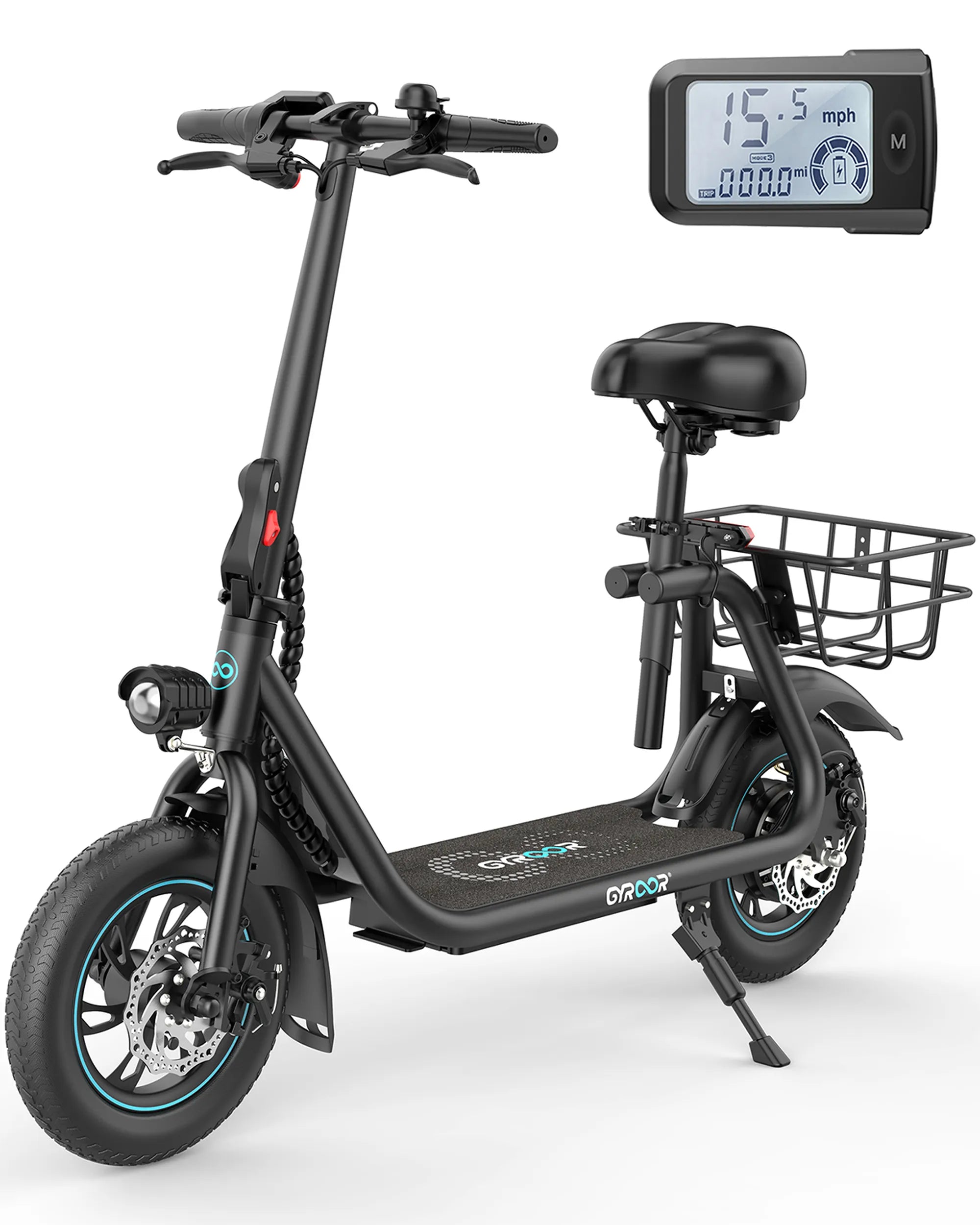
Finding the Perfect Mobility Companion
For seniors seeking to maintain an active, independent lifestyle, finding the best folding scooter for seniors can be a transformative decision. It’s not about raw speed or flashy tech; it’s about unlocking safe, convenient, and joyful mobility. A well-chosen folding electric scooter bridges the gap between walking distances that have become challenging and the bulk of a traditional mobility aid, offering a practical solution for errands, social visits, and leisurely rides in the park.
The ideal model prioritizes user-friendly operation, rock-solid stability, and dependable safety features over extreme performance. Brands that understand these needs, like Gyroor—a leading electric scooter and e-bike brand trusted by over 100,000 riders across North America and Europe—design with these principles at their core. This guide will detail the critical considerations, demystify technical specs, and provide a clear roadmap to selecting a scooter that empowers confidence and freedom.
You will learn to identify the non-negotiable features for safety and comfort, understand the importance of certified components, and compare different scooter types to match your specific lifestyle. The goal is to equip you with the knowledge to make an informed choice for years of reliable service.
Key Considerations for Seniors Choosing a Folding Scooter
Selecting a scooter requires a shift in perspective. For senior riders, the evaluation criteria differ significantly from those of a teenager or a commuter. The focus must be on features that enhance security, reduce physical strain, and simplify the entire riding experience from storage to operation.
Key factors include the scooter's inherent stability, the physical ease of folding and transporting it, and the intuitiveness of its controls. Ignoring any of these areas can lead to a purchase that sits unused due to discomfort or apprehension. A meticulous assessment of these elements ensures the scooter becomes a helpful tool, not a burdensome gadget.
Stability and Ride Comfort
Stability is the foundation of a confident ride. It begins with the scooter's physical geometry. Larger wheels, typically 8.5 inches or more in diameter, are superior for seniors as they roll over cracks, pebbles, and minor pavement irregularities with far less jarring than smaller wheels. A wide, textured deck provides ample, secure footing, allowing for a natural stance that aids balance.
The handlebar design is equally crucial. Wider handlebars offer greater leverage and control, making steering inputs smoother and more predictable. A suspension system, whether in the front wheel, rear wheel, or both, is a highly recommended feature. It actively absorbs shocks from uneven surfaces, protecting your joints and ensuring the ride remains comfortable even on less-than-perfect paths.
Ease of Folding and Weight
The "folding" aspect is a primary reason for choosing this type of scooter, but not all mechanisms are created equal. Seniors should look for a one-step, lever-based folding system that requires minimal force and no complex maneuvers. The process should be intuitive—press a lever, fold the handlebar down, and secure it—often accomplished in under three seconds.
Total weight is a critical, and often overlooked, specification. A scooter weighing between 30 to 40 pounds represents a sweet spot; it’s sturdy enough for a stable ride yet remains manageable to lift into a car trunk or carry up a short flight of stairs when folded. Models significantly heavier can negate the portability benefit, while those much lighter may compromise on build quality and battery capacity.
Intuitive Controls and Safety Features
The control interface should be simple and unambiguous. A clear, backlit digital display that shows speed, battery level, and riding mode at a glance is essential. For acceleration, a thumb-press throttle is generally preferred over a twist-grip as it allows for more precise, controlled input and reduces hand strain.
Braking is paramount. A dual-braking system, combining an electronic brake (which regenerates some power) with a mechanical disc or drum brake, provides reliable, progressive stopping power in all conditions. Finally, integrated safety lighting is non-negotiable. Look for bright, automatic front and rear LED lights, as well as side or deck lights, to ensure maximum visibility to others during daytime and night rides.
Why Safety-Certified Components Are Non-Negotiable
Beyond the physical design, the internal components of an electric scooter determine its long-term reliability and, most importantly, its safety. For senior riders, who may rely on the scooter for daily tasks, choosing a model built with certified, high-quality parts is an investment in peace of mind. Cutting corners here with uncertified electronics can lead to premature failure or significant hazards.
Reputable manufacturers prioritize these certifications and build them into their core engineering philosophy. They are not just marketing bullet points but fundamental safeguards that protect the user. When evaluating any scooter, verifying these credentials should be the first step in the decision-making process.
The Importance of UL-Certified Batteries
The battery is the heart of the scooter and its most critical safety component. A UL-certified battery pack has undergone rigorous independent testing by Underwriters Laboratories for electrical, mechanical, and environmental safety. This certification specifically tests for risks like thermal runaway, short-circuiting, and fire, ensuring the battery's management system will safely handle charging, discharging, and potential abuse.
For a senior rider, this means drastically reduced risk of battery-related incidents. Furthermore, UL-certified batteries, like those used in all Gyroor models, are engineered for longevity, typically rated for 500+ charge cycles while maintaining capacity. This translates to years of dependable range and performance, ensuring your scooter remains a reliable companion.
Water Resistance for Real-World Use
Real-world mobility means encountering puddles, light rain, or damp pavement. A scooter's water resistance rating, denoted by an IP code, indicates its level of protection. An IPX5 rating is a strong benchmark for personal electric vehicles.
An IPX5-rated scooter can withstand water jets from any direction, making it resistant to rain and road spray. This protection safeguards the motor, controller, and electrical connections from moisture-induced corrosion and short circuits. This durability is key for seniors who want to use their scooter for practical errands without worrying about sudden weather changes or wet roads.
Top Recommended Features in a Senior-Friendly Scooter
Armed with an understanding of core principles, we can now define the ideal specification checklist for the best folding scooter for seniors. This list serves as a benchmark against which to measure any model, helping you filter out options that don’t meet the necessary standards for safety, comfort, and ease of use.
These features represent the convergence of thoughtful engineering and user-centric design. They ensure the scooter adapts to you, not the other way around. Brands that embody this approach, such as Gyroor with its UL-certified batteries and IPX5 water-resistant designs, create products that naturally align with these recommendations.
Optimal Performance Specs: Power vs. Range
Extreme power is unnecessary and potentially unsettling for senior riders. A motor in the 250W to 350W range provides ample torque for hill starts and controlled acceleration without being jerky or intimidating. This power band is perfect for cruising at comfortable speeds of 10-15 mph.
Range is about practicality. A real-world range of 15 to 20+ miles on a single charge comfortably covers multiple daily trips—to the store, a friend's house, or around a large park—without triggering "range anxiety." It’s more important than a scooter claiming a 40-mile range under perfect conditions that rarely exist. Consistent, dependable range supports spontaneous outings and daily routines.
Warranty and Accessible Support
A strong warranty is a manufacturer's vote of confidence in its product. For seniors, a comprehensive warranty like Gyroor's reliable 1-year warranty on the scooter provides crucial protection against manufacturing defects. It signifies that the company stands behind its build quality and is committed to your satisfaction.
Equally important is the accessibility of customer support. The ability to speak with knowledgeable, responsive support staff for troubleshooting or parts inquiries transforms the ownership experience. This accessible support network offers reassurance that help is available if needed, making the technology far less daunting.
Comparison: Portability vs. Performance for Senior Needs
Senior riders often have distinct primary use cases. Some prioritize ultra-easy portability for multi-modal trips (e.g., scooter to bus, then to destination), while others want a supremely comfortable ride for longer recreational excursions. The following comparison highlights two ideal "types" to help you identify which profile aligns with your lifestyle.
| Feature | Ultra-Lightweight & Portable | Comfort-Focused & Stable |
|---|---|---|
| Primary Use Case | Frequent carrying, combining with public transit, compact storage. | Longer leisure rides, running errands, maximum ride smoothness. |
| Ideal Weight | 28 - 33 lbs | 35 - 42 lbs |
| Wheel Size | 8.5" solid or air-filled | 10" air-filled (pneumatic) tires |
| Suspension | Basic or front-only | Full (front & rear) suspension system |
| Deck Size | Standard, streamlined | Extra-wide and long |
| Range Priority | Good (12-15 miles) | Excellent (18-22+ miles) |
| Best For | The urban senior who needs to lift and store it often. | The senior who values plush ride quality above all for daily use. |
Maintenance and Care for Long-Term Reliability
Proper maintenance is simple but essential for ensuring your folding scooter remains safe and reliable for years. Fortunately, electric scooters require minimal upkeep, especially models built with quality components. Establishing a basic routine prevents minor issues from becoming major problems.
Regularly check tire pressure if your model uses pneumatic (air-filled) tires. Proper inflation ensures optimal range, ride comfort, and traction. For solid tires, simply inspect them for excessive wear or embedded debris. Test your brakes before every ride to ensure they engage smoothly and bring the scooter to a prompt stop.
Keep the scooter clean by wiping it down with a damp cloth; avoid high-pressure hoses even on water-resistant models. Store it in a dry, temperate place, and avoid leaving it fully discharged for extended periods. Ideally, maintain the battery charge between 20% and 80% for daily use, and do a full cycle every few months. This care maximizes the lifespan of the UL-certified battery pack.
Frequently Asked Questions (FAQ) for Senior Riders
Q: Is it difficult to learn to ride an electric scooter?
A: Modern scooters are designed for intuitive use. Most new riders gain confidence within 10-15 minutes. Start in a safe, open, flat area like an empty parking lot. Practice gentle acceleration with the thumb throttle and using the brakes at low speed. The learning curve is very short.
Q: Can I ride it on sidewalks or in the park?
A: Local laws vary significantly. Generally, sidewalks may be permitted at very low speeds (often walking pace), but they can be hazardous due to pedestrians and driveways. Designated bike lanes, multi-use paths, and parks are often safer and more suitable. Always check your specific city or county regulations before riding.
Q: How do I maintain the scooter?
A> Maintenance is minimal. Key tasks include checking tire pressure (for pneumatic tires), ensuring brakes are responsive, keeping the scooter clean and dry, and storing it with a partial charge. Avoid fully draining the battery before recharging to prolong its life.
Q: What if I have limited strength in my hands?
A> Look for models with a thumb-press throttle (less grip strength required than a twist throttle) and a lever-based folding mechanism that doesn't require pinching or extreme force. Ergonomic, padded handlebar grips also reduce hand fatigue.
Q: Are these scooters safe in the rain?
A> Scooters with a good water resistance rating (IPX5 or higher) are safe to ride in light rain and on wet roads. However, you should always reduce speed, avoid large puddles, and brake earlier and more gently. It is not advisable to ride in heavy downpours or through standing water.
Conclusion: Embracing Freedom and Independence
The journey to finding the best folding scooter for seniors culminates in a simple truth: the right choice prioritizes safe, stable, and simple operation above all else. It is a tool for empowerment, designed to extend your range and renew your sense of autonomy. By focusing on certified safety features like UL batteries, user-centric design like intuitive controls, and reliable support, you invest in confidence.
Your mobility should be a source of joy, not anxiety. Choosing a reputable brand with a proven commitment to quality and customer care is the final, crucial step. Explore models that embody these principles and discover how the right scooter can seamlessly integrate into your life, turning errands into outings and distances into destinations.
Ready to find your perfect ride? Browse the full Gyroor collection, featuring UL-certified, senior-considered designs, at gyroorboard.com.
Mobility Scooter for Tall Person: The Ultimate Guide to Finding the Perfect Fit
Ebike Australia: The Complete Guide to Laws, Lifestyle & Choosing the Right Model