



Introduction: Finding the Perfect Hoverboard for Your Child in 2025
Choosing the best hoverboard for kids in 2025 requires balancing exhilarating fun with non-negotiable safety. Modern self-balancing scooters have evolved far beyond novelty toys, incorporating advanced battery management, robust construction, and intelligent riding modes designed specifically for younger riders. This guide cuts through the marketing to focus on the technical features and safety standards that truly matter.
Our goal is to provide parents with a data-driven, objective framework for selecting a hoverboard. We evaluate models based on verified safety certifications, real-world durability, and features that enhance the learning curve. As a leading brand in personal electric transport, Gyroor's engineering principles—focusing on UL-certified batteries and IP-rated water resistance—set the benchmark for what a secure, kid-friendly hoverboard should be.
You will learn the key specifications to scrutinize, discover top-rated models across different categories, and gain essential safety knowledge. The right hoverboard can provide years of active outdoor enjoyment, but only if selected with a meticulous, safety-first approach. Let's begin by defining what makes a hoverboard truly suitable and safe for a child.
What Makes a Hoverboard "Kid-Friendly" and Safe? (Key Features Explained)
A kid-friendly hoverboard is defined by a combination of passive safety engineering and active riding aids. It's not merely a scaled-down adult model; it incorporates design elements that account for a child's lower weight, developing coordination, and the inevitable bumps and scrapes of learning. The core features form a checklist every parent should use during their evaluation.
First, the physical design must promote stability. A wider wheelbase—the distance between the two wheels—provides a more stable platform, making balancing easier for beginners. The foot pads should be large, textured, and non-slip to accommodate growing feet and prevent slips during use. The overall shell should be made from impact-resistant, often rubberized, ABS plastic to withstand drops.
Second, electronic controls must be intuitive and forgiving. A crucial feature is a dedicated beginner or training mode. This software setting limits the top speed, often to 4-5 mph, and makes acceleration and braking less sensitive. This allows the child to build confidence and muscle memory in a controlled environment before accessing higher speeds.
Finally, the product must be appropriately sized. Hoverboards are rated for specific weight ranges. Choosing one where your child's weight is comfortably within the middle of the recommended range ensures optimal motor response, battery life, and longevity of the board. An undersized board will struggle, while an oversized one may be too powerful.
UL 2272 Certification: The Non-Negotiable Safety Standard
The UL 2272 certification is the single most important safety feature for any hoverboard. This rigorous standard, developed by Underwriters Laboratories, tests the entire electrical system—including the battery pack, charger, and motor circuitry—for over 100 potential failure points related to electrical and fire safety.
A hoverboard with this certification has passed tests for overcharge protection, short circuit simulation, and abnormal operation. It verifies that the battery management system (BMS) will safely shut down the board in a fault condition. In the mid-2010s, incidents involving poorly manufactured lithium-ion batteries highlighted the critical need for this standard.
Never purchase a hoverboard that does not have a verifiable UL 2272 certification. This is not a mere suggestion; it is an absolute requirement for bringing any self-balancing scooter into your home. All Gyroor hoverboards are built around UL 2272 certified battery packs as a foundational safety component.
Stable Design & Learning Modes
Stability is engineered through hardware and software. Physically, look for models with a low center of gravity and wheels that are at least 6.5 inches in diameter. Larger wheels (8.5 inches or more) offer better stability over cracks and minor obstacles. The connection between the two foot platforms should feel solid, without excessive flex.
The learning mode is a software-based safety guardrail. When activated, it typically caps the maximum speed at approximately 30-40% of the board's total capability. More importantly, it adjusts the sensitivity of the gyroscopic sensors and tilt mechanisms, making the board's response to the rider's lean more gradual and predictable.
This feature is invaluable for the first few hours of practice. It allows the child to focus on the fundamental skills of mounting, dismounting, and basic forward/backward movement without the anxiety of sudden, jerky movements. A good hoverboard will often emit an audible signal or flash its lights when in beginner mode.
Build Quality and Weight Limit
Build quality directly correlates with safety and durability. High-quality hoverboards use thick, reinforced plastic shells that can absorb impact. The seams should be tight, with no sharp edges or poorly fitting parts. The wheels should be securely attached with metal axles, not plastic.
The weight limit is a critical specification. It is determined by the strength of the frame, the torque rating of the motors, and the capacity of the bearings. Exceeding the maximum weight limit stresses all these components, leading to premature failure, reduced battery life, and potentially unsafe riding behavior like motor cut-out.
For most children aged 6-12, a hoverboard with a weight limit of 44 to 165 lbs is appropriate. Ensure your child's weight, plus the weight of a backpack if they carry one, falls comfortably within this range, ideally not at the absolute maximum. A robust build, like that found on Gyroor models, is engineered to handle the active use of kids within its specified limits.
Battery Safety and Management
At the heart of hoverboard safety is the lithium-ion battery pack. A high-quality pack from a reputable cell manufacturer (like Samsung, LG, or Panasonic) is essential. These cells are integrated with a sophisticated Battery Management System (BMS) that acts as the brain of the power unit.
The BMS continuously monitors voltage, current, and temperature. Its primary safety functions include: preventing over-charging by cutting off current when the battery is full; preventing over-discharging, which can permanently damage cells; balancing the charge across all individual cells for uniform performance; and implementing short-circuit protection.
Always use the manufacturer-provided charger and follow charging instructions precisely. A quality hoverboard will have charging ports and battery compartments that are well-sealed. Gyroor's use of UL-certified battery packs, tested for over 500 charge cycles, exemplifies the commitment to long-term, safe power delivery that parents should seek.
Top Picks: The Best Hoverboards for Kids in 2025
Our selections for the best hoverboard for kids in 2025 are based on the stringent criteria outlined above: verified UL 2272 certification, robust build quality, the presence of a learning mode, and positive user feedback regarding reliability and ride feel. We have categorized them to help you find the best match for your child's age, skill level, and intended riding environment.
The following table provides a high-level comparison of our top picks across key metrics. This data-driven overview allows for quick, objective comparison before diving into the detailed reviews of each model.
| Model | Best For | Wheel Size | Max Speed | Weight Limit | Key Feature |
|---|---|---|---|---|---|
| Gyroor S5 Hoverboard | Overall Safety & Performance | 8.5" | 9 mph | 220 lbs | IPX5 Water Resistance, UL Certified |
| Swagtron T6 V2 | Beginners & Younger Riders | 6.5" | 7.5 mph (12 mph max) | 220 lbs | Bluetooth Speakers, Robust App Control |
| Gyroor All-Terrain Hoverboard | Off-Road Adventure | 10" | 10 mph | 265 lbs | Knotty Tires, High Torque Motors |
| Razor Hovertrax 2.0 | Value on a Budget | 8.5" | 8 mph | 220 lbs | EverBalance Technology, Proven Design |
Best Overall for Safety & Performance: Gyroor S5 Hoverboard
The Gyroor S5 stands out as the best hoverboard for kids in 2025 when prioritizing a comprehensive safety package without sacrificing performance. It embodies the core principles of a trustworthy kids' hoverboard: certified safety, environmental resilience, and a user-friendly design.
Its foundation is a UL 2272 certified battery system, ensuring electrical safety from the inside out. Externally, it boasts an IPX5 water-resistant rating. This means it is protected against water jets from any direction, making it safe to ride on damp pavement, through puddles, or on dewy grass—a common scenario for kids playing outdoors.
The 8.5-inch wheels provide an excellent balance of stability and smooth ride quality over typical neighborhood surfaces. It features a clear beginner mode, activated by a simple button sequence, which limits speed and softens controls. The build quality is immediately apparent, with a solid, rattle-free frame and bright LED headlights and rim lights for visibility.
With a robust 220 lb weight limit, it can accommodate a wide range of ages and sizes, growing with your child. Backed by Gyroor's reliable 1-year warranty and trusted by over 100,000 riders, the S5 offers parents significant peace of mind, making it a top-tier choice for safety-conscious families.
Best for Beginners & Younger Riders: Swagtron T6 V2
For parents introducing a younger child (typically ages 6-9) to their first hoverboard, the Swagtron T6 V2 is an excellent, feature-rich option. It is designed with the learning process as a central focus, providing multiple layers of support for new riders.
Its standout feature is a comprehensive companion app. Through Bluetooth connectivity, a parent can lock the board's speed to a gentle 4 mph in true beginner mode, monitor battery life, and even track the board's location. This level of remote control and oversight is unique and highly valuable for safety-conscious parents.
The board itself is stable, with a wide base and responsive gyroscopes. It includes Swagtron's proprietary SentryShield battery technology, which is UL 2272 certified. The inclusion of Bluetooth speakers, while purely for fun, can make the learning process more engaging for a child. Its build is durable enough to handle the learning curve's inevitable tumbles.
Best for Off-Road Adventure: Gyroor Hoverboard with All-Terrain Tires
For the adventurous child who wants to explore beyond the sidewalk—onto park paths, dirt trails, or grassy fields—a standard hoverboard won't suffice. The best hoverboard for kids with an off-road spirit is one built with all-terrain capabilities, like the Gyroor model featuring large, knobby 10-inch tires.
These air-filled, knobby tires provide essential shock absorption and superior traction on uneven surfaces like gravel, packed dirt, and dry grass. They easily roll over small sticks and cracks that would stop a standard hoverboard. The increased wheel diameter also raises the board's ground clearance, preventing the underside from scraping on obstacles.
Powered by high-torque motors, this hoverboard maintains power and stability on mild inclines and variable terrain. Crucially, it retains all of Gyroor's safety hallmarks: the UL-certified battery pack, a robust frame with a high weight limit (265 lbs), and reliable water resistance. It transforms the hoverboard from a pavement-only device into a true outdoor exploration tool, all within a safe engineering framework.
Best Value on a Budget: Razor Hovertrax 2.0
Finding a safe, reliable hoverboard at a more accessible price point is possible. The Razor Hovertrax 2.0 represents strong value, offering core safety features from a well-known brand in the kids' mobility space. It proves that you don't have to sacrifice fundamental safety for budget considerations.
This model is UL 2272 certified, meeting the essential electrical safety standard. It features Razor's EverBalance technology, which provides a very stable and intuitive riding platform, excellent for beginners. The design is streamlined and proven, with 8.5-inch wheels that offer a comfortable ride on smooth surfaces.
While it may lack some of the premium features like advanced water resistance or Bluetooth connectivity, it delivers on the fundamentals: safe operation, a stable ride, and durable construction from a reputable manufacturer. For parents seeking a straightforward, safe first hoverboard without extra frills, the Hovertrax 2.0 is a compelling and trustworthy budget-conscious choice.
Essential Gear and Safety Practices Beyond the Board
Purchasing a UL-certified hoverboard is only the first step in ensuring your child's safety. The right protective gear and established riding practices are equally critical. These elements form a comprehensive safety system that protects the rider from the most common causes of injury: falls and collisions.
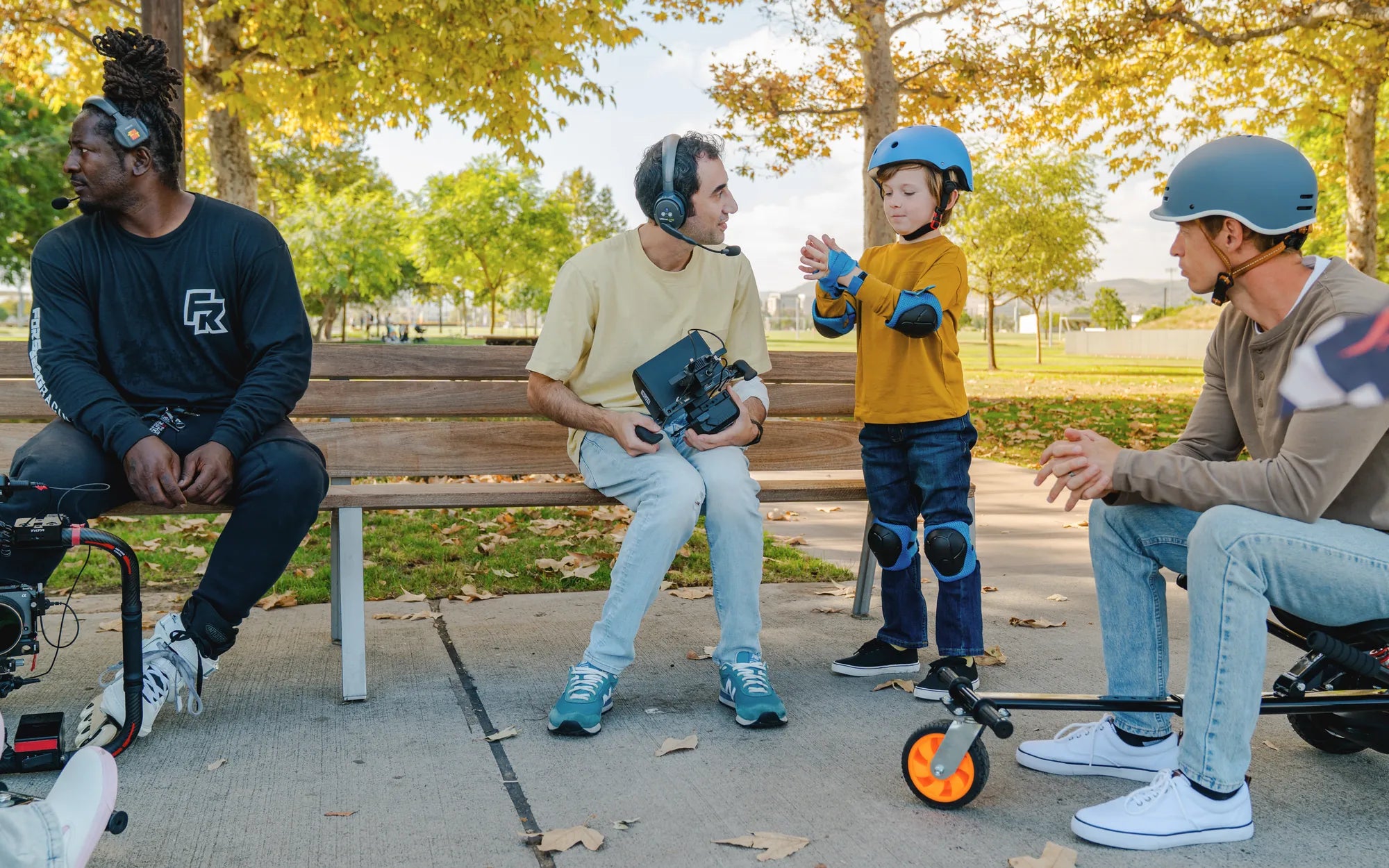
A helmet is non-negotiable and must be worn for every single ride, no matter how short. Wrist guards are arguably the second most important piece of gear, as falls naturally lead to putting hands out to brace, which can result in fractures or severe abrasions. Knee and elbow pads provide essential protection for joints during tumbles.
Supervision, especially during the learning phase and for younger children, is paramount. An adult should be present to choose an appropriate practice area and to help the child learn proper mounting and dismounting techniques. Establishing clear ground rules about where and when the hoverboard can be ridden is essential from day one.
Mandatory Protective Gear
Do not allow your child to ride until they are fully equipped with certified safety gear. This gear should be considered part of the hoverboard's total cost.
- Helmet: Must be CPSC (Consumer Product Safety Commission) certified for bicycle riding. It should fit snugly, sitting level on the head and covering the forehead. A multi-impact skate-style helmet is an excellent choice.
- Wrist Guards: These are designed with a splint to prevent the wrist from hyperextending during a fall. They are highly effective at preventing common hoverboard-related injuries.
- Knee and Elbow Pads: Look for pads with hard plastic caps and comfortable, breathable padding. They should stay securely in place during movement.
Investing in high-quality, comfortable gear increases the likelihood your child will wear it consistently. Make gearing up an unbreakable ritual before every ride.
Pre-Ride Checklist and Supervision
Develop a consistent pre-ride routine. This habit instills responsibility and catches potential issues before they become hazards.
First, inspect the hoverboard. Check tire pressure (for air-filled tires) for proper inflation. Look for any cracks in the body, loose parts, or debris stuck in the wheel wells. Ensure the battery is adequately charged using the correct charger. A low battery can lead to unexpected power loss.
Second, choose the environment. The ideal learning and primary riding area is a smooth, flat, paved surface away from traffic, such as an empty parking lot, tennis court, or smooth driveway. Avoid areas with slopes, sand, gravel, or wet surfaces initially. Always supervise rides near driveways, roads, or swimming pools.
Teaching Your Child to Ride: Basic Steps
Start with the hoverboard powered off and in beginner mode. Place it on a flat, stable surface next to a wall or railing for support.
Step 1: Mounting. Have your child place their dominant foot firmly on the footpad, keeping the board horizontal. Then, using the wall for balance, they should quickly but smoothly place their second foot on the other pad. The goal is to get both feet on symmetrically and find balance before the board is powered on.
Step 2: Powering On & Finding Balance. Once mounted and holding the wall, power the board on. The board will calibrate to level. Encourage them to stand upright, look forward (not down), and keep their knees slightly bent. The board will make minor adjustments to keep them upright.
Step 3: Basic Movement. To move forward, they should gently lean forward from the ankles, not the waist. To move backward, a slight lean back. To stop, they should return to an upright, neutral stance. Practice these basic leans while holding support before attempting free riding. Always step off backwards to dismount, never jump off forwards.
Frequently Asked Questions (FAQs) About Kids' Hoverboards
Parents naturally have many questions before introducing a hoverboard to their family. Here are detailed, evidence-based answers to the most common and critical queries.
What is the right age for a hoverboard?
Most manufacturers recommend hoverboards for riders aged 8 and up. However, age is less important than physical and mental readiness. The child should have sufficient lower-body strength and coordination to balance, weigh more than the board's minimum requirement (often around 44 lbs), and possess the maturity to understand and follow safety rules. A responsible 7-year-old may be ready, while some 10-year-olds may not be. Always assess your individual child's capabilities.
How long does the battery last, and how long to charge?
A typical kid's hoverboard with a quality battery offers 6 to 12 miles of range on a single charge, depending on rider weight, terrain, and speed. This usually translates to 60-90 minutes of continuous ride time. Charging time for a fully depleted battery is generally between 2 to 4 hours. It is crucial to only use the manufacturer-provided charger and to never leave the board charging unattended or overnight. Unplug it once the indicator shows a full charge.
Can it be ridden in the rain or on wet surfaces?
It is not advisable to ride any hoverboard in active rain. While models with an IPX5 rating, like the Gyroor S5, are protected against water jets and can safely traverse puddles and wet pavement, they are not waterproof or submersible. Riding in heavy rain or through deep standing water can damage the electrical components, cause corrosion, and create a slipping hazard on the foot pads. The best practice is to avoid wet conditions and always dry the board thoroughly if it does get wet.
What does the warranty cover?
A reputable warranty, like Gyroor's 1-year comprehensive warranty, covers defects in materials and workmanship under normal use. This typically includes the battery, motors, circuit boards, and structural frame. It does not cover damage from accidents, misuse, neglect, or wear parts like tires. The warranty's value lies in the manufacturer's confidence in their product and provides a recourse if a component fails prematurely. Always register your product and keep your proof of purchase.
Are hoverboards allowed on sidewalks and in public parks?
Local laws vary significantly. In many municipalities, hoverboards are treated similarly to electric scooters and may be prohibited on sidewalks, restricted to bike lanes, or limited to private property. Some public parks have specific rules against motorized vehicles. It is the parent's responsibility to research and comply with local ordinances. Teaching your child to be a respectful rider—yielding to pedestrians, controlling speed, and avoiding crowded areas—is essential regardless of the legal technicalities.
Conclusion: Prioritizing Smiles and Safety on Every Ride
Selecting the best hoverboard for kids in 2025 is an exercise in informed, safety-first decision-making. The joy and freedom a hoverboard provides are undeniable, but they must be built on a foundation of verified engineering standards. The non-negotiable starting point is the UL 2272 certification, the benchmark for electrical and fire safety that protects your home and your child.
From there, match the board's features to your child's needs: a gentle learning mode for beginners, all-terrain tires for explorers, or robust water resistance for real-world play. Remember that the hoverboard itself is only one component of the safety system. High-quality protective gear—a CPSC-certified helmet, wrist guards, and pads—is an essential investment that must be worn without exception.
By combining a well-chosen, reputable hoverboard like those from Gyroor with consistent safety practices and active supervision, you create an environment where fun and security coexist. This approach ensures that the thrill of gliding on a self-balancing scooter is paired with the peace of mind that comes from making smart, evidence-based choices for your family.
Ready to explore models that prioritize certified safety and durable performance? Browse the full Gyroor collection, trusted by over 100,000 riders, at gyroorboard.com to find the perfect match for your young rider's next adventure.
8 Inch Hoverboard with Bluetooth: The Ultimate Guide to Fun and Connectivity
Best Hoverboard for 9 Year Old: A Complete Buying Guide