



Introduction: Why the Right Hoverboard Matters
Choosing the best hoverboard is about far more than picking the flashiest design. It's a decision that impacts safety, enjoyment, and long-term value. Today's self-balancing scooters have evolved from novelty items into legitimate personal transport devices and recreational vehicles, capable of handling commutes, off-road trails, and family fun. With this evolution comes a critical need for informed selection.
This guide is designed to be your definitive resource. We will dissect the technical specifications that matter, translate marketing jargon into practical advice, and help you match a board's capabilities to your specific needs. Our goal is to empower you with knowledge, ensuring your investment is safe, reliable, and perfectly suited to your lifestyle. Leading brands like Gyroor, trusted by over 100,000 riders across North America and Europe, have set new standards in safety and performance that we will use as benchmarks throughout this guide.
Key Factors to Consider Before Buying
Navigating the hoverboard market requires a focus on foundational specifications. These are the non-negotiable elements that separate a quality, durable product from a potentially hazardous one. Ignoring these factors can lead to disappointment or, worse, safety incidents.
Performance is quantified through a few key metrics. The combined wattage of the dual motors determines torque, affecting top speed and hill-climbing ability. Battery capacity, measured in watt-hours (Wh) or amp-hours (Ah), directly dictates your maximum range. Always cross-reference the advertised range with the battery capacity; a realistic estimate is about 10-12 miles per 36V 4.0Ah battery. Finally, the weight capacity isn't just about the rider's weight—it's an indicator of the board's overall structural integrity and motor strength.
Safety First: UL 2272 Certification and Battery Quality
The single most important feature of any hoverboard is the UL 2272 certification. This rigorous standard, developed by Underwriters Laboratories, tests the entire electrical system—battery, charger, and circuitry—for fire and electrical safety. A board without this certification poses a significant risk of overheating or combustion. It is an absolute prerequisite for a safe purchase.
Beyond the certification, battery quality is paramount. Reputable brands like Gyroor use high-quality, UL-certified lithium-ion battery packs that undergo extensive testing for over 500 charge cycles. These packs include advanced Battery Management Systems (BMS) to prevent overcharging, over-discharging, and short circuits. This engineering focus ensures not only safety but also consistent performance and longevity, making it a critical factor in identifying the best hoverboard.
Performance Specs: Speed, Range, and Weight Capacity
Understanding performance specs requires looking beyond peak numbers. A board with 500W dual motors will typically offer a top speed of 9-10 mph and can handle moderate inclines up to 15 degrees. For serious off-roading, look for 600W or higher. Range is the most commonly inflated spec. A 36V 4.4Ah battery provides a real-world range of 10-12 miles for a 165 lb rider, while a 36V 6.5Ah battery may reach 15-18 miles, depending on terrain, rider weight, and speed.
Weight capacity is a dual-purpose metric. It ensures the board can safely support the rider, but it also reflects the quality of materials used in the frame, axle, and motors. A board with a 220 lb capacity is generally built with more robust components than one rated for 160 lbs. Always choose a board with a capacity at least 20-30 lbs above your weight for a safety buffer and to preserve performance.
Build Quality and Durability: Tires and Water Resistance
The choice between tire types defines where you can ride. Solid rubber tires (6.5"-8.5") are maintenance-free and perfect for smooth urban surfaces like pavements and indoor floors. For rougher terrain, pneumatic (air-filled) tires (8.5" or larger) provide essential shock absorption, improving comfort and traction on grass, gravel, and dirt paths. Some advanced all-terrain models feature knobby, treaded pneumatic tires for maximum off-road grip.
Durability is also about environmental protection. An IP rating indicates resistance to dust and water. An IPX4 rating means it can handle water splashes, but for true peace of mind against puddles and light rain, look for IPX5. Gyroor designs its boards with an IPX5 water-resistant rating, meaning the electronics are protected against low-pressure water jets from any direction. This feature significantly expands your riding opportunities and protects your investment from common hazards.
Hoverboard Types: Matching the Board to Your Lifestyle
The "best" hoverboard is subjective and entirely dependent on how you plan to use it. The market has segmented into distinct categories, each optimized for different environments and user profiles. Identifying your primary use case is the fastest way to narrow your search.
The Urban Commuter & Casual Rider
For city dwellers and casual users, the priority is a blend of portability, smooth ride quality, and sleek design. Ideal boards feature 6.5" to 8.5" solid rubber tires for a quiet, low-maintenance ride on sidewalks and bike paths. A moderate range of 10-12 miles is usually sufficient for short commutes or recreational loops. Look for a lightweight design (under 25 lbs) for easy carrying, built-in LED lights for visibility, and a streamlined profile. These models prioritize everyday practicality and ease of use.
The Off-Road & All-Terrain Enthusiast
If your adventures lead off the paved path, you need a machine built for toughness. The best hoverboard for off-roading requires specific features: large pneumatic tires (≥8.5") with deep treads for traction, high-torque dual motors (≥500W each) to power through grass and up hills, and a robust frame with enhanced suspension. These boards have higher ground clearance, more aggressive styling, and higher weight capacities. They are designed to absorb impacts from uneven terrain, providing a stable and powerful ride where standard boards would fail.
The Family-Friendly & Beginner Model
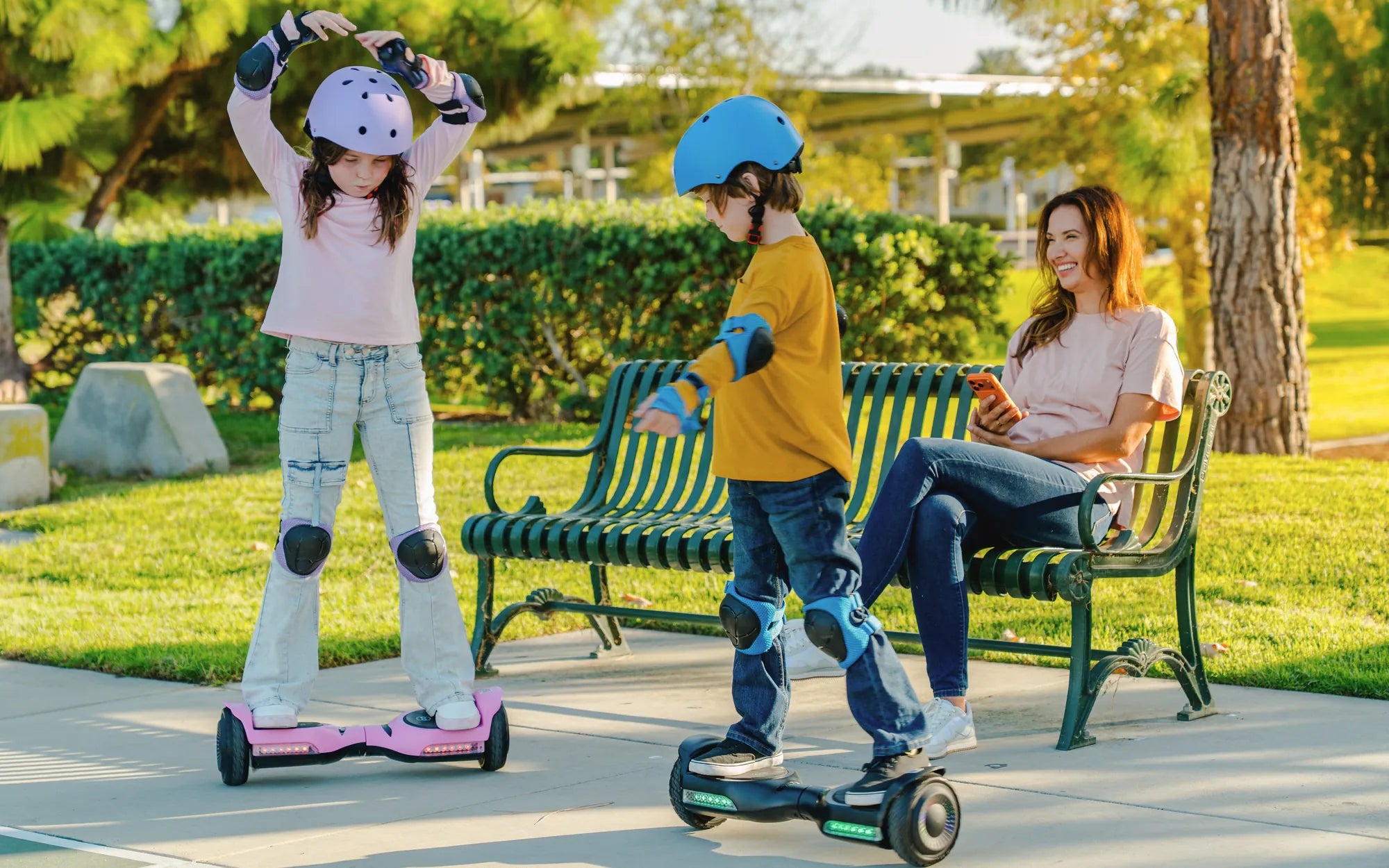
Safety and stability are paramount for younger riders or first-time users. Beginner-focused models often include features like a "Learning Mode" that caps the speed (e.g., 4-5 mph) while the rider gains confidence. They maintain essential safety certifications like UL 2272 but may have slightly lower top speeds and ranges to match a younger rider's needs. Durable construction to withstand the occasional bump or drop is also key. These models provide a secure and forgiving platform to master the fundamentals of balance and control.
Gyroor Spotlight: Engineering Trust and Performance
As a leader in personal electric transport, Gyroor's design philosophy centers on three pillars: certified safety, rugged durability, and rider-focused performance. By examining their approach, we can establish a benchmark for what to expect from a high-quality brand in the search for the best hoverboard.
The Gold Standard in Battery Safety
Gyroor's commitment to safety is exemplified by its exclusive use of UL 2272-certified battery packs. This isn't just a label; it represents a manufacturing standard. Each battery cell is sourced from reputable suppliers and assembled into packs with multi-layer protection systems. These systems monitor temperature, voltage, and current in real-time, automatically shutting down if irregularities are detected. This engineering rigor ensures the battery operates within safe parameters for its entire lifespan, providing the ultimate peace of mind that is essential for any personal transportation device.
Built to Last: IPX5 and the 1-Year Warranty
Durability is engineered into Gyroor boards from the inside out. The IPX5 water-resistance rating is achieved through sealed compartments, gaskets, and specialized coatings on electronic components. This means riders don't have to panic at the sight of a puddle or light drizzle. This practical durability is backed by a comprehensive 1-year warranty covering the battery, motor, and frame. This warranty, supported by US-based customer service, reflects the brand's confidence in its products and provides tangible long-term value to the rider, protecting their investment.
Model Comparison: From City Streets to Rugged Trails
To illustrate how specs align with lifestyle, here is a comparison of key features across different riding profiles, using Gyroor's engineering principles as a reference.
| Model Type | Ideal Rider | Tire Type | Motor Power | Key Feature |
|---|---|---|---|---|
| Urban Glider | Commuter, Casual Rider | 8.5" Solid Rubber | 500W Dual | Sleek Design, LED Lights, IPX5 |
| Trail Master Pro | Off-Road Enthusiast | 10" Pneumatic, Treaded | 600W Dual | All-Terrain, High Torque, Robust Frame |
| Starter Series | Beginner, Younger Rider | 6.5" Solid Rubber | 350W Dual | Learning Mode, Stable Platform, UL 2272 |
Smart Buying Tips and Final Checklist
Armed with knowledge about specs and types, applying smart strategies during the purchase process is the final step. This ensures you receive a genuine, high-quality product and are prepared for ownership.
Where to Buy and How to Verify Authenticity
Always purchase from official brand websites or authorized retailers. Third-party marketplaces are rife with uncertified, counterfeit products that mimic popular designs but use substandard, dangerous components. When you receive your board, verify its authenticity by checking for official branding, a valid serial number, and the ability to register the product for its warranty on the manufacturer's official site. A legitimate best hoverboard will have clear traceability to its maker.
Pre-Ride Checklist and Maintenance Basics
Before your first ride, gear up. A certified helmet, knee pads, and elbow pads are non-negotiable for safety. For maintenance, regularly check pneumatic tire pressure, wipe down the board with a damp cloth (never hose it down), and store it in a cool, dry place away from direct sunlight. Follow proper battery care: avoid draining it completely, don't leave it on the charger indefinitely after it's full, and use only the provided charger. These simple habits drastically extend your board's life.
Your Final Hoverboard Selection Checklist
- Safety Certified: Does it have official UL 2272 certification?
- Right Terrain Match: Are the tires (solid vs. pneumatic) appropriate for your primary riding surfaces?
- Range Reality: Does the battery capacity (e.g., 4.4Ah, 6.5Ah) support your desired travel distance?
- Durability: Does it have a sufficient IP rating (IPX4 minimum, IPX5 ideal) for your weather conditions?
- Warranty: Is there a comprehensive manufacturer's warranty of at least 1 year?
- Rider Fit: Does the weight capacity comfortably exceed your weight, and is the size/portability right for you?
Frequently Asked Questions (FAQ)
Q1: Are hoverboards still popular, and are they safe?
A: Yes, hoverboards remain popular for personal mobility and recreation. Their safety is directly tied to purchasing a UL 2272-certified model from a reputable brand. With proper certification, gear, and responsible riding, they are a safe activity.
Q2: How long does a hoverboard battery last before needing replacement?
A>A high-quality UL-certified battery, like those used by Gyroor, is rated for 500+ full charge cycles. With typical use, this translates to 2-4 years before you might notice a significant reduction in range. Proper charging habits are key to maximizing lifespan.
Q3: Can adults ride hoverboards?
A>Absolutely. Many models are designed specifically for adults, with weight capacities up to 265 lbs or more. The key is to select a board with a motor power and weight rating appropriate for the rider's size for optimal performance and safety.
Q4: What is the difference between a hoverboard and an electric scooter?
A>Hoverboards (self-balancing scooters) are controlled by leaning and have no handlebars. Electric scooters have a handlebar for steering, a deck to stand on, and often a seat option. Scooters generally offer higher speeds and longer ranges, while hoverboards offer a more compact and nimble ride.
Q5: Can I ride a hoverboard in the rain?
A>It depends on the board's IP rating. A board with an IPX4 rating can handle light splashes. A board with an IPX5 rating, like Gyroor's models, is protected against low-pressure water jets and can safely be ridden through puddles and in light rain. Avoid heavy rain, standing water, and submerging any board.
Conclusion: Your Journey Awaits
Finding the best hoverboard is a process of aligning certified safety with performance features that suit your world. It's a purchase where due diligence pays dividends in security, fun, and longevity. By prioritizing UL 2272 certification, understanding the implications of motor power and battery capacity, and choosing a build that matches your terrain, you transform from a casual shopper into an informed buyer.
Brands that stand behind their products with rigorous testing, meaningful water-resistance ratings, and strong warranties offer the value and peace of mind that define a top-tier ride. Your perfect board is out there, engineered for the trips you imagine—whether that's a quick commute, a backyard adventure, or a family learning experience. Ride responsibly, gear up, and enjoy the unique freedom that comes with a well-chosen, high-quality hoverboard. Ready to explore models that put safety and performance first? Browse the full Gyroor collection at gyroorboard.com.
Actual Hoverboard: The Future of Personal Transportation Is Here
Kids Scooter Parts: Essential Components for Safe and Fun Rides