



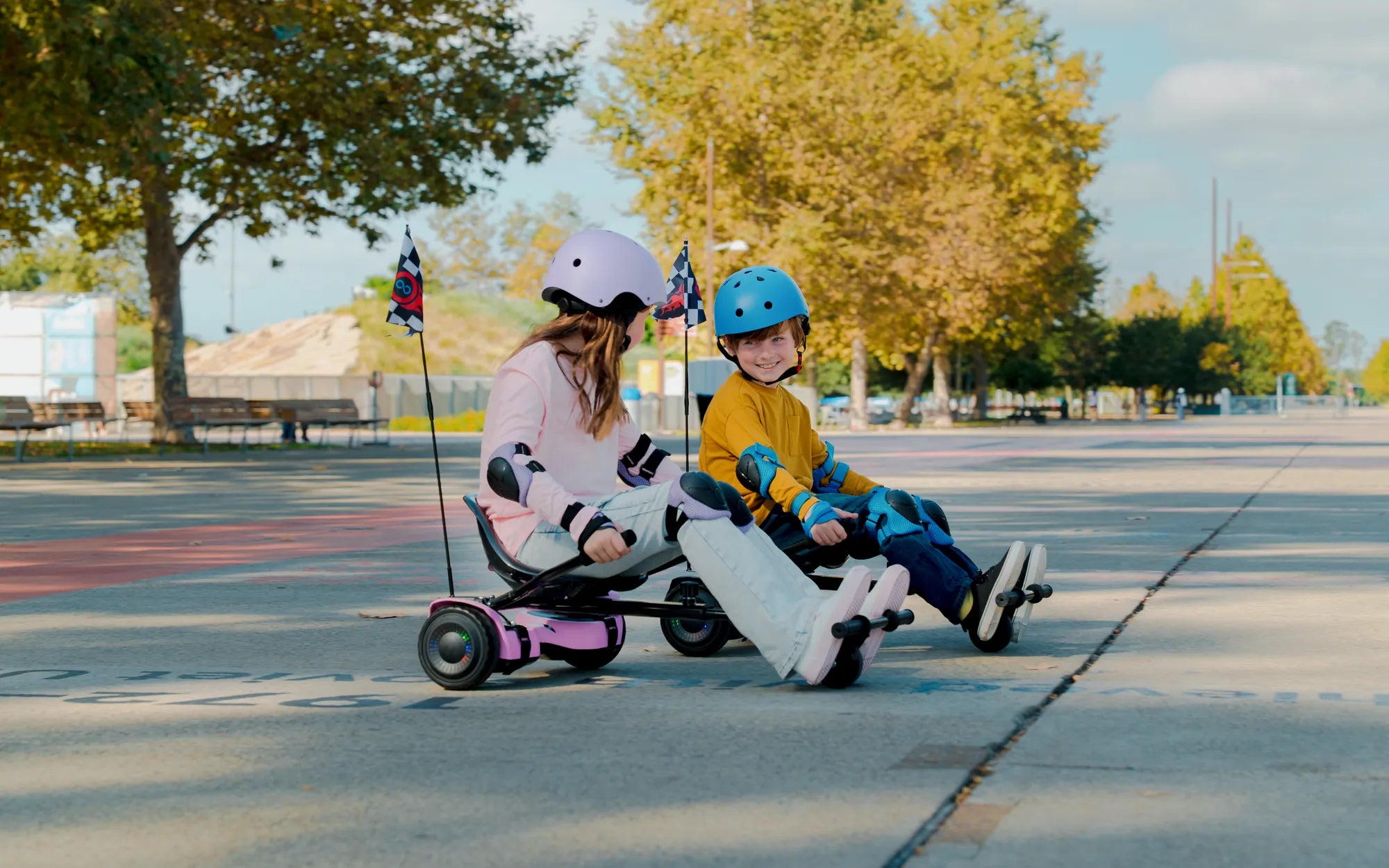
Introduction: Finding the Perfect First Wheels in New Zealand
Choosing the best kids scooter in NZ is about more than just picking a toy. It's about selecting a vehicle for adventure, development, and outdoor fun that can withstand the unique demands of Kiwi life. From Auckland's waterfront paths to Christchurch's park trails, a scooter becomes a child's passport to exploration and physical activity.
This guide will walk you through every critical factor, from safety certifications to terrain suitability. You'll learn how to match a scooter to your child's age and skill level, understand the importance of durable construction, and discover features that offer genuine value. Our goal is to equip you with the knowledge to make a confident, informed purchase that ensures years of safe riding.
We'll analyze different scooter types, highlight non-negotiable safety features, and provide specific maintenance advice for New Zealand's climate. The best kids scooter NZ parents can buy is one that grows with the child, encourages active play, and is built to last. Let's begin the journey to finding that perfect ride.
Why Scooting is Fantastic for Kiwi Kids
Scooting delivers exceptional physical benefits for developing children. It builds core strength, improves overall balance, and enhances gross motor coordination. The repetitive kicking motion strengthens leg muscles and promotes cardiovascular health, making it an ideal activity for New Zealand's emphasis on an active outdoor lifestyle.
Beyond physical health, scooting fosters mental and emotional growth. Mastering a scooter boosts a child's confidence and sense of independence. It teaches spatial awareness, risk assessment, and perseverance. Socially, it's an activity kids can enjoy together at parks, bike tracks, or simply cruising the neighborhood.
In a digital age, a scooter provides a compelling reason to get outside. It transforms local errands or trips to the park into mini-adventures. For New Zealand families, it's a practical, fun, and relatively low-cost way to embrace the country's beautiful landscapes and promote a healthy, screen-balanced routine from an early age.
Key Factors to Consider Before You Buy
Navigating the market for the best kids scooter in NZ requires a methodical approach. Price alone is a poor indicator of quality or suitability. Instead, parents should evaluate a combination of factors that directly impact safety, longevity, and enjoyment. These factors ensure the scooter is a good fit for both the child and the local environment.
A well-chosen scooter should feel like an extension of the child, not a challenge to overcome. It must be stable, responsive, and appropriately sized. Ignoring key criteria can lead to frustration, lack of use, or worse, safety incidents. The following sections break down the essential considerations every parent must weigh.
Age, Height, and Skill Level
These are the foundational metrics for selecting any scooter. A model perfect for an 8-year-old will be dangerous and unstable for a 3-year-old. The child's age provides a general bracket, but their specific height and coordination are more precise guides.
For beginners (typically ages 2-5), stability is paramount. A three-wheel design, especially a lean-to-steer model, is almost always the best kids scooter NZ parents can choose for this stage. It allows the child to focus on balance and propulsion without wrestling with handlebar steering.
As children grow (ages 5-8), they graduate to two-wheel kick scooters. These require more balance and coordination. The handlebar height should allow the child to stand upright with a slight bend in the elbows, preventing hunching. Always defer to the manufacturer's recommended height range over age alone.
For confident riders aged 8 and above, more advanced features like hand brakes, suspension, or larger wheels become appropriate. This is also the age where some families may consider electric scooters, with strict adherence to safety and local regulations.
Safety Features Non-Negotiables
Safety is not an optional extra. The construction and design of the scooter itself are the first line of defense. A robust, reliable braking system is critical. For young children on 3-wheel scooters, the lean-to-steer mechanism and rear fender brake (activated by stepping down) are simple and effective.
Older children on two-wheel models benefit from a hand-operated brake, usually on the rear wheel. This brake should engage smoothly and progressively without locking the wheel. The deck must be wide enough for a stable footing and feature a non-slip surface, especially important in New Zealand's often damp conditions.
The overall build quality prevents failures. Look for reinforced welds at stress points, such as the headset and deck connection. Handlebars should have durable end caps or grips that extend beyond the metal tube to protect against impacts. There should be no sharp edges or pinch points anywhere on the scooter's frame.
Durability for the NZ Environment
New Zealand's varied terrain—from smooth urban footpaths to slightly gritty suburban driveways—demands a tough scooter. The materials used directly impact longevity and performance. The frame is most commonly made from aluminium or steel. Aluminium offers a great strength-to-weight ratio and is rust-resistant, a key advantage in coastal areas.
Wheel composition is crucial. Polyurethane (PU) wheels are standard and offer good speed on smooth surfaces. For more vibration absorption on rougher paths, air-filled rubber tyres or models with integrated suspension are superior choices. These features make for a more comfortable ride on uneven surfaces common in many Kiwi neighborhoods.
Bearings, often overlooked, determine how smoothly the wheels spin. ABEC-rated bearings (e.g., ABEC-7 or ABEC-9) indicate higher precision and durability. A scooter that rolls easily encourages use and is less taxing for the child. Finally, check that all nuts and bolts are made from quality, corrosion-resistant materials to handle exposure to the elements.
Growth and Adjustability
Children grow rapidly, and a scooter that fits today may be too small in six months. Adjustable handlebars are the single most important feature for extending a scooter's useful life. Look for models with a wide height adjustment range, typically using a simple clamp or quick-release mechanism that parents can easily operate.
The best kids scooter NZ families invest in will grow with the child for several years. A model with a 15-20cm adjustment range can often span from age 4 to age 9 or beyond. This adjustability not only provides better value but also ensures the child maintains an optimal, safe riding posture at all times, preventing the development of poor habits from a scooter that's too small.
Understanding Scooter Types: From Toddlers to Tweens
The market offers distinct scooter categories, each designed for a specific stage of a child's development. Understanding these types is key to matching the product to the child's current abilities, ensuring a positive and safe introduction to riding. The wrong type can quickly lead to discouragement or accidents.
Transitioning between types should be based on skill, not just age. A child who has mastered balance and steering on a three-wheeler will naturally progress to a two-wheel model. The following breakdown clarifies the primary scooter categories available to New Zealand families.
3-Wheel Scooters (Lean-to-Steer)
These are the undisputed best kids scooter NZ choice for toddlers and preschoolers. The defining feature is the two front wheels configured in a way that allows the scooter to turn by leaning, not by twisting the handlebars. This intuitive steering method mirrors the body's natural balance movements.
This design provides a wide, triangular wheelbase that offers exceptional stability, preventing tip-overs as the child learns. It allows young riders to concentrate on the mechanics of kicking, balancing, and stopping. Most models in this category have a low deck height, making it easy for small legs to mount and push off.
They are perfect for children aged approximately 2 to 5 years old. The simplicity and safety of the lean-to-steer mechanism build confidence quickly. When searching for the best kids scooter NZ has for beginners, a robust three-wheel model should be at the top of your list.
2-Wheel Kick Scooters
This is the classic scooter design, suitable for children aged 5 and up who have developed good balance. It features one wheel at the front and one at the back, requiring the rider to steer directly by turning the handlebars and maintaining upright stability.
These scooters are generally lighter and more maneuverable than three-wheel models, making them ideal for tricks, faster riding, and covering longer distances, such as commuting to school. They often come with more advanced features like folding mechanisms for easy storage and transportation.
For New Zealand's varied paths, consider a two-wheel scooter with larger, air-filled rubber tyres or a front suspension system. These features absorb bumps and provide a smoother ride on surfaces that aren't perfectly smooth, which is a common scenario outside major city centers. This adaptability is a key trait of the best kids scooter NZ kids can use for daily adventures.
Electric Scooters for Older Kids
Electric scooters introduce motorized assistance and are strictly for older children and teenagers, typically 12-14 years and up depending on the model's power and speed. They are not toys and require a mature understanding of road rules, spatial awareness, and safety protocols.
Before purchasing an e-scooter for a child, it is imperative to check your local council's specific bylaws regarding their use on footpaths and cycle lanes. Regulations concerning age, speed limits (often 15km/h or 20km/h on footpaths), and where they can be ridden vary across New Zealand.
Safety gear is non-negotiable. A certified bicycle helmet is an absolute minimum; knee and elbow pads are highly recommended. Parents must ensure the child is trained to use the brakes effectively at higher speeds and understands the importance of being hyper-aware of pedestrians and other path users.
Spotlight on Gyroor: Engineered for Young Riders
Gyroor brings its extensive expertise in adult electric mobility to the youth market, creating scooters that emphasize safety, durability, and thoughtful design. As a brand trusted by over 100,000 riders globally, their approach to children's scooters is informed by a deep understanding of engineering and real-world use.
Safety is engineered into every Gyroor scooter. This includes reliable, child-appropriate braking systems designed for easy engagement, wide and stable decks for confident footing, and robust frames constructed from high-quality materials. Their designs rigorously avoid sharp edges, creating a safer riding experience for active kids.
Durability is a core principle. Gyroor scooters are built to withstand the energetic play of children and the environmental factors present in New Zealand. From the quality of the wheel bearings to the corrosion-resistant fittings, the focus is on creating a product that lasts, offering parents genuine value for money and reducing waste from premature product failure.
Gyroor models often feature easily adjustable handlebars with a significant range, allowing the scooter to grow with the child over several years. This commitment to longevity, combined with their rigorous safety standards, makes them a compelling contender when searching for the best kids scooter NZ retailers have to offer.
The Parent's Checklist: Your Pre-Purchase Guide
Use this actionable checklist to evaluate any scooter you are considering. It consolidates the key factors from this guide into a quick-reference format to ensure no critical aspect is overlooked during your search for the best kids scooter NZ market provides.
- Fit & Growth: Does the handlebar height adjust to your child's current height with room for at least 10cm of growth? Is the deck height low enough for easy kicking?
- Safety Inspection: Test the brake—it should engage smoothly and firmly. Check for any sharp edges, pinch points, or wobbly components. Ensure handlebar grips are secure and have protective end caps.
- Stability & Ride: For beginners, a 3-wheel lean-to-steer model is essential. For older kids, does the scooter feel stable when standing on it? Are the wheels suitable for your local surfaces (e.g., PU for smooth paths, rubber/air-filled for rougher ones)?
- Build Quality: Examine the construction. Is the frame sturdy without excessive flex? Are the folding mechanisms (if present) robust and secure? Do the components feel solid or cheap and plasticky?
- Reviews & Reputation: Read NZ-based customer reviews focusing on durability and after-sales support. Does the brand have a positive reputation for standing behind its products?
Comparison of Primary Scooter Types
| Feature / Type | 3-Wheel (Lean-to-Steer) | 2-Wheel Kick Scooter | Electric Scooter (Teens) |
|---|---|---|---|
| Ideal Age Range | 2 - 5 years | 5 - 12+ years | 12 - 14+ years |
| Primary Use | Learning balance, park play | Active transport, tricks, fitness | Commuting, longer distance fun |
| Key Advantage | Intuitive steering, maximum stability | Lightweight, maneuverable, versatile | Motor-assisted, less physical effort |
| Steering Method | Lean body weight to turn | Turn handlebars directly | Turn handlebars directly |
| Braking System | Rear fender/step brake | Hand brake (rear) and/or fender brake | Electronic & mechanical hand brakes |
| Terrain Suitability | Smooth, flat surfaces (footpaths, driveways) | Smooth to slightly rough paths (with appropriate wheels) | Paved surfaces only (footpaths, cycle lanes) |
| Parental Considerations | Supervision always required | Teach road/path awareness; helmet essential | Check local bylaws; mandatory safety gear; charge safety |
Frequently Asked Questions (FAQs)
Q: What age is suitable for a child to start using a 2-wheel scooter?
A: Most children are ready to transition from a 3-wheel to a 2-wheel scooter around age 5 or 6. The key indicators are confidence and mastery on their three-wheeler, including good speed control, effective braking, and demonstrated balance. Never force the transition; let the child's ability guide the decision.
Q: Are helmets legally required for kids on scooters in New Zealand?
A: While the law may not explicitly mandate helmets for footpath scooting in all cases, it is an absolute non-negotiable from a safety perspective. New Zealand's ACC and all safety advocates enforce a simple rule: No helmet, no scooter. A certified bicycle helmet must be worn every single time to protect against head injuries.
Q: My child is tall for their age. How do I choose the right size scooter?
A: Always use the manufacturer's recommended height range, not just the age guide. Have your child stand on the scooter deck. The handlebars should be between their waist and lower chest when standing straight, allowing for a slight, comfortable bend in the elbows when gripping. Prioritize models with the widest adjustability range.
Q: Where are the best and safest places for kids to ride scooters in NZ?
A: Stick to controlled environments away from traffic. Ideal locations include public parks, dedicated pump tracks or BMX areas (for skilled riders), smooth footpaths in quiet residential areas, and school playgrounds during off-hours. Always supervise young children and teach older kids to be courteous to pedestrians.
Q: How do I maintain my child's scooter to ensure it lasts?
A: Regular simple checks are crucial. Every few weeks, tighten all bolts and clamps (handlebars, stem, wheels). Ensure brakes engage correctly and aren't worn down. Keep wheel bearings clean by wiping away grit and dirt; a drop of light lubricant can help if they become stiff. Store the scooter indoors or undercover to protect it from prolonged sun and rain exposure.
Conclusion: Ready, Set, Scoot!
The quest for the best kids scooter NZ has available ends with a model that seamlessly blends safety, durability, and fun. By prioritizing your child's current skill level, choosing a scooter with robust construction for New Zealand conditions, and ensuring a proper fit with room to grow, you're investing in countless hours of healthy, outdoor activity.
Remember, the helmet is as important as the scooter itself. Pair your careful selection with proper safety gear and clear rules about where and how to ride. A high-quality scooter from a reputable brand is not an expense, but an investment in your child's development and joy.
For parents seeking reliable, thoughtfully engineered options that align with these principles, exploring the Gyroor collection is a logical next step. Their focus on safety-centric design and durable build quality offers a strong foundation for a child's riding journey. Discover models designed to empower young riders safely and last through years of adventure.
Browse the full Gyroor collection at gyroorboard.com to find a scooter engineered for your child's next adventure.
Off Road Self Balancing Scooter: The Ultimate Adventure Companion
Best Pro Scooter for Kids: Top Picks for Young Riders in 2024