



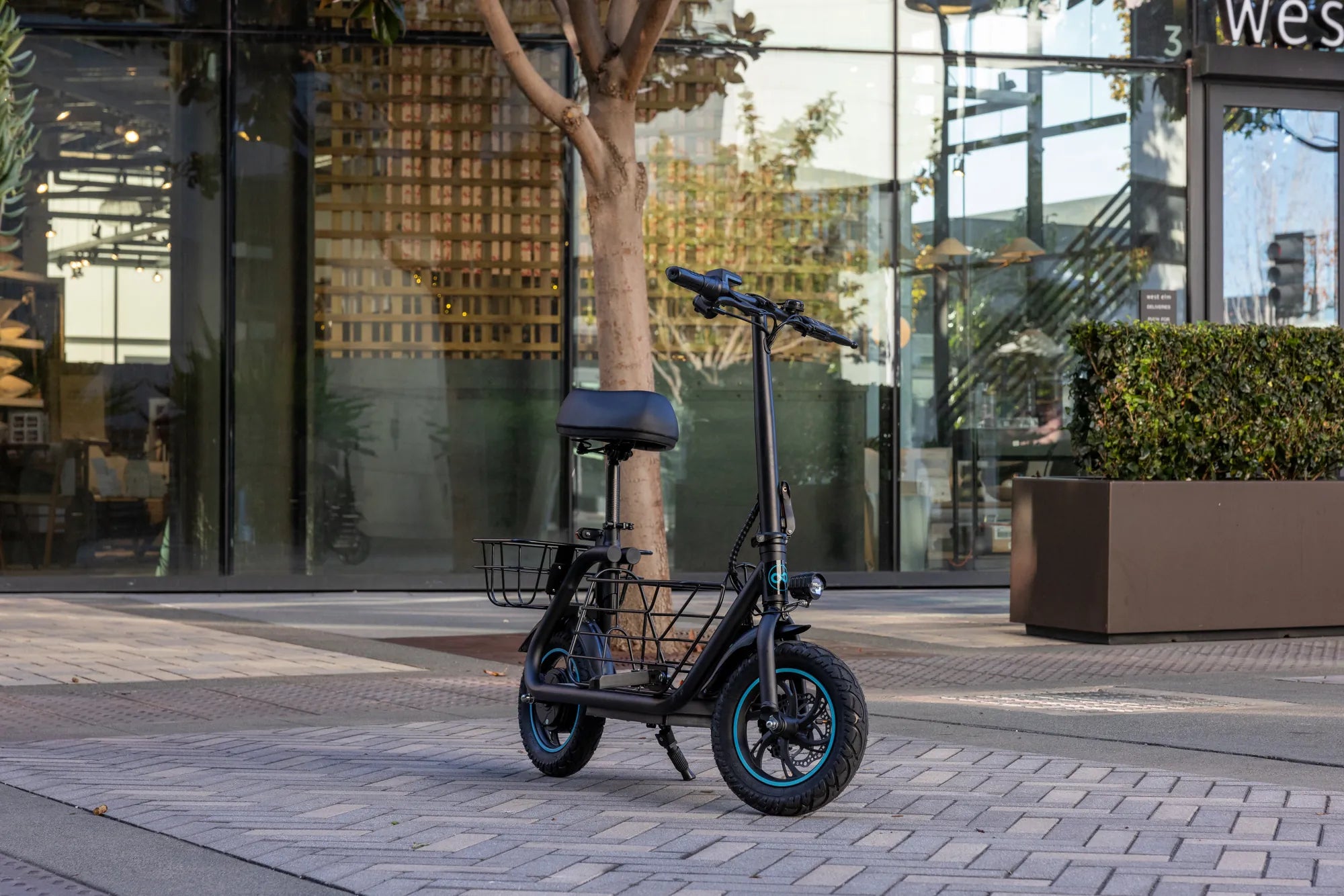
The Allure and Utility of the Motorcycle-Style E-Bike
Forget the thin tubes and upright posture of a traditional bicycle. The best motorcycle style ebike delivers a visceral riding experience, blending the commanding stance and aesthetic of a classic motorbike with the silent, efficient, and accessible power of electricity. This category, often called moped-style or scrambler e-bikes, is not just about looks. It represents a fundamental shift towards powerful, versatile electric mobility that appeals to urban commuters demanding serious range and comfort, adventure seekers craving off-road torque, and riders who want substantial performance without the complexity of a gas engine or a motorcycle license.
The core appeal lies in its capability. These are e-bikes built to dominate hills, carry cargo or a passenger, and tackle varied terrain with confidence. They bridge the gap between a standard e-bike and an electric motorcycle, offering thrilling acceleration and extended range while typically remaining classified as bicycles in most jurisdictions. Choosing the best motorcycle style ebike requires understanding the engineering behind the rugged facade.
This guide will dissect the essential features, from frame design to battery technology. We will provide a clear framework to evaluate models based on your specific riding goals, whether that's a daily 20-mile commute or weekend trail exploration. Furthermore, we will underscore the critical importance of build quality, safety certifications, and warranty support—factors that separate a lasting investment from a disposable gadget.
What Defines a Motorcycle-Style E-Bike? Key Features to Look For
Distinguishing a true motorcycle-inspired e-bike from a standard model with aggressive styling comes down to a combination of form and formidable function. These machines prioritize power, durability, and rider experience over minimalist design. The best motorcycle style ebike models share several non-negotiable characteristics that directly impact performance, safety, and long-term satisfaction. Ignoring these features in favor of cosmetic details alone is a recipe for disappointment.
The foundation is a frame that can handle stress. The motor must deliver real-world torque. The battery needs to support substantial distances. Finally, the suspension and brakes must be capable of managing the increased speeds and weights involved. When these elements are engineered in harmony, the result is an electric vehicle that feels planted, powerful, and genuinely useful. Let's break down each of these defining pillars.
Rugged, Step-Through Frame Design
The signature element is a sturdy, often steel or reinforced aluminum, step-through frame. This design mimics the lower-slung profile of a motorcycle or scooter, making mounting and dismounting intuitive and stable, especially when carrying groceries or stopping at a light. Unlike the high top tube of a mountain bike, this architecture is accessible for a wider range of riders.
More than just convenience, this frame type is built for strength. It provides a rigid platform for mounting high-torque motors and large battery packs. The geometry typically positions the rider in a more relaxed, slightly rearward stance, improving comfort on longer rides. A quality frame is the bedrock of the bike's load capacity, longevity, and overall feel of solidity on the road.
High-Torque Hub or Mid-Drive Motors
Power is paramount. The best motorcycle style ebike is equipped with a motor rated at 750 watts or higher, with many premium models featuring 1000W, 1500W, or even 2000W systems. This wattage translates directly to acceleration and hill-climbing ability. A 750W motor can comfortably tackle most urban inclines, while a 1500W motor provides motorcycle-like launch and can conquer steep off-road trails.
You'll encounter two main types: hub motors and mid-drive motors. A robust rear hub motor is common, offering simplicity, direct power delivery to the wheel, and often lower cost. A mid-drive motor, mounted at the bike's crank, leverages the bicycle's gears, making it exceptionally efficient on hills and varying terrain, though often at a higher price point. For pure, unadulterated torque, a high-wattage hub motor is a hallmark of this style.
Long-Range, High-Capacity Batteries
A powerful motor is useless without a substantial energy source. Motorcycle-style e-bikes distinguish themselves with high-voltage, high-capacity battery packs. Look for systems rated at 48V or 52V, with amp-hour (Ah) ratings of 17.5Ah, 20Ah, or higher. This combination (Volts x Amp-hours = Watt-hours) determines total energy storage.
A 48V 20Ah battery provides 960 watt-hours of energy. In real-world terms, this can translate to 40-60 miles of range using pedal assist, or 20-35 miles of throttle-only riding, depending on terrain, rider weight, and assist level. The battery's quality is critical. It must be robust, securely integrated into the frame (often in a downtube for a sleek look and low center of gravity), and, most importantly, built with safety as the top priority.
Premium Suspension and Braking Systems
With greater speed and weight comes a greater need for control and comfort. A front suspension fork with at least 80mm of travel is standard, and many models add a rear shock (dual suspension) to absorb bumps from potholes or trail roots. This system protects the frame, the components, and the rider from fatigue and impact.
Equally critical is the braking system. Mechanical disc brakes are a minimum, but hydraulic disc brakes are the gold standard for this class. They offer superior modulation, more consistent performance in wet conditions, and require less hand strength, providing confident, fade-resistant stopping power essential for a vehicle that can easily exceed 28 mph. This combination of suspension and braking transforms a powerful bike into a safe and manageable one.
Top Considerations When Choosing Your Ride
Selecting the best motorcycle style ebike requires moving beyond a spec sheet comparison. It demands a honest assessment of how you will use the bike, where you will ride it, and what you value in terms of ownership experience. A bike perfect for paved city streets may be ill-suited for forest trails, and vice versa. This decision-making framework focuses on use case, technical understanding, and long-term value.
The goal is to match the bike's capabilities to your lifestyle. A commuter's priorities—weather resistance, integrated storage, and lighting—differ vastly from an adventurer's needs for knobby tires and extreme ground clearance. Furthermore, understanding key specifications empowers you to see past marketing claims. Finally, the build quality and warranty determine whether your purchase is a source of joy or frustration for years to come.
Assessing Your Primary Use Case: Commute vs. Adventure
Your riding environment dictates the ideal feature set. For the urban commuter, practicality reigns supreme. Prioritize models with full fenders to handle puddles, integrated rear racks for panniers or cargo, and bright, always-on lighting (headlight, taillight, turn signals). A key spec is the Ingress Protection (IP) rating for water and dust resistance; an IPX5 rating means the bike can withstand water jets, making it confidently rain-ready.
For the adventure or trail rider, the focus shifts to capability. Look for fat tires (4 inches wide or more) with aggressive tread for sand, snow, and loose dirt. Increased ground clearance is necessary to clear obstacles. Dual suspension with longer travel (100mm+) becomes more important for comfort on rough terrain. The motor should be high-torque, and the frame should have multiple mounting points for water bottles and gear. The best motorcycle style ebike for you aligns perfectly with your dominant terrain.
Decoding Specifications: Voltage, Amp-Hours, and Wattage
These three electrical specs are the language of e-bike performance. Voltage (V) is like water pressure; higher voltage (48V vs. 36V) generally allows the motor to run more efficiently and can contribute to higher top speeds. Amp-hours (Ah) is the size of the water tank; it indicates capacity. A 20Ah battery can deliver 20 amps of current for one hour (theoretically).
Multiply Voltage by Amp-hours to get Watt-hours (Wh), the total energy in the tank. A 48V 20Ah battery has 960Wh. More Wh equals more potential range. Motor Wattage (W) is the power output. A 750W motor can draw up to 750 watts of power from the battery at peak. Higher wattage means more torque and acceleration, but it also drains the battery faster at full throttle. Understanding these relationships helps you compare models meaningfully.
The Importance of Build Quality and Warranty
An e-bike is a complex electromechanical system. The quality of welding on the frame, the grade of aluminum or steel, the sourcing of the battery cells, and the robustness of connectors all determine long-term reliability. A bike that feels solid and rattle-free during a test ride likely has better build quality. Pay attention to details like cable routing and finish.
The warranty is your safety net. A reputable brand will stand behind its product with a comprehensive warranty, typically covering the frame for 2-5 years, the motor for 1-2 years, and the battery for 1-2 years. Crucially, the warranty should be backed by accessible, knowledgeable customer support, preferably based in your region. This support is invaluable for troubleshooting and obtaining replacement parts, ensuring your investment is protected.
Why Gyroor Stands Out in the Motorcycle-Style E-Bike Category
In a market filled with options, certain brands earn trust by consistently delivering on the core promises of safety, durability, and performance. For riders who prioritize these fundamentals, brands like Gyroor engineer their models around non-negotiable principles. The brand's approach directly addresses the critical considerations for the best motorcycle style ebike: unwavering safety, real-world durability, and reliable support.
Gyroor's commitment begins with the most critical component: the battery. Every model utilizes UL-certified lithium-ion battery packs. This independent certification is not a marketing buzzword; it signifies the battery has passed rigorous tests for electrical, mechanical, and fire safety. For a high-capacity pack powering a 1000W+ motor, this certification is a fundamental layer of risk mitigation, providing proven peace of mind.
Durability is engineered into every ride. All Gyroor models boast a full IPX5 water-resistant rating. This means the electrical systems are sealed against low-pressure water jets from any direction. You can confidently ride through rain, tackle puddles, or wash your bike without fear of water damage causing a short circuit or motor failure. This rating is a benchmark for a vehicle designed for daily use in all weather conditions.
Finally, ownership confidence is sealed with a 1-year comprehensive warranty backed by US-based support. With over 100,000 riders across North America and Europe, Gyroor has established a track record of reliability. This warranty ensures that any issues with the motor, battery, controller, or frame are addressed, protecting your investment and ensuring you spend more time riding and less time repairing.
Essential Gear and Safety for the Power E-Bike Rider
Operating a motorcycle-style e-bike is a different experience than riding a traditional bicycle. The increased weight, higher speeds, and greater momentum demand a corresponding elevation in safety awareness and protective gear. Responsible ownership of the best motorcycle style ebike means embracing the role of a powered vehicle operator. Your safety equipment is your primary defense against the unexpected.
Beyond personal gear, a clear understanding of local regulations is mandatory. The powerful nature of these e-bikes often places them in specific legal categories that govern where you can ride, what safety equipment is required, and whether special licensing applies. Ignorance of the law is not an excuse and can result in fines or confiscation. Proactive education is part of being a savvy rider.
Non-Negotiable Safety Equipment
At a minimum, every rider must wear a DOT-certified helmet. While bicycle helmets are suitable for lower-speed e-bikes, the potential speeds of a motorcycle-style e-bike make a motorcycle or full-face MTB helmet a wiser choice for superior impact protection. Your head is your most valuable asset; protect it accordingly.
Supplement your helmet with durable gloves to protect your hands in a fall and improve grip. Protective eyewear (sunglasses or clear glasses) shields your eyes from wind, debris, and insects. For visibility, especially at dawn, dusk, or night, wear high-visibility clothing or a reflective vest. This gear ensemble is not optional; it is the standard for anyone operating a vehicle capable of sustained 28+ mph travel.
Understanding Local E-Bike Laws and Classifications
In the United States, most states adhere to a three-class system for e-bikes. Class 1: Pedal-assist only, up to 20 mph. Class 2: Throttle-assisted, up to 20 mph. Class 3: Pedal-assist only, up to 28 mph. Many high-power motorcycle-style e-bikes, especially those with throttles capable of exceeding 20 mph, may be classified as Class 2 or Class 3, but some powerful models may not fit neatly into these categories.
It is imperative to check your specific state and local laws. Some municipalities may have additional restrictions on where Class 3 e-bikes can be ridden (e.g., not on certain bike paths). A few states may require a special license, registration, or insurance for higher-wattage models. Always verify the legal status of your chosen model in your area before purchase. Responsible riding starts with knowing the rules.
Motorcycle-Style E-Bike Comparison: Key Models and Specs
To aid in your evaluation, the following table compares generalized model types within the motorcycle-style category. This data-driven overview highlights how different configurations serve different primary purposes. Remember, specifications are a starting point; build quality, warranty, and the specific features mentioned earlier are equally vital in choosing the best motorcycle style ebike for your needs.
| Model Type | Primary Use Case | Typical Motor | Typical Battery | Key Features |
|---|---|---|---|---|
| Urban Commuter | City Streets, Paved Paths | 750W - 1000W Hub | 48V 17.5Ah - 20Ah | Fenders, Rack, Lights, IPX5 Rating, Comfort Saddle |
| Dual-Sport / Hybrid | Mixed Pavement & Light Trails | 1000W - 1500W Hub | 48V 20Ah - 52V 20Ah | Front Suspension, Semi-Knobby Tires, Hydraulic Brakes, Mid-step Frame |
| Off-Road / Fat Tire | Trails, Sand, Snow, Rough Terrain | 1500W+ Hub / Mid-Drive | 52V 20Ah+ | Fat Tires (4"+), Dual Suspension, High Ground Clearance, Torque-Focused Motor |
| High-Performance / Speed | Unpaved Roads, Open Areas | 2000W+ Hub | 52V 30Ah+ | Focus on Top Speed (>35 mph), High-Capacity Battery, Reinforced Frame, Performance Brakes |
Frequently Asked Questions (FAQ)
Q1: Do I need a motorcycle license to ride a motorcycle-style e-bike?
Typically, no. Most are classified as electric bicycles if they adhere to local speed and power limits (e.g., 750W-1000W, 20-28 MPH top assisted speed). However, regulations vary significantly by state, province, and country. Some areas may classify higher-wattage (e.g., 1500W+) models as motorized scooters or mopeds, potentially requiring registration, insurance, or a license. Always check your specific local laws before purchasing.
Q2: How far can I realistically ride on a single charge?
Real-world range depends on battery capacity (Watt-hours), rider weight, terrain, wind, tire pressure, and how much you use the throttle versus pedal assist. As a rule of thumb, a quality e-bike with a 48V 20Ah (960Wh) battery can achieve 40-60 miles using moderate pedal assist, and 20-35 miles using throttle-only, under mixed urban conditions. For the best motorcycle style ebike with a larger battery, expect ranges on the higher end of that spectrum.
Q3: Are these e-bikes suitable for off-road or trail riding?
Many are, but you must choose the right model. Look for specific off-road features: knobby or fat tires (4" wide or more) for traction, long-travel front and rear suspension to absorb impacts, a high-torque motor (1500W+), and ample ground clearance. Ensure the model is explicitly marketed as an off-road or all-terrain e-bike. Urban-focused models with street tires and minimal suspension are not built for serious trail use.
Q4: What is the true benefit of a UL-certified battery?
UL (Underwriters Laboratories) certification is an independent, rigorous safety standard. A UL-certified battery pack has been tested for overcharge protection, short-circuit resistance, mechanical integrity, and fire safety. For high-capacity lithium-ion batteries, which contain significant energy, this certification drastically reduces the risk of thermal runaway (battery fires). It is one of the most important indicators of a responsibly manufactured e-bike.
Q5: How much maintenance do these e-bikes require?
They require more maintenance than a standard bicycle due to their complexity and power. Regular tasks include checking tire pressure, ensuring brake pads are not worn, cleaning and lubricating the chain (on geared models), and checking all bolts for tightness. The electrical system generally requires little maintenance, but you should periodically inspect connections for corrosion and keep the battery contacts clean. Following the manufacturer's maintenance schedule is crucial for longevity and safety.
Embracing a New Era of Powered Riding
The journey to find the best motorcycle style ebike culminates in more than just acquiring a vehicle; it's about embracing a versatile, powerful, and sustainable form of mobility. These machines offer a unique proposition: the thrill and utility of motorcycle-like performance with the accessibility, low operating cost, and environmental benefits of an electric bicycle. They empower commuters to reclaim their time, adventurers to explore further, and anyone to experience the joy of powered riding without complexity.
The ideal choice is one that balances your desired aesthetics with genuine performance specifications, uncompromising build quality, and reliable after-sales support. Prioritize safety from the component level up—starting with a UL-certified battery—and equip yourself with the proper gear and knowledge of local laws. A well-chosen motorcycle-style e-bike is not a short-term gadget but a long-term companion for countless journeys.
Ready to experience the fusion of classic style and modern electric power? Explore a range of models engineered for durability, safety, and performance. Browse the full Gyroor collection at gyroorboard.com to discover e-bikes built with UL-certified batteries, IPX5 water resistance, and the support of a comprehensive 1-year warranty. Your next adventure awaits.
750W Fat Tire Ebike: The Ultimate Guide to Power, Versatility & Performance
Best Ebike for Older Adults: A Complete Guide to Safe, Comfortable Riding