



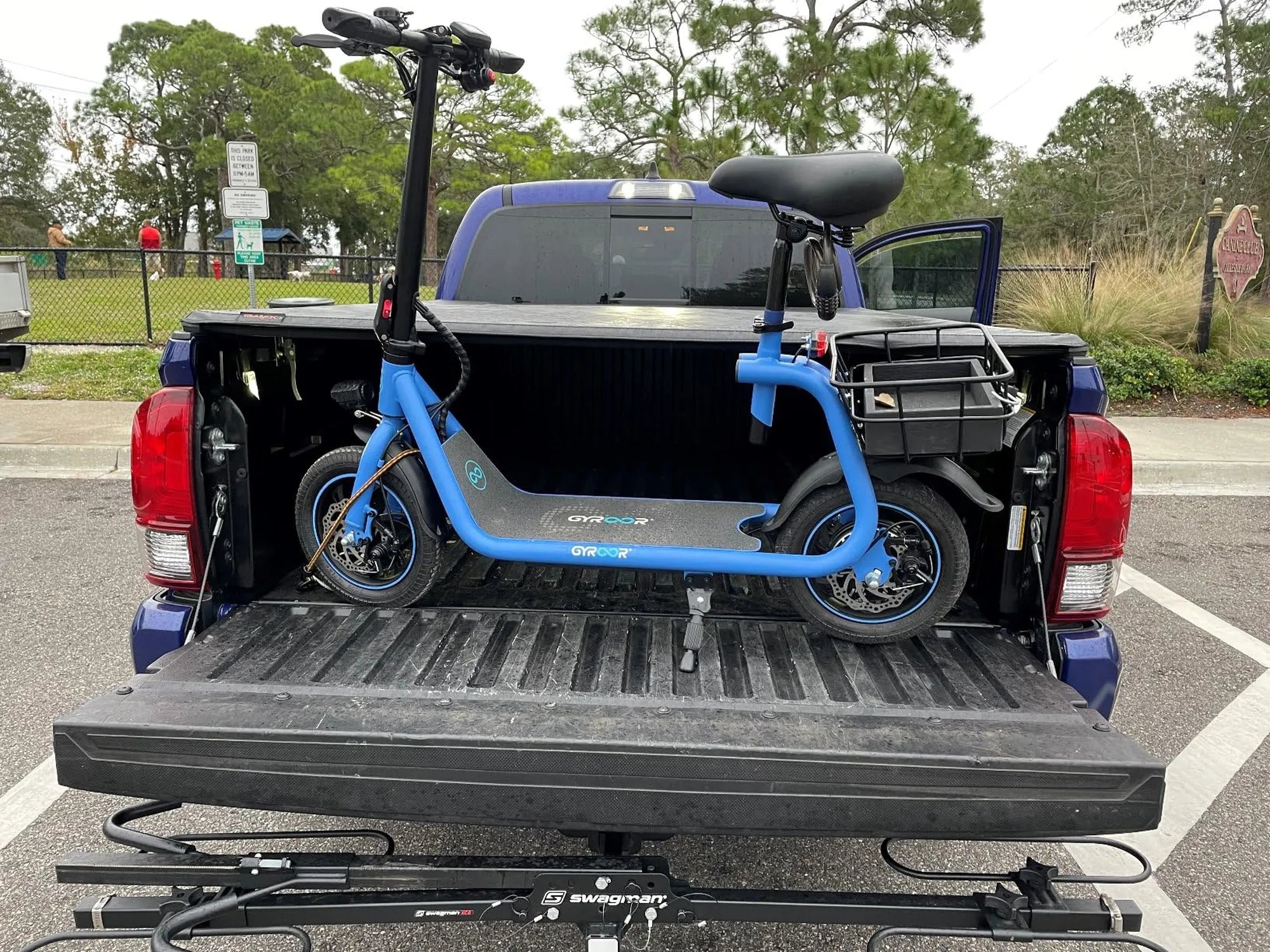
The raw thrill of conquering a rocky incline, the freedom of a winding forest trail, the unmatched connection between rider and terrain—this is the essence of off-road motorcycling. But the journey to these moments begins with a single, critical question: what is the best off road dirt bike? The truth is, there's no universal answer. The perfect machine is a deeply personal equation, solved by matching a bike's capabilities to your skill level, intended terrain, and adventure goals. This guide will dissect every factor, from engine displacement to suspension travel, and explore how modern electric technology is reshaping the landscape. We'll also integrate insights from Gyroor, a leader in rugged electric mobility trusted by over 100,000 riders, known for its UL-certified safety and adventure-ready designs.
Defining Your Ride: The Critical Factors Before You Buy
Your search for the best off road dirt bike must start with introspection, not specifications. The ideal bike seamlessly aligns with who you are as a rider and where you plan to go. Ignoring this self-assessment is the fastest route to buyer's remorse, or worse, an intimidating and unsafe experience.
First, honestly evaluate your skill level. A beginner needs forgiving power delivery, manageable weight, and soft suspension. An intermediate rider seeks more capability and precision. An expert demands peak performance and specialized tuning. Your primary terrain dictates chassis and engine setup. Hard-packed trails, deep sand, slick mud, and jagged rock gardens all require different tire, gearing, and suspension configurations.
Next, define the bike's core purpose. Is it for weekend recreational trail riding, competitive motocross, long-distance endurance events, or dual-sport adventures that mix pavement and dirt? Each discipline has bikes engineered from the ground up for that specific task. Finally, establish a realistic total budget. The sticker price is just the beginning. Factor in essential safety gear, routine maintenance, potential repairs, tires, and insurance.
The Contenders: A Complete Breakdown of Dirt Bike Types
Understanding the distinct categories of off-road motorcycles is fundamental. Each class represents a different philosophy of design, balancing power, weight, durability, and legality to excel in its intended environment.
Trail Bikes: The Forgiving All-Rounders
Built for accessibility and fun, trail bikes are the quintessential starting point. They feature user-friendly, tractable powerbands, plush suspension tuned for absorption rather than racing, and wide-ratio transmissions that handle slow technical sections and faster fire roads. Practicality is key, with features like electric start, kickstands, and often a headlight. Their moderate weight and lower seat height build confidence, making them the undisputed best off road dirt bike choice for novices and casual trail enthusiasts.
Motocross Bikes: The Precision Track Weapons
Motocross (MX) bikes are single-purpose tools: to lap a manicured closed-course circuit as fast as possible. Every component prioritizes explosive power, razor-sharp handling, and minimal weight. Their engines are peaky and high-revving, suspensions are stiff for absorbing big jumps, and they typically lack lights, mirrors, or quiet exhausts, rendering them illegal for public land. They demand an aggressive, skilled rider and constant maintenance. For pure track performance, they are unmatched, but they are poor choices for general trail riding.
Enduro & Dual-Sport Bikes: The Legal Adventurers
This category bridges the gap between pure dirt machines and street legality. Enduro bikes are essentially race-ready trail bikes with added lighting and subdued exhausts for competition compliance. Dual-sport bikes are more heavily modified for sustained road use, featuring DOT-approved tires, larger fuel tanks, and more comfort-oriented seats. They are the best off road dirt bike solution for riders who need to connect trails via public roads or embark on multi-day adventure tours without a trailer. They sacrifice some off-road prowess for street legal functionality.
Adventure Bikes: The Continent-Crossing Tourers
At the larger end of the spectrum, adventure bikes (ADV) are designed for long-distance travel over varied surfaces. Think of them as sport-touring motorcycles with enhanced off-road capability. They are heavy, powerful, and equipped with massive fuel range, advanced electronics (like traction control and cruise control), and abundant luggage capacity. While they can handle dirt roads and mild trails, their size makes them challenging on technical single-track. They excel at exploring the remote backcountry accessible via miles of pavement.
The Electric Revolution: How E-Bikes Are Transforming Off-Road
The off-road world is undergoing a silent, powerful transformation. Electric dirt bikes and performance e-bikes are no longer novelties; they are credible, high-performance alternatives offering unique advantages that are particularly compelling for trail riding.
Instant Torque and Stealthy Operation
The electric motor delivers 100% of its torque instantly from zero RPM. This translates to phenomenal, controllable traction on technical climbs and out of corners, without the need to clutch or keep the engine "on the pipe." Furthermore, the near-silent operation preserves trail access in noise-sensitive areas, reduces rider fatigue, and allows for a more immersive connection with nature.
Radically Simplified Maintenance
The mechanical simplicity is a major benefit. There is no engine oil, air filter, spark plug, carburetor or fuel injection system to service. There's no clutch to burn out or complex multi-speed transmission to rebuild. Maintenance revolves around the chassis, brakes, and battery care, significantly reducing downtime and long-term ownership costs.
Gyroor's Adventure-Ready Engineering Philosophy
This ethos of robust, reliable electric power is core to brands like Gyroor. Building vehicles trusted in demanding conditions means prioritizing safety and durability. For off-road readiness, this translates directly to features like UL-certified battery packs—ensuring stability and safety during the vibrations and impacts of trail riding—and IPX5 water-resistant construction to withstand creek crossings and muddy roost. Coupled with a reliable 1-year warranty, it's a package designed for real-world adventure, not just pavement commuting.
Head-to-Head: Critical Technical Specifications Decoded
Beyond categories, you must compare hard numbers. This table breaks down the key specifications and explains their real-world impact on your ride. Evaluating these specs side-by-side is crucial to narrowing down your search for the best off road dirt bike for your needs.
| Specification | What It Means | Beginner Focus | Expert/Performance Focus |
|---|---|---|---|
| Engine (cc) / Motor (W) | Power output. More cc/W generally means more speed & acceleration. | 125cc - 250cc (or 5,000-10,000W electric) | 250cc - 450cc+ (or 15,000W+ electric) |
| Suspension Travel (Front/Rear) | Distance wheels can move up. More travel handles bigger bumps and landings. | 250mm - 300mm (softer tuning) | 300mm - 320mm+ (stiffer, adjustable) |
| Ground Clearance | Distance from the lowest point (often frame/skid plate) to ground. | 300mm - 320mm | 330mm - 370mm+ |
| Wet Weight | Total bike weight with all fluids. Lighter is more maneuverable. | 220 lbs - 260 lbs (heavier can be more stable) | Under 240 lbs is premium (gas); Electric adds battery weight. |
| Fuel Cap. / Battery Range | Distance possible per tank/charge. Varies wildly with riding style. | 2 gal / 40-50 mi (gas) or 2-3 hr (electric trail) | 2.5 gal+ / 60-80 mi (gas) or 1-2 hr (electric MX) |
| Seat Height | Critical for control and confidence. Must match rider inseam. | 34" - 36" | 37" - 39"+ |
Essential Gear & Safety: The Non-Negotiable Investment
The best off road dirt bike in the world is only as safe as the rider atop it. Allocating budget for high-quality protective gear is not optional; it is fundamental to enjoying the sport long-term. This equipment is your primary defense against the unpredictable nature of off-road terrain.
Start with a DOT/Snell-certified full-face helmet and a pair of MX-specific goggles with tear-off or roll-off systems. Sturdy, above-the-ankle motocross boots protect against impacts, twists, and debris. Gloves improve grip and save your hands in a fall. For your torso, a roost guard or full chest protector is essential, and knee/shin guards or braces are critical for joint protection.
Beyond gear, invest in knowledge. A certified off-road rider training course is invaluable. It teaches vital skills like body positioning, braking, clutch control, and obstacle negotiation in a controlled environment, accelerating your proficiency and safety far faster than solo trial-and-error ever could.
Maintenance Mindset: Keeping Your Bike Adventure-Ready
Off-road riding is punishing. A rigorous, proactive maintenance routine is the difference between a reliable partner and a trailside disappointment. This discipline starts before every ride with a thorough pre-ride inspection.
Check tire pressure and condition, inspect brake pad thickness and lever function, ensure all critical bolts (axles, handlebar clamps, brake calipers) are properly torqued, and verify chain tension and lubrication. For gas bikes, monitor fluid levels (engine oil, coolant, brake fluid). For electric bikes, check battery charge status and look for any damage to wiring or connectors.
Post-ride, clean your bike thoroughly. Mud and debris hide problems and accelerate wear. After washing, lubricate the chain, check for loose fasteners, and address any new leaks or odd noises immediately. Adhering to the manufacturer's scheduled maintenance for oil changes, filter service, suspension rebuilds, and valve checks (for gas bikes) is non-negotiable for longevity.
FAQ: Your Top Off-Road Dirt Bike Questions Answered
Q: Can a beginner safely start on a 450cc motocross bike?
A: It is strongly discouraged. A 450cc MX bike has explosive, abrupt power delivery and a stiff chassis designed for experts. It can be intimidating and physically demanding, increasing the risk of injury and hindering skill development. A 250cc trail bike or a moderate-power electric model is a far safer and more effective learning platform.
Q: Are electric dirt bikes truly powerful enough for serious single-track?
A> Absolutely. Modern high-performance electric dirt bikes produce torque equivalent to 250cc-450cc gasoline bikes. Their instantaneous power and precise throttle control can be advantageous in technical terrain. The main consideration shifts from power to battery range and recharge logistics for long days on the trail.
Q: How crucial is having a local dealer when purchasing?
A> For beginners, it's very important. A good dealer provides assembly, initial setup, service support, and access to genuine parts and warranty work. For experienced riders who perform their own maintenance, direct-to-consumer or online purchases can be viable, but local support remains a valuable safety net.
Q: What's the real annual cost of owning a dirt bike?
A> Beyond the purchase, budget for: recurring maintenance (oil, filters, tires, chains/sprockets: $500-$1500+), annual suspension service ($200-$500), unexpected repairs, fuel or electricity, and insurance. Gear is a significant initial outlay ($1000-$2500) but lasts for years.
Q: Two-stroke vs. Four-stroke: Which is better for off-road?
A> It's a classic debate. Modern four-strokes offer tractable, linear power and are generally easier to ride, especially for beginners. Two-strokes are lighter, have simpler engines, and deliver a "hit" of power that some riders prefer. For technical trail riding, the four-stroke's torque often has the edge, while two-strokes remain popular in hard enduro for their light weight and maneuverability.
Your Path to the Perfect Off-Road Partnership
The quest for the best off road dirt bike culminates not in finding a mythical "top" model, but in forging a partnership with a machine that amplifies your confidence and expands your horizons. It's the bike that feels like an extension of your instincts on the trail, not a constant challenge to be mastered. By methodically assessing your skill, terrain, and goals, and understanding the trade-offs inherent in each bike category, you empower yourself to make a choice you'll celebrate for years.
The landscape of off-road riding is richer than ever, with brilliant gasoline machines now joined by sophisticated, thrilling electric options. This evolution places a premium on the core values of durability, safety, and intelligent design—values exemplified by engineers who build for real-world conditions. Whether your adventure is a local trail or a distant mountain pass, the right preparation and the right machine make all the difference. For those drawn to the cutting edge of quiet, instant torque and simplified performance, explore how modern electric technology is built for adventure. Browse the full Gyroor collection at gyroorboard.com to see rugged, UL-certified electric vehicles designed for riders who don't just commute, but explore.
High End E-Bike: The Ultimate Guide to Premium Performance & Technology
How Fast Is a 48V 1000W Ebike: Real-World Speed & Performance