



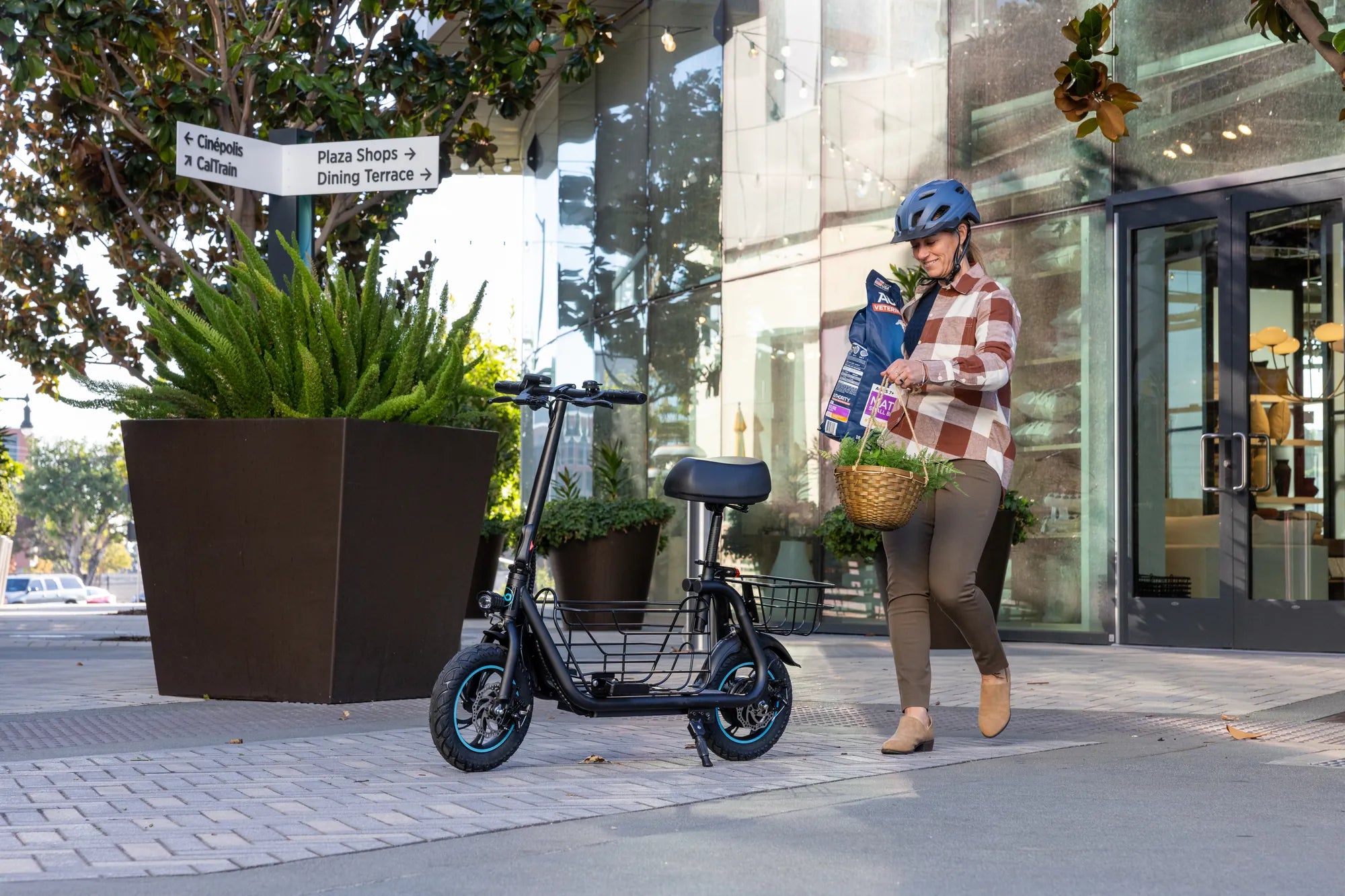
Introduction: The Rise of the Portable E-Bike
Finding the best portable ebike can transform your daily commute and urban exploration. These compact, folding electric bikes solve the critical 'last-mile' challenge, bridging the gap between public transport and your final destination. They offer a unique blend of motor-assisted power and space-efficient design, making them ideal for city dwellers, commuters, and anyone with limited storage.
This guide will dissect what makes an e-bike truly portable beyond simple marketing claims. We will decode essential features like folding mechanisms, weight distribution, and real-world performance. You'll learn how to evaluate motor power, battery safety, and long-term durability to make an informed investment in your mobility freedom.
The market is filled with options, but the best portable ebike consistently delivers on three pillars: seamless foldability, reliable performance, and certified safety. By the end of this article, you'll know exactly what to look for and how a well-engineered portable e-bike can fit into your lifestyle.
What Makes an E-Bike Truly 'Portable'? Key Features Decoded
Portability in an e-bike is a multi-faceted equation. It's not just about being lightweight; it's about the entire user experience from ride to storage. The core pillars are an intuitive folding design, a manageable total weight, and features that make carrying and storing the bike effortless. A truly portable model feels like a natural extension of your commute, not a burden.
The folding mechanism is the heart of portability. A good fold should be quick, secure, and require minimal effort. The folded dimensions determine where you can store it—under a desk, in a car trunk, or in a small apartment closet. Weight impacts how easily you can lift it up stairs or onto a train, making material choice critical.
Finally, thoughtful design elements like integrated carry handles, balanced weight distribution, and protective covers for the chain and gears enhance portability. The best portable ebike feels designed for the real world, considering every step from unfolding to riding to folding and carrying away.
The Fold: Mechanism and Compactness Compared
Folding mechanisms vary significantly, each with trade-offs between speed, compactness, and structural integrity. The most common is the central horizontal hinge, which allows the bike to fold in half near the pedals. This design is often very quick, sometimes achievable in under 3 seconds, but may result in a longer folded package.
More complex triangle or multi-joint folds can achieve a remarkably compact footprint, sometimes shrinking the bike to the size of a large suitcase. These designs often involve folding the handlebar stem and pedals as well. While they take 10-15 seconds to execute, the space savings can be dramatic, making them ideal for tight storage on public transit.
The telescopic folding mechanism, where the frame itself slides together, is less common but offers a unique profile. Regardless of type, the locking mechanism must be robust. Look for patented, over-center latches or secure locking pins that guarantee a rigid, safe ride when unfolded and a stable, locked package when folded.
The Weight Factor: Striking the Right Balance
The weight of a portable e-bike is a crucial compromise. Most quality models fall between 35 and 55 pounds (16-25 kg). Lighter bikes, often using advanced aluminum alloys or carbon fiber components, are easier to carry but may have smaller batteries or less powerful motors. Heavier bikes often pack more battery capacity and sturdier frames, enhancing range and ride stability.
For frequent carrying, a model under 45 pounds is a significant quality-of-life improvement. The weight distribution is as important as the total. A bike that balances weight evenly between the front and rear, or has a well-placed carry handle, feels much lighter and more manageable than a top-heavy model with the same total weight.
Brands like Gyroor utilize high-strength aluminum alloy frames and strategic component placement to optimize the strength-to-weight ratio. This engineering ensures the bike is light enough for portability without sacrificing the durability needed for daily urban use.
Top Considerations When Choosing Your Best Portable Ebike
Selecting the best portable ebike requires looking beyond the fold. Performance, comfort, safety, and long-term support are equally vital. Your ideal bike should deliver a satisfying ride that makes you want to use it every day, not just a compact package that sits in the corner.
Start by defining your primary use case. Is it for a daily multi-modal commute, weekend recreation, or as a compact vehicle for travel? Your answer will prioritize different features. A commuter needs quick folds and transit-friendly dimensions, while a recreational rider might prioritize comfort and range over ultimate compactness.
Always cross-reference manufacturer claims with real-world user reviews. Advertised range and speed are often achieved under ideal laboratory conditions. Look for reviews that discuss performance in hills, with stop-and-go traffic, and in varying weather to get an accurate picture.
Performance Metrics: Motor, Range, and Ride Quality
Motor performance defines your riding experience. Most portable e-bikes use rear-hub motors, which are simpler and contribute to a clean, fast-folding design. Power typically ranges from 350W to 750W. A 500W motor is a strong sweet spot, providing ample torque for urban hills and quick acceleration from stops while maintaining good efficiency.
Real-world range is dictated by battery capacity, rider weight, terrain, and assist level. A 36V/10Ah (360Wh) battery is a common standard, often yielding 20-35 miles per charge. For reliable commuting, a battery with a capacity of 400Wh or more is recommended. Remember, the battery is often the heaviest component, so more range means more weight to carry.
Ride quality is influenced by wheel size and suspension. 20-inch wheels are standard for portability, offering a good balance of agility and stability. Some models feature front suspension forks or seat-post suspension to absorb bumps. Wider, air-filled tires (e.g., 2.1-inch) also provide significant comfort and traction compared to slim, solid tires.
The Non-Negotiables: Safety, Certification, and Warranty
Safety should never be compromised for portability. The most critical component is the battery. Insist on models with UL 2271 or UL 2849 certified battery packs. This independent certification, a standard for brands like Gyroor, verifies the battery has passed rigorous electrical, mechanical, and environmental stress tests for fire and shock safety.
Water resistance is essential for all-weather reliability. Look for an IP rating for the electrical system; IPX5 signifies protection against water jets from any direction, making the bike resilient in rain. The mechanical components, especially the folding joints, should also be protected from corrosion.
A comprehensive warranty is your safeguard. A reputable brand will offer at least a 1-year warranty on the frame, motor, battery, and electronic controller. This demonstrates confidence in their product's durability. Accessible, knowledgeable customer support for troubleshooting and obtaining replacement parts is equally important for long-term ownership.
Portable E-Bikes in Action: Ideal Use Cases and Scenarios
The best portable ebike shines in specific, practical scenarios. For the urban apartment dweller with no garage or dedicated bike storage, a folding e-bike can be wheeled into a living room or stored vertically in a closet. This eliminates the risk of theft and exposure to the elements that comes with outdoor locking.
The multi-modal commuter represents the classic use case. Riding a few miles to the train or bus station, folding the bike, and carrying it aboard eliminates the 'first and last mile' problem. A compact fold ensures you're not obstructing aisles, making you a welcome passenger on public transport.
RV travelers, boat owners, and pilots appreciate having independent, zero-emission transport that stows in a small compartment. Students on large campuses can ride between classes and store the bike under their desk or in a dorm room. Even office workers can keep a portable e-bike under their desk for quick midday errands or a stress-free commute home.
Maintenance and Long-Term Ownership of Your Portable E-Bike
Proper care ensures your portable e-bike remains reliable for years. Battery maintenance is paramount. Avoid draining the battery completely; try to recharge when it reaches 20-30% capacity. Store the bike and battery in a cool, dry place, and use only the manufacturer-provided charger. These practices help achieve the 500+ charge cycles that quality UL-certified batteries are rated for.
The folding mechanism requires periodic attention. Keep the hinge points and latches clean from dirt and grime. A light application of a dry lubricant on moving parts every few months will keep the action smooth and prevent creaking. Regularly check that all locking pins and latches are secure and show no signs of wear or deformation.
General bicycle maintenance applies: keep tires properly inflated, check brake pads for wear, and ensure the chain is clean and lubricated. The advantage of owning a bike from a brand with a strong support network, like Gyroor, is the ease of accessing genuine replacement parts, detailed manuals, and customer service for specific questions.
Comparing Key Models: A Data-Driven Perspective
To choose the best portable ebike, comparing specifications side-by-side is invaluable. The table below outlines key metrics for different portable e-bike profiles, from ultra-lightweight to high-performance commuter models. This data provides a baseline for your evaluation.
| Model Profile | Approx. Weight | Motor Power | Battery (Typical) | Key Portability Feature | Best For |
|---|---|---|---|---|---|
| Ultra-Lightweight | 35-42 lbs | 350W | 36V/7.5Ah (270Wh) | Single-step fold, < 3 sec | Short trips, maximum carry-ability |
| Balanced Commuter | 45-52 lbs | 500W | 36V/10Ah (360Wh) | Compact triangle fold, integrated handle | Daily multi-modal commuting |
| High-Performance | 50-58 lbs | 750W | 48V/10Ah (480Wh) | Robust central hinge, full suspension | Longer range, hilly terrain |
As seen in the table, there is a clear trade-off between weight, power, and range. The 'Balanced Commuter' profile often represents the best portable ebike for most people, offering a practical mix of features. The high-performance model sacrifices some ease of carry for greater power and range, which may be necessary for specific routes.
When reviewing models, always verify the folded dimensions. A bike that is 40" long when folded is fundamentally different from one that folds to 28" in length. The latter is far more likely to fit under a standard office desk or in a crowded train luggage area.
Your Gateway to Effortless, Flexible Mobility
Identifying the best portable ebike is a personal calculation that weighs foldability, weight, performance, and trusted engineering. The ultimate goal is to unlock a new level of freedom in your daily movement—seamlessly transitioning between riding, carrying, and storing your vehicle without friction or frustration.
Prioritizing certified safety features like UL-listed batteries, legitimate weather resistance (IPX5), and a strong warranty from a reputable brand protects your investment. These are the hallmarks of a product built for long-term reliability, not just a quick sale. A brand like Gyroor, trusted by over 100,000 riders, exemplifies this commitment to quality and customer support.
The right portable e-bike doesn't just get you from A to B; it redefines what's possible in your urban environment. It turns a complex commute into a pleasant journey, adds spontaneous exploration to your routine, and provides a dependable, eco-friendly alternative to being stuck in traffic. Your journey toward effortless mobility starts with an informed choice.
FAQ: Your Portable E-Bike Questions, Answered
Q: How heavy are most portable e-bikes?
A: Most quality models range from 35 to 55 pounds (16-25 kg). Premium models using advanced aluminum alloys can achieve weights near 40 lbs while still offering robust motor power and battery capacity, striking an excellent balance for daily carrying.
Q: Can I take a folded e-bike on a bus or train?
A: Policies vary by transit authority, but a compact, cleanly folding e-bike is generally accepted. It's often treated as luggage. The key is a design that folds into a tidy, manageable package that doesn't obstruct aisles. Always check your local carrier's specific bicycle and luggage policies before your first trip.
Q: Does frequent folding and unfolding damage the bike?
A> A well-engineered folding mechanism is designed for thousands of cycles. Damage typically only occurs from misuse or lack of maintenance. Look for models with robust, patented locking hinges and follow the manufacturer's guide for periodic cleaning and lubrication of the folding joints to ensure longevity.
Q: Is a portable e-bike as powerful as a full-sized one?
A> Many are. Portable e-bikes frequently use the same motor and battery technology as traditional models. The primary differences are a smaller wheel size (often 20") and a folding frame, which can slightly alter the riding geometry. The motor power and acceleration are often comparable, making them just as capable on hills and in traffic.
Q: How do I maintain the battery for the longest life?
A> For maximum battery lifespan, avoid full discharges. Recharge when the battery level drops to 20-30%. Store the bike and battery in a temperate environment, avoiding extreme heat or cold. Use only the charger provided by the manufacturer. Quality UL-certified batteries, like those used by Gyroor, are rated for 500+ charge cycles with proper care.
Ready to explore models that combine innovative folding design with UL-certified safety and reliable performance? Browse the full Gyroor collection of electric bikes and scooters, trusted by a community of over 100,000 riders, at gyroorboard.com.
E-Bike Market News Today: Policy Shifts, Tech Trends, and Smart Buying Insights
Fastest Ebike Under 500: High Performance on a Budget