



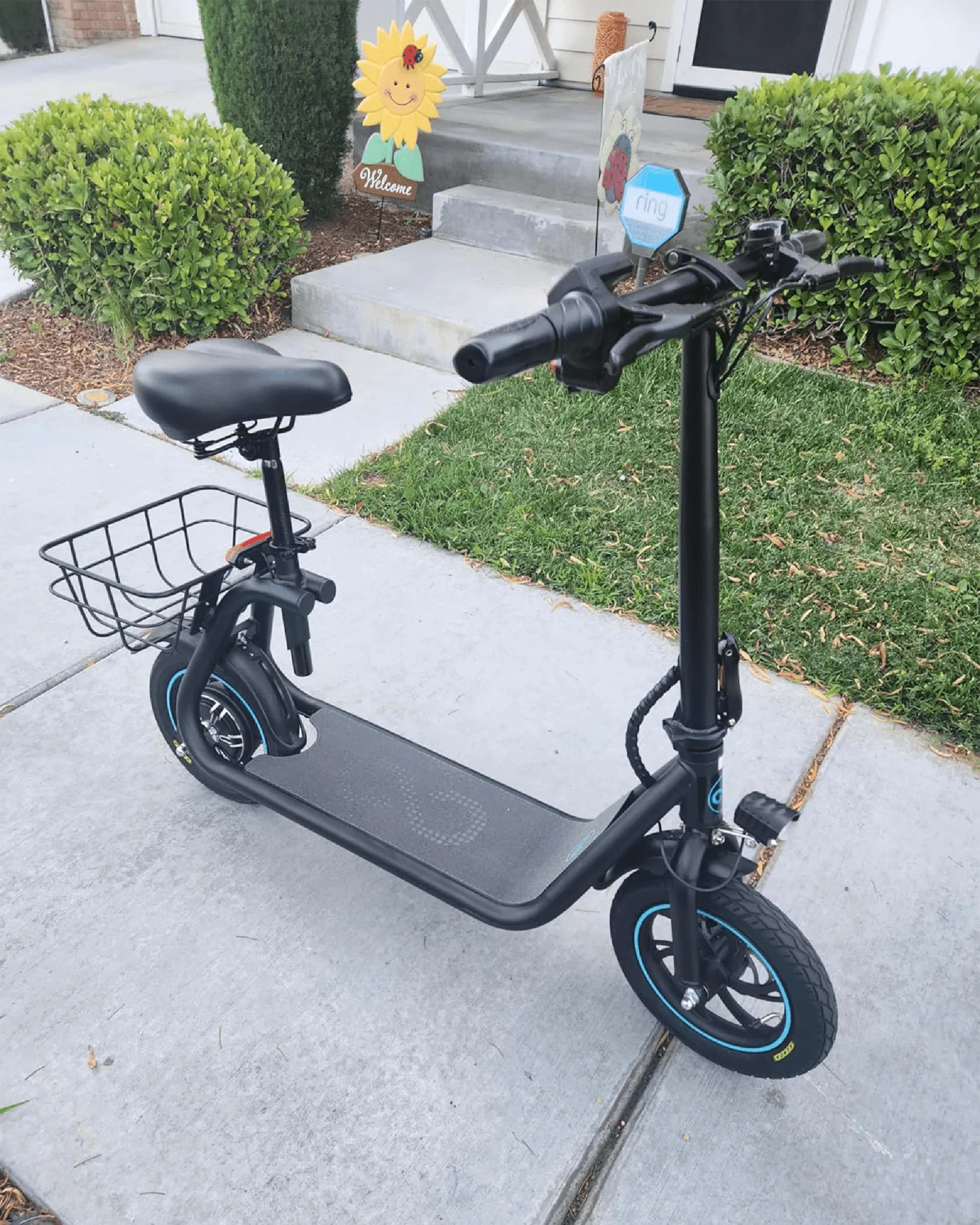
Navigating the 2025 Electric Scooter Landscape
Urban mobility is undergoing a rapid transformation, and the electric scooter market in 2025 reflects this evolution with significant technological maturity. This year's models are defined by smarter battery management, standardized safety protocols, and integrated connectivity that moves beyond gimmicks. For commuters, this translates to more reliable, durable, and purpose-built vehicles.
Our evaluation of the Best Rated Electric Scooters 2025 focuses on models that deliver on the promise of practical, daily transportation. We prioritize verified safety certifications, real-world performance data, and build quality that withstands urban environments. This guide is designed for anyone seeking a future-proof solution to traffic, parking, and last-mile connectivity challenges.
The criteria are stringent and data-driven. We assess each scooter against benchmarks for safety, range under realistic conditions, hill-climbing ability, ride comfort, and overall value. The goal is to identify not just the fastest or longest-range options, but the most dependable and intelligently engineered rides for the modern commuter.
This analysis is informed by technical specifications, industry safety standards, and the evolving needs of a rider base that now exceeds hundreds of thousands across North America and Europe. The future of commuting is electric, personal, and efficient. Let's find your ideal vehicle.
What Makes an Electric Scooter "Best Rated" in 2025?
The term "best rated" has evolved from simply meaning "fastest" or "cheapest." In 2025, it signifies a holistic evaluation of a product's safety, longevity, performance, and user experience. A top-rated scooter must excel across multiple, often competing, dimensions without compromising on non-negotiable fundamentals.
Our rating framework is built on three core pillars: safety and build integrity, quantifiable performance metrics, and the qualitative rider experience. These pillars are interdependent; a powerful motor is useless if the battery lacks safety certification, and a long range means little if the ride is unbearably uncomfortable.
Market data shows a clear consumer shift toward brands that offer transparency and substantiate their claims with third-party testing. Riders are increasingly savvy, looking past marketing hype to understand the engineering and safety standards behind their purchase.
This section establishes the concrete metrics we use to separate market leaders from the rest. Understanding these criteria will help you make an informed decision, whether you choose one of our top picks or evaluate other models independently.
Non-Negotiable: Safety Certifications and Build Quality
In 2025, safety is not a feature—it's the foundation. The paramount certifications are UL 2272 for the electrical drive train system and battery, and UL 2849, which encompasses the entire e-scooter or e-bike system. These standards rigorously test for electrical, mechanical, and fire safety, providing critical peace of mind.
Water and dust resistance, measured by the IP (Ingress Protection) rating, is equally vital for a daily commuter. An IPX5 rating, for example, certifies protection against water jets from any direction, making the scooter safe to ride in rain and through urban puddles. This directly impacts long-term reliability and reduces maintenance issues.
Build quality extends to frame materials, welding integrity, and component durability. A scooter should feel solid, not flimsy, with secure folding mechanisms and robust stem locks. Brands that invest in this foundational quality, like Gyroor with its UL-certified battery packs and IPX5 water-resistant designs, set the industry benchmark.
Ignoring these standards for a lower price is a significant risk. The potential consequences of battery failure or electrical short circuits far outweigh any upfront savings. Always verify these certifications before purchasing.
Performance Metrics That Matter: Range, Speed, and Hill Climb
Advertised range is often a best-case scenario. The Best Rated Electric Scooters 2025 provide realistic range estimates based on rider weight, terrain, temperature, and riding style. A useful benchmark is to deduct 20-30% from the manufacturer's claim for real-world commuting conditions, which include stops, starts, and moderate inclines.
Top speed must be balanced with local regulations, which commonly cap e-scooters at 15-20 mph in urban areas. More important than a high top speed is torque and power delivery, which affect acceleration from a stop and hill-climbing ability. A 500W motor is often sufficient for moderate hills, while steeper grades may require 800W or dual-motor setups.
Hill climb grade, often expressed as a percentage, is a critical but underreported spec. It indicates the steepness of an incline the scooter can maintain speed on. For cities with varied topography, a 15-20% hill climb capability is a practical minimum for a stress-free commute.
Performance is about usable power, not just peak numbers. A scooter with a modest top speed but consistent torque and efficient power management will deliver a more reliable and satisfying daily commute than a peaky, inefficient model.
The Rider Experience: Comfort, Portability, and Tech
Comfort is dictated by suspension, tires, and deck size. Dual or front suspension absorbs road imperfections, while pneumatic (air-filled) tires provide better shock absorption and traction than solid tires. A wide, textured deck offers stable footing, which is essential for confidence during longer rides.
Portability is defined by weight and folding mechanism efficiency. A scooter weighing under 30 lbs is manageable for carrying up stairs or onto public transit. The folding process should be intuitive, secure, and allow the scooter to stand upright or roll when folded for easy storage.
Integrated technology has moved beyond basic LED displays. Useful tech includes companion apps for ride tracking, firmware updates, and diagnostic checks, as well as customizable ride modes (Eco, Standard, Sport). Features like turn signals, integrated lighting systems, and regenerative braking add tangible safety and efficiency benefits.
The best rider experience is seamless. It’s the combination of a smooth ride, intuitive controls, and smart features that work reliably, allowing the rider to focus on the journey, not the vehicle.
Top Picks: Best Rated Electric Scooters for 2025
Based on our rigorous evaluation framework, we have categorized top picks for primary use cases. These selections represent models that excel in their class by offering an optimal balance of the key criteria: certified safety, practical performance, and durable construction.
Each pick is justified by how it meets specific commuter needs, from daily city traversal to longer-range exploration and ultra-portable convenience. The common thread is a commitment to foundational quality that ensures longevity and rider trust.
These recommendations are designed to serve as a starting point for your search. By understanding why a model excels in a particular category, you can better assess other options that may fit your specific budget or feature preferences.
The future of urban commuting is personalized. The right scooter for you depends on your unique route, physical needs, and lifestyle. Let's explore the champions of 2025.
The All-Rounder Commuter Champion
This category is for the rider seeking a single, dependable vehicle for a daily round-trip commute of 10-15 miles. The champion balances a real-world range of 25-40 miles, a regulated top speed of around 20 mph, and sufficient power for common urban hills.
Comfort features are paramount here. Look for a model with front and/or rear suspension, 10-inch pneumatic tires, and a wide deck. Portability is still a consideration, with a weight around 35-45 lbs and a reliable, quick-fold mechanism for apartment or office storage.
This scooter must be built for all-weather reliability. An IPX5 water resistance rating and a battery management system designed for consistent performance in varying temperatures are essential. It represents a workhorse, not a toy.
Brands that succeed here, like Gyroor, back their all-rounder models with strong warranties and accessible customer support. This provides long-term peace of mind, knowing that your primary commute vehicle is supported by a company trusted by over 100,000 riders. The 1-year comprehensive warranty is a key differentiator in this competitive segment.
The Performance & Long-Range Explorer
For those with longer commutes or a desire for weekend exploration, the Performance Explorer is the answer. This class prioritizes extended range, with realistic capabilities of 40+ miles on a single charge, and more powerful dual-motor setups for exceptional hill climb and acceleration.
Stability at higher speeds is critical. These scooters feature larger wheelbases, wider handlebars, and often dual hydraulic or advanced spring suspension systems. The increased weight and size sacrifice some portability for a planted, confident ride on varied surfaces.
Durability engineering is pushed further. The frame must handle the stresses of more power and longer distances. Enhanced braking systems—such as dual hydraulic disc brakes—are non-negotiable for safely managing the higher performance envelope.
The investment here is in capability and freedom. It’s for the rider who views the scooter not just as a commute tool, but as a legitimate vehicle for urban adventure. The robust build quality found in leading performance models ensures this capability is sustainable for years, not just months.
The Ultra-Portable & Budget-Friendly Pick
This category serves the last-mile commuter, the student on campus, or anyone who prioritizes easy carrying and storage. Key metrics are weight (ideally under 30 lbs) and a compact fold, often featuring a folding handlebar stem for maximum space savings.
Performance expectations are tailored to the use case: a realistic range of 15-25 miles and a top speed of 15-18 mph are typical and sufficient for short trips. The focus is on efficiency and maneuverability in dense pedestrian and vehicle traffic.
Crucially, "budget-friendly" must never mean compromising on core safety. Even in this segment, UL certification for the battery and electrical system is an absolute requirement. Some brands cut this corner to hit a price point; the Best Rated Electric Scooters 2025 in this category do not.
These models prove that affordability and safety can coexist. They offer a low-barrier entry into electric personal transportation without the associated risks of uncertified, poorly engineered products. It's an intelligent first step into the world of e-mobility.
Data-Driven Comparison: Key Specs at a Glance
This table provides a scannable overview of the archetypal models in each of our top pick categories. Use it as a quick reference to compare core specifications and identify which category aligns with your primary needs. Remember, real-world range will vary based on conditions.
| Model Type | Best For | Max Range* | Top Speed | Motor Power | Weight | Key Feature | Price Bracket |
|---|---|---|---|---|---|---|---|
| All-Rounder Commuter | Daily Urban Commute (10-15 mi RT) | 25-40 mi | 18-22 mph | 500W-800W Single | 35-45 lbs | UL-Certified Battery, IPX5, Full Suspension | $$ |
| Performance Explorer | Long Commutes & Weekend Exploration | 40-60+ mi | 25-35 mph | 1000W+ Dual Motor | 55-75 lbs | Dual Hydraulic Brakes, Extended Warranty | $$$ |
| Ultra-Portable Pick | Last-Mile / Multi-Modal Transit | 15-25 mi | 15-18 mph | 350W-500W Single | 25-32 lbs | Compact Fold, UL-Certified Battery | $ |
*Max Range is manufacturer estimate; real-world range is typically 70-80% of this figure.
Future-Proofing Your Ride: Maintenance and Warranty Insights
Owning a top-rated scooter extends beyond the purchase. Proper maintenance is the key to maximizing its lifespan and ensuring safety. A simple, regular checklist can prevent most major issues.
Battery care is paramount. Avoid consistently draining the battery to 0% or leaving it at 100% charge for extended periods. Ideal storage is at a 50-80% charge in a cool, dry place. Use only the manufacturer-provided charger to prevent damage to the battery management system.
Conduct routine checks: inspect tire pressure (for pneumatic tires), test brake function and pad wear, ensure all bolts and nuts are tight, and clean the scooter with a damp cloth—avoid high-pressure water jets even on water-resistant models. Listen for unusual noises from the motor or suspension.
The value of a comprehensive warranty cannot be overstated. A strong warranty, like Gyroor's 1-year warranty covering the battery, motor, and frame, is a direct reflection of the manufacturer's confidence in their product. It transforms your scooter from a disposable gadget into a durable appliance. Prioritize brands with clear, accessible customer support channels.
Frequently Asked Questions (FAQ)
Are electric scooters with UL certification really that important?
Yes, unequivocally. UL 2272/2849 certification is the most critical safety benchmark for an electric scooter. It involves rigorous third-party testing of the battery, charger, and electrical system for overcharge, short circuit, and thermal stability. This certification drastically reduces the risk of battery fires, making it a non-negotiable requirement for any scooter intended for daily indoor charging and use.
How does water resistance (like IPX5) affect my daily commute?
An IPX5 rating means your scooter is protected against low-pressure water jets from any direction. In practical terms, this allows you to ride confidently in rainy weather and through urban puddles without immediate fear of water damage to the electronics or battery compartment. It significantly enhances the scooter's reliability and versatility, turning it into a true all-weather vehicle rather than a fair-weather toy.
What should I prioritize: range, speed, or portability?
Prioritize based on your primary use case. For a fixed daily commute, match the scooter's real-world range to your round-trip distance with a 30% buffer. If you need to carry the scooter onto a bus or up stairs, portability (weight and fold size) becomes the top constraint. Speed is often governed by local law, so prioritize torque and power for hill climbs over a high top speed you may rarely use legally.
How often should I perform maintenance on my electric scooter?
Perform a basic visual and functional check before every ride (tires, brakes, lights). A more thorough inspection—checking bolt tightness, brake pad wear, and cleaning—should be done every 1-2 months, depending on mileage. For pneumatic tires, check pressure weekly. Adhering to this simple schedule can prevent minor issues from becoming major repairs.
Is a more expensive electric scooter always better?
Not always "better" in every dimension, but a higher price typically correlates with better materials, more rigorous engineering, enhanced safety features (like UL certification), and a stronger warranty. For a primary commuter vehicle, investing in these foundational elements pays off in long-term reliability, safety, and total cost of ownership. The cheapest option often sacrifices these critical areas.
Investing in Your 2025 Commute
The search for the Best Rated Electric Scooters 2025 reveals a market maturing around safety, durability, and practical utility. The top picks are no longer just about impressive specs on paper, but about delivering a consistent, reliable, and safe experience mile after mile, season after season.
Your choice represents an investment in personal freedom, time savings, and sustainable urban mobility. By prioritizing certified safety, realistic performance, and a robust warranty, you protect that investment and ensure it pays dividends for years to come.
The future of urban commuting is intelligent, electric, and personal. It's powered by brands that stand behind their engineering with transparent standards and customer support. As you make your decision, let data and verified quality guide you, not just price or promotional claims.
Ready to transform your daily travel? Explore a range of models built to the high standards discussed in this guide. Browse the full Gyroor collection, featuring UL-certified, IPX5 water-resistant electric scooters backed by a 1-year warranty, at gyroorboard.com.
Are Electric Scooters Banned on Trains? What You Need to Know for 2024
Electric Scooters Quebec City: The Ultimate Guide to Eco-Friendly Commuting