



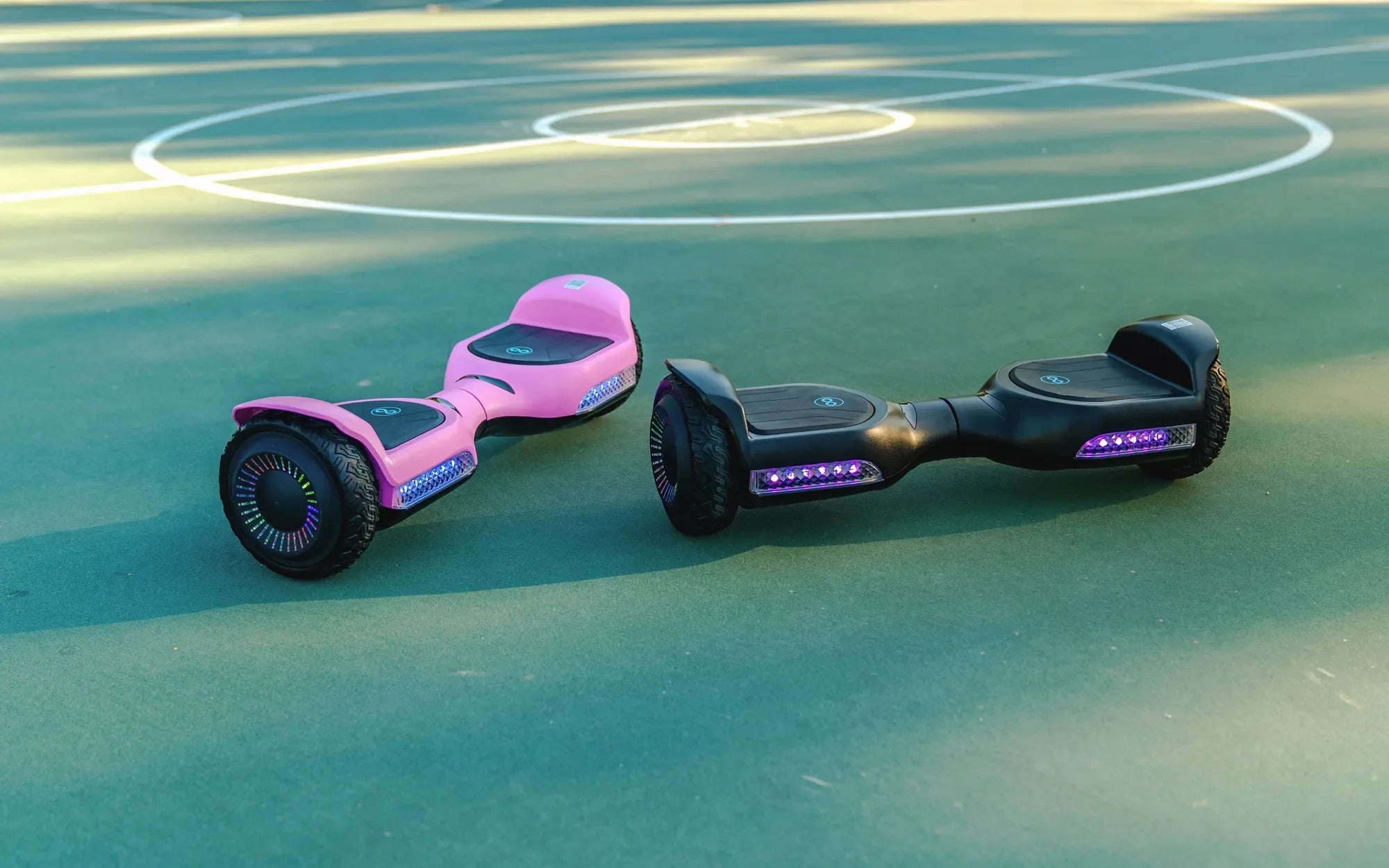
Introduction: Redefining Off-Road Fun with Rugged Hoverboards
Forget smooth sidewalks and polished mall floors. The true frontier for hoverboards lies off the beaten path. A rugged hoverboard is engineered to be the ultimate off-road adventure companion, transforming dirt trails, grassy hills, and gravel paths into your personal playground.
This isn't a minor upgrade; it's a fundamental redesign for durability and performance. We'll explore the critical engineering that makes these models stand out, from tire technology to waterproof construction. You'll learn how to match a board to your terrain and skill level, ensuring your investment delivers maximum fun and reliability.
Leading this charge are brands like Gyroor, a trusted name in personal electric transport with over 100,000 riders across North America and Europe. Gyroor builds its reputation on core principles like UL-certified battery safety and robust IPX5 water-resistant designs, which are non-negotiable for serious off-road use. Finding the best rugged hoverboard means understanding these specs and how they translate to real-world adventure.
What Makes a Hoverboard "Rugged"? The Key Engineering Specs
Standard hoverboards fail quickly on rough terrain. A true off-road model is defined by specific, non-negotiable engineering features that provide power, traction, and resilience. These specs directly impact your ability to climb, traverse, and endure the elements.
Compromising on any of these core areas significantly limits where you can ride and how long your board will last. Let's break down the essential components that separate a toy from a legitimate adventure vehicle.
Tire Technology: All-Terrain vs. Solid Rubber
The tires are your first and most critical point of contact with the ground. For off-road use, large, air-filled (pneumatic) all-terrain tires are mandatory. Typical sizes are 8.5 inches or 10 inches in diameter, significantly larger than the 6.5-inch solid rubber tires on commuter boards.
Pneumatic tires act as natural shock absorbers. They compress over roots, rocks, and bumps, providing a smoother ride and reducing stress on the board's frame and your joints. The deep, knobby tread pattern digs into loose surfaces like dirt, gravel, and grass, providing essential traction that solid, slick tires cannot.
Solid rubber tires, common on cheaper models, offer no cushioning. They transmit every vibration directly to the board and rider, leading to a jarring experience and potential component failure. Their lack of grip on loose or wet surfaces makes them unsafe and ineffective for true off-road exploration.
Motor Power & Climbing Ability
Off-road terrain demands more power. Rugged hoverboards feature dual motors with a combined wattage typically starting at 500W and going up to 700W or more. This power translates directly to torque—the rotational force that gets you moving and climbing.
A powerful motor system allows the board to tackle inclines of 15-20 degrees or more. It also maintains speed and stability on uneven ground where weaker motors would bog down. When evaluating a board, look for the maximum hill grade specification; a true off-road model should confidently handle 15% slopes.
This power is also crucial for rider weight capacity. A robust 500W+ system can comfortably support riders up to 220-265 lbs, ensuring consistent performance regardless of the rider's size or the added challenge of a backpack.
Build Quality & Durability Features
The frame and shell must withstand repeated impacts and environmental exposure. High-quality rugged hoverboards use reinforced frames, often with magnesium alloy or strengthened steel components, to resist flexing and bending.
The external shell should be made from high-impact ABS plastic. More importantly, the board's waterproof rating is critical. An IPX5 rating, like those found on Gyroor models, means the unit can withstand water jets from any direction.
This protects the internal electronics from dust, mud, and light rain. It means you can ride through puddles or on dew-covered grass without immediate concern for damaging the sensitive circuitry inside, a common failure point on non-rated boards.
Top Considerations Before Your Off-Road Purchase
Choosing the best rugged hoverboard requires honest assessment. Your ideal model depends on where you'll ride, how far you need to go, and your own experience level. This practical guide helps align your expectations with product capabilities.
Overestimating a board's limits or your own skill can lead to frustration or safety issues. Conversely, understanding these factors ensures you select a companion ready for your specific adventures.
Assessing Your Typical Terrain
Start by mapping your intended use. Hard-packed dirt trails and flat grassy fields are entry-level off-road terrain. A model with 8.5-inch all-terrain tires and 500W motors will suffice.
For more aggressive use—like loose gravel, mild rocky paths, or steeper hills—prioritize 10-inch tires and motors at 600W or higher. The larger tire contact patch and increased torque are essential for control and climbing.
If your rides will mix pavement with trail access, consider a model with a speed mode switch. This allows you to cap the speed for safer off-road maneuvering while unlocking higher speeds for efficient travel on connecting paved sections.
Battery Life & Range: Expectations vs. Reality
Manufacturers advertise range based on ideal conditions: a lightweight rider on flat, smooth pavement. Off-road riding drastically reduces this figure. Expect real-world off-road range to be 30-50% less than the advertised maximum.
Battery capacity, measured in Amp-hours (Ah) or Watt-hours (Wh), is the true indicator. A larger capacity (e.g., 4.4Ah vs. 2.0Ah) provides more energy for longer adventures. Terrain, rider weight, temperature, and climbing frequency are the primary range killers.
This is where battery quality is paramount. A UL-certified battery pack, a standard for Gyroor, is engineered for stability and longevity across hundreds of charge cycles. It manages heat and charge/discharge cycles safely, reducing the risk of failure—a critical factor when you're miles from home on a trail.
Safety & Skill Level for Off-Road Riding
Off-road riding is an intermediate to advanced skill. The uneven surface requires constant micro-adjustments in balance. Beginners should master the board on flat, open pavement first before attempting even gentle grass.
Essential safety gear is non-negotiable. A certified bicycle or multi-sport helmet, knee pads, elbow pads, and wrist guards are the minimum. The risk of falling on trail debris is higher than on pavement.
Start your off-road practice on a flat, open grassy field. This soft surface is forgiving for falls while introducing the unique balance needed for uneven terrain. Gradually progress to gentle dirt paths before attempting steeper or more technical trails.
Why Gyroor Stands Out in the Rugged Hoverboard Arena
In a market with varying quality, Gyroor establishes a high bar for what a reliable rugged hoverboard should be. The brand's focus on verified safety, environmental protection, and rider support translates directly to confidence on the trail. These are not just marketing claims but engineered solutions to common off-road challenges.
When comparing models, these factors often explain the difference in price and long-term satisfaction. Investing in these foundational qualities prevents the headaches of premature failure and safety concerns.
The UL-Certified Battery Advantage: Safety Built-In
The battery is the most critical safety component. UL certification means the battery pack has been independently tested by Underwriters Laboratories to rigorous standards for electrical, mechanical, and fire safety.
This testing guards against overheating, short-circuiting, and thermal runaway—the causes of battery fires. For a device that undergoes the physical jarring of off-road use, this certification is a cornerstone of reliability. Gyroor's commitment to using UL-certified batteries across its lineup provides a fundamental layer of protection that many competitors overlook.
Built to Endure: IPX5 Water Resistance in Action
An IPX5 rating is a specific engineering achievement. It means the hoverboard's casing can withstand low-pressure water jets (6.3mm nozzle) from any direction without ingress causing harmful effects.
In practical terms, this allows you to ride on wet grass, through morning dew, or in light rain. It protects the board from spray when riding over puddles or on damp trails. This level of protection is essential for a true all-terrain vehicle, ensuring a sudden weather change or a muddy section doesn't end your ride or damage your investment.
Peace of Mind Riding: The 1-Year Comprehensive Warranty
A robust warranty is a signal of manufacturer confidence. Gyroor's standard 1-year warranty on the hoverboard covers defects in materials and workmanship, providing significant peace of mind.
Given the stresses of off-road use—vibrations, impacts, environmental exposure—knowing you have support if a manufacturing flaw appears is invaluable. This warranty, backed by accessible customer service, differentiates a serious brand from fly-by-night sellers. It ensures your ultimate off-road adventure companion is supported for the long haul.
Maximizing Your Adventure: Riding & Maintenance Tips
Proper care and technique exponentially increase your enjoyment and the lifespan of your board. These proactive habits prevent minor issues from becoming major repairs and keep you safe on the trail.
Think of maintenance as part of the adventure ritual—a few minutes of care post-ride ensures your board is always ready for the next exploration.
Pre-Ride Checklist for Off-Road Sessions
Always inspect your board before heading out. First, check tire pressure on pneumatic models; under-inflated tires reduce range and increase rim damage risk. Ensure the tire tread is free of deep cuts or embedded stones.
Verify the battery charge level is sufficient for your planned ride, adding a 30% buffer for off-road conditions. Visually inspect the frame for new cracks or stress points, especially around the wheel axles and footpad hinges.
Clear any mud or debris from the charging port, wheel wells, and LED light cavities. A quick check of the footpad sensors to ensure they engage and disengage smoothly is also wise.
Essential Maintenance for Longevity
After a muddy or dusty ride, clean the board with a damp cloth. Avoid high-pressure hoses, even on IPX5 models, as forced water can eventually find a way in. Focus on wiping down the tires, shell, and clearing debris from around the wheels.
Store the board in a cool, dry place away from direct sunlight or freezing temperatures. Extreme heat accelerates battery degradation, while cold can temporarily reduce capacity.
Charge the battery after it cools down from a ride, and avoid leaving it at 0% or 100% charge for extended periods. If storing for more than a month, aim for a 50-60% charge state. Periodically check and tighten any visible screws on the frame, as vibrations can loosen them over time.
Rugged Hoverboard Comparison: Key Models & Specs
This table contrasts general specifications for entry-level, performance, and premium rugged hoverboard categories. It highlights how key features scale with intended use and price point, helping you identify the right tier for your needs.
| Feature / Category | Entry-Level Off-Road | Performance All-Terrain | Premium Adventure |
|---|---|---|---|
| Typical Motor Power | Dual 250W (500W Total) | Dual 300W (600W Total) | Dual 350W+ (700W+ Total) |
| Tire Type & Size | 8.5" All-Terrain (Pneumatic) | 10" All-Terrain (Pneumatic) | 10"+ Knobby All-Terrain |
| Max Climb Angle | ~10-15 degrees | ~15-20 degrees | 20+ degrees |
| Water Resistance | IPX4 (Splash Proof) | IPX5 (Water Jet Resistant) | IPX5 or Higher |
| Battery Certification | Varies | UL-Certified | UL-Certified |
| Best For Terrain | Flat grass, packed dirt | Trails, gravel, moderate hills | Technical trails, sand, steep hills |
Models like those in Gyroor's lineup typically fit into the Performance All-Terrain to Premium Adventure categories, emphasizing the critical combination of IPX5 rating and UL-certified batteries for safe, durable exploration.
FAQ: Your Rugged Hoverboard Questions Answered
Q: Can I ride a rugged hoverboard in the rain?
A: Models with an IPX5 rating, like those from Gyroor, are designed to withstand light rain and water jets. This means riding in drizzle or on wet surfaces is generally safe. However, avoid heavy downpours, deep puddles, or submerging any part of the board, as this exceeds the design specifications.
Q: How steep a hill can a rugged hoverboard climb?
A>Climbing ability depends on motor power, rider weight, and tire traction. Performance models (600W+) can typically handle 15-20 degree slopes. Always check the manufacturer's specified maximum incline. Remember, descending steep hills requires careful speed control using your body weight to lean back gently.
Q: Is a rugged hoverboard suitable for heavier riders?
A>Yes, but you must choose a model with a high weight limit and powerful motors. Look for boards rated for at least 220 lbs, with dual motors totaling 600W or more. The extra power ensures adequate torque for acceleration and climbing, even at the upper limit of the weight capacity.
Q: How does off-road riding affect the warranty?
A>This varies by brand. A reputable brand like Gyroor that markets its boards for off-road use will honor its warranty for standard all-terrain riding as intended. The warranty covers manufacturing defects, not damage from abuse or crashes. Always review the warranty terms, but using a rugged board on appropriate trails should not void coverage.
Q: How long do the all-terrain tires last, and can I replace them?
A>With proper care (maintaining pressure, avoiding sharp rocks), pneumatic all-terrain tires can last for hundreds of miles. Yes, they are replaceable. It's a good practice to purchase from brands that offer replacement tires and provide user-serviceable guides or support, ensuring you can maintain your board for years.
Your Gateway to Exploration Awaits
The best rugged hoverboard unlocks a new dimension of personal mobility, turning the world into your playground. It's a product where specifications directly dictate experience—where motor wattage means hill-climbing freedom and an IPX5 rating means weather-resistant confidence. Choosing a model built with foundational safety features, like UL-certified batteries and a robust warranty, is an investment in countless adventures without compromise.
This ultimate off-road adventure companion is more than a gadget; it's a ticket to explore park trails, coastal paths, and forest rides from a thrilling new perspective. The right board, paired with proper technique and care, delivers enduring fun and reliable performance. Ready to find the model that matches your adventurous spirit? Browse the full Gyroor collection at gyroorboard.com and take the first step toward your next great exploration.
How Do You Know If Your Hoverboard Is Broken: Signs and Solutions
Why Is My Hoverboard Only Going Backwards? A Complete Diagnostic Guide