

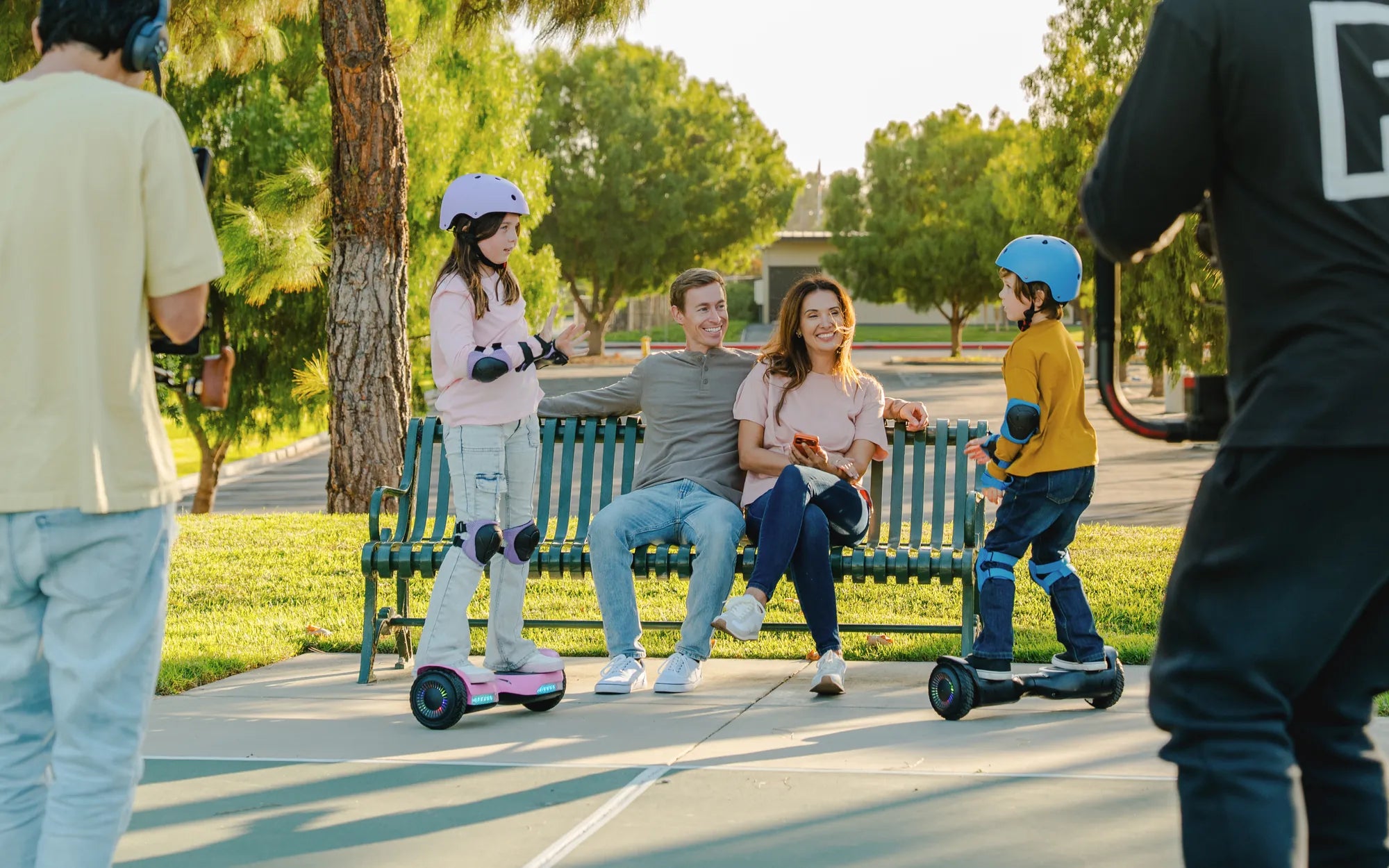
Introduction to Self-Balancing Hoverboards
Navigating the world of personal electric transportation starts with finding the best self-balancing hoverboard. These compact, two-wheeled devices, also known as smart balance wheels, have evolved from novelty gadgets into legitimate tools for urban mobility, campus travel, and recreational fun.
Their core appeal lies in intuitive self-balancing technology, portability, and a zero-emission footprint. Choosing the right model requires understanding key performance metrics and safety certifications. This guide provides the data-driven analysis you need.
As a leading brand, Gyroor has built trust with over 100,000 riders across North America and Europe by prioritizing UL-certified battery safety and robust IPX5 water-resistant designs. We'll use this expertise to frame your purchasing decision.
Key Features to Consider Before You Buy
Selecting the best self-balancing hoverboard is a technical decision. Performance, safety, and durability are determined by a set of core specifications. Ignoring these details can lead to a disappointing or unsafe experience.
Focus on motor output, battery chemistry, wheel construction, and verifiable safety standards. These factors directly impact speed, range, ride comfort, and long-term reliability. The following sections provide a detailed breakdown of each critical component.
Motor Power and Speed
Motor wattage is the primary determinant of a hoverboard's capability. It influences top speed, acceleration, hill-climbing grade, and maximum rider weight. Total power is the sum of both wheel-hub motors.
A 300W (150W x 2) model suits lightweight riders on flat terrain, typically reaching speeds of 7-8 mph. For most adults and varied landscapes, 500W to 700W total is the performance sweet spot, enabling speeds of 9•12 mph and tackling 15-20 degree inclines.
High-performance models with 800W+ can handle off-road conditions and heavier riders. Higher wattage also provides torque reserve for smoother acceleration and better stability. Always match motor power to your weight and intended terrain.
| Total Motor Power | Typical Max Speed | Max Rider Weight | Hill Grade Capability | Best For |
|---|---|---|---|---|
| 300W | 7•8 mph | 165 lbs | 10 degrees | Kids, light teens |
| 500W | 9•10 mph | 220 lbs | 15 degrees | Teens, adults on pavement |
| 700W | 10•12 mph | 265 lbs | 18-20 degrees | Adults, commuters |
| 800W+ | 12•15 mph | 285+ lbs | 20+ degrees | Off-road, all-terrain |
Battery Life and Range
Battery specifications define your freedom. Range is determined by battery capacity (measured in Watt-hours, Wh) and is affected by rider weight, terrain, and speed. A standard 36V, 4.0Ah (144Wh) battery offers 7-10 miles.
For extended commutes, seek 36V/6.5Ah (234Wh) or larger. Real-world range is typically 70-80% of manufacturer claims. Charging time ranges from 2-4 hours for standard chargers. The single most critical factor is battery safety certification.
Only consider models with UL 2272 certified battery packs. This standard rigorously tests for electrical, mechanical, and environmental safety to prevent fire hazards. Gyroor uses exclusively UL-certified cells, tested for over 500 charge cycles while maintaining performance.
Wheel Size and Terrain Performance
Wheel diameter and tread design dictate ride quality and terrain capability. Smaller 6.5-inch solid rubber wheels are compact but transmit more vibration, best for smooth indoor or paved surfaces.
8.5-inch wheels provide a better balance of agility and comfort for general urban use. For true all-terrain performance, 10-inch air-filled (pneumatic) tires with rugged treads are essential. They absorb bumps and maintain traction on grass, gravel, and dirt paths.
Larger wheels also improve ground clearance and stability at higher speeds. For the best self-balancing hoverboard experience across mixed surfaces, prioritize larger, pneumatic tires. They fundamentally transform the device's utility.
Build Quality and Safety Certifications
A durable frame and proper ingress protection are non-negotiable. The housing should be made of high-impact ABS plastic or reinforced materials. Look for an IP rating for water and dust resistance; IPX4 resists splashes, while Gyroor's IPX5 rating can withstand sustained water jets from any direction.
Pedals should have a textured, non-slip surface. Beyond UL 2272 for the battery, the entire electrical system should be UL or ETL certified (UL 2271 covers the electrical system). These certifications are your guarantee against manufacturing defects that could cause failure or injury.
Additional Features: Lights, Bluetooth, App Connectivity
Functional LED headlights and taillights are crucial for low-light safety, not just aesthetics. Some models feature ambient LED wheel lights for visibility. Bluetooth speakers are a popular recreational add-on.
Companion smartphone apps elevate the experience. They allow speed mode adjustment (e.g., beginner, advanced), battery level monitoring, firmware updates, ride statistics tracking, and sometimes anti-theft locking. While not essential, they add significant value for tech-savvy users.
Understanding Self-Balancing Technology
The "self-balancing" magic is engineered through a combination of hardware and sophisticated software. Each wheel contains a gyroscopic sensor and an accelerometer that measure the board's tilt angle and orientation hundreds of times per second.
This data is fed to a central microprocessor (the control board), which calculates the precise amount of power to send to each wheel-hub motor to maintain equilibrium. When you lean forward, the motors spin forward to keep you upright, creating propulsion.
The quality of these sensors and the tuning of the control algorithm determine responsiveness and stability. A well-tuned board feels intuitive and solid; a poorly tuned one can feel jerky or delayed. Reputable brands invest heavily in perfecting this firmware.
This technology is why learning to ride is surprisingly quick. The board is actively working to keep you balanced, allowing you to focus on steering through subtle foot pressure.
Comparing Gyroor Hoverboards: A Model Breakdown
Gyroor's lineup demonstrates how specifications translate to different user experiences. Here is a comparison of three distinct models, highlighting how to match a board to your primary needs.
| Model | Motor Power | Battery & Range | Wheels | Max Speed | Key Features | Ideal User |
|---|---|---|---|---|---|---|
| Gyroor S5 | 500W Total | 36V 4.0Ah Up to 9 miles |
8.5" Solid | 10 mph | LED Lights, Bluetooth Speaker, IPX4 | Teens & Adults for neighborhood/paved paths |
| Gyroor H20 | 700W Total | 36V 6.5Ah Up to 15 miles |
10" Pneumatic | 12 mph | All-Terrain, IPX5 Waterproof, App Connectivity | Commuters & adventurers on mixed terrain |
| Gyroor Warrior | 800W Total | 36V 8.0Ah Up to 18 miles |
10" Off-Road Tires | 15 mph | Extreme Off-Road, Dual LED Headlights, High Torque | Off-road enthusiasts & heavier riders |
Each model shares core Gyroor safety standards: UL 2272 certified batteries, a reliable 1-year warranty, and robust frame construction. The progression from S5 to Warrior shows a direct correlation between increased power, battery size, and terrain capability.
How to Ride Safely and Maintain Your Hoverboard
Mastering your new hoverboard is a quick but deliberate process. Always begin in a wide-open, flat area free of obstacles. Wear a helmet, wrist guards, knee pads, and elbow pads. Ensure the board is fully charged.
Step onto the board one foot at a time, using a wall or railing for support. Keep your feet near the wheel arches, not the very ends. Stand upright and look forward, not down. The board will activate and balance.
To move forward, gently lean your weight forward from the ankles. To slow down or go backward, lean back slightly. To turn, apply gentle forward pressure with one foot. Practice mounting, dismounting, and gentle turns before increasing speed.
Routine maintenance is simple but crucial. Wipe down the board with a damp cloth. Check pneumatic tire pressure monthly. Avoid extreme temperatures and never charge the board immediately after a long, hot ride. Store in a cool, dry place and charge the battery at least once every two months if not in use.
Legal and Practical Usage Guidelines
Hoverboard legality varies by jurisdiction. In many areas, they are classified similarly to electric scooters, permitted on bike lanes and multi-use paths but often prohibited on sidewalks and roads. Always check your local city and state regulations.
Practically, ride defensively. Assume pedestrians and vehicles may not see you. Use hand signals for turns. Avoid wet leaves, sand, and steep slopes beyond your board's rated grade. The best self-balancing hoverboard is a tool that requires responsible operation.
Respect private property rules and trail etiquette. Using Bluetooth speakers at high volume in public spaces is often discouraged. Your behavior influences public perception and future regulations for all micro-mobility users.
Frequently Asked Questions (FAQ)
Q: Are hoverboards legal on sidewalks?
A: Laws vary widely. Most major cities prohibit them on sidewalks for pedestrian safety. They are typically allowed on bike paths, park paths, and private property. Always verify your local ordinances before riding.
Q: What is the typical weight limit for a hoverboard?
A: Weight limits correlate with motor power. Standard models (500W) support 220-240 lbs. Performance models (700W+) support 265-285 lbs. Always check the manufacturer's specified limit and choose a board rated for at least 20-30 lbs above your weight.
Q: How does the self-balancing technology actually work?
A> It uses gyroscopes and accelerometers to detect the board's tilt. A microprocessor (control board) processes this data 100+ times per second and commands the wheel motors to spin at the exact speed needed to keep the rider upright. Leaning shifts your center of gravity, prompting the motors to move the board underneath you.
Q: What does a 1-year warranty typically cover?
A> A reputable warranty, like Gyroor's, covers defects in materials and workmanship for the frame, motor, and control board. Batteries are often covered for the same period but may have specific terms. It does not cover damage from accidents, misuse, water damage beyond the IP rating, or normal wear and tear like tires.
Q: Can I ride a hoverboard in the rain?
A> It depends on the IP rating. A board with an IPX5 rating, like the Gyroor H20, is designed to withstand water jets and can be ridden in light rain and through puddles. Boards with lower ratings (IPX4 or none) should be kept away from all moisture. Never submerge any hoverboard.
Conclusion: Finding Your Perfect Ride
Identifying the best self-balancing hoverboard is a process of matching verified safety features and precise technical specifications to your individual needs. Start your search by insisting on UL 2272 certification for the battery and a robust IP water-resistance rating. These are non-negotiable for safety and durability.
Next, align motor power and wheel size with your weight and typical terrain. Commuters on pavement benefit from 500W+ motors and 8.5-inch wheels, while adventurers require 700W+ and 10-inch pneumatic tires. Finally, consider value-add features like extended range, app control, and lighting for a complete package.
Gyroor exemplifies this approach, engineering performance-focused models without compromising on the UL-certified battery safety and waterproof construction trusted by a global community of riders. The right board unlocks efficient, fun, and eco-friendly personal mobility.
Ready to experience the difference that certified safety and engineered performance make? Browse the full Gyroor collection, compare specifications in detail, and find your ideal model at gyroorboard.com.
Best Hoverboard for 5 Year Old: Ultimate Guide to Safe, Fun Riding
Kids Scooter with Handle: The Ultimate Guide to Choosing the Best One