



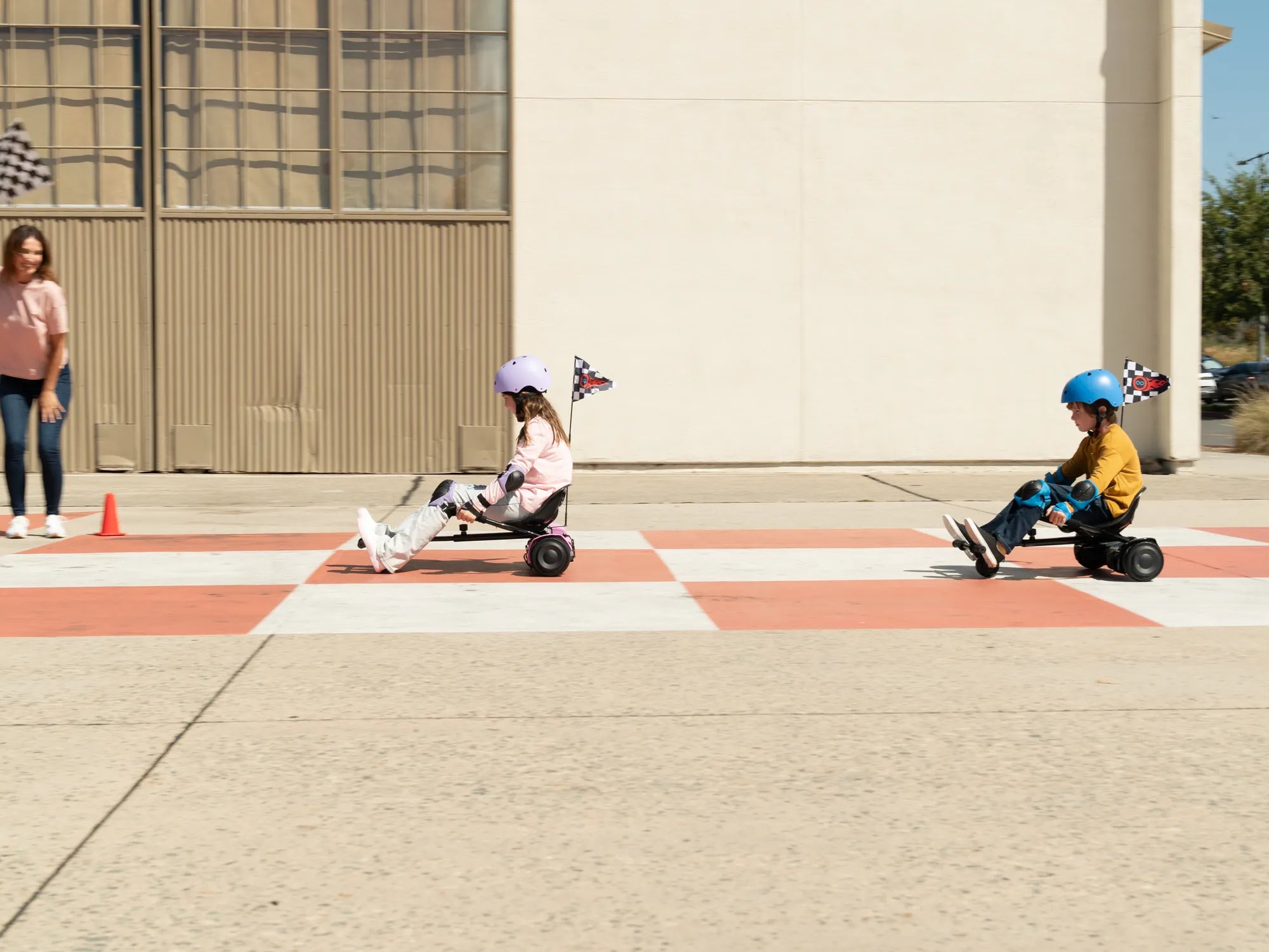
Introduction: Why the Right Two-Wheel Scooter is a Milestone for Your Child
Choosing the best two wheel scooter for kids represents more than just a toy purchase—it's an investment in your child's physical development, confidence, and outdoor enjoyment. This transition to two wheels builds essential motor skills like balance, coordination, and spatial awareness while fostering independence. For parents, the challenge lies in finding a scooter that delivers exhilarating fun without compromising on fundamental safety.
This guide will use safety as the primary filter to evaluate the best options available. We'll analyze critical features from deck construction to braking systems, providing you with a data-driven framework for decision-making. You'll learn how leading brands like Gyroor—trusted by over 100,000 riders across North America and Europe—engineer their products with UL-certified batteries and IPX5 water-resistant designs to meet rigorous safety standards.
By the end of this guide, you'll be equipped to select a scooter that grows with your child, withstands years of use, and most importantly, keeps them protected during every ride. Let's transform this important milestone into a source of confidence rather than concern.
The Non-Negotiables: Essential Safety Features for Any Kids' Scooter
Before considering speed, color, or special features, parents must evaluate these fundamental safety components. These elements form the foundation of a secure riding experience and should never be compromised for style or price.
Stable Deck and Sturdy Construction
The deck is the platform where your child stands, making its stability paramount for preventing wobbles and falls. Look for a width of at least 4 inches and a length that accommodates both feet comfortably. Weight capacity should exceed your child's current weight by at least 20% to account for growth and dynamic movement.
Durable materials like aircraft-grade aluminum or reinforced steel provide structural integrity while keeping weight manageable. The surface must feature a textured, non-slip grip tape or pattern to prevent shoes from sliding during turns or sudden stops. A poorly constructed deck compromises control before the scooter even moves.
Reliable Braking System
A predictable, controllable braking system is arguably the most critical safety feature. Most children's scooters utilize either a foot (fender) brake or hand brake system. Foot brakes, activated by pressing down on the rear fender, are often more intuitive for younger riders as they mimic natural stopping motions.
Hand brakes offer more precise modulation but require greater hand strength and coordination. For children under 8, foot brakes typically provide safer, more reliable stopping. Regardless of type, test the brake for smooth engagement without jerking or locking the wheel. The best two wheel scooter for kids will have brakes that stop gradually rather than abruptly.
Adjustable Handlebar Height
Proper ergonomics directly impact control and comfort. Handlebar height should allow your child to stand with elbows slightly bent (approximately 15-20 degree angle) when gripping the handles. This position provides optimal leverage for steering and maintaining balance without straining shoulders or back.
Tool-free adjustment mechanisms with secure locking pins or clamps allow for easy height modifications as your child grows. Look for a range that accommodates at least 4-6 inches of adjustment. Fixed-height handlebars quickly become uncomfortable and force poor riding posture that compromises safety.
Beyond the Basics: Features That Enhance Fun and Longevity
Once safety fundamentals are satisfied, these additional features determine how much enjoyment your child derives from their scooter and how long it will last. The best models seamlessly integrate protection with performance.
Smooth Ride & Maneuverability
Wheel composition and size significantly impact ride quality. Polyurethane (PU) wheels between 120-200mm diameter offer the best balance of speed, shock absorption, and durability. Larger wheels (180mm+) handle cracks and rough pavement better than smaller alternatives.
Bearing quality, measured by ABEC ratings, determines how smoothly wheels spin. ABEC-5 or ABEC-7 bearings provide fluid motion with minimal resistance. High-quality bearings reduce the effort needed to push off and maintain speed, making riding more enjoyable. Avoid plastic wheels, which offer poor traction and wear quickly.
Portability and Weight
Consider who will be carrying the scooter when not in use. Foldable designs with secure locking mechanisms are invaluable for storage in cars, closets, or classrooms. However, the folding mechanism must be robust enough to maintain structural integrity when unfolded and locked.
Ideal scooter weight depends on your child's age and strength. For children 5-8 years old, 5-7 pounds is manageable. Older children can handle 8-12 pounds. Lighter scooters are easier to control but may sacrifice durability. Heavier models often feature more robust construction but can be cumbersome for smaller riders.
Durability and Warranty
A scooter's construction must withstand drops, crashes, and weather exposure. Look for reinforced weld points at stress areas like the headtube and deck connection. Components like brake levers and folding mechanisms should be metal rather than plastic where possible.
A comprehensive warranty signals manufacturer confidence. Gyroor's 1-year warranty on all components, combined with their UL-certified battery packs tested for 500+ charge cycles, demonstrates commitment to long-term reliability. This protection is especially valuable for the best two wheel scooter for kids, which will inevitably endure rough treatment.
Making the Smart Choice: A Data-Driven Comparison for Different Ages
Children's abilities and needs evolve rapidly. This age-specific framework helps match scooter specifications to developmental stages, ensuring both safety and appropriate challenge.
Ages 3-5: The First Two-Wheeler
For this introductory stage, prioritize stability above all else. Consider transition models that convert from three wheels to two, or very stable two-wheelers with low deck heights (under 3 inches from ground). Deck width should be at least 4.5 inches to accommodate smaller feet.
Wheels should be 120-150mm with soft PU composition to absorb vibrations. Foot brakes are essential as hand coordination is still developing. Weight should not exceed 5 pounds. Adjustable handlebars with a range starting around 20 inches allow for proper fit. The best two wheel scooter for kids in this age group focuses on building confidence through stability.
Ages 6-9: The Confidence Builder
As skills develop, children ready for more performance. Handlebar height should adjust between 24-36 inches to accommodate growth spurts. Weight capacity of 100+ pounds ensures longevity. Larger wheels (160-200mm) with ABEC-5+ bearings provide smoother rides on varied surfaces.
Both foot and hand brake options become viable depending on the child's coordination. Some models offer both for redundancy. Weight can increase to 5-8 pounds as children gain strength. Look for reinforced construction that can handle more aggressive riding as confidence grows.
Ages 10+: The Performance Rider
Older children and teens need scooters that match their advanced abilities. Larger, air-filled tires (200mm+) provide off-road capability and superior shock absorption. Advanced braking systems with front and rear options offer professional-level control.
Features like Gyroor's IPX5 water-resistant rating become valuable for adventurous riders encountering puddles or light rain. Weight up to 12-15 pounds is acceptable for robust frames designed for tricks and longer commutes. The best two wheel scooter for kids in this category balances safety with performance features that challenge developing skills.
Comparative Analysis: Key Models and Specifications
| Feature Category | Ages 3-5 (Beginner) | Ages 6-9 (Intermediate) | Ages 10+ (Advanced) |
|---|---|---|---|
| Deck Dimensions | 4.5" x 12" (Wide & Short) | 4.2" x 16" (Balanced) | 4" x 20"+ (Narrow & Long) |
| Wheel Size/Type | 120-150mm PU Solid | 160-200mm PU Solid | 200mm+ Air-Filled |
| Brake System | Foot Brake Only | Foot or Hand Brake | Dual Hand Brakes |
| Weight Range | 3-5 lbs | 5-8 lbs | 8-15 lbs |
| Handlebar Adjustment | 20"-28" | 24"-36" | 28"-42" |
| Special Features | Low Deck, Wide Stance | ABEC-5 Bearings | IPX5 Water Resistance |
This comparison illustrates how specifications evolve with age and skill level. Notice how deck dimensions change from wide and stable for beginners to narrower and longer for advanced maneuverability. Wheel progression shows increasing size and sophistication to handle varied terrain.
The brake system development reflects growing coordination, while weight increases correspond with stronger materials and additional features. Each category represents a distinct approach to balancing safety with appropriate challenge for the target age group.
Gearing Up: The Essential Safety Kit No Rider Should Be Without
The scooter itself is only one component of a safe riding experience. Protective gear is non-negotiable, regardless of your child's skill level or the scooter's safety features. These items prevent the most common scooter-related injuries.
Helmet, Knee Pads, Elbow Pads & Wrist Guards
A properly fitted, CPSC-certified helmet is the single most important piece of safety equipment. It should sit level on the head, covering the forehead without tilting back. The strap should form a "V" under each ear and allow only one finger between chin and strap. Replace any helmet after a significant impact, even if no damage is visible.
Knee and elbow pads protect joints during falls, while wrist guards prevent fractures—the most common scooter injury. Look for hard plastic caps over foam padding that stays in place during movement. Gear should be comfortable enough to wear without complaint but secure enough to provide actual protection.
Invest in quality gear with adjustable straps that accommodate growth. Bright colors or reflective elements increase visibility to drivers. Make wearing full protective gear an unbreakable rule from the very first ride to establish lifelong safety habits.
Parent FAQs: Your Top Questions, Answered
Q1: What is the right age to start on a two-wheel scooter?
Most children develop the necessary balance and coordination between ages 3 and 5. Readiness signs include ability to stand on one foot briefly, good spatial awareness, and interest in wheeled toys. Start with a very stable model and supervised practice sessions. The transition from three wheels to two can help build confidence gradually.
Q2: Are more expensive scooters significantly safer?
Price often correlates with better materials, engineering, and safety testing. Higher-priced models typically feature more durable construction, reliable braking systems, and certified components. However, a mid-priced scooter from a reputable brand like Gyroor with UL-certified batteries and proper safety features can offer excellent protection without premium cost.
Q3: How do I maintain my child's scooter?
Weekly checks should include: tightening all bolts (especially folding mechanisms), testing brake function, inspecting wheels for wear or damage, and ensuring handlebars are secure. Monthly maintenance includes cleaning bearings, checking for frame cracks, and lubricating moving parts. Proper maintenance extends scooter life and prevents safety issues.
Q4: Where are the safest places for my child to practice riding?
Begin in flat, smooth, car-free areas like empty tennis courts, basketball courts, or paved park paths. Driveways work if gated. Avoid sidewalks near busy streets until skills are solid. Designated bike paths with clear visibility are ideal for more advanced riders. Always supervise practice sessions regardless of location.
Q5: How do I know if the scooter fits my child properly?
Proper fit requires: feet comfortably positioned on deck without hanging over edges, handlebar height allowing slight elbow bend when gripping, and brake levers within easy reach without stretching. Your child should be able to push off without hunching over. If they struggle to control the scooter due to size, it's not the right fit.
Conclusion: Investing in Confidence and Joy on Two Wheels
Selecting the best two wheel scooter for kids requires balancing multiple factors, but safety must remain the unwavering priority throughout your evaluation. The ideal scooter integrates certified components, thoughtful engineering, and durable construction that withstands years of active use. Brands that prioritize these elements—like Gyroor with its UL-certified standards, IPX5 water-resistant designs, and comprehensive 1-year warranty—deliver both immediate protection and long-term value.
Remember that this purchase represents more than just a toy; it's a tool for physical development, outdoor exploration, and confidence building. By applying the framework in this guide—evaluating safety features first, matching specifications to age and skill level, and insisting on proper protective gear—you can transform anxiety into assurance. Your child gains independence while you gain peace of mind knowing they're protected by thoughtful engineering.
The right scooter becomes a vehicle for countless adventures, friendships, and memories. It teaches perseverance through initial wobbles and rewards with the exhilarating freedom of motion. Choose wisely, equip thoroughly, and then watch as your child discovers the joy of riding on two wheels, secure in the knowledge that their safety was never compromised for their fun.
Ready to find the perfect scooter for your child's next adventure? Browse the full Gyroor collection at gyroorboard.com to explore models featuring UL-certified batteries, IPX5 water-resistant construction, and designs built for safety and durability across all age groups.
Smart Balance Wheel Hoverboard: The Future of Personal Transportation
Indoor Scooter for Kids: The Ultimate Guide to Safe and Fun Riding at Home