


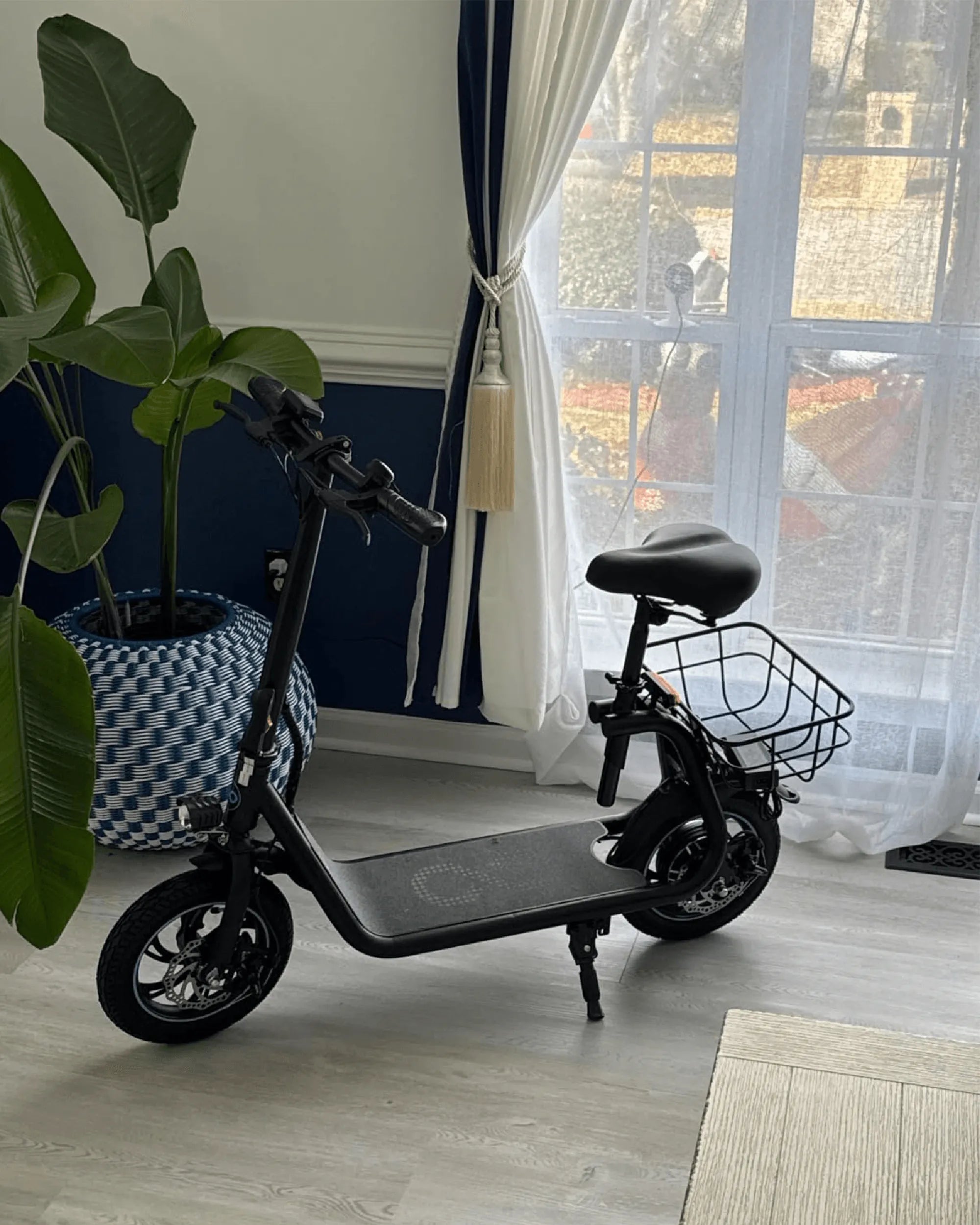
Introduction: Redefining Value in the Electric Scooter Market
Finding the best value scooter is not about hunting for the lowest price. True value is a calculated equation of performance, safety, durability, and long-term ownership cost. A scooter that fails after six months is not a value, regardless of its initial cost.
This guide defines value as getting the most reliable, safe, and enjoyable riding experience for your investment. It's about specifications that matter in daily use, not just on a spec sheet. We focus on the engineering and support that protect your purchase over time.
Brands like Gyroor have built their reputation on this principle, trusted by over 100,000 riders across North America and Europe. They deliver high-spec features, such as UL-certified batteries and IPX5 water resistance, without the luxury brand markup. This approach creates genuine, lasting value for the rider.
Our goal is to equip you with the knowledge to identify a scooter that offers the best value for your specific needs, ensuring your investment enhances your mobility for years to come.
Key Pillars of a High-Value Electric Scooter
Real-world value is built on foundational components that work together seamlessly. These pillars determine whether a scooter is a temporary gadget or a dependable transportation tool. Ignoring any one can lead to frustration, extra cost, or even safety concerns.
We will break down these essential elements, explaining why each is critical for a satisfying ownership experience. From the power source to the post-purchase support, every detail contributes to the overall value proposition of the scooter.
Understanding these pillars allows you to cut through marketing hype. You can focus on the features that directly impact your daily commute, safety, and wallet. This knowledge is the first step toward making a truly intelligent purchase.
Let's examine the four core pillars that separate a high-value scooter from a merely cheap one.
The Heart of the Matter: Battery Safety and Longevity
The battery is the most critical and expensive component of any electric scooter. Its quality dictates range, performance, safety, and the scooter's overall lifespan. A UL-certified battery pack is a non-negotiable feature for a best value scooter.
Certification from Underwriters Laboratories (UL) means the battery has passed rigorous tests for electrical, mechanical, and environmental safety. It significantly reduces the risk of fire, overheating, or catastrophic failure. For a brand like Gyroor, using UL-certified batteries tested for 500+ charge cycles is a core commitment to rider safety.
Beyond safety, a high-quality battery ensures consistent performance. It delivers the advertised range more reliably and maintains its capacity over hundreds of charges. An uncertified, low-quality battery may degrade quickly, turning your scooter into a heavy, short-range liability within a year.
Investing in a scooter with a certified battery is investing in peace of mind and long-term reliability. It is the single most important factor in protecting both your safety and your financial investment.
Built to Last: Durability and Weather Resistance
Durability is where value is proven over time. A scooter must withstand daily commutes, occasional potholes, and unpredictable weather. A fragile frame or poor water resistance leads to frequent repairs, downtime, and unexpected costs, destroying any initial savings.
Build quality involves robust materials, solid welding, and tight tolerances. The folding mechanism, stem, and deck should feel sturdy and secure. A wobbly stem or a deck that flexes excessively are signs of compromised durability and potential future failure points.
Weather resistance is equally crucial. An IPX5 water-resistant rating, a standard in Gyroor's lineup, means the scooter can handle water jets from any direction. This allows you to ride confidently in light rain or through wet streets without worrying about water damage to electronics.
This combination of solid construction and weatherproofing ensures your scooter remains a reliable asset. It reduces maintenance costs and extends the product's usable life, which is the very definition of high value.
Performance You Can Actually Use: Speed, Range, and Real-World Testing
Advertised performance figures are often measured under ideal laboratory conditions. Real-world value comes from dependable, everyday performance. A best value scooter provides a balanced, usable mix of speed and range that matches typical urban commuting needs.
Top speed is less critical than consistent torque and hill-climbing ability. A scooter that maintains 15-18 mph up a moderate incline is more valuable than one that hits 25 mph on a flat surface but struggles on hills. The motor and controller must work efficiently under real load.
Range is the most commonly inflated spec. Manufacturers often test at low speeds with a lightweight rider on perfect pavement. A realistic expectation is 60-70% of the advertised maximum range. A value-focused brand will provide clear, real-world range estimates for different conditions.
The goal is predictable performance. You should know with confidence how far you can travel on a charge for your regular commute. A scooter that delivers on its promised real-world performance eliminates range anxiety and provides true utility.
The Safety & Support Guarantee: Warranty and Customer Service
The value of a scooter extends beyond the point of sale. A comprehensive warranty and accessible customer service are safety nets that protect your investment. They are hallmarks of a manufacturer that stands behind its product's quality and durability.
A strong warranty, like the 1-year standard offered by Gyroor, covers defects in materials and workmanship. It signals the brand's confidence in its manufacturing process. A short or non-existent warranty often indicates a disposable product not built for long-term use.
Equally important is the quality of customer support. Accessible, knowledgeable, and responsive service teams can resolve issues quickly, whether it's a technical question or a warranty claim. This support turns a potential headache into a minor inconvenience.
This post-purchase ecosystem is a critical component of value. It ensures that if something does go wrong, you have a clear path to resolution, safeguarding the functionality and safety of your scooter for the long haul.
Navigating the Market: Where "Cheap" and "Value" Diverge
The electric scooter market is segmented into distinct tiers: budget, value, and premium. Understanding the differences is key to avoiding false economy. A low sticker price often masks high long-term costs and significant compromises in safety and reliability.
The table below provides a clear, data-informed comparison of what you can typically expect at each price and quality tier. It highlights how the 'value' tier strategically offers the most critical features of premium models at a more accessible price point.
| Feature | Budget Tier (Often <$400) | Value Tier (The Sweet Spot) | Premium Tier (>$1000) |
|---|---|---|---|
| Battery | Uncertified, generic cells. Rapid degradation. | UL-certified pack (e.g., Gyroor). 500+ cycle life. | High-capacity, name-brand certified cells. |
| Build & IP Rating | Basic materials, often no official water resistance. | Robust frame, IPX5 water resistance standard. | Aerospace-grade alloys, IPX6 or higher. |
| Real-World Range | 8-12 miles (often far less than advertised). | 15-25 miles (realistic estimates provided). | 30-50+ miles. |
| Top Speed | 12-15 mph, struggles on inclines. | 18-22 mph, adequate torque for hills. | 25-40+ mph, high torque. |
| Brakes | Basic mechanical or foot brake only. | Reliable disc or electronic regenerative brakes. | Dual hydraulic or electronic ABS systems. |
| Warranty & Support | 90 days or less, difficult-to-reach support. | 1-year comprehensive warranty, accessible service. | 1-2 years, sometimes with premium support. |
| Long-Term Value | Low. High risk of early failure, no safety net. | High. Balanced cost, safety, and durability. | High performance, but at a significant premium. |
This comparison illustrates that the value tier is not about cutting corners. It is about intelligent engineering that prioritizes the most impactful features for safety and daily reliability, offering the best return on investment for most riders.
The Hidden Costs of a Low Sticker Price
Choosing a scooter based solely on a low price often leads to the 'buy cheap, buy twice' adage. The initial savings are quickly erased by a host of hidden costs and frustrations that undermine the scooter's utility and safety.
Common issues include batteries that lose 50% of their capacity within months, requiring a costly replacement. Weak or poorly adjusted brakes pose a direct safety hazard. Fragile frames and stems can develop cracks or dangerous wobbles, leading to potential accidents.
Furthermore, the lack of a meaningful warranty or customer support means you are entirely on your own when problems arise. The scooter becomes a disposable item, and the total cost of ownership, when factoring in repairs or early replacement, far exceeds that of a well-built value model.
These hidden costs transform an apparent bargain into a poor financial decision and a potential safety risk. They represent the complete opposite of finding the best value scooter.
The Sweet Spot: Identifying the Value Champion
The ideal best value scooter strikes a perfect balance. It incorporates the essential safety and durability features of premium models while maintaining an accessible price. This is the sweet spot where performance, reliability, and cost converge.
Key identifiers include a reliable motor (350W-500W), a UL-certified lithium-ion battery, an IPX5 water resistance rating, and quality braking systems (disc or electronic). The scooter should feel solidly constructed, with a clear and honest estimate of its real-world range.
Critically, it must be backed by a transparent warranty of at least one year and have a reputation for responsive customer service. This combination ensures the scooter is a tool built for dependable, long-term use rather than short-term novelty.
By focusing on these tangible, high-impact features, you can confidently identify a scooter that delivers exceptional value, providing safe, enjoyable, and cost-effective transportation for years.
Maximizing Your Scooter's Value: Maintenance and Best Practices
Purchasing a high-value scooter is the first step. Protecting that value through proper care and maintenance is the second. Simple, regular upkeep can dramatically extend the lifespan of your scooter, ensuring it continues to perform reliably and safely.
Neglecting maintenance leads to accelerated wear, reduced performance, and potentially expensive repairs. By incorporating a few easy routines into your ownership, you safeguard your investment and maximize the utility you get from it every day.
The following best practices are not complicated but are highly effective. They focus on the two most critical systems: the mechanical components and the electrical heart—the battery. Consistent care in these areas pays dividends in longevity and performance.
Routine Care for Long-Term Savings
A basic mechanical check before rides can prevent major issues. Start with tire pressure. Properly inflated pneumatic tires (typically 40-50 PSI) improve range, provide a smoother ride, and prevent pinch flats. Check pressure weekly with a gauge.
Regularly inspect and adjust your brakes. For mechanical disc brakes, ensure the pads are not worn down and that the caliper is centered. The brake lever should engage firmly without touching the handlebar. Squealing or reduced stopping power signals the need for adjustment or pad replacement.
Periodically check and tighten all bolts, especially those on the folding mechanism, stem clamp, and handlebars. Vibration from riding can loosen them over time. Use the manufacturer-provided tools or a hex key set. A secure frame is fundamental to safe operation.
For IPX5-rated scooters, cleaning is simple. Use a damp cloth to wipe down the deck and frame. Avoid high-pressure hoses, as they can force water into areas beyond the rated seals. Keeping your scooter clean prevents dirt and grime from damaging moving parts or compromising electrical contacts.
Battery Care for Maximum Lifespan
Your UL-certified battery is designed for longevity, but its care is paramount. Avoid regularly draining the battery to 0%. Try to recharge when it reaches 20-30% capacity. Similarly, avoid leaving it plugged in at 100% for extended periods (days or weeks).
Store your scooter in a cool, dry place. Extreme heat (like inside a car on a summer day) and extreme cold are the enemies of lithium-ion batteries. Ideal storage temperature is between 50°F and 77°F (10°C and 25°C).
If you plan to store the scooter for a month or more, charge the battery to approximately 60% before storage. Check the charge level every few months and top it up to 60% if it has dropped significantly. This storage charge minimizes stress on the battery cells.
Use only the official charger provided with your scooter. Third-party chargers may not have the correct voltage or safety protocols, potentially damaging the battery's management system and voiding your warranty. Proper charging habits are the simplest way to ensure your battery delivers its full 500+ cycle potential.
Frequently Asked Questions (FAQ)
Q1: Is a more expensive scooter always better?
Not necessarily. While premium scooters offer top-tier performance and materials, the law of diminishing returns applies. A scooter in the value tier often provides 85-90% of the core utility (safe commuting, reliable range, durability) at 50-60% of the cost. The 'best' scooter is the one that best meets your specific needs without paying for unused extreme performance.
Q2: How important is water resistance for a commuter scooter?
It is very important for reliability. An IPX5 rating means you won't be stranded by a sudden rain shower or worry about wet streets. It protects the scooter's electronics from splash and spray, a common cause of failure in non-resistant models. For daily commuting, it is a key feature that adds significant value and peace of mind.
Q3: What should I prioritize: top speed or range?
For most urban commuters, realistic range is the higher priority. A dependable 15-20 mile range ensures you can complete your round trip with a safety margin. A top speed of 18-22 mph is sufficient and often aligns with local regulations. Prioritizing range typically leads to a more balanced, efficient, and valuable scooter for daily use.
Q4: Why does battery certification matter?
Battery certification, specifically UL certification, is a verified guarantee of safety and quality. It proves the battery pack has been independently tested to rigorous standards for electrical, mechanical, and fire safety. An uncertified battery is a major risk factor for overheating, fire, or rapid failure, directly compromising your safety and the scooter's value.
Q5: Can I perform repairs myself to save money?
Simple maintenance like tire inflation, brake adjustments, and bolt tightening is encouraged. However, for complex electrical issues, motor problems, or battery-related concerns, it is safest to contact the manufacturer's support. DIY repairs on critical systems can void your warranty, create safety hazards, and often lead to more costly damage.
Conclusion: Investing in Smart Mobility
The journey to find the best value scooter is an exercise in smart consumerism. It requires looking beyond the initial price to evaluate the total cost of ownership, safety credentials, and the brand's commitment to your long-term satisfaction. A true value champion delivers dependable performance day after day, backed by engineering you can trust.
This value is embodied in features like UL-certified batteries, IPX5 water-resistant builds, and comprehensive warranties—standards that brands like Gyroor have made central to their mission. These are not luxuries but necessities for a product meant to be a reliable part of your daily life.
By choosing a scooter built on these pillars, you are not just buying a gadget; you are investing in a tool for efficient, enjoyable, and safe urban mobility. You are securing a return on investment measured in years of reliable service, not just months of novelty.
Ready to explore a range of electric scooters engineered for real-world value? Browse the full Gyroor collection, featuring UL-certified safety, IPX5 durability, and a trusted 1-year warranty, at gyroorboard.com.
250cc Bike Speed: The Complete Data-Driven Performance Guide
10 Inch Scooter Inner Tube: The Complete Guide to Selection, Maintenance & Safety