



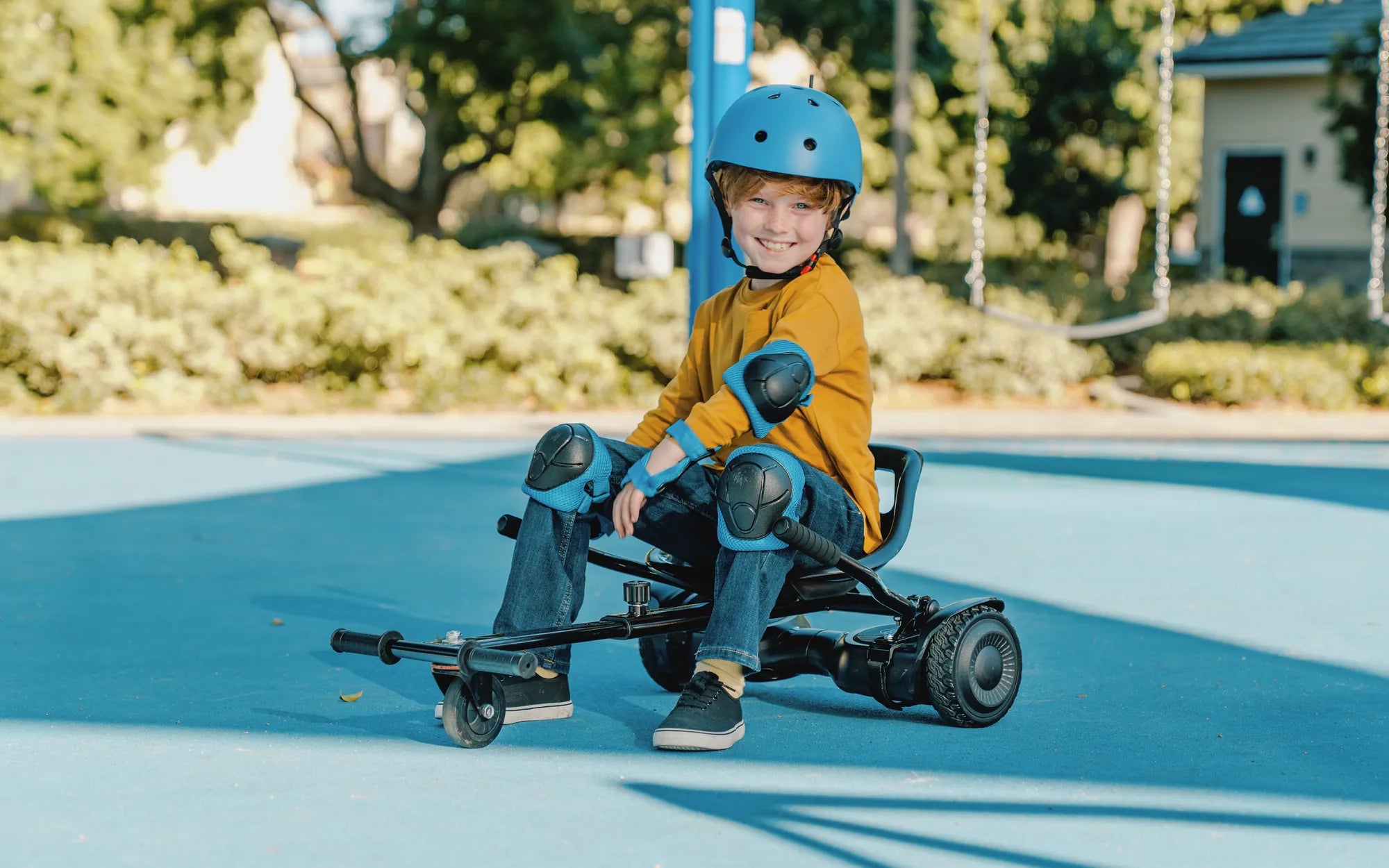
Choosing the right scooter for your child is about more than just picking a color. It's about selecting a tool for adventure that prioritizes safety, builds confidence, and encourages active play. This guide dives deep into the world of the big tire scooter for kids, a category defined by larger, often air-filled tires that offer a fundamentally different—and often superior—riding experience compared to traditional small-wheel models. You'll learn why these scooters are revolutionizing kids' mobility, what critical features to look for, and how to ensure every ride is both thrilling and secure.
Introduction to Big Tire Scooters for Kids
A big tire scooter for kids is characterized by wheels typically 8 inches in diameter or larger, moving away from the small, hard polyurethane wheels common on basic kick scooters. This shift isn't just cosmetic. The core design philosophy centers on enhanced stability, superior shock absorption, and the ability to handle a variety of surfaces beyond smooth pavement.
These scooters represent a growing segment in the youth mobility market, answering a clear demand from parents and kids alike for more capable, comfortable, and durable riding options. They bridge the gap between a simple sidewalk toy and a true exploration vehicle, empowering young riders to confidently navigate park paths, gravel driveways, and grassy fields.
The evolution towards bigger tires mirrors trends in adult bicycles and electric vehicles, where contact patch and suspension are key to control and comfort. For children, whose coordination and strength are still developing, these engineering principles translate directly to increased safety and enjoyment. The result is a scooter that feels planted, smooths out bumps, and instills a sense of mastery in the rider.
This guide will unpack every aspect of these innovative scooters. We'll explore their tangible benefits, provide a detailed purchasing framework, compare them directly to traditional models, and outline a complete safety and maintenance protocol. Our goal is to equip you with all the knowledge needed to make an informed decision that fuels your child's adventure safely.
Why Choose a Big Tire Scooter? Key Benefits for Young Riders
The advantages of a big tire scooter for kids are rooted in physics and child development. The larger wheel diameter and increased air volume (in pneumatic models) create a platform that is inherently more forgiving and capable, directly addressing common frustrations and limitations of standard scooters.
Parents often report that children who were hesitant or wobbly on conventional scooters take to big tire models with remarkable speed and confidence. This isn't coincidence; it's the result of intentional design choices that lower the skill floor for enjoyment while raising the ceiling for adventure. The benefits extend beyond mere fun, contributing to physical development, balance, and outdoor engagement.
From navigating the inevitable cracks in a sidewalk to exploring a packed dirt trail, these scooters transform limitations into opportunities. They encourage longer periods of active play because the ride is less fatiguing, turning a quick trip around the block into an extended expedition. This section breaks down the core benefits that make this category worth serious consideration.
Enhanced Stability and Control
The primary benefit of a big tire scooter for kids is dramatically improved stability. A larger wheel has a greater contact patch with the ground, which increases traction and reduces the likelihood of slipping. Furthermore, the wider axle and wheelbase common on these models lower the center of gravity, making the scooter feel planted and secure.
This enhanced stability is crucial for learning and skill development. A child can focus on balancing, steering, and braking without constantly fighting against a twitchy, unstable platform. It significantly reduces the "speed wobbles" that can occur on smaller-wheeled scooters at higher velocities or on uneven surfaces, a key safety improvement.
The control benefit extends to steering and maneuverability. While the scooter feels more stable in a straight line, the steering geometry is often designed to remain responsive. This gives young riders predictable handling, allowing them to make confident turns and avoid obstacles without overcorrecting, which is a common cause of falls on less stable equipment.
Superior Comfort and Shock Absorption
Comfort is where big tire scooters truly separate themselves. Small, solid wheels transmit every pebble, crack, and seam in the pavement directly through the deck and handlebars to the rider. This jarring experience can shorten playtime and discourage use on anything but perfect asphalt.
Larger tires, especially pneumatic (air-filled) ones, act as primary suspension systems. The air inside the tire compresses to absorb impacts, smoothing out bumps and vibrations. This results in a ride that is noticeably more comfortable, reducing fatigue in a child's hands, wrists, and legs. It allows them to ride longer distances and on more interesting terrain without discomfort.
This shock absorption isn't just about comfort; it's also a safety and durability feature. By cushioning impacts, the tires reduce stress on the scooter's frame, fork, and handlebar joints. This leads to a longer-lasting product and a safer ride, as the scooter is less likely to suffer from stress fractures or sudden component failure from repeated hard impacts.
Versatility for Adventure
A traditional scooter is largely confined to smooth, paved surfaces. A big tire scooter for kids redefines the play environment. With their robust construction and capable tires, these scooters can confidently handle grass, hard-packed dirt, gravel paths, and even light trail use.
This versatility unlocks a world of exploration. A ride is no longer limited to the driveway or sidewalk; it can extend into the park, along a bike path, or around a campsite. This encourages imaginative play, physical activity in varied environments, and a deeper connection with the outdoors. It transforms the scooter from a neighborhood toy into a genuine adventure vehicle.
The tread patterns on big tires are also more aggressive, designed to grip loose or soft surfaces. This capability builds a child's confidence in their equipment, knowing they won't get stuck or slip on a patch of sand or wet leaves. It fosters independence and problem-solving as they learn to assess and navigate different types of terrain safely.
What to Look For: Essential Safety and Feature Checklist
Not all big tire scooters are created equal. As a parent, focusing on specific safety and construction features is non-negotiable. This checklist serves as a data-driven framework for evaluation, moving beyond marketing claims to assess tangible quality and safety benchmarks.
The ideal big tire scooter for kids balances robust materials, thoughtful engineering, and certified safety components. It should feel substantial without being unwieldy, and adjustments should be secure and tool-free where possible. Paying attention to these details ensures your investment is in a product designed for real-world use and durability, not just a flashy appearance.
Prioritize features that prevent accidents (like reliable brakes and a stable deck) and those that mitigate injury when a fall does occur (like handlebar grips and overall stability). The following subsections break down the critical elements that should be on your radar during the selection process.
Non-Negotiable Safety Features
Reliable Braking System: A responsive brake is the most important safety feature. Look for a rear fender brake (foot brake) combined with a hand-operated disc or caliper brake. Dual braking provides redundancy and teaches proper braking technique. Test that the brake levers are within easy reach of small hands and require moderate pressure to engage.
Secure Deck and Construction: The deck should be wide enough for both feet to stand comfortably side-by-side or in a staggered stance. It must have a slip-resistant surface. The frame should be made of reinforced steel or aircraft-grade aluminum, with visible, robust welding at stress points. Avoid models with thin tubing or plastic major structural components.
Adjustable Handlebar Height: Proper ergonomics prevent hunching and improve control. Look for a tool-free, quick-adjust mechanism that allows the handlebars to grow with your child. Ensure the adjustment clamp is sturdy and locks firmly into place without play or wobble. The handlebar grips should be soft, non-slip, and have end caps to protect hands in a fall.
The Importance of Quality Tires
The tires are the heart of a big tire scooter for kids. Understanding the options is key. Pneumatic (Air-Filled) Tires offer the best shock absorption and traction, providing a car-like ride quality. They require periodic pressure checks and are susceptible to punctures, though many come with sealant or offer tubeless setups. The ride comfort is often worth the minimal maintenance.
Airless (Foam-Filled or Solid Rubber) Tires are maintenance-free and puncture-proof. Modern versions use advanced foam compounds or honeycomb structures that offer decent shock absorption, though typically not as plush as quality pneumatics. They are an excellent choice for parents who want a truly zero-maintenance option and for riders who frequently encounter thorny areas.
Evaluate the tread pattern based on intended use. Deep, knobby treads excel on loose dirt and grass, while a smoother, street-oriented tread provides better rolling efficiency and quieter operation on pavement. Many all-terrain models strike a balance with a hybrid pattern. The tire width also matters; wider tires provide more stability and flotation on soft surfaces.
Durability and Brand Trust: Why Gyroor Stands Out
When evaluating brands, trust is built on verifiable standards and post-purchase support. Gyroor, a leading electric scooter and e-bike brand trusted by over 100,000 riders, exemplifies this approach with its kids' mobility products. Their commitment to safety and durability is evidenced by specific, measurable features.
First, UL-certified battery packs (for electric-assist models) are a critical differentiator. This independent certification means the battery has passed rigorous tests for electrical, mechanical, and fire safety—a paramount concern for any parent. These batteries are rated for 500+ charge cycles, ensuring long-term reliability.
Second, an IPX5 water-resistant rating on relevant models means the scooter can withstand water jets from any direction. This translates to real-world resilience against puddles, rain, and wash-downs without fear of electrical short or corrosion, significantly enhancing the scooter's lifespan and all-weather capability.
Finally, a 1-year comprehensive warranty on the frame, electronics, and components provides tangible peace of mind. It signals the brand's confidence in its manufacturing and materials. This combination of certified safety (UL), environmental protection (IPX5), and warranty backing makes a brand like Gyroor a benchmark for trustworthy design in the big tire scooter for kids category.
Big Tire vs. Traditional Scooters: A Side-by-Side Comparison
To make an informed decision, a direct comparison is essential. The table below contrasts big tire scooters with traditional small-wheel models across key performance and usability dimensions.
| Feature | Big Tire Scooter | Traditional Scooter (Small Wheels) |
|---|---|---|
| Primary Terrain | All-terrain: Pavement, grass, dirt, gravel, light trails. | Pavement only: Smooth sidewalks, asphalt, indoor surfaces. |
| Ride Comfort | High. Pneumatic or advanced foam tires absorb bumps and vibrations. | Low. Small, hard wheels transmit all impacts to the rider. |
| Stability & Control | Excellent. Wider wheelbase, larger contact patch reduces wobble. | Moderate to Low. Prone to speed wobbles and catching on cracks. |
| Learning Curve | Easier for beginners due to inherent stability. | Steeper, as balance must compensate for platform instability. |
| Maintenance | Moderate (Pneumatic: check air, puncture repair). Low (Airless: none). | Very Low. Solid wheels require no maintenance. |
| Weight | Heavier (15-25 lbs), due to robust frame and larger wheels. | Lighter (5-10 lbs), easier for young kids to carry. |
| Best Use Case | Adventure, exploration, rough neighborhoods, confident daily riding. | Short trips on perfect pavement, tricks/stunts (for specific models). |
| Long-Term Durability | Generally higher. Built for impacts and varied use. | Varies. Can be less resilient to curb strikes and hard impacts. |
This comparison reveals that the big tire scooter for kids is a purpose-built tool for active, exploratory play across diverse environments. The traditional scooter remains a lightweight option for very specific, smooth-surface applications. The choice ultimately hinges on whether you prioritize comfort, capability, and confidence-building or absolute minimal weight and simplicity for perfect-path use.
Top Tips for Parents: Ensuring a Safe and Fun Riding Experience
Owning a great scooter is only half the equation. Proactive parenting practices around gear, environment, and maintenance complete the safety picture. These tips are designed to integrate scooter riding seamlessly into your family's active lifestyle while minimizing risks.
Establishing good habits from the first ride sets a positive precedent. This involves clear rules about where and when to ride, mandatory safety gear, and a basic understanding of scooter care. By taking this holistic approach, you empower your child with the knowledge and tools for independence while maintaining appropriate oversight. The goal is to foster responsibility alongside the fun.
Gear Up: The Essential Safety Kit
Helmet: This is non-negotiable. Choose a CPSC-certified bicycle helmet that fits snugly, sitting level on the head about two finger-widths above the eyebrows. The straps should form a "V" under each ear and allow only one or two fingers between the strap and the chin. Replace it after any significant impact.
Knee and Elbow Pads: For new riders or those tackling rougher terrain, pads are crucial. They protect the joints most likely to be scraped in a fall. Look for hard plastic caps with soft foam backing and adjustable straps that don't restrict movement. Wrist guards are also highly recommended, as falls often involve putting hands out to brace.
Appropriate Footwear: Closed-toe shoes with flat, grippy soles (like sneakers) are mandatory. Sandals, flip-flops, or Crocs can slip off pedals, get caught, and offer zero protection in a crash. Bright, visible clothing, especially in low-light conditions, is also a smart addition to the safety kit.
Choosing the Right Riding Environment
Start on a controlled, smooth, and flat surface like an empty tennis court, basketball court, or a quiet cul-de-sac with fresh pavement. This allows your child to get a feel for the scooter's balance, acceleration, and braking without the added challenge of obstacles, slopes, or traffic.
Gradually introduce new environments as skills improve. Move to a sidewalk with minor cracks, then a park with a mix of pavement and packed dirt. Always supervise new terrain exploration. Explicitly rule out riding near roads with traffic, on steep hills, or in parking lots. Establish clear boundaries for where riding is permitted.
Teach basic "rules of the road": be aware of surroundings, yield to pedestrians, avoid blind corners at speed, and never ride at dusk or dawn without high-visibility gear and lights if the scooter is equipped with them. A big tire scooter for kids is capable, but the rider must learn to use that capability judiciously.
Maintenance 101: Keeping the Scooter in Top Shape
Perform a quick pre-ride check: ensure tires are properly inflated (for pneumatic models), test that both brakes engage firmly and don't rub, check that the handlebar and stem are tight and don't wobble, and confirm the folding mechanism (if present) is securely locked.
For pneumatic tires, maintain the recommended PSI (usually printed on the tire sidewall) using a bike pump with a pressure gauge. Proper inflation optimizes ride comfort, rolling efficiency, and prevents pinch flats. Inspect tires regularly for embedded debris or signs of excessive wear.
Every few months, or after particularly muddy adventures, do a deeper clean. Wipe down the frame, check and tighten all bolts (especially on the stem, handlebars, and wheels) with the appropriate tools, and lubricate the brake pivots and folding mechanisms with a dry lubricant if they become stiff. For electric models, follow the manufacturer's specific guidelines for battery care and charging.
Frequently Asked Questions (FAQs)
Q: What age is a big tire scooter best for?
A: Most models are designed for children aged 6 and up. The key factor is not just age, but the child's height, coordination, and strength. The scooter should allow for a slight bend in the knees when standing on the deck, and the child should be able to comfortably reach and operate the hand brakes. Always check the manufacturer's recommended age and weight limits.
Q: Are they much heavier than regular scooters?
A: Yes, typically by 5 to 15 pounds. This is the trade-off for the robust frame, larger wheels, and more substantial components that provide the stability and durability benefits. For most children over 6, the weight is manageable for riding, though they may need help carrying it up stairs or loading it into a car. The riding stability often outweighs the carrying inconvenience.
Q: Can the tires go flat, and how do I fix them?
A> Pneumatic tires can go flat from punctures or slow leaks. Many come with puncture-resistant liners or sealant. Repair involves finding the leak, removing the tire/tube (if not tubeless), patching or replacing the tube, and re-inflating. Airless tires cannot go flat, offering true zero-maintenance in this regard. Your choice depends on prioritizing ultimate ride comfort (pneumatic) versus absolute convenience (airless).
Q: Is a big tire scooter a good choice for a first scooter?
A> Absolutely. In many ways, it's an ideal first scooter. The enhanced stability and easier balance lower the initial learning curve, allowing a child to experience success and build confidence quickly. The comfort also encourages longer practice sessions. While a traditional scooter might be lighter, the big tire model's forgiving nature often leads to a safer, more positive introductory experience.
Q: Do they come in electric versions?
A> Yes, the big tire design is increasingly popular in the kids' electric scooter market. The large tires are perfect for handling the increased speed and weight of an electric model, providing necessary stability and comfort. Brands like Gyroor incorporate their big tire designs into electric models, pairing the terrain capability with UL-certified batteries and water-resistant construction for a safe, powerful ride.
Conclusion: Rolling Towards Confidence and Adventure
A big tire scooter for kids is more than a toy; it's an investment in active, outdoor childhood development. By prioritizing stability, comfort, and all-terrain capability, this design directly supports safer riding, longer adventures, and the growth of a child's confidence and independence. The data is clear: the fundamental engineering advantages translate to tangible benefits for young riders.
The decision ultimately comes down to choosing a model backed by verifiable safety standards and durable construction. Brands that transparently offer features like UL-certification for batteries, IP-rated water resistance, and strong warranties demonstrate a commitment to product integrity that parents can trust. This peace of mind is invaluable.
Ready to see models that embody these principles? Explore a range designed for safety and adventure. Browse the full Gyroor collection at gyroorboard.com to find the perfect big tire scooter for kids to launch your child's next great adventure.
E Scooter Kids Cheap: The Ultimate Guide to Affordable and Safe Rides for Children
4.5 Inch Hoverboard: The Ultimate Guide to Compact and Portable Riding