

Navigating the Urban Mobility Dilemma
For modern commuters and urban explorers, the choice between an electric bike and an electric scooter is more than a matter of preference—it's a practical decision impacting daily life. The core question, bike or scooter which is better, lacks a one-size-fits-all answer. The superior choice hinges on your specific commute distance, storage options, physical needs, and local regulations.
This article provides a factual, data-driven comparison to cut through the hype. We will analyze key performance metrics, real-world practicality, safety considerations, and total cost of ownership. As a leader trusted by over 100,000 riders, Gyroor's experience with both UL-certified e-bikes and IPX5 water-resistant e-scooters informs this comprehensive guide. By the end, you'll have the clarity to choose the vehicle that best fits your lifestyle.
Defining the Contenders: E-Bike vs. E-Scooter
Understanding the fundamental design of each vehicle is the first step. An electric bike, or e-bike, is essentially a bicycle augmented with an electric motor. It provides pedal-assist, where the motor amplifies your pedaling effort, and often includes a thumb throttle for motor-only propulsion. E-bikes feature a traditional bicycle frame, larger wheels (typically 20-28 inches), and a seated riding position.
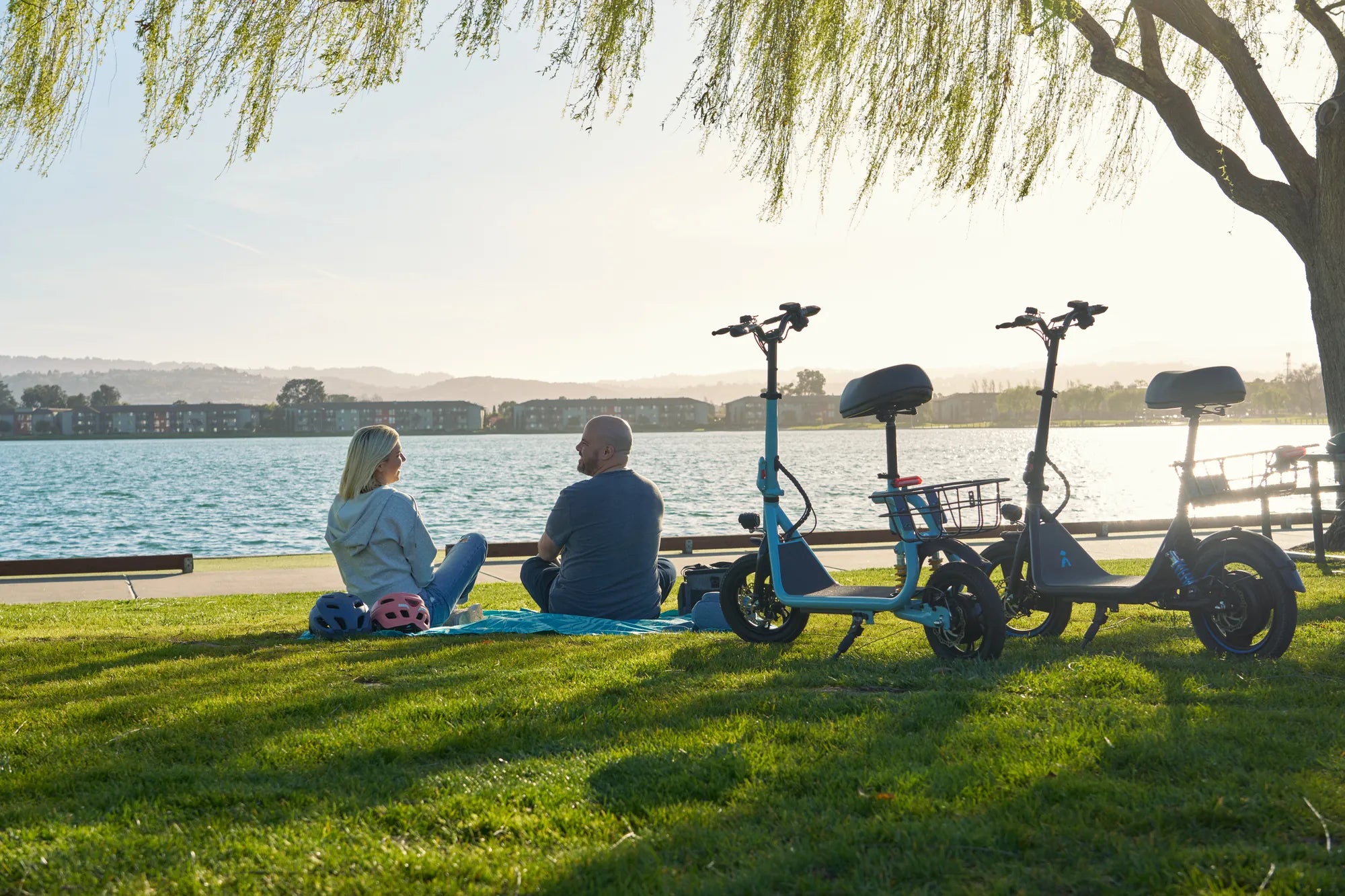
An electric scooter, or e-scooter, is a motorized version of a traditional kick scooter. The rider stands on a deck between the handlebars and the base. It is controlled solely via a throttle and hand brakes, with no pedals. E-scooters have smaller wheels (usually 8-10 inches) and a compact, foldable design for easy portability. This fundamental difference in form dictates their primary use cases in the personal transport ecosystem.
Key Performance Metrics: Speed, Range, and Power
Performance is measured in speed, range, and power. E-bikes generally have a higher top speed, often capped at 20 mph for Class 1 and 2, and 28 mph for Class 3 models. Their larger frames can accommodate bigger battery packs, yielding a longer typical range of 25-50 miles per charge, depending on pedal assist level and terrain.
E-scooters commonly have top speeds between 15 and 20 mph, with some performance models reaching higher. Their range is typically 15-25 miles on a single charge, as the compact design limits battery size. Both vehicle types from reputable brands like Gyroor use UL-certified battery packs, tested for 500+ charge cycles, ensuring safety and consistent performance whether you choose a bike or a scooter.
The Practicality Factor: Commuting, Storage, and Portability
For daily use, practicality is paramount. E-bikes excel in comfort over longer distances (5+ miles) due to the seated position and shock-absorbing features like front suspension or fat tires. They can handle grocery runs with added baskets or panniers and are ideal for mixed-terrain commutes. However, their size and weight (50-70 lbs) make them less convenient for carrying onto crowded public transit or storing in a small apartment.
E-scooters are the champions of portability and the "last-mile" solution. Their lightweight (30-40 lbs), foldable design allows them to be carried onto buses, stored under a desk, or tucked into a car trunk with ease. For shorter commutes (under 5 miles) and errands in dense urban areas, their compact nature is a significant advantage. The standing ride, however, can be less comfortable over very long distances or on rough pavement.
Safety, Stability, and Riding Experience
Riding dynamics significantly impact safety. E-bikes offer greater inherent stability due to their lower center of gravity, larger wheel diameter (which rolls over bumps and cracks more smoothly), and triangular frame geometry. This makes them more confident on varied road surfaces. They also often feature more robust braking systems, like hydraulic disc brakes.
E-scooters require more active balance, especially at lower speeds or on uneven terrain. Their smaller wheels are more susceptible to potholes. However, their lower speed profile and upright stance can enhance visibility in traffic. Features like Gyroor's IPX5 water-resistant design on select models add a layer of all-weather safety for both types, protecting critical electronics from rain and splashes.
Legal Landscape and Where You Can Ride
Regulations are a critical, often overlooked factor. In most regions, e-bikes are clearly classified similarly to traditional bicycles, especially pedal-assist models. They are generally permitted in bike lanes and on roads, and are subject to the same rules as bicycles. Some areas have specific class definitions that govern where Class 3 (28 mph) e-bikes can operate.
E-scooter laws are more fragmented and evolving. Regulations vary widely by city and state, covering where they can be ridden (bike lanes vs. roads vs. sidewalks), age restrictions, helmet requirements, and speed limits. It is essential to check your local ordinances before purchasing an e-scooter to ensure compliant and safe riding.
Cost Analysis: Initial Investment and Long-Term Value
The total cost of ownership includes purchase price and ongoing expenses. Quality e-bikes represent a higher initial investment, often ranging from $1,200 to $3,000+. E-scooters from reputable brands like Gyroor typically start at a lower entry point, from $500 to $1,500. Both offer immense savings compared to car ownership, eliminating fuel, insurance, and parking costs.
Long-term costs include maintenance (tire replacements, brake adjustments) and eventual battery replacement after several years. The value of a comprehensive warranty and accessible customer support cannot be overstated. Gyroor backs its products with a reliable 1-year warranty and US-based support, providing long-term peace of mind and protecting your investment, making the decision of bike or scooter which is better also a question of trusted brand support.
The Eco-Conscious Choice: Environmental Impact
Both e-bikes and e-scooters are excellent green alternatives to gasoline-powered vehicles. They are highly energy-efficient, consuming far fewer watt-hours per mile than a car. By replacing car trips, each rider significantly reduces their personal carbon footprint. The sustainability of these vehicles is further enhanced by durable construction and long-life, UL-certified batteries designed for hundreds of cycles.
The marginal difference in environmental impact between the two is small and often tied to user behavior. An e-bike used for a 10-mile commute replaces more car miles than a scooter used for a 2-mile trip. Ultimately, the most eco-friendly vehicle is the one you will use consistently instead of a car.
Making Your Decision: A Side-by-Side Comparison
This table synthesizes the key decision factors to help you determine bike or scooter which is better for your situation.
| Factor | Electric Bike | Electric Scooter |
|---|---|---|
| Best For | Longer commutes (5+ mi), hills, carrying cargo, mixed terrain. | Short commutes, last-mile transit links, ultra-dense urban areas. |
| Portability | Lower. Heavy (50-70 lbs), bulky even when folded. Hard to carry. | High. Lightweight (30-40 lbs), compact fold. Easy to carry/store. |
| Riding Comfort | High. Seated position, better suspension, stable over bumps. | Moderate. Standing position can cause fatigue on long rides. |
| Typical Cost | Higher initial investment ($1,200+). | Lower entry point ($500+). |
| Ideal Rider Profile | Commuters with longer routes, riders needing cargo capacity, those seeking exercise with assist. | Apartment dwellers, multi-modal commuters, those with minimal storage space. |
Frequently Asked Questions (FAQ)
Which is better for hills: e-bike or e-scooter?
E-bikes are almost always superior for hills. Their combination of pedal-assist, more powerful motors (often 500W+), and multiple gears provides sustained torque to climb steep inclines efficiently. Most e-scooters struggle with sustained hill climbs.
Which is easier to learn for a beginner?
E-scooters have a shorter learning curve. The controls are simple (throttle and brake), and balance is intuitive for most adults. E-bikes require basic bicycle riding skills, though the electric assist makes pedaling easier.
Can I carry groceries or luggage on either?
Yes, but e-bikes are more capable. You can easily add rear racks, panniers, or large front baskets. For e-scooters, you'll need a backpack or a handlebar hook for light bags; they are not designed for heavy cargo.
How does Gyroor's warranty and support work?
Gyroor offers a 1-year comprehensive warranty covering manufacturing defects on the vehicle, motor, and battery. They provide support via email and phone, with replacement parts shipped from US warehouses for faster resolution, ensuring you ride with confidence.
Are they safe to ride in the rain?
Models with an IPX5 water-resistance rating, like several in Gyroor's lineup, are protected against water jets from any direction, making them safe for wet conditions. Always ride cautiously, as wet surfaces reduce tire traction for both bikes and scooters.
The Right Ride for Your Lifestyle
The debate over bike or scooter which is better concludes with your personal needs as the final judge. For the rider with a longer, hillier commute who values comfort and cargo capacity, an e-bike is the compelling choice. For the urban dweller tackling short trips, navigating public transit, and prioritizing ultra-portability, an e-scooter is the superior tool. Both represent a smart, sustainable step forward in personal mobility.
Your next step is to explore a range built with safety and reliability at its core. Assess your daily route, storage options, and local laws, then find the model that matches. Discover the perfect blend of performance and practicality engineered for real riders. Browse the full Gyroor collection at gyroorboard.com to find your ideal electric ride today.
The Fashion Baby Scooter: Style, Safety, and Smart Urban Mobility
Ebike Fat Foldable: The Ultimate Guide to All-Terrain, Space-Saving E-Bikes