



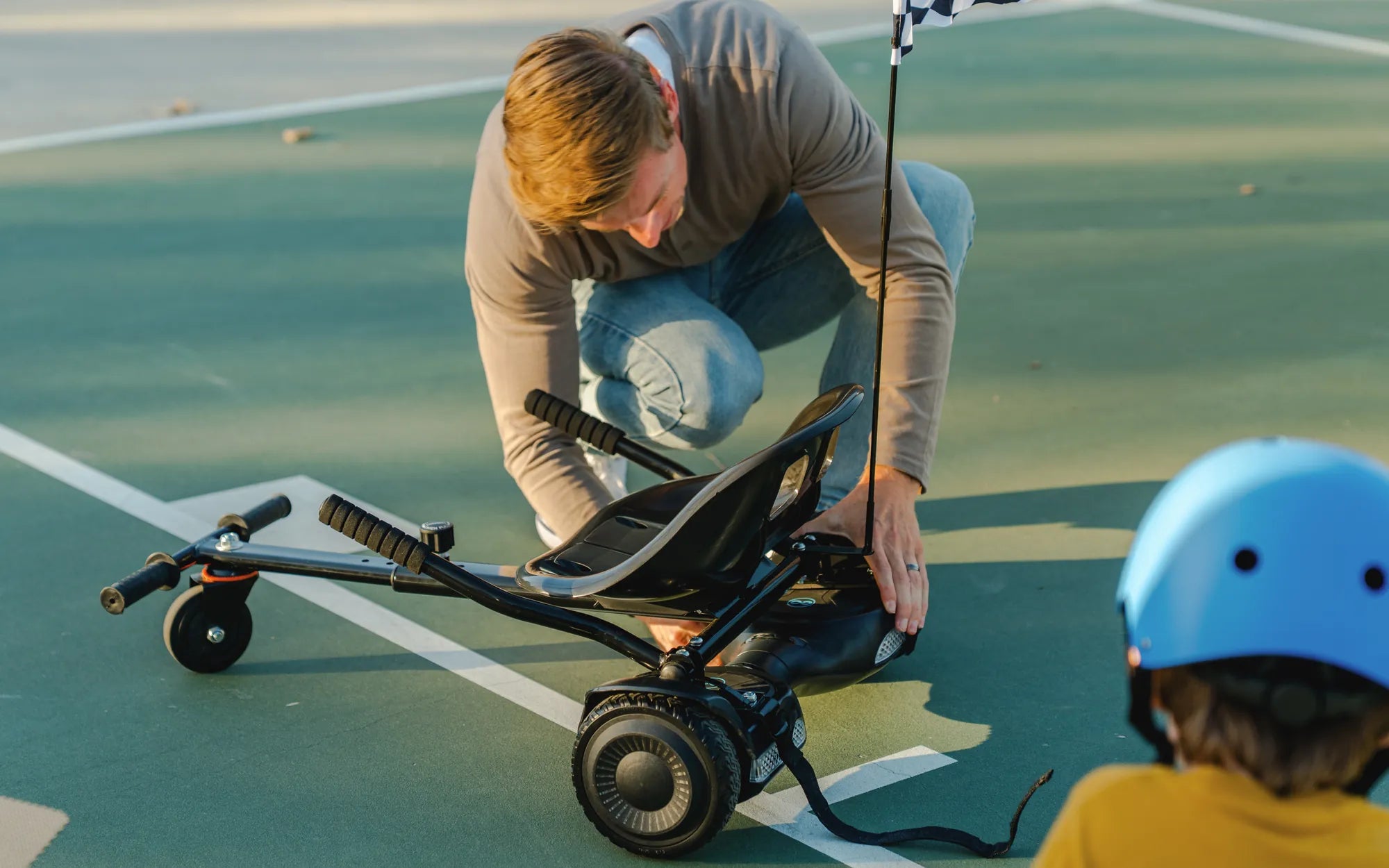
Introduction to the Black Hoverboard with Blue Lights
The black hoverboard with blue lights represents the zenith of stylish personal electric mobility. It combines a stealthy, sophisticated aesthetic with functional, high-visibility lighting to create a riding experience that feels genuinely futuristic. This guide provides a comprehensive, data-driven analysis for urban commuters, tech enthusiasts, and style-conscious riders considering this iconic model.
You will learn how to evaluate critical performance specifications, understand the real-world benefits of integrated LED systems, and identify the build qualities that separate premium models from substandard alternatives. We will demystify technical jargon, compare essential features, and provide actionable advice on maintenance, safety, and local regulations. The goal is to equip you with the knowledge to select a hoverboard that delivers on its sleek promise without compromising on reliability or safety.
Why Choose a Black Hoverboard with Blue Lights?
Selecting a black hoverboard with blue lights is a deliberate choice that merges form and function. The primary appeal lies in its unmatched visual signature—a sleek, monochromatic base illuminated by cool, attention-grabbing blue accents. This combination is not merely cosmetic; it serves distinct practical purposes that enhance the overall riding experience.
From a design perspective, black is a timeless color that conveys sophistication and versatility. It pairs seamlessly with any rider's style, from casual streetwear to more polished looks. The addition of blue lighting transforms the device from a simple transporter into a moving piece of tech art, especially effective in low-light conditions.
Functionally, the integrated lighting system is a critical safety feature. It significantly increases rider visibility to pedestrians, cyclists, and motorists, reducing the risk of collisions during dusk, dawn, or night rides. This makes the black hoverboard with blue lights a smart choice for those who prioritize both style and proactive safety.
Style & Aesthetics: More Than Just a Color
The aesthetic impact of a black hoverboard with blue lights is profound. The black finish, whether in a matte or gloss variant, offers a minimalist, powerful look that avoids the toy-like appearance of brighter-colored models. It presents a professional and sleek profile suitable for a wider range of environments and age groups.
The blue LED lights are the defining futuristic element. Typically configured as rim lights, underglow, or deck accents, they create a halo or spotlight effect that makes the board appear to float on light. This visual signature is a major part of the device's identity and appeal, setting it apart in a crowd.
This combination allows for personal expression within a framework of sophisticated design. Riders aren't just moving from point A to B; they are making a statement about embracing modern technology and style. The look is consistently cited as a top reason for purchase among users seeking a premium personal transport experience.
Safety & Visibility: The Practical Advantage of LEDs
The blue LED system on a black hoverboard is a fundamental safety upgrade. Human eyes are particularly sensitive to blue light wavelengths, making these LEDs highly effective for gaining attention. This is crucial for urban environments where riders share space with larger, faster vehicles.
Enhanced visibility directly correlates with reduced accident rates. The lights ensure the rider is seen from multiple angles, not just from the front or back. This 360-degree visibility is a key defensive riding tool, alerting others to your presence on shared paths, in parking lots, and on low-lit streets.
It is important to note that while blue lights increase visibility, riders must be aware of local regulations. In many jurisdictions, solid blue lights are restricted for use by emergency vehicles. Therefore, most consumer models feature blue lights as an accent or underglow for aesthetic and visibility purposes, not as a primary forward-facing headlight, which is often white.
Key Features to Look for in a Quality Model
Beyond the striking color scheme, a high-performance black hoverboard with blue lights must excel in core engineering areas. Discerning buyers should prioritize motor performance, battery safety, and structural durability. These elements determine real-world usability, range, and longevity far more than cosmetic features alone.
A quality model balances power with control, offering a smooth yet responsive ride. It should feel stable underfoot and capable of handling minor terrain variations. The following checklist details the non-negotiable specifications that separate premium boards from unreliable imitations.
- Dual Motor System: Look for a combined wattage of at least 600W (2x300W) for adequate torque and hill-climbing ability.
- Certified Battery: The battery pack must have UL 2272 or similar certification, a non-negotiable safety standard.
- IP Water Resistance Rating: An IPX5 rating or higher is essential for protection against water splashes and dust.
- Robust Frame: The chassis should be made of reinforced, impact-resistant polymer or alloy.
- Quality Tire Type: 6.5-inch or larger air-filled (pneumatic) or solid rubber tires for better shock absorption.
Motor Power & Terrain Performance
Motor power dictates a hoverboard's capability. For a black hoverboard with blue lights to be practical, it needs sufficient torque. A dual 300W motor configuration (600W total) is a common benchmark for adult riders, enabling speeds of up to 10-12 mph and the ability to climb inclines of 15-18 degrees.
This power level allows the board to handle common urban obstacles like driveway ramps, gentle slopes, and uneven pavement transitions smoothly. Lower-wattage motors may struggle with these tasks, leading to a jarring ride and potential stalling on inclines.
Terrain performance is also tied to tire choice. Models with larger, air-filled tires (6.5” or 8.5”) provide much better shock absorption on rough surfaces, while solid rubber tires offer puncture-proof reliability on smooth pavement. Your typical riding surface should guide this choice.
Battery Life, Range & Safety Certifications
The battery is the heart of the hoverboard and the most critical safety component. A quality black hoverboard with blue lights will use a UL 2272 certified lithium-ion battery pack. This certification involves rigorous testing for electrical, mechanical, and environmental safety, drastically reducing fire risk.
Battery capacity, measured in watt-hours (Wh) or amp-hours (Ah), directly determines range. A standard 36V, 4.4Ah battery typically provides a real-world range of 10-12 miles per charge for an average rider. Higher-capacity batteries (e.g., 36V, 6.5Ah) can extend this to 15-18 miles.
Brands like Gyroor, trusted by over 100,000 riders, use these UL-certified packs tested for 500+ charge cycles. This ensures not only safety but also long-term battery health and consistent performance, making the investment more durable and reliable.
Build Quality: IP Ratings and Durability
Build quality ensures your hoverboard withstands daily use. The Ingress Protection (IP) rating is a key indicator. An IPX5 rating, a standard for brands like Gyroor, means the unit is protected against water jets from any direction. This allows you to confidently ride through puddles and in light rain without damaging the electronics.
The frame material is equally important. A high-quality ABS shell reinforced with metal components around the wheel axles and hinge provides the necessary rigidity to support riders up to 265 lbs without flexing or cracking. This robust construction protects the internal circuitry from impact shocks.
Attention to detail in sealing and component quality prevents the common failure points of cheaper models, such as water ingress near the charging port or LED light strips coming loose. This durability is essential for preserving both the functionality and the sleek appearance of your black hoverboard with blue lights.
Top Considerations Before You Buy
Making an informed purchase requires balancing performance specs with practical realities like rider profile, support services, and legal constraints. A thoughtful evaluation of these factors ensures the board you choose integrates seamlessly into your lifestyle without unexpected complications or limitations.
The following table compares key decision factors across typical use cases, helping you identify the model attributes that matter most for your intended riding environment and needs.
| Consideration | Urban Commuter | Recreational Rider | Teen/Young Adult |
|---|---|---|---|
| Priority Feature | Range & Durability (IPX5+) | Style & Top Speed | Safety & Ease of Use |
| Ideal Range | 12+ miles | 8-10 miles | 6-8 miles |
| Key Spec | Large pneumatic tires, high-capacity battery | Bright LED systems, 10+ mph speed | Beginner mode, robust frame, UL-certified battery |
| Warranty Importance | Very High (frequent use) | Moderate | High |
Rider Weight & Speed Limits
The manufacturer's stated weight capacity is a strict limit, not a suggestion. Exceeding it can strain motors, drain the battery rapidly, and compromise structural integrity. Most quality adult models support 220 lbs to 265 lbs. Always choose a board with a capacity at least 20-30 lbs above your weight for optimal performance and safety.
Speed limits are often tied to motor power and local regulations. While many boards can reach 10-12 mph, beginner modes often cap speed at 4-6 mph for easier learning. It's crucial to match the board's speed capability with the rider's skill level and the intended riding environment (e.g., crowded sidewalks vs. open paths).
Heavier riders should prioritize models with higher-wattage motors (700W total or more) to maintain responsive acceleration and hill-climbing ability. Lighter riders may find standard 600W configurations perfectly adequate, potentially benefiting from slightly longer range.
Warranty and Customer Support
A comprehensive warranty is your best protection against manufacturing defects. A reputable brand will offer a minimum 1-year warranty on the entire unit, with specific coverage for the battery and motor. This demonstrates confidence in their product's quality and provides you with peace of mind.
Customer support accessibility is equally critical. Brands like Gyroor provide dedicated, US-based support channels. This is invaluable if you encounter setup issues, need troubleshooting help for the blue light system, or require warranty service. Avoid brands with only overseas support or difficult-to-reach service departments.
The value of reliable support cannot be overstated. It ensures that your investment in a black hoverboard with blue lights is protected and that you can quickly resolve any technical problems, maximizing your enjoyment and the product's lifespan.
Local Regulations and Riding Etiquette
Laws governing hoverboards vary significantly by city, state, and country. Before riding, research local statutes regarding where you can legally operate your device—common restrictions involve sidewalk riding, bike lane use, and minimum age requirements.
As a general rule, ride defensively and courteously. Yield to pedestrians, use an audible signal like a bell or your voice when passing, and avoid weaving unpredictably. On shared paths, maintain a predictable line and a safe speed appropriate for the traffic density.
Regarding the blue lights, be aware that flashing or solid blue lights are often legally reserved for emergency vehicles. Use your board's lighting system for visibility and aesthetics, but avoid any mode that could be mistaken for an official emergency signal to prevent legal issues.
Maintaining Your Black Hoverboard with Blue Lights
Proper maintenance preserves the sleek look, ensures the blue LED system remains vibrant, and extends the mechanical life of your hoverboard. A simple, regular care routine prevents minor issues from becoming major repairs and keeps your board performing like new.
Focus on three key areas: the exterior shell and lights, the battery system, and the tires and mechanical parts. Using the correct cleaning materials and following storage guidelines are essential steps. Neglect can lead to faded aesthetics, reduced battery capacity, and premature wear.
Cleaning and Protecting the Exterior
To clean the black shell, first power off the board and disconnect the charger. Use a soft, slightly damp cloth with a mild soap solution to wipe down the surface. Avoid abrasive cleaners, solvents, or high-pressure water sprays, which can scratch the finish or force water into seals.
For the blue LED light casings, use a dry or lightly dampened microfiber cloth to gently wipe away dust and grime. Be careful not to apply excessive pressure to the light strips or lenses. Regular cleaning prevents dirt buildup that can dim the lights' output over time.
Despite an IPX5 rating, the goal is to prevent unnecessary exposure. After riding in wet conditions, dry the board thoroughly with a towel, paying special attention to the charging port cover and the seam between the two footpads.
Battery Care and Storage Best Practices
Optimal battery care maximizes lifespan and maintains range. Avoid completely draining the battery; try to recharge when it drops to 20-30% capacity. Always use the manufacturer-provided charger to prevent voltage mismatches that can damage the battery cells.
For long-term storage (over a month), store the board in a cool, dry place with the battery charged to approximately 50-60%. Storing a battery at full charge or completely empty for extended periods can accelerate capacity degradation. Check and top up this storage charge every 2-3 months.
Allow the board to cool to room temperature after a long ride before plugging it in to charge. This simple practice reduces thermal stress on the UL-certified battery pack, supporting its 500+ cycle lifespan as seen in Gyroor's rigorously tested models.
Frequently Asked Questions (FAQ)
Q: Are the blue lights customizable (e.g., blinking/static patterns)?
A: It depends on the model. Many premium black hoverboards with blue lights offer multiple lighting modes controlled via a button or a companion mobile app. Common modes include solid on, slow blinking, fast strobe, and color cycle (if equipped with RGB LEDs). Always check the product specifications for details on light customization.
Q: Is it legal to ride a hoverboard with blue lights on public roads?
A> This is a crucial distinction. Using blue lights for underglow or non-flashing accent lights is generally acceptable for visibility. However, using bright, flashing, or forward-facing solid blue lights is often illegal, as blue is typically reserved for emergency vehicles. Always prioritize white lights for front illumination and check your specific state and local vehicle codes to ensure compliance.
Q: Can I ride my black hoverboard with blue lights in the rain?
A: Boards with an IPX5 water-resistance rating, like those from Gyroor, are designed to withstand water jets and can be ridden through puddles and in light rain. However, they are not waterproof or submersible. Avoid heavy downpours, deep standing water, and submerging any part of the board. After wet riding, dry it thoroughly as described in the maintenance section.
Q: How do I troubleshoot if the blue lights stop working?
A> First, perform basic checks: ensure the board is powered on and the lights aren't simply in an "off" mode via the control button or app. Inspect the light strips for any obvious physical damage or loose connections. If basic checks fail, consult the user manual. If the board is under warranty, contact customer support. For brands with strong support like Gyroor, this is often the quickest path to a resolution.
Q: What is the realistic range I can expect on a single charge?
A> Advertised range is based on ideal conditions (light rider, flat terrain, moderate speed). Real-world range is typically 70-80% of the advertised maximum. For a standard model with a 36V 4.4Ah battery, expect 10-12 miles. Rider weight, terrain hills, frequent acceleration, and temperature all significantly impact range. A higher-capacity battery (6.5Ah+) is recommended for longer commutes.
Conclusion: Stepping into the Future
The black hoverboard with blue lights successfully merges visionary style with tangible technological benefits. It offers a riding experience defined by sleek design, enhanced safety through visibility, and the pure enjoyment of gliding on a illuminated platform. This guide has detailed the path to selecting a model that delivers on this futuristic promise through certified safety, robust construction, and reliable performance.
Your choice ultimately hinges on pairing this iconic aesthetic with engineering integrity. Opting for a brand that prioritizes UL-certified batteries, IPX5 water resistance, and strong customer support ensures your investment is protected. This combination transforms the device from a novelty into a dependable component of your modern mobility.
For a selection of hoverboards that embody this fusion of futuristic style and certified, reliable engineering, browse the full Gyroor collection at gyroorboard.com. Discover models that bring the vision of a black hoverboard with blue lights to life without compromising on the safety and durability trusted by over 100,000 riders.
How Old Do You Have to Be for a Hoverboard: Age Guidelines and Safety Tips
Best Hoverboard Under $150: Top Picks for Smooth, Safe Rides