



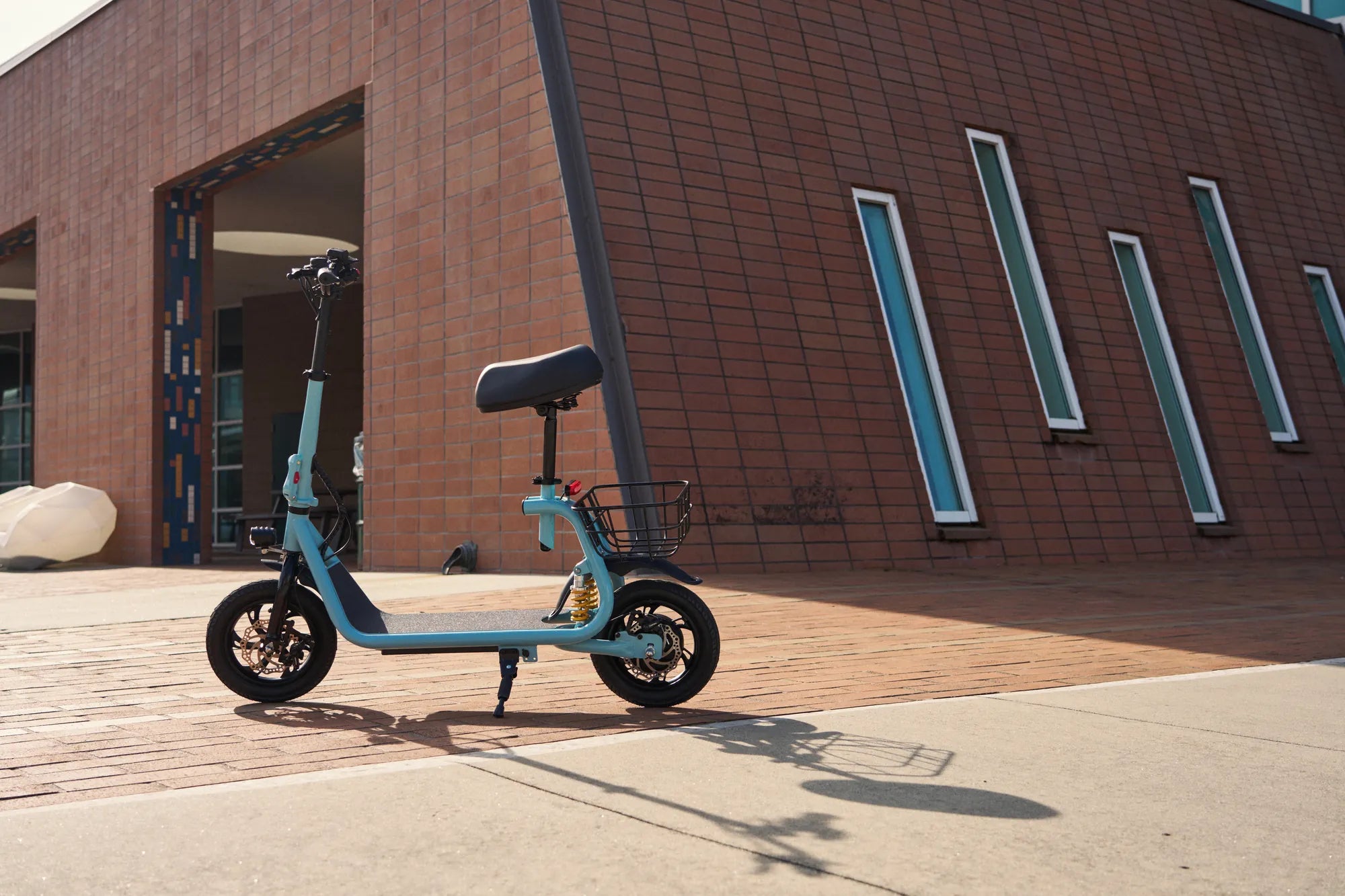
Electric scooters have surged in popularity, and it's no surprise that many 12-year-olds are eager to join the ride. The core question for parents isn't just about fun—it's a serious consideration of safety, legality, and responsibility. Can 12 year olds ride electric scooters? The answer is nuanced, hinging on a combination of your child's maturity, your local laws, and the specific safety measures you put in place. This guide will dissect the critical safety considerations, navigate the complex patchwork of legal age restrictions, and provide a concrete framework for parental guidance. We'll also explore how choosing a scooter built with safety as a core principle, like those from leading brands such as Gyroor—known for UL-certified batteries and robust designs—can be a foundational part of a responsible riding plan.
Understanding the Risks: A Safety-First Analysis for Young Riders
Before handing over the keys to a motorized vehicle, it's crucial to understand the unique risks a 12-year-old faces. At this age, cognitive development is ongoing; judgment, risk assessment, and impulse control are still maturing. Physically, while many 12-year-olds are coordinated, they may lack the core strength and refined reaction time needed to handle unexpected obstacles at speed.
The primary dangers include collisions with vehicles, pedestrians, or stationary objects, and falls due to loss of balance, road hazards, or improper braking. The risk profile changes dramatically between a controlled, low-speed practice in an empty lot and riding near traffic or on busy sidewalks.
A critical, often overlooked risk is overconfidence. A child who masters basic operation quickly may feel ready for situations beyond their actual skill level. Parental oversight must account for this psychological factor, ensuring rules and boundaries are clear and enforced.
Physical Readiness and Skill Assessment
Not every 12-year-old is ready at the same time. Parents should conduct a honest assessment using a practical checklist. First and foremost: Can your child ride a traditional bicycle proficiently? Mastery of balancing, steering, and stopping on a bike is the strongest indicator of baseline coordination for an e-scooter.
Next, assess their understanding of basic traffic rules and spatial awareness. Do they instinctively look both ways before crossing? Do they understand right-of-way? Furthermore, evaluate their physical capability: can they comfortably support the scooter's weight (often 25-40 lbs) when maneuvering it at a standstill, and do they have the hand strength to operate the throttle and brakes smoothly?
The Critical Role of Protective Gear
This is non-negotiable. A helmet is the single most important piece of safety equipment and must be CPSC-certified for bicycle riding, properly fitted, and worn for every single ride, no matter how short. Head injuries are a leading cause of serious e-scooter-related trauma.
The full protective kit should include knee pads, elbow pads, and wrist guards. Wrist fractures are extremely common in falls. Closed-toe, sturdy shoes (never flip-flops or sandals) are essential. Making gear mandatory from day one establishes a culture of safety. High-visibility clothing or reflective elements are also advisable for low-light conditions.
Navigating the Legal Landscape: Age Laws and Local Ordinances
Assuming an electric scooter is legal for a 12-year-old because it's sold online is a dangerous mistake. Regulations are a complex, often confusing patchwork that varies by country, state, and even city. Ignorance of the law is not a defense and can result in fines or confiscation of the scooter.
The legal framework typically governs where you can ride (road, bike lane, sidewalk) and who can ride (minimum age, license requirements). For 12-year-olds, the minimum age restriction is the primary legal hurdle. Parents must research the rules specific to their exact location, checking both state vehicle codes and municipal ordinances.
A Patchwork of Regulations: State vs. City Laws
In the United States, there is no federal law. Some states classify e-scooters similarly to bicycles, with no minimum age, while others set a minimum age of 16. For example, California law requires riders to be at least 16 and have a driver's license or permit to operate an e-scooter on public roads.
However, city ordinances can be stricter. A city may ban all motorized scooters from sidewalks regardless of the rider's age, or impose a higher age limit. The rules for private property are different, but the moment your child rides on a public path or road, local law applies. Your first step should be a search for "[Your City] electric scooter ordinances" and "[Your State] vehicle code electric scooter."
Manufacturer Recommendations as a Guideline
Legality sets the absolute minimum; manufacturer recommendations set a safety standard. Reputable brands base their age and weight guidelines on the scooter's power, size, braking performance, and overall design complexity. A recommendation of "14+" is a serious engineering and liability assessment.
These guidelines often exceed the bare minimum legal age and should be heavily weighted in your decision. A scooter designed for an adult commuter with a 500W motor and high top speed is inherently less suitable for a young teen than a model designed with younger riders in mind, perhaps featuring a speed limiter and more manageable power. Brands like Gyroor clearly state age recommendations for each model, providing a crucial data point for parents.
Choosing the Right Scooter: Features That Enhance Safety for Kids
Selecting an appropriate scooter is a proactive safety measure. The right model can compensate for a young rider's developing skills and provide parents with greater peace of mind. The goal is to find a scooter that prioritizes control, stability, and reliability over raw speed or power.
Key considerations include motor power, speed capabilities, braking system, tire type, and overall build quality. For a 12-year-old, a scooter that can go 20+ mph is often unnecessary and increases risk. Look for models that offer a balanced performance profile suited to neighborhood riding and supervised practice.
Prioritizing Manageable Power and Control
A lower-wattage motor (e.g., 250W-350W) provides ample power for hills and acceleration for a child's weight without being overwhelming. The most critical feature is a speed limiter or beginner mode. This allows parents to cap the maximum speed (e.g., at 10 mph) while the child builds confidence and skill, with the option to increase the limit later.
Braking is paramount. A dual braking system—typically an electronic brake combined with a mechanical disc or drum brake—provides reliable stopping power. Wide, pneumatic (air-filled) tires offer better shock absorption and traction on uneven surfaces compared to small, solid tires, greatly improving stability and comfort.
Safety as a Built-In Standard: What to Look For
Beyond performance, look for design features that inherently promote safety. Bright, always-on front and rear lights are essential for visibility, not just at night but during dusk or overcast days. A wide, textured deck provides secure footing.
From a brand integrity perspective, prioritize companies that build safety into their core engineering. For instance, Gyroor models incorporate UL-certified battery packs, which have undergone rigorous testing for safety and longevity, mitigating fire risk. IPX5 water resistance means the scooter can handle wet roads and puddles without immediate damage, a practical feature for real-world use. A robust frame and clear, intuitive controls round out the safety picture.
Parental Guidance Checklist: Rules, Supervision, and Training
Purchasing a safe scooter is only step one. Active, engaged parental guidance is the most important factor in ensuring safe riding habits. This involves setting clear rules, conducting thorough training, and maintaining ongoing supervision.
Think of this as a graduated licensing program. Start with extreme restrictions and slowly grant more independence as your child demonstrates consistent responsibility and skill. Documenting these rules and having your child agree to them can make expectations clear.
Establishing Ironclad Riding Rules
Create a non-negotiable contract for riding. Core rules must include: 1) Full protective gear every time. 2) No passengers. E-scooters are designed for one rider. 3) No headphones or phone use while riding. Auditory awareness is critical. 4) Stick to pre-approved routes (e.g., specific bike paths or quiet residential streets)—no roads with traffic. 5) Observe all traffic signs and signals. 6) Avoid riding in the dark, in rain, or on wet surfaces. 7) A strict curfew or time-of-day restriction for riding.
The Importance of Supervised Practice Sessions
Do not let the first ride be a solo adventure. Dedicate several hours to supervised practice in a safe, empty environment like a school parking lot on a weekend. Practice starts and stops until they are smooth. Practice turning in wide arcs and then tighter circles. Practice using the brakes gently and then more firmly in a controlled manner.
Create a simple obstacle course with cones to work on maneuverability. Only after they have demonstrated mastery in the controlled environment should you consider allowing rides in the neighborhood, initially with you accompanying them on a bicycle. This gradual progression builds muscle memory and confidence safely.
Maintenance and Pre-Ride Checks: Ensuring Mechanical Safety
A safe rider also needs a safe machine. Teaching your child basic maintenance and instituting a mandatory pre-ride check is a vital part of responsible ownership. Simple, regular upkeep prevents mechanical failures that could lead to accidents.
Make the pre-ride check a ritual, just like putting on a helmet. It should take less than a minute but can identify potential issues before they become dangerous. This also fosters a sense of ownership and responsibility in the young rider.
The 60-Second Pre-Ride Safety Check
Walk your child through this quick checklist before every ride: Tires: Are they properly inflated (for pneumatic tires) and free of major cuts or wear? Brakes: Squeeze the brake lever. Does the brake engage firmly and smoothly? Is there excessive travel? Lights: Test the front and rear lights to ensure they are working. Frame and Hardware: Give the scooter a quick shake. Is there any unusual looseness or rattling? Check that the folding mechanism (if present) is securely locked. Battery: Ensure it is adequately charged and securely connected.
Basic Maintenance Responsibilities
While parents should handle complex issues, a 12-year-old can learn to: Keep the scooter clean and dry, especially after riding on wet ground. Regularly check and tighten any obvious bolts (with parental supervision). Learn how to properly inflate the tires to the PSI listed on the tire wall. Understand how to charge the battery safely: using the provided charger, on a non-flammable surface, and not leaving it plugged in indefinitely after a full charge.
Comparing Scooter Types for Different 12-Year-Old Use Cases
Not all electric scooters are created equal. The right choice depends on the primary use case: casual neighborhood fun, commuting to school (where legally permitted), or off-path adventures. The table below outlines key considerations.
| Use Case | Prioritized Features | Recommended Specs | Safety Considerations |
|---|---|---|---|
| Neighborhood & Park Fun | Stability, ease of use, durability | 250W-350W motor, speed limiter (max 15 mph), pneumatic tires, simple controls | Strictly off-road or on designated bike paths. Focus on fall protection gear. |
| Short Commute (Bike Paths) | Range, reliability, visibility | 350W+ motor, 10+ mile range, bright lights, dual brakes, IPX4+ water resistance | Must follow all path rules. High-visibility clothing. Plan a safe route away from traffic. |
| All-Terrain / Light Trails | Suspension, traction, power | Larger pneumatic tires, front/rear suspension, 500W+ motor, robust frame | High risk of falls. Full protective gear mandatory. Adult supervision required. Avoid public roads. |
For most 12-year-olds, a scooter suited for "Neighborhood & Park Fun" is the ideal starting point. Models designed with these priorities, such as those in Gyroor's lineup that emphasize UL-certified safety and robust construction, provide a safe platform for developing skills.
Social and Ethical Riding: Teaching Responsibility Beyond the Self
Riding an electric scooter doesn't happen in a vacuum. It's a community activity that involves pedestrians, cyclists, and drivers. Teaching your 12-year-old to be a courteous and ethical rider is as important as teaching them to brake.
This education helps prevent conflicts, reduces the risk of accidents caused by others reacting to rude behavior, and fosters a positive image of young e-scooter riders. It’s about building respect for shared spaces.
Sharing Paths and Sidewalks
If local laws permit sidewalk riding (which is rare), the rule is simple: pedestrians have absolute right-of-way. The scooter must slow to walking speed when passing and give a wide berth. On bike paths, ride predictably in a straight line, signal intentions, and pass others only when safe. Never weave between pedestrians or other path users.
Parking and Public Perception
Improperly parked scooters are a major public nuisance and safety hazard. Drill into your child that the scooter must be parked upright in a designated bike parking area or another spot where it does not block sidewalks, ramps, doorways, or access points. How riders behave and park directly impacts whether communities welcome or ban these devices.
Conclusion: Empowering Responsible Riding Through Preparation
So, can 12 year olds ride electric scooters? The evidence shows that with meticulous preparation, the answer can be a cautious yes. It is not a simple purchase but a project in safety education. Success depends on verifying local laws, rigorously assessing your child's readiness, investing in full protective gear, and selecting a scooter designed with safety features like speed limiters, reliable brakes, and certified components.
Ultimately, the scooter is a tool. The real foundation is the framework of rules, training, and supervision you establish as a parent. By taking these steps, you can transform a potentially risky activity into a rewarding opportunity for your child to develop independence, responsibility, and mechanical awareness. When choosing equipment, prioritize brands that align with this safety-first philosophy. For a range of electric scooters built with these principles—featuring UL-certified batteries, IPX5 water resistance, and designs that balance fun with control—explore what a dedicated brand offers. Browse the full Gyroor collection at gyroorboard.com to find a model that fits your family's safety standards and riding goals.
FAQ: Common Parental Concerns Addressed
Q: What is the typical age rating for electric scooters?
A: Most reputable brands provide age recommendations based on motor power and design complexity. For commuter-style scooters, common ratings are 12+ or 14+. For more powerful models, 16+ is standard. Always defer to the specific manufacturer's guideline in the manual, as it reflects the scooter's intended user. Gyroor, for example, clearly states age recommendations for each model to guide appropriate selection.
Q: Can my 12-year-old legally ride on the sidewalk in our town?
A> You must check your local municipal code. Many cities explicitly prohibit any motorized vehicle, including e-scooters, on sidewalks for pedestrian safety. Even if not explicitly banned, it is often discouraged. Safer alternatives are dedicated bike lanes or multi-use paths where permitted by law.
Q: Is a 1-year warranty important for a kid's scooter?
A: Absolutely. A comprehensive warranty is a sign of manufacturer confidence and protects your investment. It should cover defects in the frame, motor, battery, and controller. Given the active use a scooter will see from a child, this coverage is crucial for peace of mind. Gyroor provides a reliable 1-year warranty on its core components.
Q: How can I limit the scooter's speed for my child?
A> Look for models that explicitly offer a "beginner mode," "ECO mode," or app-connected speed limiting. These features allow you to cap the maximum speed (often between 8-12 mph) via a simple setting or password protection. This is a key safety filter when choosing a scooter for a young teen.
Q: Are electric scooters with seats safer for 12-year-olds?
A: Not necessarily. Seated scooters can change the center of gravity and may give a false sense of security. The fundamental safety issues—balance at speed, braking, and hazard reaction—remain. Standing scooters often promote a more active, alert riding stance. Safety is determined more by speed, stability features, and rider gear than by the presence of a seat.
Q: What should I do if my local laws seem unclear or contradictory?
A> When in doubt, contact your local police department's non-emergency line or your city's transportation department for clarification. It is always better to operate under the most restrictive interpretation until you get an official ruling. Assuming something is legal can lead to fines and unsafe conditions.
Cheapest Electric Scooters for Commuters: Affordable and Efficient Rides
Best Electric Scooters for 9 Year Olds: A 2024 Parent's Guide to Safe & Fun Rides