


Introduction: The Scooter Milestone – When is the Right Age?
The question "can a 2 year old ride a scooter" is a common one for parents witnessing their toddler's growing mobility and curiosity. This inquiry sits at the intersection of safety concerns and the desire to nurture active, confident play. While the short answer is yes—with extremely specific conditions—the journey involves understanding toddler development, selecting the correct equipment, and implementing unwavering safety protocols.
This guide will provide a detailed, evidence-based framework for introducing scooting to a two-year-old. We will dissect the physical and cognitive readiness signs, outline the non-negotiable design features of a safe beginner scooter, and establish the paramount importance of supervision and protective gear. The goal is to transform scooter play from a potential hazard into a beneficial developmental activity that builds foundational motor skills and confidence.
Understanding Toddler Development: Balance, Coordination, and Readiness
At two years old, children are in a rapid phase of gross motor skill development. They typically transition from a steady walk to running, can kick a ball, and begin to jump with both feet leaving the ground. However, their balance and proprioception—the sense of their body in space—are still maturing. This makes the choice of scooter and the method of introduction critically important.
Readiness is less about a strict calendar age and more about observable milestones. A child who is physically ready will demonstrate certain capabilities that make scooting a logical next step rather than a frustrating challenge. Pushing a child onto a scooter before they possess these foundational skills can lead to negative associations with the activity and increase the risk of falls and injury.
Key Physical Milestones to Look For
Before considering a scooter, parents should observe their child for these specific signs of readiness. These milestones indicate sufficient strength, coordination, and cognitive understanding for a supervised introduction to a scooter.
Confident Walking and Running: The child should be able to walk and run without frequent stumbling. This demonstrates core stability and leg strength.
Ability to Stand on One Foot Briefly: Even a one- to two-second balance on one foot shows developing equilibrium, a key component for the one-legged push-off in scooting.
Sufficient Leg Strength for Pushing: The child should be able to propel ride-on toys or push themselves around while seated on a wheeled item. This indicates the muscle power needed for the kicking motion.
Ability to Follow Simple Two-Step Instructions: Understanding commands like "stand here," "hold on," and "push with your foot" is crucial for safe learning and supervision.
The Right Scooter for a 2-Year-Old: Safety-First Design Features
The central tenet for a toddler's first scooter is that it must be a manual, human-powered kick scooter designed explicitly for their age group. Electric scooters, two-wheeled razor-style scooters, or any model intended for older children or adults are categorically inappropriate and dangerous. The design features for a safe toddler scooter are non-negotiable.
These scooters are engineered for stability and control above all else. They prioritize a low center of gravity, a wide wheelbase, and materials that are durable yet lightweight enough for a small child to manage. The focus is on building confidence through a stable platform, not on speed or complex maneuvering.
Three-Wheel vs. Two-Wheel: Stability is Paramount
The most critical design feature is the wheel configuration. For a two-year-old, a three-wheel scooter is the only appropriate starting point. The most stable configuration features two wheels in the front and one in the rear (or a wide, stable two-wheel front with a leaning mechanism).
This trike-style setup prevents the scooter from tipping forward or sideways during the initial learning phase. It allows the child to focus on the basic motions of standing, balancing, and pushing without constantly fighting to keep the scooter upright. Some three-wheel models are designed to transition to two wheels as the child's skill improves, but starting with maximum stability is essential.
Adjustable Handlebar Height and Lightweight Frame
Ergonomics are crucial for safety and comfort. An adjustable handlebar allows the scooter to grow with the child, ensuring they can maintain an upright posture with a slight bend in the elbows. If the handlebar is too high or too low, it compromises control and balance.
The frame must be constructed from lightweight materials like aluminum or reinforced plastic. A heavy scooter is difficult for a toddler to maneuver, more dangerous if it falls on them, and cumbersome for parents to carry. The total weight should ideally be under 3-4 pounds (1.4-1.8 kg). Additionally, handlebars should have soft, non-slip grips, and the deck should have a textured surface to prevent slipping.
Safety Gear and Supervision: Non-Negotiable Essentials
Introducing a scooter without proper safety gear and active supervision is an unacceptable risk. This combination forms the essential safety system that protects the child as they learn and play. The gear mitigates the consequences of inevitable falls, while supervision prevents high-risk situations before they occur.
The cornerstone of safety gear is a properly fitted helmet. It should be certified for bicycle safety (CPSC standard in the US, CE in Europe) and sit level on the head, covering the forehead without tilting back. Straps must be snug. Knee and elbow pads are highly recommended, as toddlers most often fall onto their hands and knees. Wrist guards can be considered but may be cumbersome for very young children.
Supervision means an adult is within arm's reach, actively watching, and not distracted by a phone. The practice environment must be carefully selected: a flat, smooth, paved surface away from traffic, slopes, and water. A empty driveway, a quiet sidewalk, or a paved park path during off-hours are ideal. Sessions should end before the child shows signs of fatigue, which increases accident risk.
Benefits of Scooter Play at a Young Age
When introduced safely and appropriately, scooter play offers significant developmental benefits that extend beyond simple recreation. It is a dynamic activity that engages multiple systems simultaneously, promoting physical and cognitive growth in a fun, engaging context.
Enhanced Motor Skills: Scooting develops gross motor skills like balance, coordination, and leg strength. The act of kicking and gliding requires bilateral coordination—using both sides of the body in a coordinated way. It also strengthens core muscles, which are fundamental for all movement.
Development of Spatial Awareness and Risk Assessment: Navigating a scooter helps toddlers understand concepts of speed, distance, and obstacles. They learn to judge spaces and make minor steering adjustments, which builds foundational skills for future athletic and safety awareness.
Promotion of Outdoor Activity and Confidence: Successfully mastering a new skill like scooting provides a powerful boost to a child's self-esteem and sense of independence. The "I did it!" moment is a powerful motivator. It also encourages a habit of active, outdoor play from a young age.
Parental Guidance: How to Teach Your Toddler to Scoot Safely
The teaching process should be patient, positive, and pressure-free. Keep initial sessions very short (5-10 minutes) and always end on a positive note. The goal is to create a fun association with the scooter, not to achieve a distance or speed milestone.
Step 1: Introduction and Familiarization. With the scooter stationary on a flat surface, help your child simply stand on the deck, holding the handlebars. Let them get a feel for the standing position and weight distribution. Praise them for holding on.
Step 2: Walking the Scooter. Have them walk while pushing the scooter along beside them, holding the handlebars. This teaches them how to steer and control the scooter's movement at a very slow pace.
Step 3: The First Push and Glide. With them standing on the scooter, gently help them place their dominant foot on the deck. Guide their other foot to give a small, gentle push off the ground. Focus on the motion of pushing and then placing that foot on the deck for a brief, assisted glide. Repeat this slowly.
Step 4: Building Confidence. As they become comfortable, let them try the push-and-glide sequence with you walking closely alongside, ready to stabilize. Always hold them by the torso or under the arms if needed, not by the handlebars, as this can disrupt their balance.
Electric Scooters vs. Toddler Kick Scooters: A Critical Comparison
It is vital to understand that electric scooters and toddler kick scooters are entirely different categories of product with mutually exclusive use cases and safety profiles. The following table highlights the fundamental differences.
| Feature | Appropriate Toddler Kick Scooter (Age 2-5) | Electric Scooter (e.g., Gyroor Models for Older Riders) |
|---|---|---|
| Power Source | Manual kicking by child | Electric motor with battery |
| Appropriate Age | Typically 2 years and up, with supervision | Typically 8-12+ years, per manufacturer guidelines |
| Speed | Child-controlled, walking pace | Motor-controlled, 10-20+ mph |
| Primary Safety Focus | Stability, fall prevention, supervision | Motor control, braking, traffic awareness, helmet |
| Weight | Very lightweight (3-4 lbs) | Heavier (20-40+ lbs) |
| Key Skills Required | Basic balance, pushing motion | Advanced balance, motor control, road safety judgment |
| Risk Profile | Low-speed falls; mitigated by gear/supervision | High-speed collisions or falls; significant injury risk |
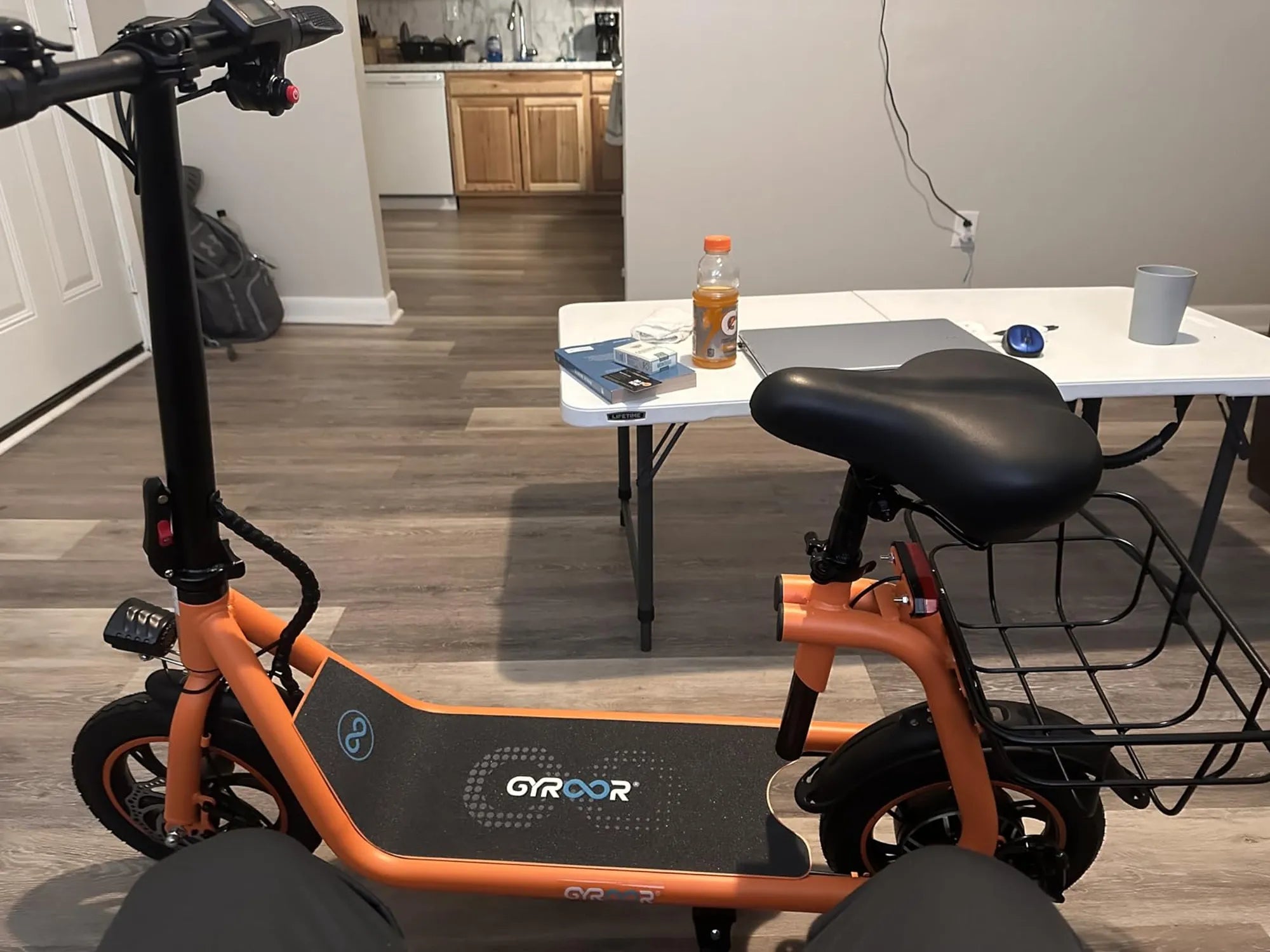
This comparison makes it unequivocally clear: an electric scooter is not a toy and is utterly unsuitable for a toddler. Brands like Gyroor design their electric scooters and e-bikes with sophisticated components—such as UL-certified battery systems, disc brakes, and suspension—for responsible older riders, not for preschool-aged children.
Frequently Asked Questions (FAQ)
Q: Can a 2-year-old ride an electric scooter like a Gyroor?
A: Absolutely not. Electric scooters are designed for much older children, teenagers, and adults. They travel at speeds far beyond a toddler's reaction time, are too heavy for a small child to control or withstand in a fall, and require cognitive skills for operating brakes and assessing traffic that a two-year-old does not possess. Gyroor and similar performance brands specify minimum age and weight requirements for a reason—safety.
Q: What is the best scooter brand for a 2-year-old?
A: Look for reputable toy or youth sports brands that specialize in durable, safety-tested products for preschoolers. These brands focus on the stability and lightweight construction we've outlined. It is important to note that brands like Gyroor, a leader in electric scooters and e-bikes trusted by over 100,000 riders, operate in a different product category focused on older age groups and are not a fit for toddler scooters.
Q: How long should a scooter session last for a toddler?
A: Initial sessions should be very brief, around 5-10 minutes. Even as they gain interest and skill, capping sessions at 15-20 minutes is wise to prevent fatigue, which leads to loss of concentration and increased falls. Always follow the child's lead and end while they are still enjoying themselves.
Q: My child is tall for their age. Can they use an older child's scooter?
A: Height is less important than developmental readiness and scooter design. A taller two-year-old may still lack the advanced balance, coordination, and cognitive skills required for a two-wheel scooter. It is safer to use an age-appropriate three-wheel model with an adjustable handlebar set to its maximum height than to prematurely advance to a less stable scooter designed for a 5+ year old.
Q: What are the most common mistakes parents make?
A: The top mistakes are: 1) Choosing a scooter that is too advanced (two-wheel or electric), 2) Skipping safety gear, especially a helmet, 3) Practicing on unsafe terrain (hills, near traffic, gravel), 4) Providing passive rather than active, hands-on supervision, and 5) Pushing the child to progress faster than they are comfortable with.
Conclusion: Fostering Fun and Foundation Skills
So, can a 2 year old ride a scooter? The evidence shows they can, provided parents make informed, safety-first choices. The journey begins with selecting a stable, three-wheel, manual kick scooter and equipping the child with a certified helmet and pads. It progresses through patient, supervised practice in a safe environment, always prioritizing the child's comfort and enjoyment over achievement.
This early scooter experience is not about transportation or speed; it's about laying a foundation for physical confidence, coordination, and a love for active play. By respecting the boundaries of toddler development and equipment design, parents can turn a simple scooter into a powerful tool for growth. Celebrate each small glide and remember that the ultimate goal is safe, joyful exploration.
When your child is older and ready for the next step in personal electric mobility, explore the range of UL-certified, reliable electric scooters and e-bikes designed for responsible older riders. Browse the full Gyroor collection at gyroorboard.com to find performance-tested models built with safety features like IPX5 water resistance and backed by a comprehensive 1-year warranty, trusted by a community of over 100,000 riders.
Lightweight Mens Bike: The Ultimate Guide to Weight, Performance & Choice
1000cc Bike Speed: The Ultimate Guide to Superbike Performance