

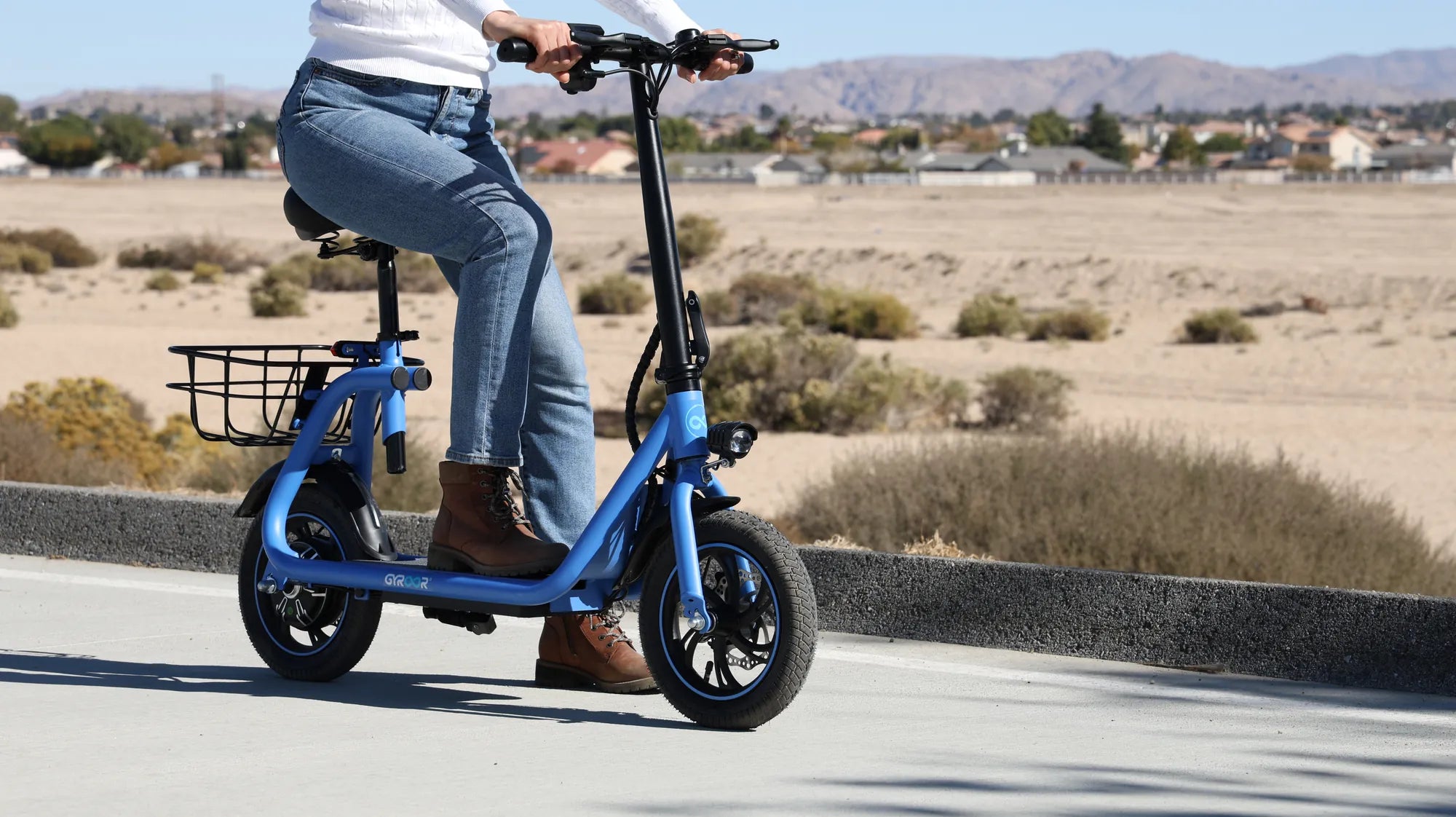
The simple question, 'Can electric scooters go in bike lanes?' is the gateway to a complex web of local laws, safety debates, and urban planning challenges. For riders, the answer dictates daily commutes and route planning. This guide cuts through the confusion with a data-driven exploration of regulations, safety principles, and practical riding strategies. You will learn how to verify local laws, navigate shared lanes responsibly, and understand how your scooter's design impacts safety. As a leading electric scooter and e-bike brand trusted by over 100,000 riders across North America and Europe, Gyroor is committed to providing not only reliable, UL-certified vehicles but also the knowledge needed to ride them safely and legally.
The Rise of Urban E-Mobility: A Primer on Lane Sharing
City streets are transforming. The surge in personal electric vehicles (PEVs), particularly electric scooters and e-bikes, represents a fundamental shift toward compact, efficient urban transport. This evolution pressures existing infrastructure, primarily designed for cars and traditional bicycles. The bike lane has become the central arena for this change, a shared space where speed, mass, and etiquette must be negotiated in real-time.
Understanding lane-sharing is crucial for the future of sustainable cities. It's not merely a question of legality but of safety, efficiency, and social harmony. When e-scooters use infrastructure appropriately, they reduce car trips and congestion. When conflicts arise, they can lead to injuries and calls for bans. Navigating this new landscape requires riders to be informed advocates for themselves and their chosen mode of transport.
Brands like Gyroor operate within this ecosystem, engineering products that align with both rider needs and regulatory trends. Features such as adjustable speed modes, robust lighting, and reliable braking aren't just selling points; they are direct responses to the demands of shared urban spaces. The hardware enables the ride, but the rider's knowledge and behavior determine its success.
Decoding the Law: A City-by-City Guide to E-Scooter Lane Regulations
The legal status of e-scooters in bike lanes is not uniform. It is a patchwork of municipal, state, and national regulations that can change at jurisdictional borders. A common trend in many regions is to treat low-speed electric scooters similarly to bicycles, granting them access to bike lanes and paths. However, this is a general principle, not a universal rule.
The critical takeaway is that local verification is non-negotiable. Assuming your local rules match those of a neighboring city or a viral online post is a fast track to fines or unsafe conditions. Official sources—city transportation department websites, local police advisories, and municipal codes—are the only reliable authorities.
Key Regulatory Factors That Determine Where You Can Ride
Legislators typically use specific technical criteria to classify e-scooters and dictate where they may operate. The primary factors are motor power, maximum speed, and vehicle ownership type. Many jurisdictions set a wattage limit, often 500W or 750W, for vehicles allowed in bike lanes. Speed caps are even more common, with 15-20 mph (24-32 km/h) being a frequent benchmark.
The distinction between privately-owned scooters and shared rental fleets is also significant. Some cities have specific pilot programs or regulations that apply only to commercial rental companies, while laws for personal devices may differ. For example, a Gyroor commuter scooter with a top speed of 18 mph may be perfectly legal in a local bike lane, while a higher-performance model capable of 28 mph might be restricted to road use or prohibited altogether, depending on the locale.
Notable Examples: How Major Cities Handle E-Scooters in Bike Lanes
Examining key markets reveals the diversity of approaches. The table below provides a snapshot of current regulations (always subject to change).
| City/Region | Bike Lane Access | Key Stipulations & Notes |
|---|---|---|
| New York City, USA | Yes | E-scooters under 100 lbs with max speed of 15 mph are allowed in bike lanes. Must be 16+, helmet required for those under 18. Rental scooters operate under a separate permit system. |
| Los Angeles, USA | Yes | Allowed in bike lanes. City-wide speed limit of 15 mph. Riding on sidewalks is prohibited. |
| Chicago, USA | Yes | Permitted in bike lanes. Devices must have a max speed of 20 mph or less. Sidewalk riding is illegal. |
| London, UK | Yes (on public roads) | Privately-owned e-scooters are currently only legal on private land. Rental scooters in approved trials are allowed on roads and cycle lanes, but not sidewalks. |
| Berlin, Germany | Yes | Allowed in bike lanes and on roads. Max speed of 20 km/h (12.4 mph). Requires insurance plate, and riders must be 14+. |
| Paris, France | Yes | Allowed in bike lanes. City-wide speed limit of 20 km/h. Dedicated parking zones are enforced to reduce clutter. |
Safety First: Navigating Bike Lanes Responsibly on an E-Scooter
Legal access is a privilege contingent on safe operation. Responsible riding in shared lanes is the single most important factor in ensuring long-term access and fostering positive community relations. Safety is a shared responsibility between the rider, the vehicle manufacturer, and city planners.
E-scooter riders must recognize that bike lanes are shared spaces. Cyclists, other scooter riders, and occasionally pedestrians use them. Your actions directly impact the safety and experience of everyone in that lane. Proactive, predictable, and courteous behavior is the foundation of safe lane sharing.
Essential Riding Etiquette for Shared Spaces
Etiquette translates legal rights into safe practice. First, control your speed. Even if your Gyroor scooter can go faster, match your speed to lane conditions. Slow down in congestion, near intersections, and around pedestrians. Second, communicate clearly. Use a bell or your voice to signal before passing. Hand signals for turns are crucial for informing those behind you.
Third, pass with care. Only pass when safe, announce your intention, and leave ample space (at least 3 feet). Do not squeeze past cyclists. Fourth, maintain a predictable line. Avoid sudden swerving or stopping. Finally, respect the right-of-way. Yield to pedestrians in crosswalks and to vehicles when entering a roadway from a lane.
The Role of Scooter Design in Lane Safety
Safety is engineered into quality scooters. Gyroor designs its models with shared lane navigation in mind. A responsive dual braking system (electronic and disc or drum) provides reliable stopping power critical for avoiding collisions in tight spaces. Wide, anti-slip decks offer stable footing, allowing riders to maintain balance during evasive maneuvers or on uneven surfaces.
Bright LED headlights and taillights, along with side reflectors, ensure visibility to other road users in low-light conditions. Stable, wide tires (often 8.5 inches or more on commuter models) provide better grip and smoother handling over cracks and debris common in bike lanes. These features aren't luxuries; they are essential components for safe operation in a dynamic urban environment.
Beyond the Bike Lane: When and Where to Use Alternative Routes
The bike lane is often the best option, but not always. A savvy rider assesses the entire route and chooses the safest path, which may involve alternative corridors. Blindly staying in a bike lane without evaluating its condition or the surrounding traffic can be hazardous.
Planning your route using cycling apps can reveal dedicated, protected bike paths that are superior to painted lanes on busy streets. Understanding the hierarchy of options—from protected lanes to shared roads—empowers you to make safer choices.
Scenarios to Avoid the Bike Lane
Certain conditions warrant leaving the bike lane. Avoid it when it is extremely congested with cyclists and other users; merging cautiously into a slow-moving traffic lane may be safer than creating a dangerous bottleneck. Avoid lanes that are poorly maintained, filled with gravel, potholes, or debris that could cause a loss of control.
Be wary of bike lanes that run directly adjacent to high-speed traffic without a physical barrier. The risk of a car door opening ("dooring") or a vehicle drifting into the lane is significant. Finally, of course, avoid the bike lane if local law explicitly prohibits e-scooter use there, regardless of how empty it appears.
Safer Alternatives: Sidewalks, Roads, and Multi-Use Paths
When the bike lane isn't viable, consider your alternatives carefully. Sidewalks are generally illegal and dangerous for e-scooter riding. If you must use a sidewalk (e.g., for a short distance to access a building), you must act as a guest: dismount or ride at a walking speed (under 5 mph), yield to every pedestrian, and be prepared to stop instantly.
Riding on the road is legal in many areas where scooters are classified as vehicles. If you do this, ride predictably in the lane, follow all traffic signals, and use hand signals. This option is best for confident riders on lower-speed residential streets. Dedicated multi-use paths (shared with pedestrians, cyclists, skaters) are often excellent alternatives, but always reduce speed and exercise extreme caution around other users.
The Commuter's Checklist: Gear, Prep, and Best Practices
Consistent preparation turns knowledge into safe habit. A comprehensive pre-ride routine minimizes legal and physical risk. This checklist ensures you are ready for the road, reinforcing that safe riding is a combination of the right gear, a well-maintained machine, and a prepared mind.
Pre-Ride Verification and Gear
Before every ride, conduct a quick verification. Know your local laws and any route-specific restrictions. Always wear a helmet; studies show it reduces head injury risk by over 60%. Consider additional protective gear like knee and elbow pads, especially for new riders or high-speed commuting. High-visibility clothing or reflective elements are crucial for dawn, dusk, or night riding.
Perform a mechanical safety check on your Gyroor scooter: ensure tires are properly inflated, test both brakes, confirm front and rear lights are functional, and check that the folding mechanism (if present) is securely locked. A well-maintained scooter is a safe scooter.
Ongoing Advocacy and Community Responsibility
Riders are ambassadors for the entire micro-mobility community. Report hazardous road or bike lane conditions (potholes, debris, poor drainage) to your city's public works department via their app or website. Consider joining or supporting local advocacy groups that lobby for better, safer, and more connected bike and micro-mobility infrastructure.
Lead by example. Your courteous and lawful riding directly counters negative stereotypes. When non-riders see e-scooters being used responsibly, it builds public support for the infrastructure and policies that benefit all active transportation users.
E-Scooter vs. E-Bike: A Lane Usage Comparison
Understanding how e-scooters fit into the broader micro-mobility landscape is helpful. E-bikes often face similar questions about lane access. The table below compares key characteristics relevant to bike lane integration.
| Feature | Typical Electric Scooter | Typical E-Bike (Class 1/2) | Implication for Bike Lanes |
|---|---|---|---|
| Primary Stance | Standing | Seated | E-bike posture may offer greater long-distance comfort; scooter offers quicker dismount. |
| Average Speed in Lane | 15-20 mph | 15-20 mph (assist cuts off at 20 mph) | Speeds are often comparable, allowing for similar flow. |
| Footprint & Maneuverability | Compact, highly maneuverable | Larger, similar to a bicycle | Scooters can navigate tighter spaces but may be less stable at very low speeds. |
| Legal Classification | Often defined as "Electric Scooter" or "Motorized Scooter" | Defined as "Bicycle" in most laws | E-bikes have more established legal precedent for bike lane access. |
| Rider Visibility | Rider height is lower | Rider height is higher | E-bike riders may be more visible to drivers; scooter riders must rely more on lights/reflectors. |
FAQ: Quick Answers to Common E-Scooter Lane Questions
Q: Are electric scooters with seats allowed in bike lanes?
A: It depends entirely on local classification. Some jurisdictions define vehicles with seats differently, potentially classifying them as mopeds or other vehicle types with different rules. Always check your specific local ordinances for seated e-scooters or e-mopeds.
Q: What's the typical speed limit for e-scooters in bike lanes?
A> Many cities impose a limit of 15-20 mph (24-32 km/h), often aligning with the intended speed of the bike lane infrastructure itself. Many Gyroor scooters feature multiple speed modes (e.g., Eco, Normal, Sport) to help riders easily comply with these limits.
Q: Do I need insurance to ride my e-scooter in a bike lane?
A> Requirements vary widely. In some countries (e.g., parts of Europe), liability insurance is mandatory. In most U.S. states, it is not required for privately-owned scooters but is highly recommended to protect against third-party injury or property damage claims.
Q: Does my Gyroor warranty cover incidents in a bike lane?
A> Gyroor's standard 1-year warranty covers defects in materials and workmanship. It does not cover damage resulting from collisions, accidents, misuse, or normal wear and tear. This underscores the critical importance of safe riding practices, protective gear, and, where available, separate personal insurance.
Q: What should I do if a cyclist is upset I'm in the bike lane?
A> Stay calm, maintain a predictable path, and follow proper etiquette. A friendly wave or verbal acknowledgment can often defuse tension. Remember, the goal is coexistence. You have a legal right to be there if local laws permit, but exercising that right with courtesy fosters a better environment for all users.
Conclusion: Riding Smart in the Shared Urban Future
The question of whether electric scooters can go in bike lanes finds its true answer in the combination of verified local law and unwavering personal responsibility. Legal access is the starting point, but safe, courteous, and predictable operation is what sustains it. As cities evolve, informed riders who champion shared-space etiquette will be key to building a harmonious and efficient multi-modal transport system.
Choosing a reliable vehicle from a brand like Gyroor, with its focus on UL-certified safety, durable construction, and rider-centric design, provides a solid foundation. That quality hardware, paired with the knowledge from this guide, empowers you to navigate the urban landscape confidently and safely. The future of urban mobility is shared, and it is built one responsible ride at a time.
Ready to explore with confidence? Equip yourself with a scooter designed for the realities of modern commuting. Browse the full collection of UL-certified, feature-packed electric scooters and e-bikes at gyroorboard.com.
Electric Scooters Kids Manufacturer: The Ultimate Guide to Safe and Fun Rides
Electric Scooters Exeter: The Future of Urban Mobility