


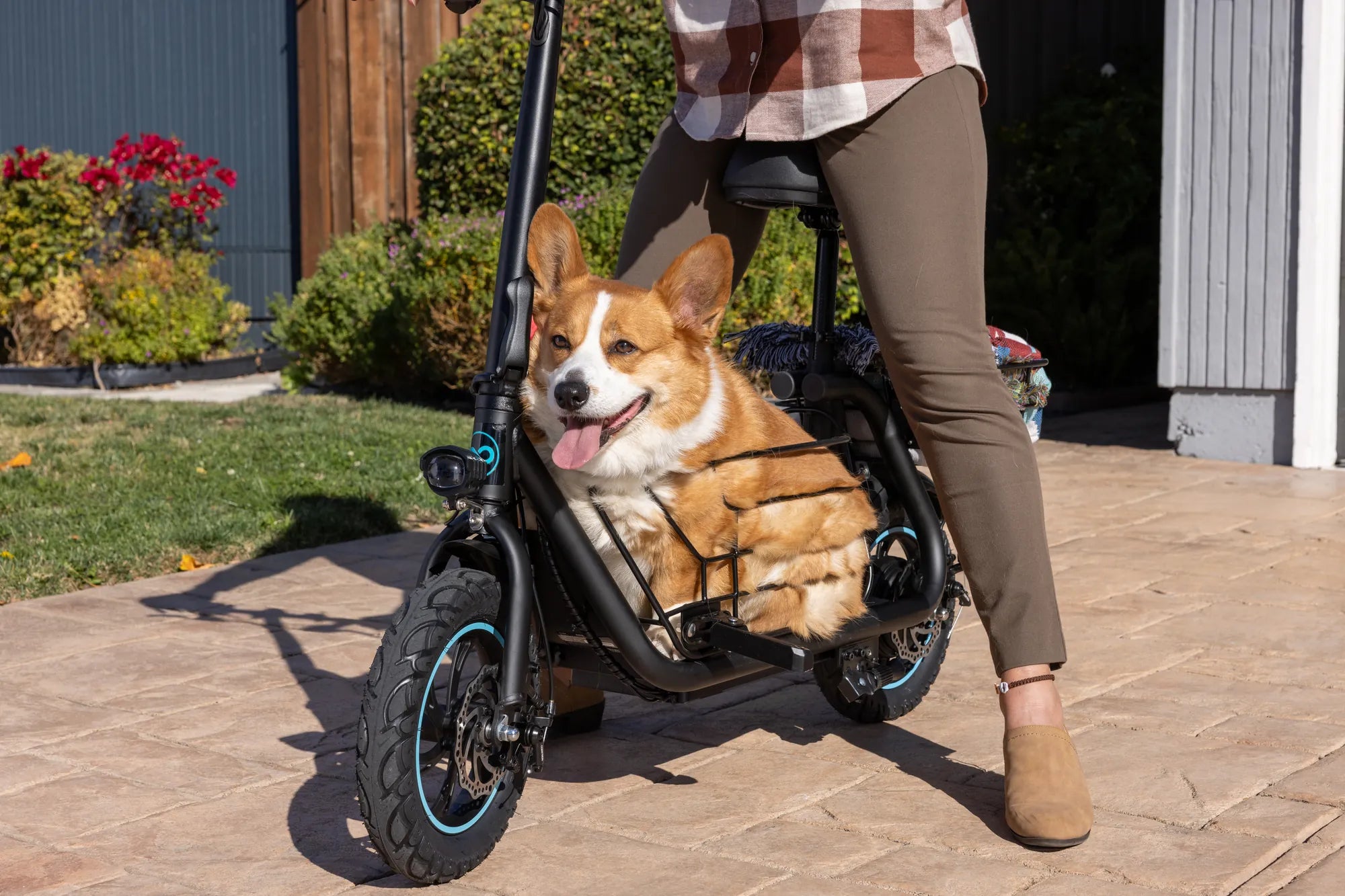
Navigating Public Transit with Your Electric Scooter
Combining an electric scooter with a public bus system creates a powerful, multi-modal commute that solves the first and last-mile problem. This practical approach extends your range, reduces overall travel time, and offers unmatched flexibility for urban and suburban travel. The central question for riders is straightforward: can you bring a scooter on the bus? The answer is typically yes, but it is governed by a specific set of rules that vary by location. This guide provides the actionable, data-driven information you need to integrate your scooter seamlessly with bus travel, ensuring you can plan your journey with certainty and avoid common pitfalls.
Understanding these policies is essential for a smooth experience. Transit authorities implement rules primarily for safety, space management, and operational efficiency. A rider who is prepared—with a compliant scooter and knowledge of local etiquette—contributes to a positive environment for everyone. We will dissect the most common policy frameworks, highlight the critical features of a transit-friendly scooter, and provide a step-by-step protocol for successful boarding and travel.
Understanding the Rules: A Guide to Bus Operator Policies
There is no single, universal law governing scooters on buses. Policy is set at the level of the individual transit authority, city, or regional transportation district. However, most policies converge around a few common principles designed to minimize disruption and ensure passenger safety. The most widespread rule is the "fold and carry" policy. Under this rule, you must fully fold your electric scooter before boarding and carry it with you, typically keeping it out of aisles and designated wheelchair spaces.
Size and weight restrictions are the second most common factor. Transit agencies often specify maximum dimensions for folded items. A typical limit might be a package under 24" x 18" x 12" or a requirement that the item can be stored on your lap or under the seat. Weight limits, often around 50 pounds, ensure the rider can safely manage the item without assistance. Some agencies explicitly prohibit electric scooters during peak rush hours (e.g., 6-9 AM and 4-7 PM) to maximize passenger capacity during the busiest times.
The most critical step for any rider is to verify the policy with your local transit agency. Do not rely on anecdotal information from other riders or assume policies are the same everywhere. Visit the official website of your city's public transportation provider and search for "scooter policy," "foldable bicycles," or "carry-on items." If the information is unclear, a direct call to customer service can provide definitive guidance. Having a screenshot or printout of the official policy can be helpful if you encounter a driver who is unfamiliar with the rules.
Key Factors Transit Authorities Consider
Transit authorities evaluate several key criteria when formulating their scooter policies. Folded dimensions are paramount; a scooter that folds into a compact, rectangular shape is far more likely to be permitted than one that is long or awkward. Battery safety certification is a major concern due to fire risks. Agencies increasingly look for proof that a scooter's battery system meets recognized safety standards like UL 2272 or UL 2849, which test for electrical and fire safety.
Another crucial distinction is whether the scooter is a personal mobility device used by a person with a disability. Under the Americans with Disabilities Act (ADA), buses must accommodate mobility devices like wheelchairs and certain scooters in designated securement areas. However, a standard electric scooter used for convenience does not qualify as an ADA mobility device and must adhere to the "fold and carry" rules for general luggage. The operator also assesses the ease and speed of the folding mechanism; a scooter that can be folded in seconds without tools is less likely to delay boarding.
The Gyroor Advantage: Designed for the Multi-Modal Commuter
Choosing the right electric scooter is the foundation of a successful multi-modal commute. Gyroor designs its lineup with the practical needs of urban commuters in mind, focusing on features that align perfectly with common transit policies. A core advantage is the use of UL-certified battery packs across all models. This certification, achieved through rigorous testing for over 500 charge cycles, directly addresses the top safety concern of transit authorities, providing documented assurance of battery integrity and reducing potential barriers to boarding.
Beyond safety, the physical design of Gyroor scooters emphasizes transit compatibility. Models feature fast, intuitive folding mechanisms that allow a rider to collapse the scooter in under three seconds. This speed is critical when a bus arrives, enabling you to board quickly without holding up the line. The folded profiles are engineered to be compact and manageable, with balanced weight distribution for easy carrying. Furthermore, IPX5 water-resistant construction means your commute isn't derailed by a sudden rain shower, a common occurrence for those waiting at bus stops.
Model Spotlight: Best Gyroor Scooters for Bus Integration
Not all scooters are equally suited for bus travel. Comparing key models highlights which features matter most. The Gyroor S1 Max is an exemplary transit partner. It folds down to a remarkably compact size, with dimensions that easily meet typical bus carry-on limits. Its one-step folding mechanism is exceptionally fast, and the lightweight aluminum frame makes it easy to carry up bus steps and store securely.
For riders who prioritize power and range for the non-bus segments of their trip, the Gyroor F1 Pro offers a compelling balance. It provides robust performance with a motor capable of handling hills, yet it retains a relatively efficient folding design. While slightly larger when folded than the ultra-compact models, its structure is still designed for portability. The key is matching the scooter's capabilities to your total commute distance and the specific space constraints you anticipate on your regular bus routes.
Practical Steps: How to Successfully Board with Your Scooter
Success hinges on preparation and etiquette. Your actions should prioritize safety, efficiency, and courtesy to the driver and other passengers. Step one is preparation before the bus arrives. Have your payment method (card, pass, phone) ready in one hand. Begin folding your scooter as you see the bus approaching, so it is fully folded and ready to carry by the time the doors open. This prevents delays at the stop.
Step two is boarding. Fold the scooter completely and carry it, typically by the stem or a built-in carry handle. Use the front door if possible, allowing the driver to see your item. Move quickly to the rear of the bus to avoid blocking the doorway. Step three is in-transit storage. The ideal place is vertically between your legs, on your lap if space allows, or under the seat in front of you. It must never block the aisle, the rear door, or the wheelchair securement area. Keep a hand on it at all times to prevent it from shifting during turns or stops.
Step four is disembarking. As your stop approaches, gather your scooter and move toward the rear door. Do not unfold the scooter until you have completely exited the bus and are safely on the sidewalk or curb, away from traffic and the bus's path. This orderly process demonstrates respect for the system and ensures a repeatable, positive experience for all involved.
What to Do If You're Denied Boarding
Despite preparation, you may encounter a driver who is unsure of the policy or denies boarding. If this happens, remain calm and polite. Arguing will not resolve the situation and may escalate it. You can calmly state, "I've checked with [Transit Agency Name]'s official policy, and folded scooters are permitted as carry-on items." If you have the policy on your phone, you can show it.
If the driver insists, do not block the bus. The safest and most prudent action is to step aside and let the bus depart. Note the bus number, time, and route. Afterward, contact the transit agency's customer service department to clarify the policy and report the incident. They can provide official documentation for future rides or use the feedback for driver training. In the moment, have a backup plan, such as a rideshare app or knowledge of an alternative bus route or scooter-friendly path to your destination.
Data & Comparison: Scooter vs. Other Micro-Mobility Options on Buses
Understanding how electric scooters compare to other personal transport options clarifies their relative advantages and challenges on public transit. The following table conceptualizes a typical policy analysis based on common factors like size, setup time, and storage requirements.
| Vehicle Type | Typical Bus Policy | Key Advantage | Primary Limitation |
|---|---|---|---|
| Electric Scooter (Folded) | Fold & Carry; Size/Weight Limits | Fastest setup/fold time; Most compact folded footprint | Battery safety concerns; Subject to peak-hour bans |
| Folding E-Bike | Fold & Carry; Stricter Size Limits | Greater range & power for longer distances | Heavier & bulkier when folded; Slower to fold/unfold |
| Standard Bicycle | External Rack Only (if equipped) | No battery restrictions; Simple technology | Dependent on rack availability; Exposed to weather/theft |
| Kick Scooter (Non-electric) | Generally Unrestricted | Lightweight; No policy concerns | Requires physical effort; Slower travel speed |
As the data shows, a modern foldable electric scooter like those from Gyroor offers the best combination of portability and independent mobility. Its main competitor for multi-modal travel is the folding e-bike, which trades some portability for greater power. The electric scooter's decisive advantage is its speed of transition from riding mode to carry mode, a critical factor during brief bus boarding windows.
Safety and Maintenance for the Transit Commuter
Regular use in a multi-modal context demands specific safety and maintenance habits. Before each journey, perform a pre-ride safety check. Ensure tires are properly inflated, all folding mechanisms are locked securely, brakes are responsive, and lights are functional. This is especially important after the scooter has been carried and potentially jostled on a bus. Always wear a helmet when riding, regardless of the distance to the bus stop.
Maintenance should account for the increased handling. The folding joints and latches are high-wear points. Clean them regularly of dust and debris, and check for any loosening. The battery should be charged using only the provided UL-certified charger and stored in a cool, dry place. If your scooter will be stored under a bus seat, consider a protective cover for the deck to prevent scuffs. Adhering to Gyroor's recommended maintenance schedule, backed by a reliable 1-year warranty, ensures your scooter remains a dependable transit partner.
Frequently Asked Questions (FAQ)
1. Do I have to pay an extra fare to bring my scooter on the bus?
In the vast majority of public transit systems in North America and Europe, there is no extra fare for bringing a folded electric scooter onboard, as it is treated as personal carry-on luggage. However, this is not a universal rule. A small number of agencies may classify it as an oversized item and charge a fee. Always confirm this detail when you check your local policy.
2. Can I bring my scooter on a train or subway?
Policies for trains and subways (metro/rail) are often more permissive than for buses, as these vehicles generally have more interior space. The "fold and carry" principle usually still applies, but peak-hour restrictions may be less common. Again, checking with the specific rail operator is essential, as rules can differ even between bus and rail services run by the same agency.
3. What if the bus is very crowded?
Even if scooters are permitted, a driver has the final authority to deny boarding if the bus is too full to safely accommodate you and your folded scooter without obstructing aisles or doors. Use good judgment. If the bus looks packed, it may be best to wait for the next one. Courtesy and safety should always override your right to board.
4. Are hoverboards or electric skateboards allowed?
Policies for hoverboards and electric skateboards are less standardized and often more restrictive than for electric scooters. Many transit agencies explicitly ban devices with lithium-ion batteries that lack handlebars or a defined folding mechanism due to stability and safety concerns. They are rarely included in "foldable bicycle" policies. Assume they are prohibited unless an official policy states otherwise.
5. How do I prove my scooter's battery is safe (UL certified)?
Keep a digital or physical copy of your scooter's user manual or specification sheet, which should list the UL certification (e.g., UL 2272 for the battery system). The Gyroor website and product packaging also prominently display this certification. While drivers rarely ask for proof, having it available demonstrates you are a informed, responsible rider and can be useful if you need to clarify policy with transit officials.
Unlocking a Farther, Greener Commute
Successfully integrating an electric scooter with bus travel fundamentally expands your mobility options, creating a car-free commute that is both practical and sustainable. The key lies in a simple three-part formula: first, always verify your local transit rules and follow them meticulously; second, invest in a scooter designed for compatibility, with safety certifications, a reliable fold, and a portable form; and third, practice conscientious boarding etiquette to ensure a positive experience for yourself and fellow passengers.
This multi-modal approach reduces traffic congestion, lowers transportation costs, and contributes to a smaller personal carbon footprint. By choosing a trusted brand like Gyroor, with over 100,000 riders relying on its UL-certified, transit-ready designs, you equip yourself with a tool built for this modern lifestyle. Your journey becomes a seamless blend of personal speed and public efficiency, unlocking parts of your city in a new, empowering way.
Ready to find your perfect transit partner? Explore the full range of high-performance, commuter-engineered electric scooters and e-bikes. Browse the full Gyroor collection at gyroorboard.com to compare models, specifications, and find the ideal ride for your multi-modal journey.
Best Scooter for 3 Year Old Girl: Ultimate Safety & Fun Guide
Average Weight of Mobility Scooter: A Complete 2024 Guide