



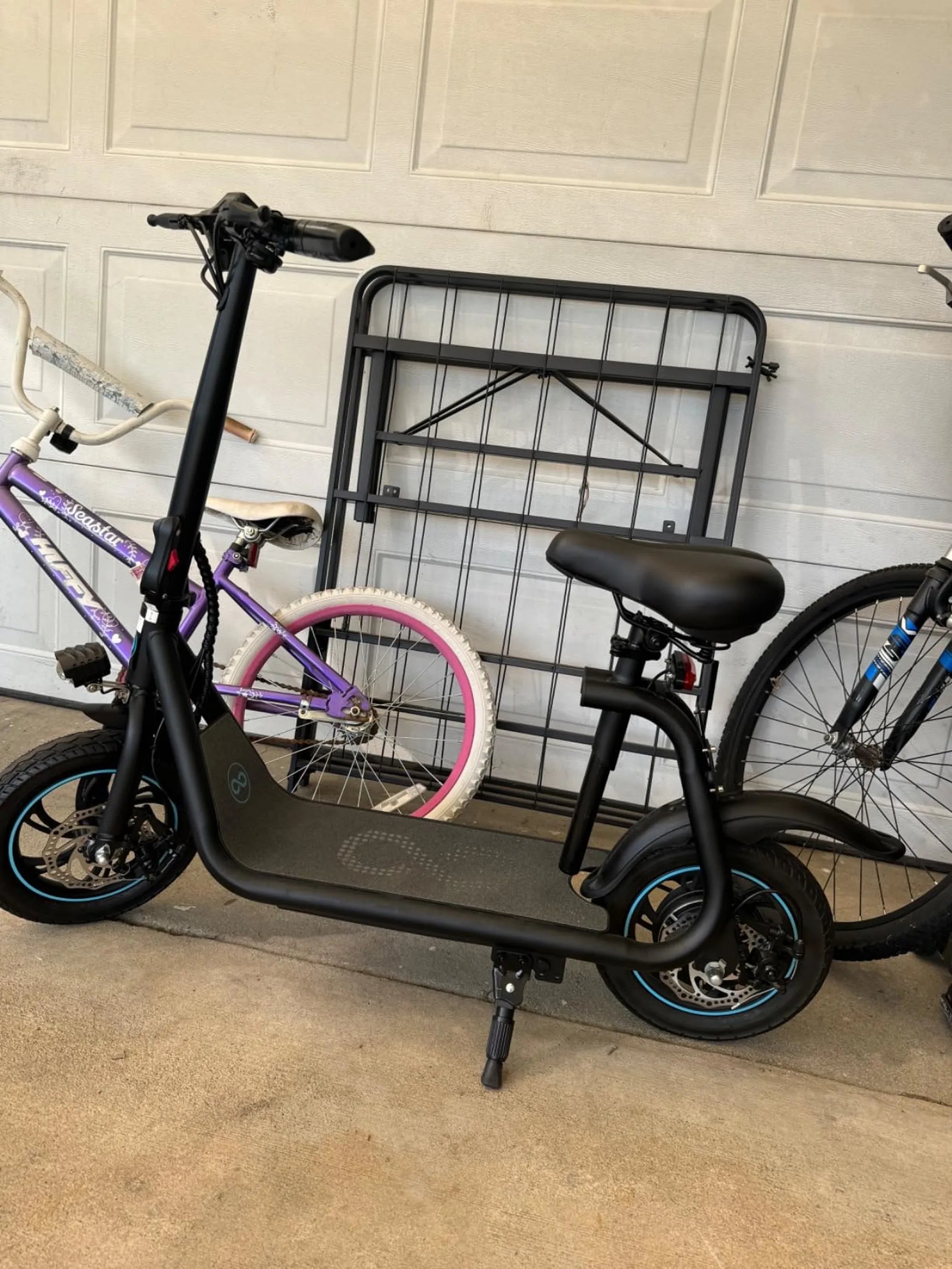
You just got a 50cc dirt bike and you're itching to ride. The sidewalk seems like a quiet, convenient place to start. Stop right there. The direct, unequivocal answer to 'can you ride a 50cc dirt bike on the sidewalk?' is no. It is illegal, unsafe, and a significant liability risk. This article will provide a comprehensive breakdown of the laws, the critical safety reasons behind them, and the proper, legal venues for enjoying your dirt bike. We'll cover vehicle classification, local ordinances, and practical alternatives to ensure you ride responsibly and avoid costly penalties.
Understanding Vehicle Classification: Dirt Bike vs. Street-Legal
The core issue lies in how the law sees your machine. A 50cc dirt bike is classified as an Off-Road Vehicle (ORV) or a motorcycle, not a bicycle or a motorized scooter. This classification is based on its design and intended use, not just its engine size. This legal label dictates where it can and cannot be operated on public property.
Key design features cement this status. Dirt bikes lack standard equipment required for street-legal operation. You won't find Department of Transportation (DOT)-approved lighting, turn signals, mirrors, or a horn. Their tires are knobby and designed for dirt, not for providing safe traction on pavement. These omissions are not oversights; they are defining characteristics of an off-road machine.
Contrast this with a 50cc scooter or moped, which can be street-legal. Those vehicles are manufactured with the required lighting, signaling, and safety equipment and are intended for on-road use. The engine displacement is similar, but the vehicle's purpose and construction are worlds apart in the eyes of the law.
Attempting to register a standard 50cc dirt bike for street use will almost certainly fail a state inspection. The modifications needed—adding lights, signals, a mirror, a horn, and switching to DOT-approved tires—are extensive and often cost-prohibitive, essentially turning it into a different vehicle.
The 50cc Engine: Power vs. Permission
A 50cc engine is small, often associated with entry-level mobility. However, '50cc' does not mean 'unregulated.' In many jurisdictions, any internal combustion engine over 49cc automatically classifies the vehicle as a motorcycle for licensing and registration purposes, regardless of its off-road intent.
This engine size can still propel a lightweight dirt bike at speeds of 30-40 mph, which is dangerously fast for a pedestrian environment like a sidewalk. The law focuses on the vehicle's capability and type, not the rider's intended speed. Even puttering along at 10 mph on a motor vehicle where it's prohibited is a violation.
The takeaway is clear: the 'dirt bike' part of '50cc dirt bike' is the operative term. It is designed, sold, and regulated for off-road recreation. Its classification overrides its modest engine size when determining where it is permitted to operate.
The Legal Landscape: Sidewalks, Roads, and Public Property
Traffic laws create a strict hierarchy for public spaces. Sidewalks are legally designated for pedestrian use. Exceptions are narrow and specific, typically including wheelchairs, bicycles (in many, but not all, areas), and certain low-speed, personal electric mobility devices like e-scooters in designated shared zones.
Motor vehicles are expressly prohibited from sidewalks. Every state's vehicle code and virtually every municipal ordinance contains language that bans the operation of a 'motor vehicle' or 'motor-driven cycle' on a sidewalk. A 50cc dirt bike, as an ORV or motorcycle, falls squarely under this prohibition.
This prohibition extends to other pedestrian areas like crosswalks, public parks, school grounds, and hiking/biking trails not explicitly marked for motorized use. The law's intent is to create safe zones free from motor vehicle traffic.
Enforcement is not just a theoretical concern. Police officers do issue citations for this offense, especially in residential areas where complaints from pedestrians are common. Ignorance of the law is not a valid defense in court.
Local Ordinances and State Laws
While the prohibition is nearly universal, the specific penalties are dictated by local law. You must consult your state's Vehicle Code and your city or county's municipal codes. A simple online search for "[Your City] municipal code sidewalk motor vehicle" will often yield the exact ordinance.
Penalties can be severe. They often start with a substantial fine, which can range from $200 to over $1000 for a first offense. Subsequent offenses can lead to higher fines and even misdemeanor charges.
More critically, your bike can be impounded. Police have the authority to tow and impound an illegally operated vehicle, especially if the rider is unlicensed or the vehicle is unregistered. Retrieving it involves paying hefty tow and storage fees on top of the fine.
If you have a driver's license, a conviction for illegal operation may add points to your driving record, leading to increased insurance premiums. The financial and legal repercussions make sidewalk riding a high-risk, low-reward activity.
Safety and Liability: The Critical Reasons Behind the Law
The laws exist for compelling safety reasons, not bureaucratic red tape. Sidewalks are unpredictable environments designed for walking speeds, not motorized traffic.
Pedestrians are vulnerable. Children may dart out from between parked cars, the elderly may have limited mobility and hearing, and pets on leashes can suddenly change direction. A dirt bike, even a small one, presents a severe impact risk. A collision at 15 mph can cause life-altering injuries or be fatal.
Driveways and intersections are blind spot nightmares. A car backing out of a driveway or turning into a side street is looking for pedestrian traffic, not a motorized vehicle traveling on the sidewalk. This is a classic recipe for a tragic collision where the dirt bike rider, despite being on the sidewalk, is likely to be seriously injured.
From a liability perspective, the rider is almost always 100% at fault in any incident on a sidewalk. If you hit a pedestrian, damage property, or cause a car accident, you will be held financially and legally responsible. Your homeowner's or parent's insurance may not cover the damages, leaving you personally liable for medical bills and repair costs that can reach hundreds of thousands of dollars.
Where Can You Legally Ride a 50cc Dirt Bike?
The good news is there are fantastic, legal, and often more enjoyable places to ride your 50cc dirt bike. Embracing these options is key to being a responsible rider.
Private Property: With the explicit, written permission of the landowner, you can ride on private property. This is the simplest solution. Ensure you have permission to avoid trespassing charges.
Designated Off-Road Trails & OHV Areas: State and federal lands often have designated Off-Highway Vehicle (OHV) trails, parks, and riding areas. These are purpose-built for dirt bikes and ATVs. You may need a state-issued OHV permit or sticker, which is inexpensive and directly supports trail maintenance.
Motocross Tracks: Private motocross tracks offer a controlled, challenging environment to hone your skills. They require a membership or daily fee and have strict safety rules (e.g., helmet, boots, neck brace).
Making It Street-Legal (The Hard Path): In some states, it is technically possible to convert a dirt bike for street use. The process is arduous: installing a full lighting kit (headlight, brake light, turn signals), horn, mirror, DOT-approved tires and wheels, and often a different exhaust for noise compliance. It then must pass a state DMV inspection, be registered, titled, and insured. For most 50cc dirt bikes, the cost and effort far exceed the bike's value.
Gyroor's Perspective on Responsible Riding
As a leader in personal electric mobility, trusted by over 100,000 riders across North America and Europe, Gyroor emphasizes that all vehicles must be used in their intended, legal environments. Safety and community respect are paramount.
Gyroor's electric scooters and e-bikes, like the Gyroor C1 Pro or F1 Max, are engineered for specific use cases—such as bike lanes or roads where local law permits—with integrated safety features. These include UL-certified battery packs tested for 500+ charge cycles, IPX5 water-resistant designs for all-weather reliability, and robust braking systems.
The brand's philosophy is that responsible riding protects the rider, the public, and the reputation of the riding community. Just as you wouldn't take a Gyroor e-scooter onto a motocross track, you shouldn't take a dirt bike onto a sidewalk. Using the right tool for the right environment ensures everyone's safety and enjoyment.
Comparison: Dirt Bike vs. Legal Personal Mobility Options
Understanding what you can't do with a dirt bike highlights what you can do with properly classified vehicles. The table below contrasts a 50cc dirt bike with common street-legal or pathway-legal options.
| Vehicle Type | Primary Legal Use Area | Key Legal Requirements | Typical Top Speed | Example / Alternative |
|---|---|---|---|---|
| 50cc Dirt Bike (Off-Road) | Private Land, OHV Parks, MX Tracks | OHV Permit (for parks); Landowner Permission | 30-40 mph | Honda CRF50F, Yamaha TT-R50 |
| Street-Legal 50cc Scooter/Moped | Public Roads (Not Highways) | Registration, Insurance, License (M1/M Class often required) | 30-35 mph | Generic 50cc Scooter |
| Class 1/2/3 E-Bike | Bike Lanes, Roads, Multi-Use Paths (varies) | Helmet (often required); Age restrictions may apply | 20-28 mph (assisted) | Gyroor Electric Bikes |
| Electric Scooter (Shared/Micro-Mobility) | Bike Lanes, Roads, *Sometimes Sidewalks* (Local Law Specific) | Helmet; Often must be 18+; Speed limits in pedestrian zones | 15-20 mph | Gyroor C Series Electric Scooters |
| Bicycle | Sidewalks (often permitted), Bike Lanes, Roads | Generally none for adults; Local helmet laws may apply | 10-15 mph (avg.) | Traditional Bicycle |
This table illustrates the clear regulatory boundaries. A dirt bike's domain is off-road, while e-bikes and e-scooters are designed for integrated urban mobility where local laws permit.
Frequently Asked Questions (FAQ)
Q: What about riding on the road or in a bike lane?
A: No. An unregistered, off-road dirt bike is not legal for any public roadway, including bike lanes. Bike lanes are designated for bicycles and, in some municipalities, other specific low-speed mobility devices like e-scooters. A dirt bike is a motor vehicle and must be street-legal to use the road.
Q: Can I ride it in my neighborhood or on empty residential streets?
A: On public residential streets, no. They are still public roadways. Riding on private streets within a gated community or on a homeowner association's roads requires the explicit permission of the HOA or property management. Without that, it's illegal.
Q: What are the real penalties for getting caught?
A: Penalties vary but are consistently serious. They typically include a hefty fine ($250-$1000+), impoundment of your bike (incurring $200+ in tow/storage fees), and potential points on your driver's license. In some cases, especially with repeat offenses or if an incident occurs, you could face misdemeanor charges.
Q: Are electric dirt bikes treated differently?
A: Generally, no. The classification is based on vehicle type and intended use, not the power source. An electric dirt bike (e.g., a Surron) designed for off-road use faces the same restrictions as a gas-powered model. If it's not manufactured and certified for street use, it's an off-road vehicle.
Q: I see people doing it all the time. Does that make it okay?
A: Absolutely not. Common violation does not equal legality. Those riders are risking all the penalties and dangers outlined above. Their luck will eventually run out, potentially with tragic consequences. Responsible riders follow the law and use proper venues.
Conclusion: Prioritizing Safety and Legality
Riding a 50cc dirt bike on the sidewalk is a clear-cut violation of the law with serious safety and financial consequences. The sidewalk is a sanctuary for pedestrians, and introducing a motor vehicle into that space is inherently dangerous and irresponsible. The legal alternatives—private property, OHV parks, and motocross tracks—offer superior, more enjoyable, and community-friendly riding experiences.
Understanding and respecting these boundaries is what defines a mature and responsible rider. It protects you from liability, protects your community, and preserves access to riding areas. For those seeking convenient, legal urban mobility, explore vehicles designed for that purpose from trusted brands. Discover the full range of UL-certified, reliable electric scooters and e-bikes designed for integrated urban travel. Browse the full Gyroor collection at gyroorboard.com to find the perfect ride for your legal commute or adventure.
Mid Size Dirt Bike: The Ultimate Guide to the Versatile Power Sweet Spot
How to Make Your Ebike Battery Last: The Complete Longevity Guide