

Understanding E-Bike Classifications: The Foundation of the Law
Before asking can you ride a class 2 ebike on the sidewalk, you must understand what defines it. In the United States, a three-class system, largely adopted from California law, provides a federal framework that most states follow. This system categorizes e-bikes by their top motor-assisted speed and how that power is delivered, which directly influences where they are legally permitted.
Class 1 E-Bikes are pedal-assist only, with no throttle. The motor provides assistance only when you are pedaling and ceases at 20 mph. Class 2 E-Bikes, the focus of our query, are defined by a throttle that can propel the bike without pedaling, up to a maximum assisted speed of 20 mph. Class 3 E-Bikes are typically pedal-assist only (though some states allow a throttle up to 20 mph) and have a higher top assisted speed of 28 mph.
The presence of a throttle on a Class 2 e-bike is the critical differentiator. This feature allows the bike to operate similarly to a low-powered scooter or moped, which is why it often falls under stricter scrutiny regarding sidewalk use. Understanding this classification is the first step in navigating the complex patchwork of local ordinances that answer our core question: can you ride a class 2 ebike on the sidewalk?
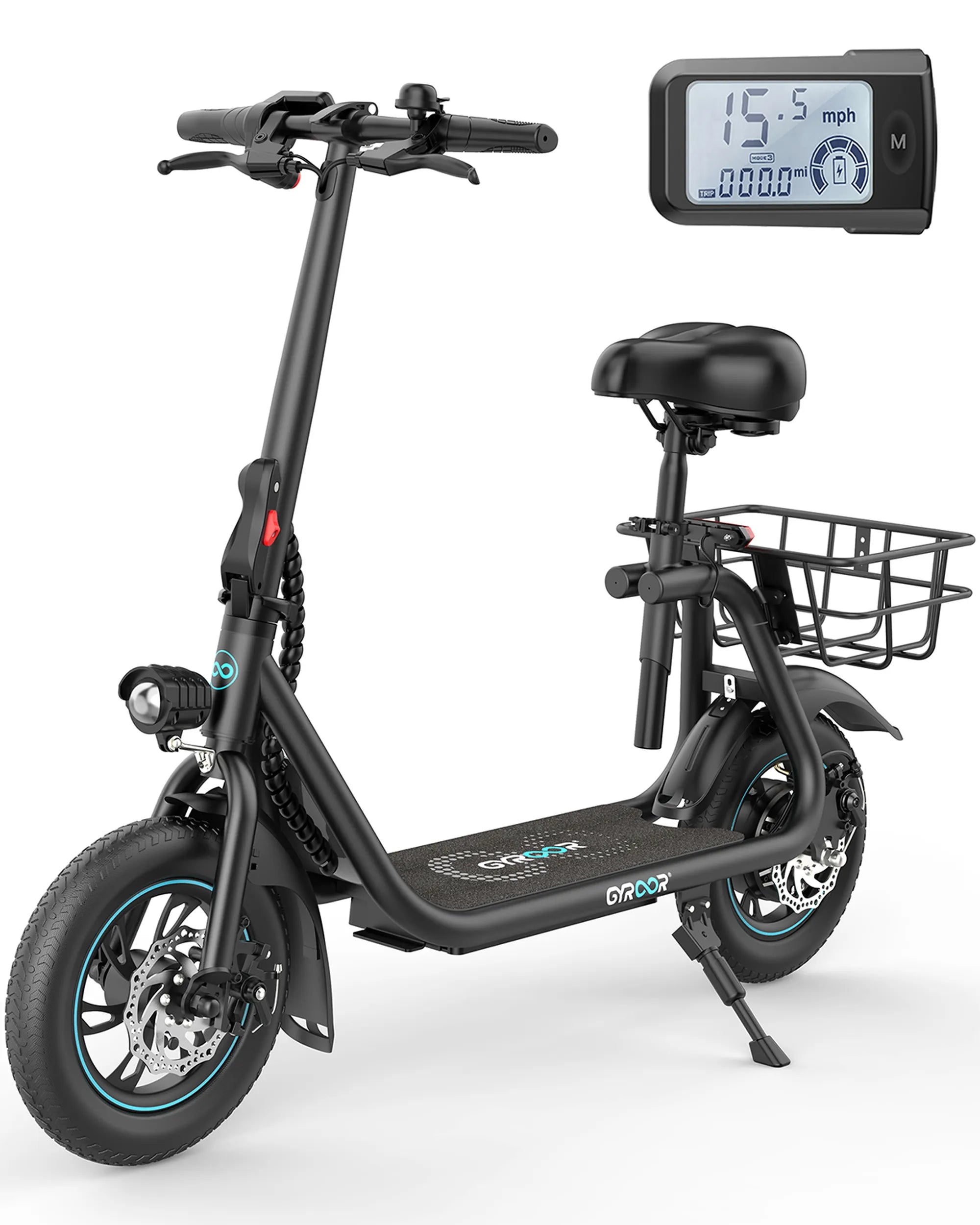
For brands like Gyroor, which offers reliable Class 2 models, this clarity helps riders choose the right product for their commute and understand its legal operating environment from the outset. A Gyroor e-bike's UL-certified battery and robust construction are designed for dependable performance where it's meant to be ridden.
The Legal Landscape: It’s Almost Always a Local Call
E-bike class sets the stage, but sidewalk riding laws are determined almost exclusively by state, county, and city ordinances. There is no single, nationwide answer. The overarching principle, however, is consistent: in most populated, urban, and suburban areas, sidewalks are legally designated for pedestrian use.
Motorized vehicles, including e-bikes, are generally prohibited from sidewalks to protect pedestrian safety. This default position treats a throttle-equipped Class 2 e-bike similarly to a motor scooter. Therefore, unless a local law explicitly makes an exception for e-bikes, the answer to can you ride a class 2 ebike on the sidewalk is a firm "no." Some states, like New York, explicitly ban all e-bikes from sidewalks in their vehicle and traffic law.
Exceptions do exist but are rare and specific. A handful of small towns or specific city zones may permit low-speed electric vehicles on sidewalks. More commonly, you might find designated "shared-use paths" or "multi-use paths" (MUPs) where e-bikes are allowed. It is crucial to distinguish these official, signed paths from a standard sidewalk adjacent to a road.
Riding where it's prohibited can result in fines, confiscation of your e-bike, and significant liability if an accident occurs. The legal risk alone makes verifying your local rules an essential pre-ride ritual.
How to Find Your Specific Local Regulations
Don't rely on hearsay. Finding your local law requires a few methodical steps. First, search for your city or municipal code. Use terms like "[Your City] municipal code bicycles" or "[Your City] sidewalk ordinance." Look for chapters on vehicles, traffic, or parks and recreation.
Second, review your state's e-bike legislation. Most states have adopted the three-class system, but some add unique restrictions. Your state's department of transportation or legislative website is the best source. Third, check rules for specific trails, parks, or boardwalks. Managing authorities often post signage and have rules online prohibiting motorized vehicles, which include e-bikes.
Resources like local cycling advocacy groups or bike shop employees can also provide guidance. Investing this time ensures you ride confidently and legally, protecting yourself and your community.
The Direct Answer: Can You Ride a Class 2 Ebike on the Sidewalk?
So, can you ride a class 2 ebike on the sidewalk? The direct, generalizable answer is: No, it is illegal in the vast majority of jurisdictions. The combination of motor-assist and a throttle that allows operation without pedaling places Class 2 e-bikes into a category that lawmakers and safety advocates agree does not belong in pedestrian spaces.
The 20 mph top speed, while seemingly moderate, is far too fast for the confined, unpredictable environment of a sidewalk. Pedestrians change direction suddenly, children can dart out, and doors open from adjacent buildings. A vehicle moving at 15-20 mph in such a space creates an unacceptable hazard.
Even in areas where local law is silent or ambiguous, the principle of "default prohibition" for motorized vehicles on sidewalks applies. Enforcement may be sporadic, but the law and the liability in case of a collision are clear. The throttle feature is often the key legal trigger, as it removes the requirement for human-powered motion, aligning the e-bike more closely with other motor vehicles.
Therefore, riders should operate under the assumption that sidewalk riding is not permitted unless they have confirmed a specific local exception through official sources. This responsible approach is foundational to the safe integration of e-bikes into our transportation ecosystem.
Safety and Liability: The Critical Reasons Behind the Law
The laws prohibiting sidewalk riding are not arbitrary; they are rooted in compelling safety data and liability principles. Sidewalks are designed for walking speeds, typically 3-4 mph. Introducing a vehicle capable of 20 mph creates a severe speed differential and drastically reduces reaction time for both the rider and pedestrian.
Key risk zones include driveways and intersections. Motorists pulling in or out are looking for slow-moving pedestrians on the sidewalk, not for vehicles traveling at road-like speeds. This is a leading cause of "right-hook" and driveway collision incidents. Pedestrians, especially the visually impaired, elderly, or young children, are particularly vulnerable to serious injury from a collision with an e-bike.
From a liability perspective, if you ride illegally on a sidewalk and are involved in an accident, you will almost certainly be found at fault. This can lead to devastating civil lawsuits covering medical bills, lost wages, and pain and suffering. Your personal insurance may not cover incidents occurring while you were violating the law.
Riding on the sidewalk can also be more dangerous for the rider at intersections, as cars are not expecting fast-moving traffic from that space. Choosing the road or bike lane, where you are more visible and predictable to drivers, is often the safer choice.
Data and Expert Perspectives on Shared Spaces
Safety organizations are clear on this issue. The League of American Bicyclists advises that " bicyclists should not ride on sidewalks because it is often more dangerous than riding on the road." Studies, such as those cited by the Pedestrian and Bicycle Information Center, show a significantly higher crash rate for cyclists riding on sidewalks compared to those in the street, particularly at intersections.
The National Highway Traffic Safety Administration (NHTSA) treats e-bikes as bicycles when operated on roadways, encouraging integration into the flow of traffic where appropriate. The consensus among traffic engineers is that mixing high-speed (even 20 mph) cycles with pedestrian traffic is a recipe for conflict and injury. This expert guidance reinforces why the question can you ride a class 2 ebike on the sidewalk is so frequently answered with regulations designed to keep these vehicles off them.
Responsible Riding with Your Gyroor Class 2 E-Bike
Owning a capable Class 2 e-bike like those from Gyroor comes with the responsibility to ride it where it's designed to perform best: on roads, bike lanes, and designated paths. The reliability built into Gyroor models—from their UL-certified battery packs to their IPX5 water-resistant designs—empowers you to ride confidently in the correct environments.
Knowing the law is the first step; practicing safe, courteous riding is the next. Your Gyroor e-bike is a tool for efficient, enjoyable mobility, and using it responsibly promotes positive perceptions of e-biking as a whole. It ensures your safety, protects pedestrians, and helps build community support for better bike infrastructure.
This means embracing your role as a vehicle operator on the road, using your throttle judiciously, and always being an ambassador for the e-biking community. The following sections outline the optimal places to ride and the etiquette to employ.
Optimal Routes: Bike Lanes, Streets, and Multi-Use Paths
Your primary riding locations should be, in order of preference: 1. Protected or Painted Bike Lanes: These are the ideal infrastructure, separating you from vehicle traffic. 2. The Roadway: When no bike lane exists, you have a right to "take the lane" or ride to the right, following all traffic signals and signs. Ride predictably and visibly.
3. Designated Multi-Use Paths (MUPs): Many communities have paved paths through parks or along corridors where e-bikes are explicitly permitted. These are not sidewalks. Always check posted signage at path entrances. On MUPs, you must yield to pedestrians and slow down when passing.
Understanding the hierarchy of these routes allows you to plan safer, more efficient journeys. Apps like Google Maps (set to "Bicycling" layer) or dedicated cycling apps can help identify bike lanes and trails in your area. Remember, a sidewalk is almost never the correct choice for a Class 2 e-bike rider.
Rider Etiquette and Speed Management
Good etiquette is safety in action. On shared paths, slow down to pedestrian speed (under 10 mph) when passing or in crowded areas. Use a bell or polite verbal cue ("On your left!") well before passing. Always yield to pedestrians.
On the road, be predictable: signal turns, avoid weaving, and use lights at night. Your Gyroor e-bike’s throttle is a powerful tool for starting from a stop or maintaining pace in traffic; use it smoothly, not abruptly. In mixed-traffic environments, matching the general flow of traffic (where legal and safe) can sometimes be safer than riding too slowly at the curb.
Regular maintenance, like checking tire pressure and brakes, is also part of responsible ownership. A well-maintained e-bike is a safe and responsive e-bike.
Comparative Analysis: E-Bike Classes and Where to Ride Them
Understanding how different e-bike classes are treated can clarify why Class 2 faces specific restrictions. The following table compares key attributes and typical legal permissions.
| Feature / Permission | Class 1 E-Bike | Class 2 E-Bike | Class 3 E-Bike |
|---|---|---|---|
| Motor Activation | Pedal-Assist Only | Throttle & Pedal-Assist | Primarily Pedal-Assist (up to 28 mph) |
| Max Assisted Speed | 20 mph | 20 mph | 28 mph |
| Typical Road/Bike Lane Access | Generally Permitted | Generally Permitted | Generally Permitted (some states restrict on paths) |
| Sidewalk Legality (General) | Usually Prohibited | Almost Always Prohibited | Almost Always Prohibited |
| Multi-Use Path (MUP) Access | Often Allowed | Often Restricted* | Frequently Restricted/Prohibited |
| Key Legal Consideration | Treated as a bicycle | Throttle triggers "motor vehicle" rules in many sidewalk/path laws | Higher speed limits access to certain infrastructure |
*Note: Many MUPs prohibit any motorized vehicle or e-bike with a throttle. Always check local rules. This table underscores that the throttle is the defining factor that most often excludes Class 2 e-bikes from pedestrian-oriented spaces, even if their top speed is identical to a Class 1.
Frequently Asked Questions (FAQ)
Q1: What if I just ride really slowly on the sidewalk?
A: Riding slowly does not change the legality if it's prohibited. Furthermore, at driveways and intersections, your presence on the sidewalk at any speed is unexpected to drivers, creating a hazard. It's best to use legal alternatives.
Q2: Are electric scooters treated the same as Class 2 e-bikes regarding sidewalks?
A: Yes, typically. Most local laws that prohibit "motorized vehicles" or "electric rideables" on sidewalks encompass both throttle-equipped e-bikes and electric scooters. They face the same restrictions for the same safety reasons.
Q3: Can I use the throttle on my Class 2 e-bike in a bike lane?
A> Absolutely. Bike lanes are designed for bicycle traffic, which includes e-bikes. Using your throttle to accelerate from a stop or maintain a steady speed in a bike lane is both legal and a key benefit of a Class 2 model.
Q4: What should I do if there is no bike lane and the road feels too dangerous?
A> This is a common concern. First, remember you have a right to the road. Make yourself visible with lights and bright clothing. Plan your route to use quieter residential streets. If you must briefly use an empty sidewalk to reach a safer street, dismount and walk your e-bike—this is always legal.
Q5: How do I know if a path is a "multi-use path" and not a sidewalk?
A> Look for official signage at entry points that says "Multi-Use Path," "Shared Use Path," or shows icons for bikes and pedestrians. They are often physically separated from the roadway by a curb and greenery, and are commonly found in parks, along rivers, or on converted rail trails. Standard sidewalks are directly adjacent to roads.
Ride Confidently, Ride Legally, Ride Safely
The question can you ride a class 2 ebike on the sidewalk has a clear answer rooted in law, safety, and responsibility. While the convenience of a throttle-powered ride is undeniable, it comes with the obligation to operate your vehicle in spaces designed for it. The sidewalk is for pedestrians; the road and bike infrastructure are for you.
By choosing to ride your Gyroor Class 2 e-bike legally and courteously, you not only protect yourself from fines and liability but also contribute to safer streets and greater public acceptance of e-mobility. Your e-bike is engineered for reliable performance—pair that with knowledgeable riding for the best experience.
Explore the full range of versatile and reliable Class 2 e-bikes and scooters designed for the real world of commuting and recreation. Browse the full Gyroor collection at gyroorboard.com to find your perfect ride, and commit to enjoying it the right way.
Scooter Facts: The Definitive Data-Driven Guide to Modern Micro-Mobility
Heavy Ebike Frame: The Ultimate Guide to Durability, Stability & Performance