


Introduction: Beyond the Living Room – The Outdoor Hoverboard Question
Many people still picture hoverboards zipping around living rooms and smooth hallways. The core question, can you ride a hoverboard outside, is more relevant than ever as these devices evolve. Modern hoverboards are engineered for more than just indoor play; they are legitimate personal electric vehicles.
This article will provide a comprehensive, data-driven exploration of outdoor hoverboard use. You will learn to decode technical specifications, assess terrain compatibility, and implement essential safety protocols. We will also examine how leading brands design products specifically for the challenges of outdoor environments.
Understanding the possibilities and limitations is key to a safe and enjoyable experience. The answer to whether you can ride a hoverboard outside is a conditional yes, dependent on your device, your preparation, and your environment.
Understanding Your Hoverboard's Outdoor Capabilities: Key Specs Decoded
Not all hoverboards are created equal for outdoor adventure. Performance hinges on a few critical engineering specifications. Assessing these specs will tell you exactly what your device—or a potential new purchase—can handle.
Ignoring these details can lead to a frustrating, unsafe, or short-lived experience. The right combination of features transforms a novelty into a practical tool for short commutes and recreational riding.
Wheel Size and Type: Conquering Terrain
Wheel diameter is the first determinant of outdoor capability. Standard indoor models often feature 6.5-inch solid rubber tires. These are fine for perfectly flat, smooth surfaces but struggle outdoors.
For confident outdoor use, look for wheels of 8.5 inches or larger. Larger wheels roll over cracks, pebbles, and minor sidewalk imperfections with greater stability. They also maintain higher top speeds more efficiently on asphalt.
The tire type is equally crucial. Solid rubber tires are puncture-proof but offer a harsh, unforgiving ride. Pneumatic (air-filled) tires, similar to bicycle tires, provide superior shock absorption. This significantly improves comfort and control on uneven pavement.
Some advanced models feature all-terrain, treaded tires designed for packed dirt paths or grass. For standard sidewalk and pavement use, larger pneumatic tires represent the ideal balance of comfort and performance.
Motor Power and Climbing Ability
Motor power, measured in watts (W), dictates a hoverboard's torque and hill-climbing capability. Many basic models have a combined motor power of 300W to 400W, sufficient for flat indoor surfaces.
For outdoor use, especially in areas with gentle inclines, driveways, or bridges, more power is essential. Look for a combined wattage of 700W or higher. This provides the necessary torque to tackle slopes of 10-15 degrees without straining the motors or risking a sudden loss of power.
Dual 350W motors, for a total of 700W, are a common benchmark for reliable outdoor performance. Higher wattage also contributes to better acceleration and the ability to carry heavier riders without a significant drop in speed or range.
The Critical IP Rating: What Does Water-Resistant Really Mean?
The IP (Ingress Protection) rating is a non-negotiable specification for outdoor electronics. It defines the level of protection against solids (like dust) and liquids (like water). For hoverboards, the water resistance component is paramount.
An IPX4 rating means the device is splash-resistant from any direction. It can handle a light drizzle or damp ground. An IPX5 rating, however, signifies protection against water jets from a nozzle. A hoverboard with an IPX5 rating can safely navigate wet pavement, ride through shallow puddles, and withstand being sprayed during cleaning.
Brands like Gyroor, a leading electric scooter and e-bike manufacturer, engineer their hoverboards with IPX5 water-resistant designs. This provides a critical safety margin against the elements, protecting the battery, control boards, and motors from moisture-related damage and ensuring long-term reliability.
The Pros and Cons of Outdoor Hoverboarding
Outdoor hoverboarding offers a unique blend of utility and enjoyment, but it comes with distinct trade-offs. A realistic assessment helps set proper expectations and ensures the activity aligns with your needs.
Advantages: Fun and Functional Commuting
The primary advantage is last-mile connectivity. Hoverboards excel at covering the short distance between public transit and your final destination, or navigating large campuses and neighborhoods. They are compact, relatively lightweight, and fun to ride.
They represent an eco-friendly alternative for short urban trips, producing zero direct emissions. The portability factor is significant; most models can be carried indoors easily for storage or charging.
Beyond practicality, the sheer enjoyment of gliding outdoors is a major draw. It combines balance, control, and a sense of freedom that differs from riding a bicycle or scooter, making short trips something to look forward to.
Disadvantages and Limitations to Consider
The most significant limitation is range. Even robust models typically offer 10-15 miles per charge, which is suitable for short errands but not extended travel. Charging times can range from 2 to 5 hours.
Terrain sensitivity remains an issue. Unless equipped with all-terrain tires, hoverboards perform poorly on grass, gravel, sand, or severely cracked and broken pavement. They are best suited for smooth, hard surfaces.
Legal restrictions are a major consideration. Most jurisdictions prohibit hoverboards on public roads. They are generally confined to sidewalks, bike paths (where permitted), and private property. Safety in crowded pedestrian areas requires extreme caution and courtesy.
Gyroor Hoverboards: Engineered for Confident Outdoor Riding
Choosing a brand that prioritizes outdoor durability is essential. Gyroor designs its personal electric vehicles, including hoverboards, with the demands of real-world riding in mind. Their engineering directly addresses the common pain points of outdoor use.
Safety is foundational. All Gyroor models use UL-certified battery packs, rigorously tested for over 500 charge cycles. This certification is a critical benchmark for battery fire safety, providing peace of mind that is absent from many generic models.
Durability against the elements is built-in with IPX5 water-resistant construction. This allows riders to confidently navigate damp conditions without fear of immediate damage. Combined with robust motor systems (often 700W+) and larger pneumatic tires, these specifications create a hoverboard capable of handling daily outdoor use.
This commitment to quality is backed by a reliable 1-year warranty and supported by a brand trusted by over 100,000 riders across North America and Europe. It reflects an understanding that outdoor riding requires more resilient components and thoughtful design.
Safety First: Essential Gear and Riding Practices for Outdoors
Outdoor riding introduces variables like pedestrians, vehicles, and unpredictable surfaces. Adopting a safety-first mindset is not optional; it is the foundation of responsible riding.
Non-Negotiable Protective Gear
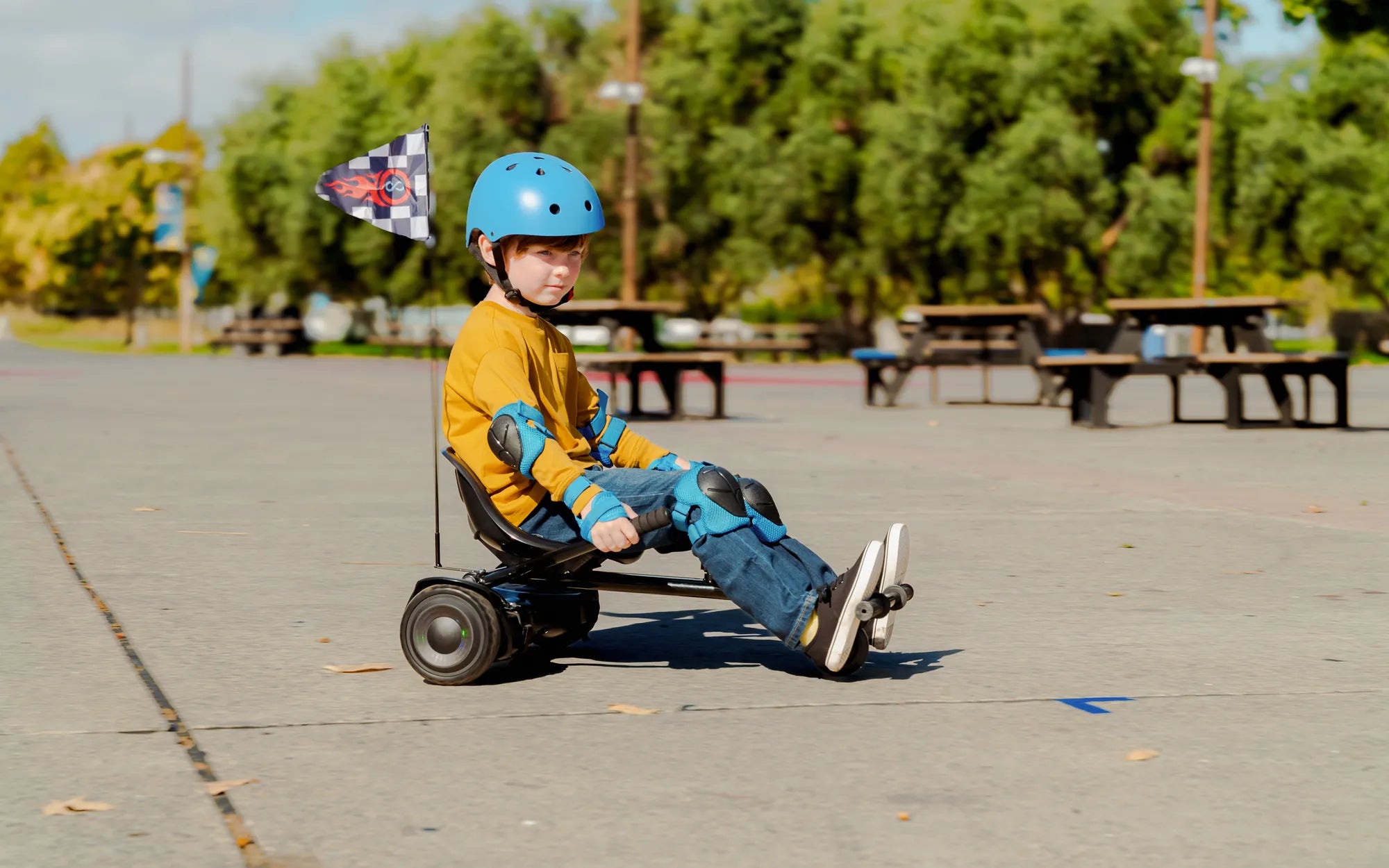
A certified bicycle or multi-impact helmet is the single most important piece of safety equipment. Wrist guards are equally critical, as falls often result in instinctive hand-outstretching, leading to fractures or severe abrasions.
Knee and elbow pads provide vital protection for joints. This gear drastically reduces the risk of serious injury during a fall, which is more likely outdoors due to higher potential speeds and obstacles.
Smart Riding Habits for Public Pathways
Always begin your ride in a safe, open, car-free area like an empty parking lot to warm up. Obey all local laws, which almost universally relegate hoverboards to sidewalks or designated paths, not roads.
Be hyper-aware of your surroundings. Pedestrians have the right of way. Use a bell or your voice to audibly signal your approach from a distance. Maintain a slow, controllable speed in crowded areas.
Avoid inherently hazardous surfaces like wet leaves, metal grates, loose gravel, and oily pavement. Never ride in heavy rain, through deep puddles, or during thunderstorms. Conduct a pre-ride check of tire pressure (for pneumatic tires) and ensure the hoverboard is fully charged.
Hoverboard vs. Electric Scooter: Choosing Your Outdoor Ride
For short-distance personal transport, hoverboards and electric scooters are leading options. The choice depends on your priorities for portability, stability, terrain, and learning curve.
| Feature | Outdoor Hoverboard | Electric Scooter |
|---|---|---|
| Primary Use Case | Last-mile, recreational gliding, compact trips | Longer commutes, faster urban travel |
| Learning Curve | Steeper; requires balance & core engagement | Easier; intuitive like a kick scooter |
| Portability | Generally lighter, easier to carry short distances | Often heavier, may fold but bulkier |
| Stability & Terrain | Good on smooth surfaces; sensitive to bumps | Superior on rough pavement; larger wheels |
| Typical Range | 10-15 miles | 15-40+ miles |
| Storage Footprint | Very compact, stands upright | Requires more space, even when folded |
Hoverboards shine in ultimate portability and a unique, fun riding dynamic. Electric scooters, like those in Gyroor's extensive lineup, offer greater speed, range, and stability for riders prioritizing a more traditional and efficient commute.
FAQ: Your Outdoor Hoverboard Questions Answered
Q: Can I ride a hoverboard on grass or dirt?
A: Only models specifically equipped with large, all-terrain (AT) tires with deep treads can handle short stretches of firm grass or packed dirt. Standard hoverboards with street tires will struggle, lose traction, and overwork the motors. It is generally not recommended for prolonged use.
Q: What is the legal age to ride a hoverboard outside?
A> There is no universal age law, but many city and state regulations set a minimum age of 16 for operating electric rideables on public property. Always check your specific local ordinances, as rules vary significantly and can include helmet mandates and speed limits.
Q: Can I ride it after it rains?
A: If your hoverboard has a sufficient IP rating (IPX5 or higher), riding on damp pavement and avoiding standing water is generally safe. Models with lower ratings (IPX4 or none) risk water damage. Never submerge any part of the board or ride in active, heavy rainfall.
Q: How do I maintain my hoverboard for outdoor use?
A> Regular maintenance is key. Keep tires properly inflated (for pneumatic types). Wipe down the board with a damp cloth after riding on wet or dirty surfaces. Check for loose screws or casing cracks. Store in a cool, dry place and avoid leaving it fully discharged for extended periods.
Q: Are hoverboards allowed on college campuses?
A: Policies vary widely. Many campuses permit them on walkways and paths at reasonable speeds, treating them similarly to bicycles. However, some may restrict them in certain high-traffic areas or buildings. Always consult your campus transportation office for specific rules.
Conclusion: Expanding Your Ride's Horizon
So, can you ride a hoverboard outside? Absolutely—with the right device and the right approach. The experience hinges on selecting a model built with outdoor specs: sufficient motor power, larger pneumatic tires, and a robust IPX5 water-resistant rating. Pairing that hardware with mandatory safety gear and defensive riding habits unlocks a world of convenient, enjoyable short-range travel.
It transforms the hoverboard from a living-room novelty into a legitimate micro-mobility option. By choosing a well-engineered model from a reputable brand that prioritizes safety certifications and durable construction, you invest in reliable performance and peace of mind. Ready to explore your neighborhood on a new kind of ride? Browse the full Gyroor collection, featuring UL-certified, IPX5-rated models designed for confident outdoor adventure, at gyroorboard.com.
China Scooters for Kids Toddler Scooter: The Ultimate Guide for Parents
Best Electric Scooter for Kids Age 7: A Parent's Guide to Safe and Fun Rides