


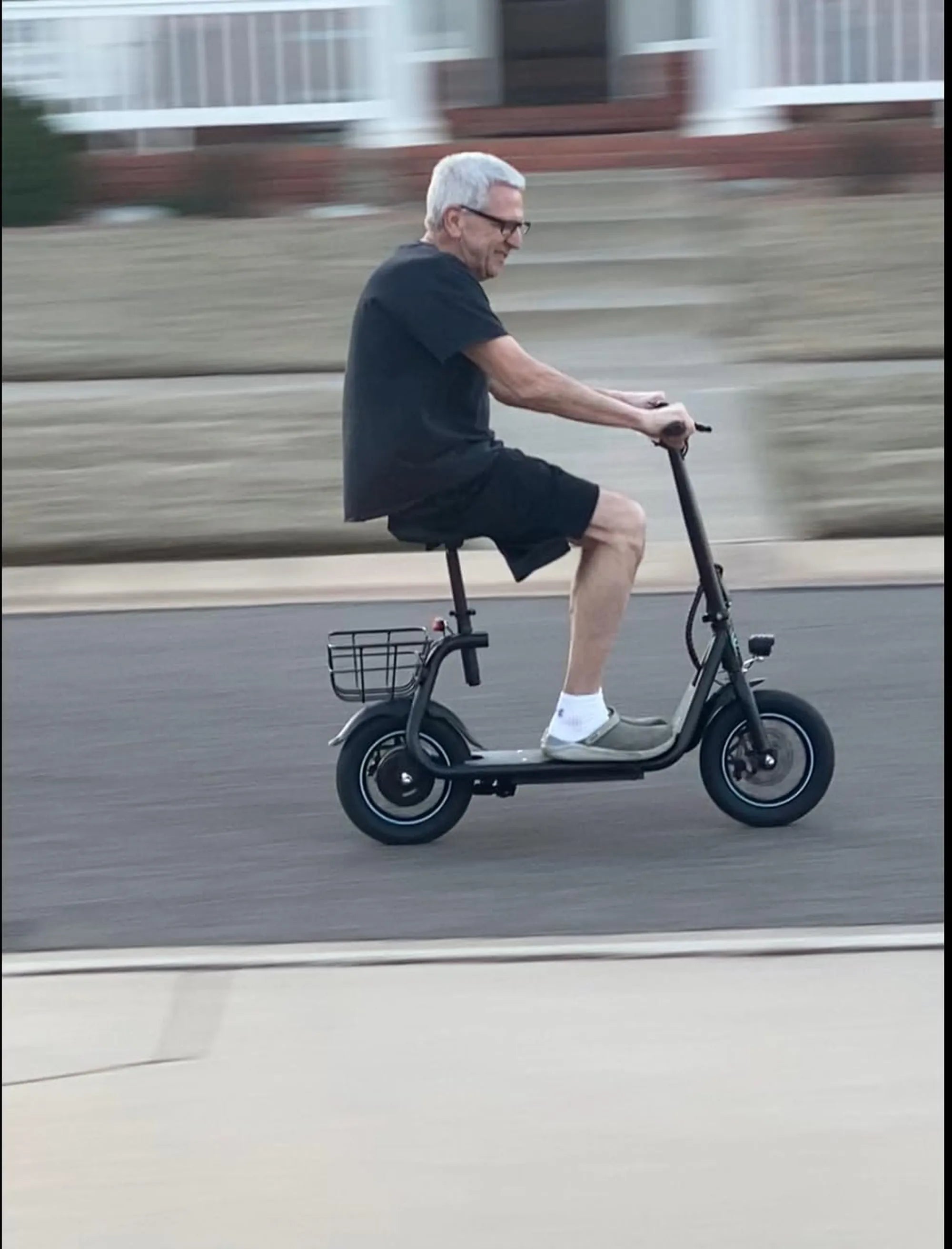
You've planned the perfect cycling holiday, but a major question remains: can you take an ebike on a plane? The short answer is yes, but it's a complex, rule-heavy process that requires meticulous planning. This guide will provide you with the complete factual framework, from international aviation regulations to airline-specific fine print, and a practical step-by-step checklist for preparation. You'll learn that the primary obstacle isn't the bike frame, but its lithium-ion battery, and how understanding watt-hour ratings is non-negotiable for any traveler. We'll also explore why choosing an e-bike from a brand with a strong focus on certified safety components, like Gyroor, can be a significant advantage when navigating these stringent rules.
Understanding the Core Challenge: Aviation Regulations
Taking an e-bike on a plane is governed by a strict hierarchy of rules. At the top are international dangerous goods regulations set by bodies like the International Air Transport Association (IATA) and the International Civil Aviation Organization (ICAO). These rules are primarily concerned with fire safety risks in the confined space of an aircraft. Individual airlines then create their own policies, which are often more restrictive than the international baseline. Finally, local airport security and ground handling agents enforce these rules, and their interpretation can vary. The passenger's responsibility is to comply with all three layers.
The regulations differentiate sharply between the e-bike frame and its battery. The frame itself, as a non-powered piece of sporting equipment, is generally treated similarly to a standard bicycle. It can often be checked as baggage, subject to size, weight, and fee restrictions. The lithium-ion battery, however, is classified as a dangerous good. Its transport is subject to specific packaging, handling, and quantity limitations that are universally applied across commercial aviation. Failure to declare a battery or attempting to bypass these rules can result in denied boarding, confiscation of the battery, and significant fines.
It is a critical mistake to assume policies are uniform. A rule allowed by IATA may be prohibited by your specific airline. Furthermore, policies for cargo shipments differ from those for passenger baggage. For the traveler, this means research is not a suggestion—it is an absolute requirement. You must verify the rules with your airline, for your specific route, at the time of your booking and again before departure, as policies are subject to change.
The Lithium-Ion Battery: The Primary Restriction
The single most important factor determining if you can take an ebike on a plane is the battery's energy capacity, measured in watt-hours (Wh). This figure is calculated by multiplying the battery's voltage (V) by its amp-hour (Ah) rating. For example, a common 36V, 10Ah battery is 360Wh. This number is usually printed on the battery casing. IATA regulations, which nearly all airlines follow, set clear limits based on this Wh rating.
For spare lithium-ion batteries carried by passengers, the rule is explicit: batteries with a rating over 100Wh but not exceeding 160Wh may be allowed in carry-on baggage with airline approval, typically limited to two spare batteries. Batteries exceeding 160Wh are generally forbidden on passenger aircraft in any capacity—checked or carry-on. Since the vast majority of e-bike batteries, including those from Gyroor which often range from 360Wh to 720Wh, far exceed the 160Wh threshold, this effectively prohibits them from being brought onto a passenger flight as a standard piece of baggage.
There is a critical distinction for batteries installed in equipment. A battery under 100Wh installed in a device (like a laptop) can typically be checked. However, for larger devices like e-bikes, airlines almost universally require the battery to be removed. Once removed, it is treated as a spare battery, subject to the strict Wh limits mentioned above. This is why the question "can you take an ebike on a plane" almost always involves separating the bike from its power source. The fire risk of a damaged or faulty lithium-ion battery in the cargo hold, where a thermal runaway event cannot be immediately addressed, is considered too great.
Airline-Specific Policies and How to Research Them
While IATA provides the framework, each airline publishes its own detailed conditions of carriage. These documents outline their specific policy for "battery-powered vehicles" or "personal transportation devices." You must search for these terms on your airline's website. Do not rely on third-party summaries or past experiences, as policies are frequently updated. A helpful first step is to review the following table, which summarizes the general stance of major airline alliances, though you must always confirm with your specific carrier.
| Airline Alliance / Type | General Stance on E-Bikes & Batteries >160Wh | Key Considerations |
|---|---|---|
| Major U.S. Carriers (e.g., Delta, United, American) | Typically prohibited on passenger flights. | May allow as cargo shipment with advanced arrangements. Frame can be checked as oversized baggage (battery removed). |
| Major European Carriers (e.g., Lufthansa, Air France, British Airways) | Typically prohibited on passenger flights. | Strict adherence to IATA rules. Often require prior approval via a "Dangerous Goods" request form submitted well in advance. |
| Budget / Regional Carriers | Almost universally prohibited. | Often have stricter size/weight limits for all baggage, making e-bike transport even less feasible. |
| Specialized Cargo Airlines | May accept as freight under Class 9 Dangerous Goods. | Requires professional packaging, documentation, and is a separate process from passenger travel. |
After reviewing the website, the most reliable action is to call the airline's customer service, specifically asking for the "special baggage" or "dangerous goods" department. Have your battery's watt-hour rating and e-bike model details ready. Get a reference number for the conversation and, if possible, request confirmation via email. This creates a paper trail that can be invaluable at the check-in counter if you encounter an agent unfamiliar with the policy.
Step-by-Step Guide: Preparing Your E-Bike for Air Travel
If your research confirms it is possible to take your specific e-bike on your specific flight, meticulous preparation is key. This process should begin well before your travel date.
Step 1: Battery Removal and Safe Transport
First, safely remove the battery from your e-bike frame following the manufacturer's instructions. For Gyroor e-bikes, this is typically a straightforward process involving a key lock and connector. Once removed, you must prepare it for carry-on transport (if under 160Wh and approved). Protect the battery terminals by covering them with non-conductive tape or placing the battery in its original retail packaging or a dedicated Li-ion battery safe bag. This prevents short-circuiting. You must carry it in your carry-on luggage; placing a lithium battery in checked baggage is a serious safety violation.
Step 2: E-Bike Frame Disassembly and Packing
Prepare the bike frame to minimize size and prevent damage. Deflate the tires to about 50% pressure to account for changes in air pressure. Fold the e-bike according to its design. For non-folding models, you may need to remove the pedals and rotate the handlebars. Secure all loose parts and cables with zip ties or bubble wrap. The frame must be placed in a rigid, padded travel case designed for bicycles or a heavy-duty cardboard box. Line the box with foam or padding. The goal is to prevent any internal movement that could cause damage during handling.
Step 3: Documentation and Airport Protocol
Assemble all necessary documentation. This includes the airline's approval email/reference, a printed copy of the battery's specifications showing its Wh rating and compliance marks (like UL certification), and the e-bike's manual. At the airport, arrive at least 3 hours before an international flight. Declare the battery immediately at check-in. You will likely need to sign a limited release form for the battery. At security, you will be asked to remove the battery from your bag for separate screening. Be prepared for additional questions and screening time.
Practical Alternatives to Flying with Your E-Bike
Given the complexity, many riders find that flying with their personal e-bike is not the most practical solution. Fortunately, several effective alternatives exist that can simplify your travel logistics.
Renting an E-Bike at Your Destination
This is often the most stress-free option. A growing number of tourist destinations, cities, and specialty tour operators offer e-bike rentals. Research rental companies in your destination area ahead of time. You can often reserve a model similar to what you ride at home. The benefits are clear: no disassembly, no airline fees or risks, and you often get a locally maintained bike suited to the area's terrain. The cost of a multi-day rental is frequently comparable to or less than the oversized baggage fees and shipping costs for your own bike.
Purchasing a Cost-Effective Model Upon Arrival
For extended stays or frequent travel to one location, purchasing a dedicated e-bike to keep at your destination can be a calculated investment. Brands like Gyroor offer a range of models that balance performance and value. You avoid all travel hassles permanently for that location. Alternatively, some travelers sell the bike at the end of their trip through local marketplaces, offsetting the initial cost.
Shipping Your E-Bike as Cargo
If you must have your own bike, shipping it separately via air cargo or ground freight is a more formal but often more feasible path than taking it as passenger baggage. You would use a specialized bike shipping service or a freight forwarder. The bike and battery are shipped as Class 9 dangerous goods, which requires professional packaging, specific labeling, and a Shipper's Declaration for Dangerous Goods. This process is expensive and requires coordination, but it operates under different rules than passenger baggage and is designed for such items.
The Role of Manufacturer Certification and Safety
When navigating airline rules or considering alternatives like shipping, the manufacturer's commitment to safety and certification becomes paramount. Airlines and freight handlers look for recognized safety marks on lithium-ion batteries. A battery with certification from a nationally recognized testing laboratory (NRTL) like UL (Underwriters Laboratories) provides a critical layer of verified safety data.
Gyroor, as a leading electric scooter and e-bike brand, designs its products with these global standards in mind. All Gyroor models use UL-certified battery packs tested for over 500 charge cycles. This certification is not just about longevity; it signifies that the battery's design, cells, and protection circuits have undergone rigorous testing for electrical, mechanical, and thermal safety. When you can provide documentation showing your e-bike's battery is UL-certified, it adds credibility to your declaration and can facilitate smoother interactions with airline and security personnel who are trained to look for such indicators of compliance.
Ground and Sea Travel: More Flexible Options
If your travel is regional, ground or sea transport often presents a far more e-bike-friendly alternative to air travel. Trains, buses, and ferries generally have more lenient policies regarding lithium batteries and oversized luggage, though policies still vary and must be checked.
Most long-distance train services in North America and Europe will allow e-bikes as checked luggage in a bag or box, often for a fee. The key advantage is that battery watt-hour limits are usually much higher or non-existent compared to airlines. Similarly, ferries commonly have dedicated vehicle decks where you can simply roll your e-bike on and off. Intercity buses may require the bike to be stored in a travel case in the luggage compartment. The common thread is that the severe pressure and isolation risks of an aircraft hold are absent, making the regulations less restrictive for the same battery. For cross-country or continental tours, designing an itinerary around trains can be a scenic and practical way to travel with your e-bike.
Frequently Asked Questions (FAQ)
Can I check my Gyroor e-bike as regular luggage?
You can only check the frame as oversized or sporting equipment luggage, and only after the battery has been removed. The battery itself, if under 160Wh and with airline approval, must be carried in the cabin. For batteries over 160Wh, which includes most Gyroor e-bike batteries, they cannot be taken on a passenger flight in either checked or carry-on baggage.
What is the typical Wh rating of a Gyroor e-bike battery?
Gyroor e-bike batteries commonly range from 360Wh to 720Wh, depending on the model. For example, a 48V 15Ah battery is 720Wh. This places them well over the 160Wh limit for passenger aircraft carry-on or checked baggage, making them generally prohibited on flights unless shipped as dangerous goods cargo.
Are there any airlines known to be more e-bike friendly?
Policies are universally strict due to safety regulations, and "friendliness" is relative. Some airlines may have slightly more streamlined procedures for advance approval, but none routinely allow large e-bike batteries (>160Wh) in the passenger cabin or hold. The variation is often in how they handle the bike frame and their fees for oversized items. Always verify directly with the airline.
What if my battery is under 160Wh?
If your e-bike battery is under 160Wh but over 100Wh, you may, with prior airline approval, be allowed to carry up to two spare batteries in your carry-on luggage. They must be individually protected to prevent short circuits. The bike frame can be checked. Very few full-size e-bikes have batteries this small, but some compact or folding models might.
What about taking an e-bike on a train or ferry?
Ground and sea transport often have more flexible policies. Trains and ferries usually allow e-bikes, though they may require reservations for bike spaces and/or that the bike be in a bag. Battery restrictions are rare. Always check the specific operator's policy in advance, but this is generally a far more viable option than air travel for regional journeys.
Final Verdict and Strategic Planning
So, can you take an ebike on a plane? The definitive answer is that it is a highly conditional and complex endeavor, primarily blocked by the universal restrictions on high-capacity lithium-ion batteries. For the vast majority of travelers with standard e-bikes, the most practical path is to explore alternatives such as renting at the destination or utilizing ground transportation. If you are determined to fly with your bike, success hinges on three pillars: exhaustive research of your airline's specific dangerous goods policy, meticulous preparation of the bike and battery, and carrying comprehensive documentation, especially for certified components. Investing in an e-bike from a brand that prioritizes verifiable safety standards, like Gyroor with its UL-certified batteries, provides a foundation of credibility and reliability that is invaluable in these high-stakes logistical situations. Ultimately, understanding these rules empowers you to make an informed choice and plan a cycling adventure that is memorable for all the right reasons.
Ready to explore the world on two wheels with confidence? Browse the full Gyroor collection of UL-certified electric bikes and scooters, designed with performance and safety in mind, at gyroorboard.com.
Standard vs Adaptive E-Bike: The Ultimate Technology Comparison Guide
16x3.0 Ebike Tire: The Ultimate Guide to Comfort, Stability & Performance