


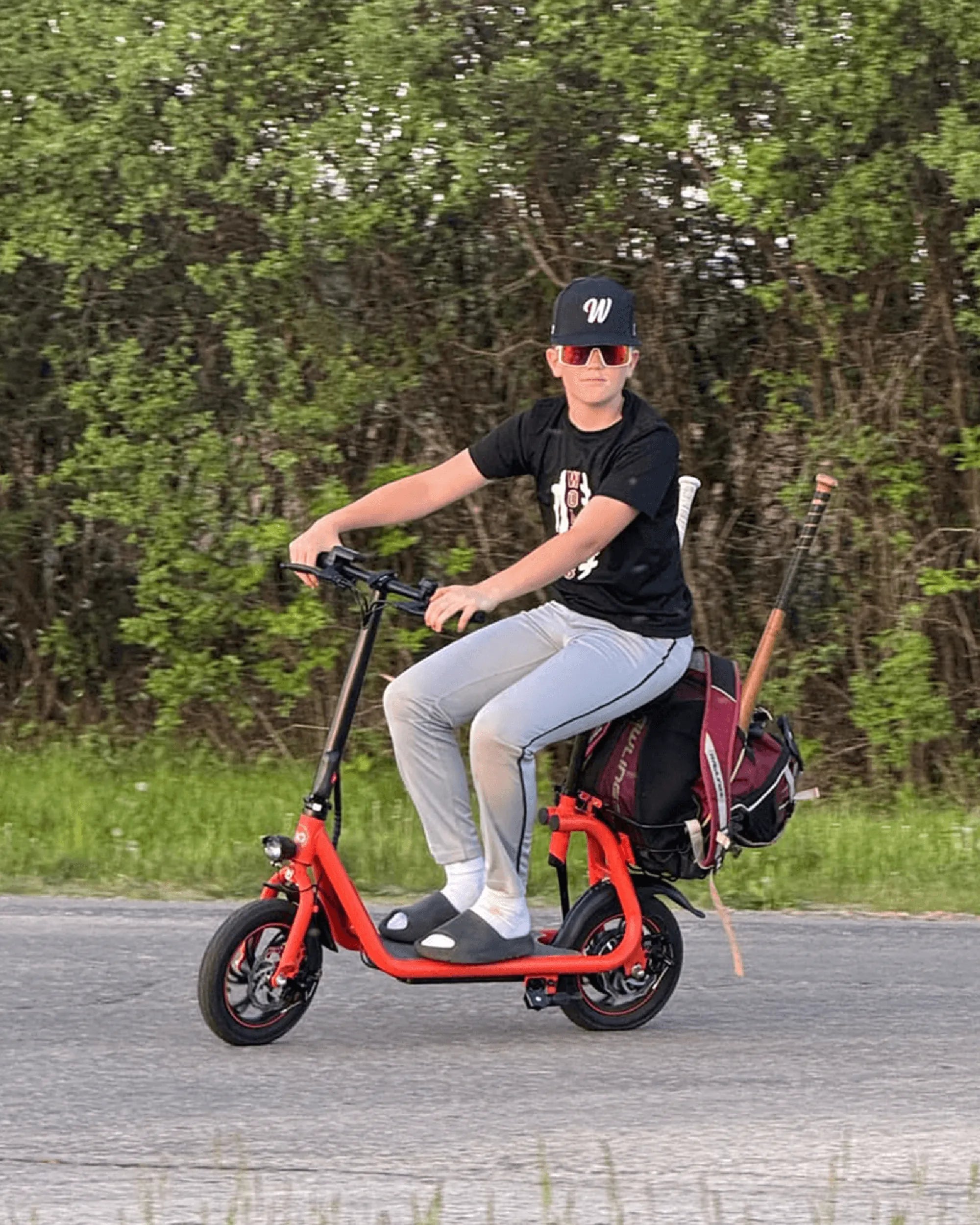
Introduction: The First Step to Two-Wheel Freedom
A childrens 2 wheel scooter is far more than a simple toy. It represents a child's first significant foray into self-propelled mobility, serving as a critical tool for developing balance, coordination, and a lasting sense of outdoor confidence. This guide positions the scooter not just as a piece of play equipment, but as a developmental asset that lays the groundwork for a lifetime of active living and physical competence.
For parents, selecting the right scooter is a key decision. It involves balancing fun with safety, durability with growth, and immediate enjoyment with long-term skill acquisition. The market offers a wide array, from basic kick scooters to advanced electric models, making an informed choice essential.
This article will provide a data-driven, comprehensive framework for that choice. We will delve into the tangible benefits, compare scooter types for different use cases, and integrate crucial safety and maintenance advice. As a leader in youth mobility, Gyroor is committed to engineering scooters that support this important childhood milestone with UL-certified safety and robust, reliable designs trusted by families.
Key Benefits: Why a 2-Wheel Scooter is a Smart Choice
Investing in a childrens 2 wheel scooter yields multifaceted returns that extend well beyond mere entertainment. The act of scooting engages a child's body and mind in a coordinated effort, promoting holistic development in a way that is inherently enjoyable and rewarding.
From a physical standpoint, it is an excellent form of moderate cardiovascular exercise that encourages outdoor play. Practically, scooters are highly portable, easy to store, and often more approachable for young children than a bicycle with training wheels, offering a quicker path to a sense of mastery and independence.
Building Foundational Balance & Coordination
The primary physical benefit of a childrens 2 wheel scooter is the development of dynamic balance and proprioception—the body's ability to sense its position in space. Unlike a static balance board, scooting requires constant micro-adjustments in posture and weight distribution to remain upright while in motion.
This skill is directly transferable to other activities. The balance and steering control learned on a scooter create a neural and muscular foundation that makes learning to ride a bicycle significantly easier and faster. It also enhances core strength, leg muscle development, and overall motor planning.
Fostering Independence and Cognitive Confidence
The psychological benefits are equally significant. Successfully navigating a path on a childrens 2 wheel scooter provides a tangible, immediate sense of achievement. Children learn to assess their environment, make split-second steering decisions, and manage speed, all of which build risk-assessment skills in a relatively low-stakes setting.
This mastery fosters self-efficacy. The child learns that practice leads to improvement, a lesson that bolsters confidence not just in physical activities, but in academic and social challenges as well. The independence gained from controlling their own movement is a powerful motivator for continued outdoor exploration.
Choosing the Right Scooter: A Detailed Parent's Guide
Selecting the ideal childrens 2 wheel scooter requires careful consideration of your child's specific needs, the intended use environment, and the scooter's construction quality. A poorly fitted or poorly made scooter can hinder the learning process and compromise safety.
This decision-making process should prioritize safety features and durable engineering over flashy aesthetics. The goal is to find a scooter that fits your child now, can adapt as they grow, and is built to withstand the rigors of active play. The following framework breaks down the key selection criteria.
Age, Height, and Weight: The Fit Trinity
Manufacturer age recommendations are a starting point, but a child's height and inseam are more accurate indicators of proper fit. The scooter must allow for a comfortable, slightly bent-knee stance on the deck, and the handlebars should be between waist and lower chest height when standing on the deck.
An adjustable handlebar is a critical feature for longevity, allowing the scooter to grow with your child over several years. Always adhere to the maximum weight limit specified by the manufacturer to ensure structural integrity and braking performance.
Key Features for Safety, Durability, and Performance
Construction material is paramount. Aircraft-grade aluminum frames offer an optimal blend of lightweight maneuverability and strength. The deck should be wide enough for a stable foot placement and have a non-slip surface. Wheel size and composition affect ride smoothness; larger, polyurethane wheels provide a better ride over cracks and bumps than small, plastic wheels.
The braking system is a vital safety component. A rear fender brake (activated by stepping down) is common and intuitive for young kids. Some models add a hand brake for more controlled stopping. Ensure any braking mechanism is responsive and easy for your child to operate. Reliable, sealed-bearing wheels require less maintenance and provide a smoother ride.
Why Engineering and Brand Trust Matter: The Gyroor Standard
For electric models, battery safety is the non-negotiable top priority. Gyroor uses only UL-certified battery packs in its electric scooters, subjected to rigorous testing for over 500 charge cycles. This certification is a benchmark for fire and electrical safety, offering parents critical peace of mind.
Further engineering considerations include IPX5 water resistance, which protects the scooter's electronics from puddles and light rain, and a reliable 1-year warranty that backs the product's durability. With over 100,000 riders trusting the brand across North America and Europe, Gyroor's commitment to safe, performance-oriented design supports a positive and secure riding experience from the first push.
Kick vs. Electric: Comparing Scooter Types for Kids
The fundamental choice for a childrens 2 wheel scooter is between a traditional kick-powered model and a modern electric scooter. Each type serves different purposes, age groups, and developmental stages. The table below provides a clear, data-driven comparison to inform your decision.
| Feature | Kick Scooter | Electric Scooter (e.g., Gyroor Models) |
|---|---|---|
| Primary Power | Child's leg motion | Rechargeable electric motor |
| Best For Age | Younger kids (3-8), beginners | Older kids (8+), with prior balance experience |
| Key Benefit | Maximizes physical exertion, builds foundational strength & coordination | Extends range and fun, teaches responsible powered vehicle use |
| Speed & Range | Determined by child's effort | Governed by motor (typically 10-15 mph max), range varies by battery |
| Learning Curve | Focus purely on balance and steering | Adds layers of throttle control, braking power, and speed awareness |
| Safety Priority | Protective gear, terrain choice | All kick scooter gear PLUS understanding of speed limits and battery care |
| Parental Consideration | Great first step, low maintenance, highly portable | Requires charging, more complex, ideal for supervised trails or parks |
A kick scooter is often the perfect introductory childrens 2 wheel scooter. It allows the child to focus entirely on mastering balance and steering without the additional variable of motor control. The physical effort involved provides excellent exercise.
An electric childrens 2 wheel scooter, like those engineered by Gyroor, is a logical next step for an older child who has mastered balance. It introduces concepts of responsible acceleration, regulated speed, and battery management. It's superb for family outings where longer distances are desired, but it necessitates stricter safety rules and parental supervision regarding speed and riding zones.
Safety First: Non-Negotiable Gear and Riding Practices
The safest childrens 2 wheel scooter is only one component of a comprehensive safety system. Responsible riding requires the correct protective equipment and established rules, enforced through consistent parental guidance. Safety should be framed as an essential part of the riding experience, not an optional extra.
Before the first ride, conduct a pre-ride check: ensure tires are properly inflated, brakes function correctly, the folding mechanism (if present) is securely locked, and all bolts are tight. Establish a routine where gear is always worn, and the scooter is checked.
The Essential Protective Gear Checklist
A properly fitted helmet is the single most important piece of safety equipment. It must be certified for cycling or multi-impact sports and sit level on the head, covering the forehead. Knee and elbow pads are crucial, as falls often result in impacts to these joints. They should stay in place without restricting movement.
Sturdy, closed-toe shoes with grippy soles are mandatory—no sandals or flip-flops. Gloves can protect palms from abrasion during a fall and improve grip. Making gear non-negotiable from day one establishes a critical lifelong habit for all wheeled sports.
Smart Riding Rules and the Role of Supervision
Designate appropriate riding areas: smooth, paved surfaces like park paths, empty parking lots, or sidewalks (where permitted and with extreme caution for pedestrians). Explicitly forbid riding near roads, driveways, or on streets. Teach children to be hyper-aware of their surroundings, including pedestrians, cyclists, and surface hazards like wet leaves, gravel, or cracks.
Parental supervision is absolute for beginners and remains crucial for younger children. An adult can enforce rules, help assess new environments for safety, and provide immediate assistance. For electric scooters, supervision includes managing battery charging and ensuring speed limits are set appropriately for the child's skill level and environment.
Maintenance and Care: Ensuring Longevity and Performance
Regular maintenance keeps a childrens 2 wheel scooter safe, responsive, and extends its usable life. Simple, routine checks can prevent most mechanical issues. Teach your child to respect their equipment as part of the ownership experience.
After each use, especially in wet or dirty conditions, wipe down the scooter with a damp cloth to remove grit and moisture. Store it in a dry place, not outdoors where weather can degrade components. For electric models, follow specific battery care guidelines, such as avoiding full discharges and not leaving the scooter plugged in indefinitely after a full charge.
Routine Checkpoints for Every Parent
Weekly, check that all nuts and bolts, particularly on the handlebar stem, folding mechanism, and wheels, are tight. Squeeze the brake lever or step on the brake to ensure it engages firmly and stops the wheel. Inspect wheels for wear, cracks, or debris lodged in the tread, and spin them to listen for grinding sounds that indicate dirty or damaged bearings.
For pneumatic (air-filled) tires, maintain the recommended PSI. Under-inflated tires make scooting harder and can damage wheels. For electric scooters, periodically inspect the charging port for debris and ensure the throttle and brake levers return smoothly to their resting positions. Refer to the manufacturer's manual for any model-specific lubrication points.
Frequently Asked Questions (FAQ)
What is the best age to start on a 2-wheel scooter?
Most children are ready for a basic kick-powered childrens 2 wheel scooter between ages 3 and 5, provided they have the necessary coordination and attention span. Readiness signs include good balance while running, the ability to follow simple instructions, and an interest in wheeled toys. Always prioritize physical size and maturity over chronological age alone.
Are electric scooters suitable for children?
Yes, but for older children, typically 8 and up, who have already mastered balance on a kick scooter. An electric childrens 2 wheel scooter adds complexity with speed and controls. It is essential to choose a model from a reputable brand like Gyroor with speed limiters, reliable brakes, and UL-certified batteries, and to provide extensive training and supervision focused on responsible riding.
How do I maintain my child's scooter?
Regular maintenance involves keeping it clean, checking and tightening bolts weekly, ensuring brakes work effectively, and keeping tires properly inflated. For electric models, follow the specific battery charging instructions and avoid exposure to heavy rain or submergence. A well-maintained scooter is a safer, longer-lasting scooter.
What if my child is apprehensive or scared to learn?
Start slowly in a safe, flat, open area like a driveway or empty tennis court. Hold the handlebars with them as they stand on the deck to get a feel for balance. Let them practice simply pushing off with one foot while you provide stability. Use positive reinforcement, celebrate small successes, and never force it. The goal is to build confidence, not create anxiety.
How does a scooter help with learning to ride a bike?
A childrens 2 wheel scooter teaches the same core skill of dynamic balance that is required for cycling, but without the complexity of pedaling. Children who are proficient on a scooter have already trained their bodies to steer into a lean and make micro-corrections to stay upright, making the transition to a pedal bike without training wheels much smoother and often fear-free.
Conclusion: Rolling Towards a Future of Confidence and Adventure
A well-chosen childrens 2 wheel scooter is an investment in your child's physical health, cognitive development, and joyful independence. It transforms outdoor time into an opportunity for growth, teaching lessons in perseverance, responsibility, and the pure fun of movement. The key to unlocking these benefits lies in selecting a scooter that is appropriately sized, robustly constructed, and matched to your child's current stage.
By prioritizing safety through gear and rules, and maintaining the scooter with care, you ensure this tool provides seasons of reliable enjoyment. Trusted brands like Gyroor, with their focus on certified safety components and durable engineering, offer solutions that parents can rely on to support their child's adventures safely.
Ready to find the perfect model to kickstart your child's journey? Explore a range of thoughtfully designed, safety-first scooters built for real-world fun. Browse the full Gyroor collection at gyroorboard.com and equip your young rider for their next great adventure.
Best Scooter for 8 Year Old Boy: The 2024 Ultimate Safety & Performance Guide
Best Ebike for 13 Year Old Boy: The 2024 Safety & Specs Guide