



Introduction: Finding the Perfect First Ride for Your 7-Year-Old
Selecting the right childrens scooter 7 year is a critical decision that impacts a child's safety, physical development, and confidence. At age seven, children experience significant growth in coordination, balance, and independence, making it the ideal time for a first serious scooter. This guide provides factual, data-driven analysis to help parents navigate the key features, safety standards, and product types.
You will learn how to prioritize features like adjustable handlebars, wheel size, and braking systems. We will compare kick scooters versus electric models with specific performance metrics. The goal is to equip you with the knowledge to choose a durable, growth-friendly scooter that matches your child's skill level and your safety requirements.
Gyroor, a leading electric scooter and e-bike brand, designs products with these principles in mind. Trusted by over 100,000 riders across North America and Europe, Gyroor emphasizes UL-certified batteries, IPX5 water-resistant designs, and a reliable 1-year warranty, making their models a relevant benchmark in our discussion of quality and safety.
Key Features to Prioritize for a 7-Year-Old's Scooter
When evaluating a childrens scooter 7 year, certain engineering specifications directly correlate with safety and suitability. The ideal model balances lightweight construction with structural integrity, offering features that adapt to a growing child. These are not mere accessories but foundational elements for secure riding.
Primary considerations include the scooter's weight, deck dimensions, and wheel composition. A scooter weighing under 10 lbs (4.5 kg) is manageable for most seven-year-olds to carry and maneuver. The deck should provide ample foot space, typically around 4.5 inches wide, to promote a stable stance.
Material quality is paramount. Frames constructed from aerospace-grade aluminum alloy offer an optimal strength-to-weight ratio, resisting the impacts of daily use. This focus on core specifications ensures the scooter is a tool for development, not a source of frustration or hazard.
Safety First: Build Quality and Stability
The foundation of any safe childrens scooter 7 year is a rigid, well-constructed frame. A wobbling stem or flexing deck can lead to instability and falls. High-quality manufacturers use reinforced welding at stress points and thicker tubing to prevent this. The steering column should have a secure locking mechanism, often a patented folding or clamping system, to eliminate play.
Braking systems are equally critical. For this age group, a rear fender brake activated by foot pressure is standard and effective. It allows intuitive speed control without requiring complex hand coordination. Some advanced models may include a front hand brake for graduated stopping power, but this requires proper instruction.
Wheel design dictates stability and ride comfort. Larger wheels (150mm to 200mm) roll over small cracks and debris more smoothly than smaller ones. High-rebound polyurethane (PU) wheels with a durometer rating around 78A-85A provide a good balance of grip and speed. ABEC-5 or higher rated bearings ensure smooth, efficient rolling with minimal maintenance.
Growth-Friendly Adjustability
Children experience rapid growth spurts, making adjustability a non-negotiable feature for a long-lasting childrens scooter 7 year. An adjustable handlebar height is the most important element, typically offering a range from approximately 28 inches to 36 inches from the ground. This allows the scooter to be tailored to the child's height for optimal control and posture.
The correct handlebar height is at or slightly below the child's waist when they are standing flat on the deck. This position allows for a slight bend in the arms, promoting better steering control and reducing fatigue. A simple push-button or quick-release clamp mechanism makes adjustment tool-free and straightforward for parents.
Beyond the handlebars, some models offer adjustable stem length or deck angle. While less common, these features can fine-tune the riding position for comfort. Investing in an adjustable scooter can extend its usable life by 2-3 years, providing excellent value and reducing waste.
Portability and Weight
The physical weight of a childrens scooter 7 year directly impacts usability. A child must be able to lift and carry the scooter short distances, such as up porch steps or into a car. Industry data suggests the optimal weight range is between 6.5 and 9.5 pounds (3-4.3 kg).
Lightweight construction does not mean compromising strength. Advanced materials like 6061-T6 aluminum and magnesium alloys achieve this balance. A folding mechanism further enhances portability, allowing the scooter to be compactly stored in a closet or car trunk. The fold should be simple, secure, and designed to prevent accidental collapse during riding.
Heavier scooters, often those with electric motors and batteries, require parental assistance for transport. This is a key practical distinction between kick and electric models for this age group. The choice hinges on whether the benefits of electric propulsion outweigh the added weight and complexity for your specific use case.
Why Gyroor Stands Out for Young Riders
Gyroor's engineering philosophy aligns closely with the core requirements for a safe, durable childrens scooter 7 year. The brand's commitment to certified safety, robust construction, and rider-centric design provides a compelling case for parents seeking reliability. Their focus extends beyond basic functionality to creating a product that builds confidence.
With a product range of over 20 models, Gyroor applies lessons from its electric scooter and e-bike development to its youth-oriented designs. This includes rigorous testing protocols for frames, bearings, and braking systems. The result is a scooter that can withstand the rigorous demands of an active seven-year-old.
The brand's established customer base of over 100,000 riders and an average 4.5/5 rating reflect consistent satisfaction. This track record, combined with clear warranty support, reduces the perceived risk for parents making a significant purchase for their child's recreation and development.
Engineered for Durability and Peace of Mind
Durability in a childrens scooter 7 year is measured by its ability to endure impacts, weather, and repeated use without failure. Gyroor utilizes aerospace-grade aluminum alloy frames that are both lightweight and exceptionally strong. Critical joints are reinforced, and the deck is often textured with a non-slip grip tape or coating to maintain traction.
This robust construction is backed by a clear and accessible 1-year comprehensive warranty. This warranty covers manufacturing defects in materials and workmanship, providing tangible peace of mind. Support is handled by a US-based team, simplifying the process for North American customers should any issue arise.
Furthermore, components like the patented folding mechanism are tested for thousands of cycles to ensure long-term reliability. The focus is on creating a product that lasts, supporting sustainable consumption by being a single purchase that grows with the child through their elementary years.
Smooth Performance for Growing Confidence
A scooter that performs predictably is essential for building a child's riding confidence. Gyroor models feature precision ABEC-7 bearings, which reduce friction for a smoother, quieter, and faster ride with less pushing effort. This allows the child to focus on balance and steering rather than fighting a sluggish scooter.
The wheels are another performance highlight. Made from high-rebound PU, they offer excellent shock absorption on uneven pavement. Paired with a responsive, adjustable rear fender brake, the child gains precise control over their speed. This controlled environment is where skills are safely developed.
For electric models in their lineup, Gyroor integrates safety-focused performance limits. Speed can be capped via parental controls, and motors are tuned for smooth acceleration rather than jarring torque. These design choices prioritize a gradual learning curve, ensuring the electric scooter is an aid to fun, not a source of intimidation.
Comparing Scooter Types: Kick vs. Electric for a 7-Year-Old
The choice between a traditional kick scooter and an electric model is a significant one, with implications for cost, safety, physical activity, and supervision. The decision should be based on the child's maturity, prior riding experience, and the intended riding environment. There is no universally correct answer, only the best fit for your circumstances.
The following table provides a data-driven comparison of the two primary scooter types for a childrens scooter 7 year candidate.
| Feature | Kick Scooter | Electric Scooter |
|---|---|---|
| Primary Power Source | Child's leg motion | Rechargeable battery & electric motor |
| Average Weight | 6.5 - 9.5 lbs (3 - 4.3 kg) | 15 - 25 lbs (6.8 - 11.3 kg) |
| Max Speed | Determined by child's effort | Typically 10 - 15 mph (adjustable) |
| Physical Activity | High: Develops coordination & cardio | Low to Moderate: Focus on balance & steering |
| Operational Complexity | Low: Simple mechanical operation | Moderate: Requires charging, power controls |
| Typical Range | Unlimited (child-dependent) | 6 - 10 miles per charge |
| Parental Supervision Level | Standard | Heightened, especially initially |
| Average Cost | $50 - $150 | $200 - $400+ |
This comparison highlights fundamental trade-offs. A kick scooter is an excellent tool for physical development and learning fundamental skills with lower risk and cost. An electric scooter offers extended range and less physical exertion but introduces new variables like battery management, higher speeds, and increased weight.
The Classic Kick Scooter: Pros and Cons
The traditional kick scooter remains the overwhelmingly popular choice for a first childrens scooter 7 year. Its primary advantage is skill development. The act of kicking propels the scooter forward, requiring and enhancing bilateral coordination, core strength, and cardiovascular fitness. It is, effectively, active play.
From a safety perspective, speed is inherently limited by the child's physical capability. There is no risk of an unintentional throttle engagement causing a sudden surge. The mechanical simplicity means fewer components can fail, and the lighter weight makes crashes less consequential and the scooter easier for the child to control and recover.
The main consideration is the child's stamina. For long family walks or commutes, a child may tire from continuous kicking. However, for most neighborhood play sessions of 30-60 minutes, this is rarely an issue. The lower cost point also allows for investment in higher-quality safety gear without significantly increasing the total budget.
The Electric Scooter Option: Is Your Child Ready?
An electric scooter for a seven-year-old is a more advanced product that demands careful evaluation. Readiness is less about age and more about demonstrated responsibility, maturity, and foundational riding skills. A child should be completely proficient on a kick scooter—including braking, turning, and obstacle avoidance—before transitioning to electric power.
Key factors for readiness include the ability to follow complex safety instructions consistently and an understanding of cause-and-effect regarding speed controls. The riding environment must be strictly controlled, ideally a smooth, paved, car-free area like a park path or empty parking lot. Direct parental supervision is non-negotiable, especially during the learning phase.
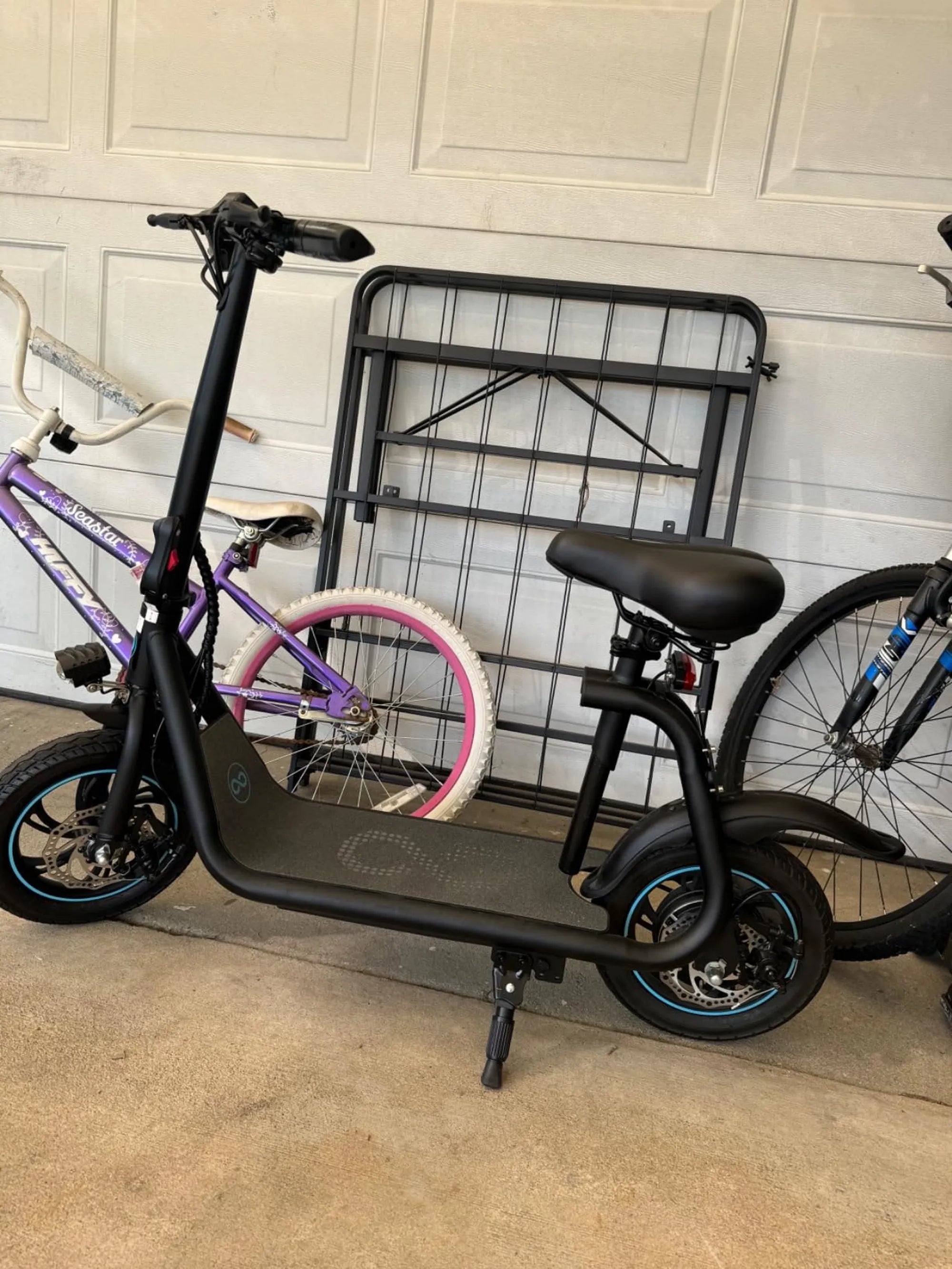
If opting for an electric model, prioritize those with safety-centric features. Look for a speed cap of 10 mph or less for beginners, a low-speed start mode, and a design that places the motor in the rear wheel for stability. Gyroor's electric models, for instance, incorporate these principles alongside their UL-certified battery systems for added safety assurance.
Essential Safety Gear and Riding Tips
A high-quality childrens scooter 7 year is only one component of safe riding. Comprehensive protective gear and established rules form an equally critical safety system. This combination mitigates risk and allows the child to explore their independence within clear, secure boundaries. Parents must enforce this protocol consistently.
The statistics are clear: proper helmet use can reduce the risk of head injury by up to 85%. For scooter riding, which involves balance at speed, protection for extremities is also vital. Investing in high-quality gear is an investment in preventing serious injury, making it as important as the scooter purchase itself.
Establishing rules before the first ride sets expectations. These rules should be simple, clear, and explained in the context of safety. Regular reviews and leading by example—such as parents wearing helmets when cycling—reinforce their importance and help cultivate a lifelong attitude of safe riding.
Non-Negotiable Safety Equipment
Helmet: This is the absolute minimum requirement. The helmet must be CPSC (Consumer Product Safety Commission) certified, fit snugly without rocking, and sit level on the head, covering the forehead. Replace any helmet involved in a significant impact, as its protective capacity may be compromised even if no damage is visible.
Knee and Elbow Pads: Falls are a natural part of learning. Pads protect the large, vulnerable joints most likely to make contact with the ground. They should have a hard plastic shell, a thick foam liner, and adjustable straps to ensure a secure fit that doesn't slip during a fall.
Wrist Guards: Highly recommended, as the instinct in a fall is to put hands out. Wrist guards help prevent fractures and severe sprains. Footwear: Closed-toe shoes with grippy soles (like sneakers) are mandatory. Sandals, flip-flops, or crocs can slip off or get caught, leading to loss of control or foot injuries.
Establishing Ground Rules for Safe Riding
Riding Surface: Limit riding to smooth, paved surfaces like sidewalks, bike paths, or driveways. Avoid roads with traffic, gravel, sand, or wet surfaces, which drastically reduce traction and control. Be particularly cautious of driveway entrances and intersections.
Pre-Ride Check: Institute a habit of a quick safety check. Ensure the handlebars are locked in position, the brakes are functioning, and no wheels are loose. For electric models, verify the battery charge and that all lights are operational if riding near dusk.
Skill Drills: Before free riding, practice fundamental skills in a safe, open area. This includes starting and stopping smoothly, making controlled turns (leaning, not just turning the handlebars), and scanning for obstacles. Teach your child to always look in the direction they want to go.
Environmental Awareness: Instill the habits of scanning ahead for cracks, potholes, or debris, and listening for cars or pedestrians. No headphone use while riding. Make eye contact with drivers at intersections. These proactive habits significantly reduce the risk of accidents.
Frequently Asked Questions (FAQs)
Q: What is the right wheel size for a 7-year-old?
A: For a childrens scooter 7 year, wheel sizes typically range from 120mm to 200mm. Larger wheels (e.g., 180mm-200mm) provide a smoother ride over cracks and small obstacles, offering more stability. Smaller wheels (120mm-150mm) allow for quicker acceleration and are often found on lighter, trick-oriented models. For general neighborhood use, wheels in the 150mm-180mm range offer an excellent balance.
Q: How do I know if the handlebar height is correct?
A: The correct handlebar height is crucial for control. Have your child stand on the scooter deck with their feet in a natural riding position. The handlebar grips should be at or slightly below their waist level. When they grip the handles, their arms should have a slight, comfortable bend at the elbows (approximately a 10-15 degree angle). This position allows for effective steering and shock absorption.
Q: Are Gyroor scooters easy to assemble?
A> Yes, Gyroor designs its scooters, including those suitable for a childrens scooter 7 year, for straightforward assembly. Most models require minimal, often tool-free, setup. Typically, this involves unfolding the stem and locking it into place with a secure clamp or latch, and occasionally attaching the handlebars. Clear, step-by-step instructions are included, and the process usually takes less than 5 minutes.
Q: Can the scooter handle rough use?
A> Scooters from reputable brands like Gyroor are engineered for durability. Features like aerospace-grade aluminum frames, reinforced decks, and high-quality bearings are designed to withstand the jumps, curb drops, and general rough treatment of an active child. The 1-year comprehensive warranty provides additional assurance, covering defects in materials and workmanship that may arise from normal use.
Q: How do I maintain a kick scooter to ensure longevity?
A> Regular maintenance is simple but important. Every few weeks, check and tighten all bolts (stem, handlebar, wheel axles). Inspect wheels for wear and replace if they become cracked or severely worn down. Keep bearings clean and lubricated; a drop of light machine oil on each wheel's bearing can keep them rolling smoothly. Wipe down the frame and deck to prevent dirt buildup.
Conclusion: Investing in Fun, Freedom, and Development
Choosing the right childrens scooter 7 year is an investment that pays dividends in outdoor activity, physical development, and personal confidence. The optimal scooter acts as a growth tool, featuring adjustable components, robust safety engineering, and a design that inspires repeated use. It bridges the gap between playful recreation and skill-building exercise.
The data clearly shows that prioritizing core features—adjustable handlebars, a lightweight yet strong frame, reliable brakes, and appropriate wheel size—creates a safer and more enjoyable experience. Whether you select a classic kick scooter for its developmental benefits or a carefully supervised electric model for extended adventure, the principles of safety gear and established rules remain constant.
Brands that commit to certified quality, like Gyroor with its UL-certified components and comprehensive warranty, offer tangible peace of mind. This allows parents to focus on the joy of watching their child gain independence and mastery. The right scooter isn't just a toy; it's a vehicle for childhood exploration and growth.
Ready to find the perfect match for your young rider? Explore a range of durable, safety-focused models engineered for real-world use. Browse the full Gyroor collection at gyroorboard.com to discover scooters built to last through every adventure.
Accessories for Scooter Stand: The Complete Guide to Security, Charging & Organization
Dirt Bike Shop Online: The Ultimate Guide to Buying, Gearing Up & Riding