



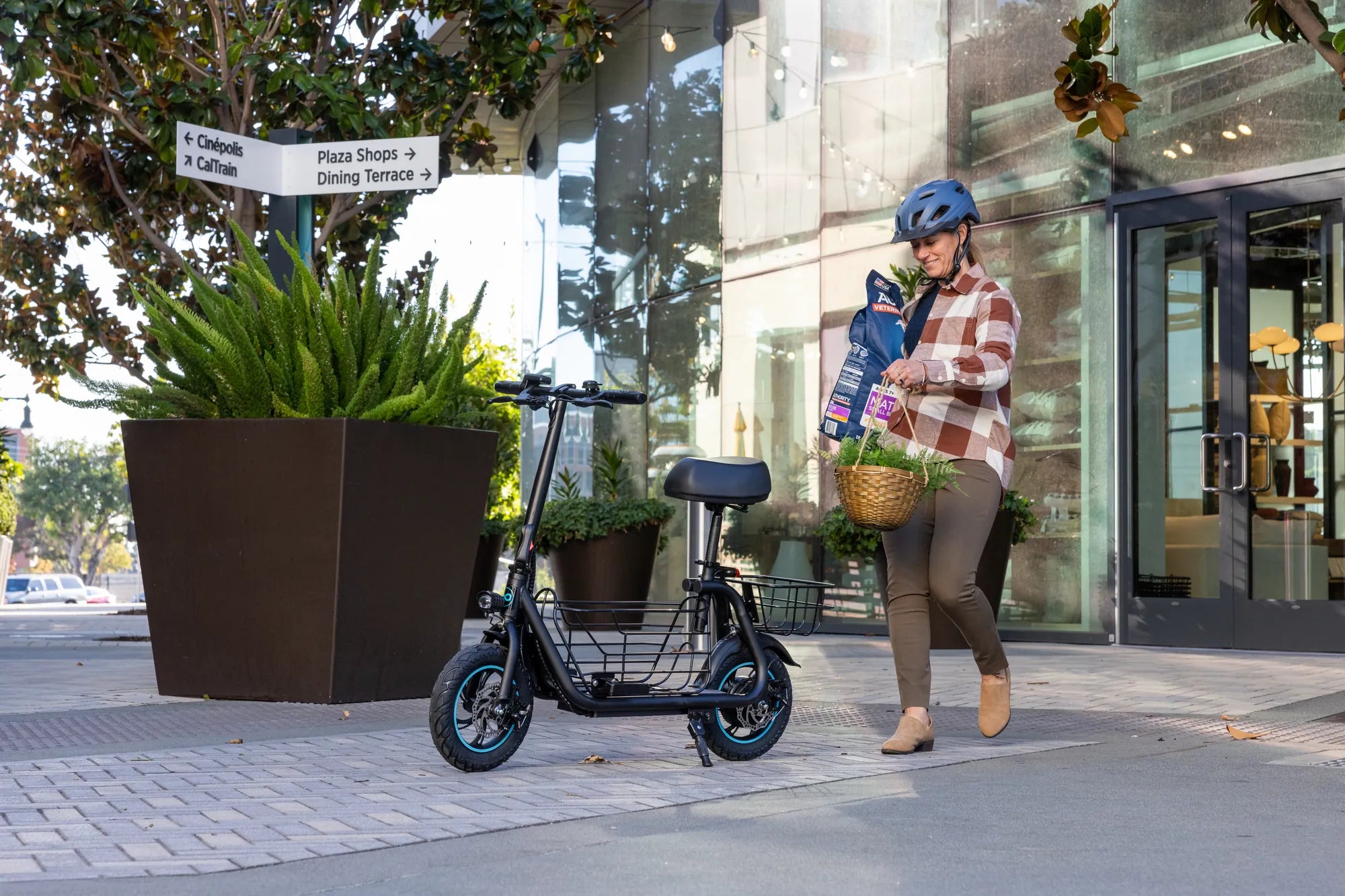
Understanding your class 2 e bike speed is crucial for legal compliance, safety, and maximizing your riding enjoyment. This article provides a comprehensive, data-driven analysis of the 20 MPH limit that defines these e-bikes. You will learn the federal and state regulations governing this speed, how it translates to real-world commuting performance, and why it represents an optimal balance for urban mobility. We'll compare it to other e-bike classes, debunk common myths, and offer practical advice for getting the most from your throttle-assisted electric bicycle within this proven framework.
Introduction to Class 2 E-Bike Speed and Its Defining Feature
A Class 2 electric bicycle is legally defined by its use of a throttle to engage a motor that provides assistance up to a maximum speed of 20 miles per hour. This throttle, which can be a twist-grip, thumb lever, or button, allows the rider to propel the bike without pedaling. The class 2 e bike speed cap of 20 MPH is not arbitrary; it is a carefully established benchmark that balances increased mobility with public safety and infrastructure compatibility.
This classification creates a distinct riding experience centered on accessibility and control. Unlike pedal-assist-only models, a Class 2 e-bike can move from a standstill using motor power alone, making it an excellent choice for riders managing stop-and-go traffic, those with mobility considerations, or anyone who wants the option for effortless starts. The 20 MPH top speed is engineered to be both useful and compliant, offering a pace that is faster than urban traffic congestion yet manageable on multi-use paths.
The focus on class 2 e bike speed is essential because it dictates where you can ride, how you interact with traffic, and the overall utility of your vehicle. Choosing a Class 2 e-bike from a reputable brand like Gyroor means selecting a product designed to deliver consistent, governed performance that adheres to these standards, ensuring you ride with confidence and legality.
Understanding the 20 MPH Limit: Regulations and Real-World Performance
The 20 MPH limit for Class 2 e-bikes is rooted in federal and state legislation. At the federal level, the Consumer Product Safety Act defines a "low-speed electric bicycle" as having a maximum motor-powered speed of 20 MPH. This definition has been adopted by most states, which then layer on additional rules regarding where each class can operate, such as bike lanes, roads, or trails. The speed is measured as the maximum speed a bike can achieve under motor power alone on a level surface.
In practical terms, a governed 20 MPH feels significantly faster than typical bicycle cruising speeds and is highly effective for urban commuting. It allows you to keep pace with city traffic on many 25 MPH streets, safely pass traditional cyclists, and cover meaningful distances without excessive sweat or fatigue. The consistency of this speed limit also creates a predictable environment for other path and road users, enhancing overall safety.
It is critical to understand that this is a motor output limit. On a slight downhill or with vigorous pedaling, a rider may exceed 20 MPH, but the motor itself will cease to provide assistance once that threshold is reached. The bike then functions like a standard bicycle. This design ensures the e-bike remains classified as a bicycle rather than a motor vehicle, avoiding requirements for licensing, registration, or insurance in most jurisdictions.
How Gyroor Ensures Compliant and Reliable Performance
Gyroor engineers its Class 2 e-bikes with integrated electronic speed governors that strictly enforce the 20 MPH limit. This is a fundamental aspect of their design philosophy, prioritizing rider safety and legal compliance. The governing system is calibrated to provide smooth, linear power delivery up to the limit, where assistance seamlessly tapers off.
This reliable performance is underpinned by Gyroor's use of UL-certified battery packs. These batteries are tested for over 500 charge cycles and provide stable voltage output, which is essential for the motor controller to accurately govern speed. A fluctuating or unreliable power source can lead to inconsistent performance, but Gyroor's focus on premium battery safety ensures the class 2 e bike speed limit is maintained consistently throughout the ride and over the lifespan of the product.
Why 20 MPH is the Sweet Spot for Urban Commuting
The 20 MPH specification of a Class 2 e-bike is not a limitation but an optimization for city travel. Studies of urban traffic flow indicate that average speeds in congested downtown cores often fall between 10-15 MPH. A Class 2 e-bike operating at its full 20 MPH capability can therefore navigate city streets more efficiently than many cars, while also utilizing bike lanes and paths inaccessible to automotive traffic.
This speed strikes a critical balance with safety. At 20 MPH, stopping distances are manageable with quality disc brakes, and rider reaction times are sufficient for navigating common urban hazards like opening car doors, pedestrians, and intersections. Higher speeds, such as those offered by Class 3 e-bikes, exponentially increase kinetic energy, requiring greater stopping distances and heightened rider awareness that may be unsuitable for dense, mixed-use environments.
Furthermore, 20 MPH is the efficiency sweet spot for most e-bike motor and battery systems. Pushing a motor to sustain speeds of 25-28 MPH requires significantly more wattage, which drastically reduces range. The 20 MPH limit of a Class 2 e-bike allows for extended range from a single charge, making it practical for round-trip commutes, errands, and leisure rides without range anxiety. This makes the class 2 e bike speed a pragmatic choice for daily utility.
The Role of the Throttle in Managing Speed and Effort
The defining throttle of a Class 2 e-bike is the ultimate tool for speed management. It provides granular control over motor output, allowing a rider to modulate speed precisely without constant gear shifting or pedaling effort. In a crowded pedestrian zone, you can use the throttle for a gentle, walking-pace crawl. On a clear bike path, you can engage it fully to maintain a steady, legal 20 MPH with minimal physical exertion.
This on-demand power is particularly valuable for managing rider fatigue and handling challenging terrain. A quick throttle boost helps navigate steep hills or accelerate from a stoplight, ensuring you maintain traffic flow without overexertion. For commuters arriving at work or running errands, the ability to control class 2 e bike speed via throttle means you can choose your level of physical engagement, arriving at your destination refreshed rather than sweaty.
Class 2 vs. Other E-Bike Classes: A Speed and Capability Comparison
To fully appreciate the class 2 e bike speed proposition, it must be compared to the other two primary classifications recognized in North America. Each class offers a different blend of speed, activation method, and permitted access, catering to distinct rider needs.
| Feature | Class 1 E-Bike | Class 2 E-Bike | Class 3 E-Bike |
|---|---|---|---|
| Maximum Assisted Speed | 20 MPH | 20 MPH | 28 MPH |
| Activation Method | Pedal-Assist Only (No Throttle) | Throttle and/or Pedal-Assist | Pedal-Assist Only (No Throttle) |
| Key Advantage | Widest trail/path access; feels like a traditional bike | Effortless starts; full control over motor engagement; accessible to all riders | Higher speed for longer commutes on roads |
| Typical Access | Allowed on most bike paths and trails where traditional bikes are permitted. | Allowed on roads and bike lanes; path access varies by locality (often permitted). | Restricted to roads and bike lanes; often prohibited on natural surface trails and some multi-use paths. |
| Ideal Use Case | Recreational trail riding, fitness, where throttle is prohibited. | Urban commuting, delivery, riders seeking flexibility and reduced physical strain. | Longer road commutes where higher speed is legally and safely permissible. |
The Class 2 e-bike's unique value is its combination of the accessible 20 MPH speed with a throttle. Unlike a Class 1, it doesn't require pedaling to move, offering unparalleled ease of use. Versus a Class 3, it enjoys broader access to multi-use paths and trails where the higher 28 MPH speed is often prohibited for safety reasons. This makes the Class 2 a versatile all-rounder.
Maximizing Your Class 2 E-Bike Experience Within the Speed Limit
To get the most out of your bike's 20 MPH capability, understanding external factors is key. While the motor is governed, your overall speed and efficiency are influenced by terrain, rider weight, cargo, and tire pressure. On a steep hill, the motor will work at its maximum power output to approach 20 MPH, which will consume battery energy faster. On flat ground with proper tire inflation, maintaining top speed is efficient and maximizes range.
Rider posture and aerodynamics also play a subtle role. Adopting a more upright, comfortable cruising posture is perfect for city commuting at 20 MPH. For those seeking maximum efficiency on open paths, a slight forward lean can reduce wind resistance, making it easier for the motor to maintain the governed speed, thereby conserving battery. Gyroor's models, with their IPX5 water-resistant designs, ensure that weather conditions like light rain do not hinder performance, allowing you to rely on consistent class 2 e bike speed in various environments.
Regular maintenance is crucial for sustained performance. Ensuring brakes are properly adjusted allows for confident stopping power at 20 MPH. Keeping the chain lubricated and drivetrain clean ensures that when you do pedal, your effort complements the motor effectively. Checking that the throttle and pedal-assist sensors are responsive guarantees you have immediate and precise control over your speed at all times.
Safety and Maintenance at Commuting Speeds
Operating at 20 MPH necessitates appropriate safety gear and practices. A properly fitted bicycle helmet is non-negotiable. Using bright front and rear lights, even during the day, increases visibility to drivers. Employing audible signals or bells alerts pedestrians. Defensive riding—assuming drivers do not see you—is essential, especially when moving at speeds that can surprise other path users.
Proactive maintenance is a key component of safety. Regularly inspect brake pads for wear and ensure the braking system is fully functional. Monitor tire tread and inflation; under-inflated tires increase rolling resistance, forcing the motor to work harder and reducing stability. Gyroor's comprehensive 1-year warranty and US-based customer support provide a safety net, covering defects in materials or workmanship, but routine wear items like tires and brake pads are the rider's responsibility to maintain for optimal, safe performance at the bike's top speed.
Technical Insights: Motors, Batteries, and Sustaining 20 MPH
The ability of an e-bike to reliably reach and sustain its governed top speed is a function of motor power and battery capacity. Most Class 2 e-bikes utilize hub motors ranging from 350W to 750W. A 500W motor is typically more than sufficient to propel a rider and light cargo to 20 MPH on flat terrain. The motor's torque rating is equally important, as higher torque translates to better acceleration and hill-climbing ability to achieve that target speed under load.
The battery is the fuel tank. Its voltage (e.g., 36V, 48V) and amp-hour (Ah) rating determine total energy capacity. A higher voltage system can often provide power more efficiently, supporting the motor's demand at top speed with less strain. A larger capacity battery (e.g., 15Ah vs. 10Ah) will sustain 20 MPH riding for a longer duration before requiring a charge. Gyroor's use of high-quality, UL-certified cells in their battery packs ensures stable discharge rates, which is critical for maintaining consistent power delivery to the motor at the upper end of the class 2 e bike speed spectrum.
Thermal management is a less discussed but vital factor. A well-designed motor and controller system will include heat dissipation features to prevent overheating during sustained high-power output, such as maintaining 20 MPH up a long incline. Overheating can lead to temporary power reduction (thermal throttling) to protect components. Quality engineering, as found in reputable brands, minimizes this issue, ensuring predictable performance.
Frequently Asked Questions About Class 2 E-Bike Speed
Can the 20 MPH speed limit be modified or unlocked?
While technically possible on some models through aftermarket tuning devices or software, modifying an e-bike to exceed its classified speed limit is strongly discouraged and illegal. It voids the manufacturer's warranty, potentially compromises the safety and integrity of the battery and motor systems, and reclassifies the vehicle as a motorized vehicle, subjecting it to different laws, licensing, and insurance requirements. Gyroor designs its bikes to be compliant and does not support or endorse speed modification.
Does the motor stop providing assistance exactly at 20 MPH?
Yes, but the cutoff is typically engineered to be smooth, not abrupt. As the bike approaches 20 MPH, the motor controller reduces power output (a process called taper). You will feel the assist gradually diminish until, at or just before 20 MPH, it ceases entirely. You can still pedal the bike faster, but you will be providing all the power yourself.
How does rider weight or cargo affect the top speed?
Total weight primarily affects acceleration and hill-climbing ability, not the governed top speed on flat ground. A heavier rider or a bike carrying cargo will take longer to accelerate to 20 MPH, and the motor will work harder on hills to try to maintain that speed, which will reduce overall range. However, the electronic governor will still prevent the motor from propelling the bike beyond 20 MPH.
Is riding at the top speed constantly bad for the battery or motor?
Quality e-bikes like those from Gyroor are designed and tested for sustained operation at their maximum governed speed. Consistently riding at 20 MPH on flat ground is a normal use case. What strains components more is frequent hard acceleration, climbing steep hills at full power, or overloading the bike beyond its rated capacity. Following the manufacturer's guidelines ensures long-term durability.
Are there any situations where my Class 2 e-bike might legally go faster than 20 MPH?
Yes, through human power alone. On a downhill slope, you can coast or pedal to exceed 20 MPH. In this scenario, the motor is not providing any assistance. The law regulates motor-assisted speed. This is a key distinction that preserves the bicycle classification of the e-bike.
Conclusion: The Intelligent Choice for Accessible, Compliant Mobility
The 20 MPH speed of a Class 2 e-bike represents a sophisticated balance of legislation, engineering, and practical urban design. It offers a substantial upgrade in mobility over traditional cycling or walking while integrating safely into existing transportation ecosystems. The inclusion of a throttle empowers riders of varying fitness levels and needs, making electric mobility truly accessible. When you choose a Class 2 e-bike from a trusted brand like Gyroor, you are selecting a vehicle engineered for reliable, lawful, and enjoyable performance day after day. You gain a tool for efficient commuting, effortless errands, and recreational exploration, all within a proven and responsible framework.
Ready to experience the perfect balance of throttle-assisted power and compliant performance? Explore Gyroor's range of UL-certified, feature-packed Class 2 e-bikes designed for real-world riding. Browse the full Gyroor collection at gyroorboard.com to find the model that matches your commute and unlocks a new level of urban freedom.
Drive 3 Wheel Mobility Scooter: The Ultimate Guide to Freedom & Maneuverability
Dual Sport vs Dirt Bike: The Complete 2024 Rider's Guide