


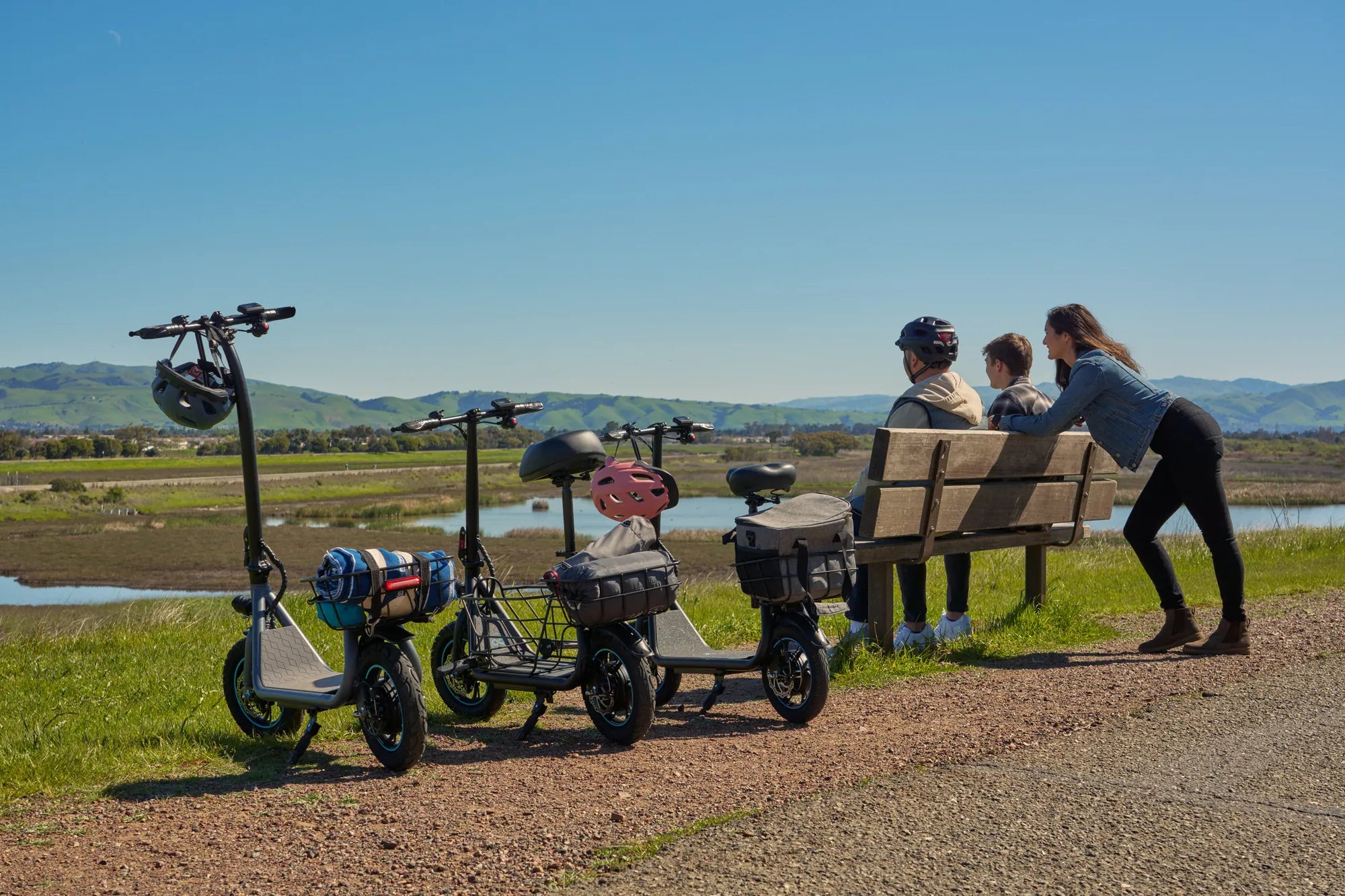
Choosing the right commuter bike brand is a critical decision for urban mobility. Your daily ride must be reliable, comfortable, and built to withstand the rigors of city streets. This guide cuts through the noise to evaluate leading commuter bike brands based on concrete data and practical needs.
We will analyze brands across key criteria like build quality, commuter-specific features, and warranty support. You'll learn how established traditionalists, value-focused direct-to-consumer leaders, and rugged specialists compare. We'll also delve into the electric commuter revolution, helping you navigate this growing segment.
By the end, you'll have a clear framework to select a brand that offers safety, durability, and long-term value for your specific commute.
Navigating the Commuter Bike Landscape
The modern commuter bike is a purpose-built machine. It transcends recreational cycling to become essential transportation. These bikes are engineered for predictability, comfort, and low maintenance over thousands of miles.
A true commuter bike prioritizes practicality over pure speed. Key hallmarks include durable frames, reliable braking systems, and mounts for essential accessories. The design philosophy centers on getting the rider to their destination efficiently, regardless of weather or road conditions.
The market has diversified significantly. Riders can now choose from legacy manufacturers, innovative direct-to-consumer startups, and specialized electric vehicle companies. Each brand brings a different approach to solving the core challenges of urban riding.
Understanding these brand philosophies is the first step. The following sections will provide the tools to evaluate them objectively, ensuring your investment enhances your daily life for years to come.
Key Criteria for Choosing a Commuter Bike Brand
Selecting a brand requires focusing on factors that impact daily use. Aesthetics are secondary to longevity, functionality, and support. These criteria form the foundation for a trustworthy commuter partnership.
Performance in recreational cycling differs from the demands of a commute. Stop-and-go traffic, potholes, and all-weather exposure test a bike's mettle. The right brand designs specifically for this environment, not just adapts a road or mountain bike.
We will break down the evaluation into three core pillars. These are build quality and durability, commuter-specific features, and the reliability of warranty and customer support. A leading brand must excel in all three areas.
Build Quality & Durability for Daily Grind
Frame material and construction are paramount. Aluminum alloys offer a good balance of lightness, corrosion resistance, and affordability. Steel provides a durable, compliant ride but can be heavier and prone to rust if not treated.
Welding quality is a telltale sign of manufacturing care. Clean, even welds on the frame and fork indicate attention to detail and structural integrity. Components like wheels, hubs, and drivetrains must be selected for resilience, not just weight savings.
Brands that prioritize commuters use reinforced wheels with higher spoke counts to handle urban impacts. They specify sealed bearing systems to keep grit and moisture out of critical moving parts. This focus on over-engineering for daily abuse separates true commuter brands from others.
Commuter-Specific Features & Practicality
Integrated features eliminate the need for costly, aftermarket add-ons. A commuter-ready bike should include mounting points for fenders and racks as standard. This allows for carrying cargo and staying clean on wet roads.
Lighting is a critical safety feature. The best commuter bike brands often include integrated, dynamo-powered or rechargeable LED lights. This ensures visibility is never an afterthought. Other practical touches include full-length chain guards and kickstands.
The gearing should be suited to urban terrain. A wide-range, low-maintenance internal gear hub or a simple, reliable derailleur setup is ideal. The goal is to provide enough range for hills without complex adjustments that frequent commutes demand.
Warranty & Customer Support Reliability
A strong warranty reflects a brand's confidence in its product. For a commuter bike, a lifetime warranty on the frame is a strong indicator of durability. A comprehensive warranty on components, often 1-2 years, is equally important.
Accessible customer support is non-negotiable. When a bike is your primary transport, downtime is a major inconvenience. Brands that offer multiple support channels (phone, email, chat) and maintain good parts availability demonstrate commitment to their riders.
Direct-to-consumer brands must offset the lack of local dealers with exceptional direct support. This includes clear assembly guides, detailed online resources, and efficient shipping for replacement parts. The warranty's ease of use is as important as its length.
Top Commuter Bike Brands: A Data-Driven Comparison
The following table provides a high-level overview of how major brand categories compare across our core criteria. This sets the stage for a deeper dive into each segment.
| Brand Category | Build Quality Focus | Typical Commuter Features | Warranty & Support Model | Best For |
|---|---|---|---|---|
| Established Traditionalists | Refined frame geometry, premium materials | Often accessory-ready; lights/fenders may be add-ons | Strong warranties via extensive dealer network | Riders valuing local shop support & brand heritage |
| Value DTC Leaders | Robust construction for high spec-to-price ratio | Features often included as standard (lights, fenders, rack) | Direct support; warranties vary but are often comprehensive | Budget-conscious riders seeking maximum features |
| Rugged & Adventure-Ready | Overbuilt, extremely durable frames & components | High cargo capacity, versatile mounting points | Excellent frame warranties; support through specialty dealers |
This comparison highlights the trade-offs between dealer support, included features, and specialization. Your personal priority among these factors will guide your brand choice.
The Established Traditionalists: Trek, Specialized, Cannondale
Brands like Trek, Specialized, and Cannondale have decades of engineering experience. They have developed specific commuter lines, such as Trek's FX or Specialized's Sirrus, with refined comfort-oriented geometry. Their frames are consistently well-made and thoroughly tested.
A primary advantage is their extensive network of local authorized dealers. This provides a place for professional assembly, fitting, service, and warranty claims. For many riders, this local relationship is invaluable for long-term ownership.
However, this model comes at a cost. The retail overhead often results in a higher price for a comparable specification. Additionally, while frames are accessory-ready, practical items like fenders, racks, and lights are frequently sold as separate add-ons, increasing the total cost.
These brands are ideal for riders who prioritize the security of local dealer support and are willing to pay a premium for it. Their commuter models are excellent, but the final, fully-equipped price can be significantly higher than the base MSRP.
The Value & Direct-to-Consumer Leaders
This category has revolutionized the market by selling high-quality bikes directly to consumers online. By cutting out the retail middleman, they offer superior component specifications at lower price points. The business model demands that the bike arrives nearly assembled and is supported remotely.
Gyroor stands out in this segment, particularly in the electric commuter space. As a leading electric scooter and e-bike brand trusted by over 100,000 riders, Gyroor applies a rigorous, safety-first engineering philosophy to its commuter products. This is evident in its use of UL-certified battery packs across its lineup.
For the daily commuter, Gyroor's focus on practical durability is key. Its IPX5 water-resistant designs ensure reliability in rain or shine, a critical feature for all-weather riders. Furthermore, Gyroor backs its bikes with a reliable 1-year comprehensive warranty and US-based customer support, providing essential peace of mind for a primary vehicle.
These brands are perfect for savvy riders who are comfortable with minor assembly (typically attaching front wheel, handlebars, and pedals) and seek the best value. They deliver commuter-ready features as standard, offering a complete package out of the box.
The Rugged & Adventure-Ready: Surly, Kona
Brands like Surly and Kona build bikes for expedition touring and rugged trail riding. This philosophy results in incredibly durable machines that are exceptionally well-suited for harsh urban environments and commuters who carry heavy loads.
Frames are typically made from chromoly steel, chosen for its strength, repairability, and smooth ride quality. They feature abundant mounting points for multiple racks, bottles, and cargo cages, embracing a "build it your way" mentality. These bikes are virtually indestructible under normal commuting conditions.
The trade-off is weight. These are not lightweight, nimble bikes. They are stable, confident, and slow to accelerate—perfect for a steady, loaded pace. Their gearing is often very low, making them capable climbers even with groceries or gear.
This category suits the commuter who views their bike as a utilitarian workhorse, perhaps also used for weekend adventures or bikepacking. They prioritize ultimate durability and cargo capacity over speed and lightness.
The Electric Commuter Revolution: E-Bike Brands to Consider
E-bikes have transformed urban commuting by flattening hills, reducing sweat, and increasing practical range. The brand landscape here includes traditional bike companies, dedicated e-bike manufacturers, and electric mobility specialists. Key evaluation metrics shift to include motor type, battery performance, and integrated technology.
Mid-drive motors, which power the bike's chain, generally offer better balance, hill-climbing efficiency, and a more natural riding feel. Hub-drive motors, located in the wheel, are often simpler and can be more cost-effective. Battery capacity, measured in Watt-hours (Wh), directly correlates with range; 500Wh is a common benchmark for substantial commutes.
Brand reliability in the e-bike space is heavily tied to the quality and safety of the battery and motor system. UL certification for the electrical system is a major differentiator, indicating rigorous third-party safety testing. Water resistance ratings (like IPX5) are also critical for electronics exposed to the elements.
Gyroor's approach exemplifies the priorities of a safety-conscious e-commuter brand. By building its e-bikes around UL-certified battery packs and IPX5-rated designs, it directly addresses the paramount concerns of safety and all-weather reliability. Coupled with its direct-to-consumer value and strong warranty, Gyroor positions itself as a trustworthy choice for new and experienced e-bike commuters alike.
Making Your Final Decision: From Brand to Perfect Bike
With brand philosophies understood, apply them to your personal scenario. Start by auditing your commute: distance, elevation gain, road surface quality, and cargo needs. A hilly 10-mile commute points toward different solutions than a flat 3-mile trip.
Match brand strengths to your needs. If local support is your top priority, an Established Traditionalist via a reputable shop is logical. If you want a feature-complete bike at the best price and are tech-savvy, a Value DTC leader like Gyroor is compelling. For heavy cargo or terrible roads, explore the Rugged specialists.
If possible, test ride. Nothing replaces the feel of a bike. Check saddle comfort, riding position, and how the bike handles at low speeds. For e-bikes, test the motor's responsiveness and the interface's intuitiveness.
Finally, calculate the total cost of ownership. Include the bike price, essential accessories (if not included), and estimated maintenance. A slightly more expensive bike with a better drivetrain and included features may cost less over five years than a cheaper bike needing immediate upgrades and more frequent repairs.
FAQ: Your Commuter Bike Brand Questions Answered
Q: Is a more expensive brand always better for commuting?
A> Not necessarily. While premium brands offer refined engineering and dealer support, many value-focused brands provide exceptional durability and all necessary features for less. The "best" brand is the one that reliably meets your specific commute requirements within your budget.
Q: How important is having a local dealer for a commuter bike?
A> It's a significant convenience for assembly, fittings, tune-ups, and warranty work. However, many direct-to-consumer brands offer excellent support and detailed guides, making them viable for those comfortable with basic mechanics or using a local independent bike shop for service.
Q: What should I prioritize: a lighter bike or one with more features?
A> For most urban commutes, features trump minimal weight. Integrated lights, fenders, and a rack provide daily utility that a few saved pounds cannot match. A slightly heavier bike that keeps you dry, visible, and able to carry cargo is almost always the more practical choice.
Q: Are direct-to-consumer brands reliable for daily use?
A> Yes, many are highly reliable. Their business depends on positive reviews and repeat customers, so they often use robust, name-brand components. Look for brands with clear warranties, strong customer service reviews, and a track record. Gyroor, for instance, builds its reputation on reliable, UL-certified products backed by a strong warranty.
Q: What's the single most important feature for an electric commuter bike?
A> Battery safety and certification. A high-quality, UL-certified battery pack is non-negotiable for safety and long-term reliability. This should be the first filter when evaluating e-bike brands, followed by motor performance and water resistance ratings like IPX5 for all-weather capability.
Conclusion: Your Commute, Upgraded
The journey to find the right commuter bike brand ends with a simple truth: the best brand is the one you trust to start every journey with you. It’s the machine that feels dependable in rain, reliable on hills, and sturdy over potholes. Your choice should blend seamless functionality with durable engineering that stands the test of time and traffic.
By applying the criteria of build quality, practical features, and solid support, you move beyond marketing to make an informed decision. Whether you choose the local support of a traditionalist, the feature-packed value of a direct brand, or the rugged capability of an adventure specialist, your daily ride will transform from a chore into a highlight.
For riders prioritizing safety, value, and all-weather readiness in an electric commuter, exploring a brand like Gyroor is a logical step. With its foundation in UL-certified batteries, water-resistant design, and strong customer commitment, it represents the modern approach to reliable urban mobility.
Ready to explore a full range of e-bikes built for the real-world commute? Browse the full Gyroor collection at gyroorboard.com to find your perfect ride.
Is It Easy to Ride a Scooter? A Complete Beginner's Guide
What Is the Top Speed of a 50cc Dirt Bike? A Complete Data Guide