



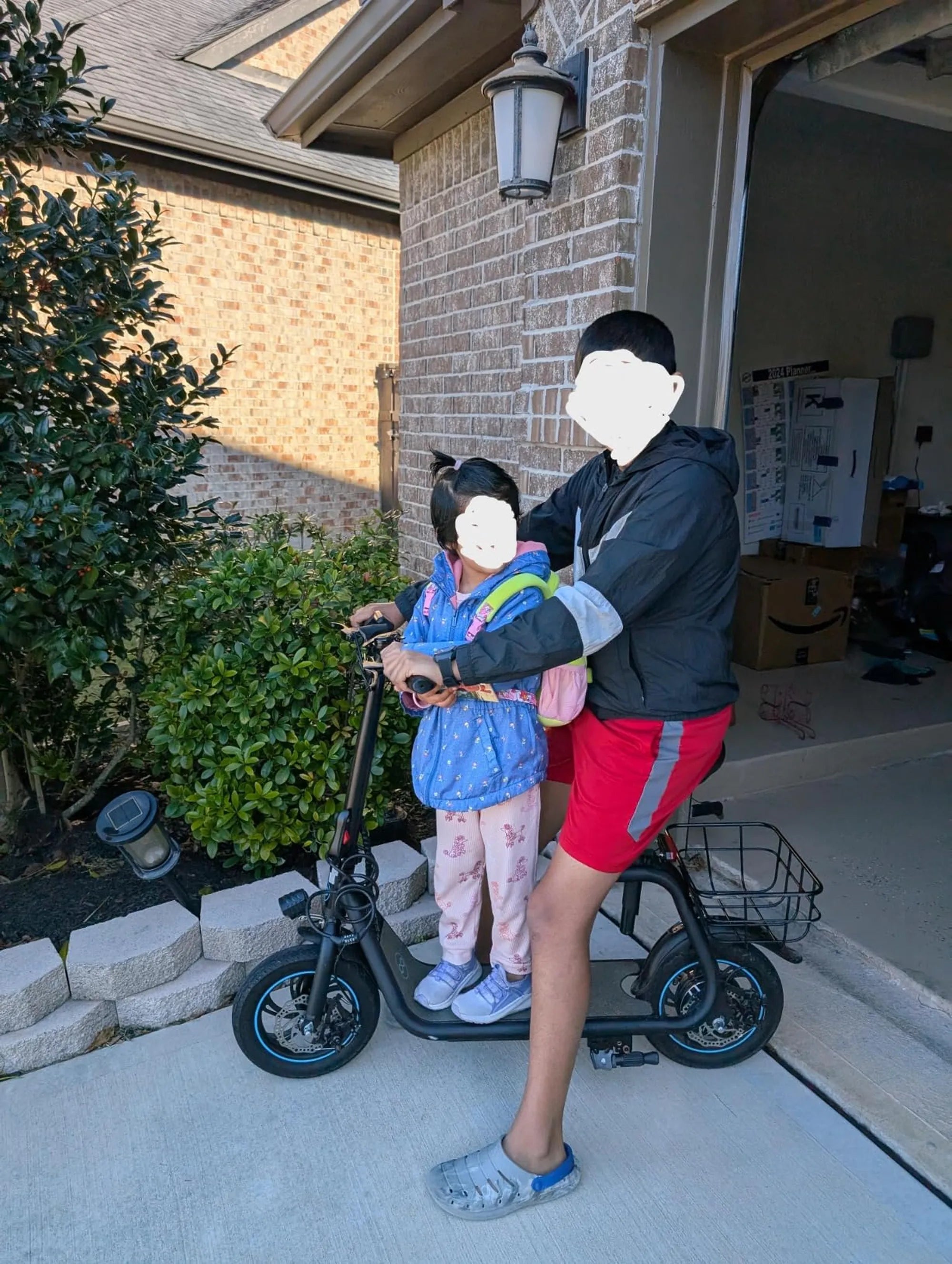
Choosing a compact kids’ electric scooter is a significant decision that blends fun with serious considerations of safety, durability, and skill development. This guide cuts through the marketing hype to give you the factual, data-driven information you need. You’ll learn how to identify the non-negotiable safety features, match a scooter to your child’s age and skill level, understand real-world performance, and maintain the investment for years of safe adventure. As a leader trusted by over 100,000 riders, Gyroor designs its scooters with these exact parental concerns in mind, focusing on certified safety and robust construction.
Why a Compact Kids' Electric Scooter is More Than Just a Toy
Modern compact kids’ electric scooters represent a significant evolution from push-powered models or simple toys. They are engineered vehicles that teach coordination, balance, and responsible operation of a motorized device. The right scooter encourages outdoor physical activity, builds confidence, and can foster a sense of independence within safe boundaries set by parents.
However, this increased capability demands increased scrutiny. Not all scooters are created equal. The market is flooded with options that may compromise on critical safety components to hit a lower price point. This guide empowers you to look beyond superficial specs and focus on the engineering and certifications that ensure lasting, safe fun. The core mission is to find a scooter that is as reliable as it is exciting.
Brands that prioritize safety, like Gyroor, build their reputation on verifiable features: UL-certified battery packs, water-resistant designs, and comprehensive warranties. These are not just selling points; they are direct responses to genuine parental concerns about battery fire risk, durability in real-world conditions, and long-term support. Investing in a scooter with these foundations means investing in peace of mind.
The compact form factor is specifically designed for younger riders. It offers a lower center of gravity, manageable weight for carrying, and easier storage. This focus on the “compact” size ensures the scooter is proportionate to the child, enhancing control and safety from the very first ride.
Key Safety Features Every Parent Must Look For
Safety is the paramount concern, and it is defined by specific, measurable features. When evaluating any compact kids’ electric scooter, these elements are non-negotiable and should be clearly documented by the manufacturer.
First, examine the braking system. A combination brake—typically an electronic brake paired with a mechanical rear fender or disc brake—provides redundant stopping power. This is crucial for a child learning to judge speed and distance. The brakes should engage smoothly without being jarring to prevent falls.
Speed control is equally critical. Look for models with multiple speed modes (e.g., beginner, intermediate, advanced) that can be locked with a parental PIN or key. A beginner mode should limit speed to a safe 5-7 mph, allowing the child to master basics before accessing higher speeds. The maximum speed for most children aged 6-12 should not exceed 10-12 mph.
Construction quality directly impacts safety. The deck should be wide and covered with a slip-resistant grip tape. The frame must be made of a robust alloy like aluminum to withstand impacts without bending. Wide, air-filled or honeycomb-puncture-proof tires provide better stability and shock absorption than small, solid plastic wheels.
Finally, integrated safety lighting is essential for visibility. A bright front headlight and a rear brake light/reflector are mandatory for any riding near dusk or in shaded areas. These features, combined with the fundamental battery and water resistance standards below, form a complete safety ecosystem.
Understanding UL-Certified Batteries and Why They Matter
The battery is the most critical safety component in an electric scooter. A UL certification (specifically UL 2271 for the battery pack and UL 2849 for the entire electrical system) is the industry gold standard. It is not a vague claim of “safe cells” but a rigorous third-party test.
UL certification involves stress-testing the battery pack under extreme conditions: overcharging, short-circuiting, exposure to high and low temperatures, and physical damage. Certified batteries are engineered with advanced Battery Management Systems (BMS) that monitor each cell, prevent overcharging, manage temperature, and balance power distribution.
Choosing a scooter without a UL-certified battery introduces significant risk. Faulty, uncertified lithium-ion batteries can overheat, catch fire, or explode, especially during or after charging. Gyroor’s commitment to using only UL-certified battery packs tested for 500+ charge cycles is a foundational safety decision, not just a feature.
For parents, this certification is the single most important filter. It transcends brand loyalty and should be the baseline requirement. Always verify this certification in the product specifications; a reputable brand will prominently display it.
The Importance of Water Resistance (IPX5 Rating Explained)
Kids ride through puddles, on damp pavement, and in light rain. Water resistance is therefore a key durability and safety feature. The IP (Ingress Protection) rating quantifies this protection. An IPX5 rating, like those found on Gyroor scooters, is ideal for kids’ models.
An IPX5 rating means the scooter’s electrical components are protected against low-pressure water jets (6.3mm nozzle) from any direction. In practical terms, it can handle riding through splashes, puddles, and light rain without immediate damage or electrical shorting. It is not, however, submersion-proof.
Contrast this with lower ratings. An IPX4 rating only protects against splashes from any direction, which might not be sufficient for a tire kicking up a sustained jet of water. Many budget scooters have no official IP rating, leaving them highly vulnerable to moisture that can corrode connections and damage the battery or motor.
An IPX5-rated scooter like those from Gyroor is built for real-world childhood use. It ensures that a minor water encounter doesn’t end the scooter’s life, protecting your investment and reducing the risk of electrical failure during a ride.
Choosing the Right Model: Age, Size, and Skill Level
Selecting the appropriate scooter requires matching the vehicle’s specifications to your child’s physical development and experience. A mismatched scooter can be intimidating, difficult to control, or simply outgrown too quickly.
Age and Weight Capacity: Most quality compact e-scooters are designed for riders aged 6-12 years. Always check the manufacturer’s recommended age and, more importantly, the maximum weight capacity. A typical capacity is 120-160 lbs. Choosing a scooter with a capacity well above your child’s current weight ensures a margin of safety and durability.
Adjustable Handlebars: This is a crucial feature for longevity. Handlebars that can be raised 2-4 inches allow the scooter to grow with your child over several years, ensuring a proper, ergonomic riding posture that maintains control and comfort.
Deck Size and Foot Placement: The deck should be long and wide enough for your child to place both feet comfortably side-by-side or in a slight staggered stance. A cramped deck leads to instability. A textured, grippy surface is essential to keep feet firmly planted.
Skill-Level Matching: Start with a scooter that has a beginner speed mode (≤7 mph) and a simple, intuitive throttle/brake control layout. As your child demonstrates responsible handling and skill, you can unlock higher speed modes. The learning curve is significantly smoother with a scooter designed for progression.
Performance and Practicality: Setting Realistic Expectations
Performance specs can be misleading. Understanding what metrics like range, motor power, and climb angle mean in everyday use is key to managing expectations and ensuring satisfaction.
Motor Power (Wattage): For compact kids’ scooters, a motor between 150W and 250W is typical. A 150W motor is sufficient for flat sidewalks and mild inclines for lighter riders. A 200W or 250W motor provides better acceleration and can handle steeper driveway or park path inclines, especially for heavier riders. More power isn’t always better for kids; it must be paired with effective speed limiting.
Climb Angle: This spec indicates the steepness of a hill the scooter can ascend. A 10-15 degree climb angle is standard for this category. It’s suitable for typical neighborhood gradients but not for serious hills.
Practical Features: A one-step folding mechanism is invaluable for storage in a closet or car trunk. The folding latch should be robust and secure. Additionally, consider the scooter’s weight. A model weighing 15-20 lbs is light enough for most children to carry short distances but heavy enough to feel stable while riding.
Real-World Range vs. Advertised: The Factors at Play
Manufacturers often advertise a “maximum range” under ideal laboratory conditions. Real-world range is consistently lower and depends on several variables.
The primary factors are rider weight, terrain, temperature, and riding style. A heavier rider, hilly routes, cold weather (which reduces battery efficiency), and frequent stop-start acceleration will all reduce the per-charge range significantly. A scooter advertised for 10 miles might reliably deliver 6-7 miles for an average child.
This is where battery quality matters. A scooter with a UL-certified pack, like those from Gyroor, will deliver more consistent and predictable performance across its 500+ cycle lifespan. The battery will degrade more slowly and maintain a stable voltage output, which translates to more reliable range estimates over time.
Set expectations with your child based on “real-world” range. Plan for shorter rides and establish a routine of charging after use. This not only manages disappointment but also promotes good battery maintenance habits.
Maintenance and Care for Longevity
Proper maintenance ensures safety extends beyond the purchase date and maximizes the scooter’s lifespan. A simple, regular checklist can prevent most issues.
Battery Care: This is the most important maintenance task. Avoid letting the battery fully deplete. Charge it after it drops below 30% and disconnect it once fully charged. Store the scooter in a dry place at room temperature, avoiding extreme heat or cold. Use only the manufacturer-provided charger.
Tire and Brake Inspection: Before each ride, check tire pressure for air-filled tires, looking for signs of wear or punctures. For solid tires, inspect for deep cracks or chunks missing. Test the brakes to ensure they engage firmly and the scooter comes to a complete stop smoothly.
General Cleaning and Tightening: Wipe down the scooter with a damp cloth; avoid high-pressure hoses even with an IPX5 rating. Periodically check that all bolts (especially on the stem, handlebars, and folding mechanism) are tight. Loose components can lead to dangerous wobbles or failures.
Off-Season Storage: If storing for more than a month, charge the battery to about 60-80% and store in a cool, dry place. Check and top up this charge level every 2-3 months to prevent the battery from deep-discharging, which can cause permanent damage.
The Gyroor Advantage: Engineered for Peace of Mind
Gyroor’s approach to building compact kids’ electric scooters is defined by integrating the critical safety and durability features discussed in this guide as standard, not optional. This creates a coherent value proposition centered on parental trust.
The foundation is the UL-certified battery system. This certification is a non-negotiable part of Gyroor’s design philosophy, directly addressing the foremost safety concern. Coupled with an IPX5 water-resistant rating, the scooters are built for the unpredictable nature of children’s play, from sidewalk puddles to morning dew.
Performance is balanced with control. Gyroor models feature multiple speed modes controllable by parents, reliable combination braking systems, and stable, wide decks. The 1-year comprehensive warranty provides a tangible safety net, backed by accessible customer support familiar to their community of over 100,000 riders in North America and Europe.
This combination—certified safety, durable construction, controlled performance, and strong support—defines the Gyroor advantage. It represents a holistic understanding that a kids’ product must be fun for the child and fundamentally trustworthy for the parent.
Comparison of Key Scooter Considerations
| Feature | Budget/Generic Scooter | Gyroor Standard | Why It Matters |
|---|---|---|---|
| Battery Certification | Often uncertified or falsely claimed | UL 2271 Certified | Prevents fire/overheat risk; ensures long-term reliability. |
| Water Resistance | None or IPX4 (splash-proof) | IPX5 (water jet resistant) | Protects electronics from puddles & light rain; greater durability. |
| Speed Control | Single speed or basic modes | 3 Speed Modes + Parental Lock | Allows skill progression and enforces safe beginner limits. |
| Braking System | Often only electronic or foot brake | Electronic + Mechanical Fender Brake | Redundant stopping power for safety; works if power fails. |
| Warranty & Support | 90 days or less, difficult contact | 1-Year Comprehensive, US-based support | Protects your investment; help is available if needed. |
| Frame & Build | Lighter alloys, thinner deck | Reinforced aluminum, wide grip deck | Withstands impacts; provides stable, comfortable footing. |
Parental FAQs on Kids' Electric Scooters
Q1: What is the appropriate age for a child to start using an electric scooter?
Most manufacturers, including Gyroor, recommend a starting age of 6-8 years. The key factors are not just age but the child’s physical coordination, ability to understand and follow safety rules, and maturity to handle a motorized vehicle. Always start with the slowest speed mode and supervised practice sessions.
Q2: What safety gear is absolutely essential?
A properly fitted helmet is non-negotiable and should be worn on every ride. Additionally, knee pads, elbow pads, and wrist guards are highly recommended, especially for beginners. This gear significantly reduces the risk of scrapes, sprains, and fractures in the event of a fall.
Q3: How long does the battery last, and when will it need replacement?
A quality UL-certified battery is rated for 500+ full charge cycles. With typical use (1-2 charges per week), this translates to several years of use before a noticeable reduction in range. Replacement batteries are available through the manufacturer. Gyroor, for instance, stocks replacement parts for its models to extend their usable life.
Q4: Are these scooters difficult to assemble or maintain?
Most quality scooters arrive 90-95% assembled. Typically, you only need to attach the handlebar to the stem and tighten a few bolts—a 10-minute task with included tools. Maintenance is minimal: regular cleaning, bolt tightening, and proper battery care as outlined in this guide.
Q5: Where is it safe for my child to ride?
Stick to smooth, paved surfaces like sidewalks (where permitted by local law), bike paths, driveways, and empty parking lots. Absolutely avoid roads with vehicular traffic, steep hills, wet or sandy surfaces, and areas with heavy pedestrian traffic. Establish clear riding boundaries before the first use.
Final Verdict: Investing in Safe, Lasting Fun
Selecting the right compact kids’ electric scooter is an investment in your child’s outdoor enjoyment and developmental growth. The process should be guided by a prioritization of verified safety certifications over flashy features or low price points. A scooter built with a UL-certified battery, robust water resistance, and adjustable growth-oriented design pays dividends in durability, reliability, and, most importantly, peace of mind.
Brands that transparently commit to these standards, like Gyroor with its UL-certified packs, IPX5 rating, and 1-year warranty, align their products directly with core parental values. The data shows that these engineering decisions prevent the most common failure points and hazards associated with lower-quality models.
Ultimately, a well-chosen electric scooter becomes a tool for teaching responsibility, encouraging physical activity, and creating joyful childhood memories. That outcome is only possible when the foundation is safety. Empower your child’s adventure with the confidence that comes from making an informed, safety-first choice.
Ready to explore models that put safety first? Browse the full collection of certified, durable, and fun compact kids’ electric scooters at Gyroor. Visit gyroorboard.com to find the perfect match for your young rider’s next adventure.
How Fast Electric Scooters Go: Speed, Safety, and Performance Explained
Is It Illegal for Kids to Ride Electric Scooters? What Parents Need to Know