


Introduction: Navigating the License Maze for Scooters
"Do I need a motorcycle license to drive a scooter?" is one of the most common questions for new riders. The answer is not a simple yes or no; it depends entirely on your scooter's specifications and your local jurisdiction's laws. Confusion often arises because the term "scooter" can refer to everything from a low-speed electric kick scooter to a powerful gas-powered maxi-scooter.
This guide will demystify the legal landscape, providing clear, data-driven answers. We'll break down the Department of Transportation (DOT) and state DMV classifications that determine licensing requirements. Understanding these rules is crucial for your safety, legal compliance, and peace of mind on the road.
As a leading electric scooter and e-bike brand trusted by over 100,000 riders, Gyroor prioritizes rider safety and legal clarity. Our models are engineered with precise performance specifications to help riders stay within compliant categories where a standard driver's license is often sufficient. Let's explore the key factors that answer the core question: do i need a motorcycle license to drive a scooter.
Understanding the Legal Classifications: Mopeds vs. Motorcycles
Legal classification is the foundation of licensing. Authorities don't categorize vehicles by appearance but by objective performance metrics. The primary determinants are engine displacement (for gas models), motor wattage (for electric), and maximum capable speed. These metrics place vehicles into distinct legal buckets.
Generally, vehicles fall into these categories: Class 1/2/3 Electric Bicycles, Motorized Scooters (or Electric Stand-Up Scooters), Mopeds (or Motor-Driven Cycles), and Motorcycles. A Class 2 e-bike with pedal-assist and a throttle that caps at 20 mph is treated very differently from a 150cc Vespa-style scooter that can reach 60 mph.
The critical threshold in most states is whether the vehicle can exceed 30-35 mph. Machines that can go faster almost always require a motorcycle license (Class M endorsement). Those limited to lower speeds may only require a standard driver's license, a moped permit, or sometimes no license at all. Always check your state's specific definitions, as terms like "moped" vary widely.
Key Determinants: CC, Watts, and MPH
Engine size for gas scooters is measured in cubic centimeters (cc). Electric scooter power is measured in watts (W). Speed is measured in miles per hour (mph). A common rule of thumb: gas scooters under 50cc and electric scooters under 1000W that are speed-limited to 20-30 mph often avoid the motorcycle license requirement. However, this is a generalization, and exceptions exist.
When You DON'T Need a Motorcycle License: Low-Speed Electric Scooters & E-Bikes
For many urban commuters, the answer to "do i need a motorcycle license to drive a scooter" is a reassuring "no." This applies to most consumer-grade, stand-up electric scooters and many e-bikes. States have created specific categories for these low-speed electric mobility devices to encourage adoption without imposing the full burden of motorcycle licensing.
Typically, an electric scooter classified as a "motorized scooter" or "electric scooter" under state law must have a maximum speed of 15-20 mph and a motor under 750-1000W. In this category, riders usually only need a valid driver's license (and sometimes not even that), must be a minimum age (often 16+), and are required to wear a helmet. These are the models commonly used for last-mile commuting and seen in bike-share programs.
Similarly, electric bicycles (e-bikes) governed by the 3-Class system are widely accessible. A Class 2 e-bike, which provides throttle-assisted power up to 20 mph, is typically treated like a regular bicycle. No driver's license, registration, or insurance is required in most states. This makes them an incredibly accessible form of electric mobility.
The Gyroor Advantage: Built for Accessible, Compliant Riding
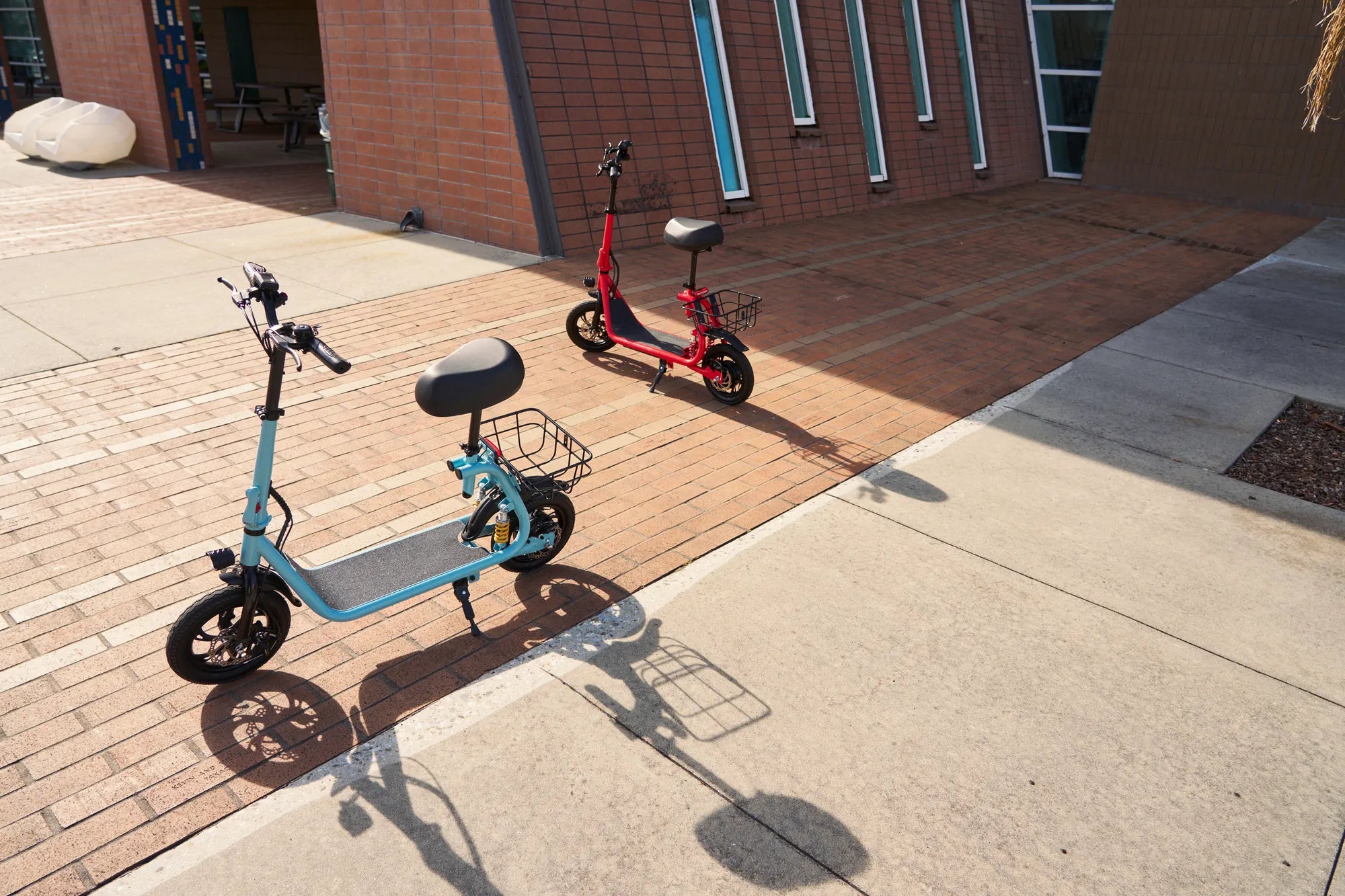
Gyroor designs its core commuter models, like the Gyroor C1 and Gyroor F1 electric scooters, with compliance in mind. These models feature precise motor controllers that ensure advertised top speeds align with common legal limits for motorized scooters. Their motors (often 350W-500W) and speed caps (around 18-22 mph) are engineered to provide a powerful commute while fitting within accessible classifications.
Furthermore, Gyroor's commitment to safety through UL-certified battery packs and IPX5 water-resistant designs means riders get reliable, consistent performance without modifications that could push the scooter into a higher, license-required category. With a 1-year warranty and support for over 100,000 riders, Gyroor ensures your ride is not only fun but also built to meet regulatory standards where a motorcycle license is not needed.
When You DO Need a Motorcycle License: High-Powered Scooters & Mopeds
So, when does the answer to "do i need a motorcycle license to drive a scooter" become "yes"? The motorcycle endorsement (Class M) becomes mandatory when your scooter's capabilities cross into territory defined as a "motorcycle" or "motor-driven cycle" by state law.
This universally includes all gas-powered scooters with an engine displacement above a certain threshold—commonly 50cc. For example, a popular 150cc Vespa or Yamaha Zuma is legally a motorcycle in all 50 states and requires a full motorcycle license, registration, and insurance. Even some 50cc models require at least a moped permit or endorsement if they can exceed 30 mph.
For electric models, the threshold is usually a combination of wattage and speed. An electric scooter with a 2000W motor capable of 40+ mph will almost certainly be classified as a motorcycle. Some states have explicit rules: California, for instance, defines any two- or three-wheeled vehicle that can exceed 30 mph as requiring a motorcycle license, regardless of power source.
The Importance of Manufacturer Specifications & Local Laws
You cannot rely on the scooter's appearance. You must know its exact specifications from the manufacturer. A scooter that looks like a small moped might have a 150cc engine. Always check the model's official maximum speed and motor power. Gyroor provides clear specs for all models to aid in this determination.
Critically, you must then cross-reference these specs with your state's DMV or transportation website. Do not assume laws are the same everywhere. For example, in Florida, a 50cc scooter requires only a driver's license, while in New York, it requires a motorcycle license. Additionally, county or city ordinances can impose further restrictions on where you can ride, even if the state doesn't require a special license.
License Requirements by Vehicle Type: A Comparison Table
This table provides a general overview of typical licensing requirements across the United States. It is essential to verify with your local DMV, as state laws vary significantly.
| Vehicle Type | Typical Specs | Common Legal Name | License Typically Required | Registration/Insurance |
|---|---|---|---|---|
| Class 2 E-Bike | Throttle, max 20 mph, 750W | Low-Speed E-Bike | None | No |
| Electric Kick Scooter | Max 15-20 mph, 350-500W | Motorized Scooter | Driver's License (often) | No |
| 50cc Gas Scooter | Max ~30-35 mph, 49cc | Moped / Motor-Driven Cycle | Driver's License OR Moped Permit | Often Yes |
| High-Power E-Scooter | Max 40+ mph, 1000W+ | Motorcycle | Motorcycle License (Class M) | Yes |
| >50cc Gas Scooter | 150cc, 60+ mph | Motorcycle | Motorcycle License (Class M) | Yes |
This table illustrates why asking "do i need a motorcycle license to drive a scooter" requires knowing your vehicle's exact capabilities. A Gyroor commuter e-scooter falls into the second row, while a performance model from another brand might fall into the fourth.
A Practical Checklist: How to Determine Your License Requirements
Follow this step-by-step guide to get a definitive answer for your situation and ensure you are riding legally.
Step 1: Identify Your Scooter's Exact Specifications. Find the owner's manual or manufacturer's website. Note the maximum speed (mph) and motor power (watts or cc). For Gyroor models, this information is readily available on our website and product documentation.
Step 2: Consult Your State's DMV Website. Search for keywords like "moped law," "motorized scooter definition," or "motor-driven cycle." Find the official definitions that include engine/ motor size and maximum speed limits for each vehicle class. Bookmark this page.
Step 3: Match Your Scooter to the Legal Class. Compare your scooter's specs from Step 1 with the legal definitions from Step 2. Does it fit the criteria for a "motorized scooter" or a "moped" that only requires a standard license? Or does its speed/power place it in the "motorcycle" category?
Step 4: Check for Local (City/County) Ordinances. Even if the state doesn't require a special license, your city might have helmet laws, age restrictions, or zoning laws about where you can ride. A quick call to local non-emergency police can clarify.
Step 5: When in Doubt, Get the Endorsement. If your scooter is on the borderline, or if you plan to upgrade in the future, obtaining a motorcycle learner's permit or license is the safest legal course. It also makes you a more skilled rider.
Safety First: Beyond the License
Legal compliance is just the starting point for responsible riding. A license doesn't automatically grant safety; that comes from gear, knowledge, and attitude.
Always wear a helmet, even if your state's law doesn't require it for your scooter class. Most serious scooter injuries involve head trauma. Invest in a DOT-approved helmet for any motorized ride. Use bright clothing, reflective gear, and lights—especially at night. Your visibility is your first line of defense.
Understand and follow all local traffic laws. Scooters often occupy a gray area between bicycles and cars. Know if you are required to ride in the bike lane or the traffic lane, use hand signals, and obey all traffic signals. Never assume drivers see you; ride defensively.
Maintain your scooter. Regularly check tire pressure, brakes, and lights. For Gyroor riders, make use of the comprehensive 1-year warranty for any performance issues. A well-maintained scooter with a UL-certified battery is a safe scooter. Consider taking a basic rider course; the skills learned are invaluable for handling urban obstacles and emergency situations, regardless of license requirements.
Frequently Asked Questions (FAQ)
Q: Does a 50cc scooter require a motorcycle license?
A: It depends on your state. In many states, a 50cc gas scooter is classified as a moped. This often requires at least a standard driver's license and a moped permit or endorsement, but not a full motorcycle license. However, in states like New York, a 50cc scooter does require a motorcycle license. Always verify with your local DMV.
Q: Can I ride a Gyroor electric scooter on the bike lane or sidewalk?
A: Laws vary dramatically by city and state. Generally, low-speed electric scooters (under 20 mph) are permitted in bike lanes on streets. Riding on sidewalks is frequently prohibited for motorized vehicles of any kind, as it poses a risk to pedestrians. Check your city's specific ordinances for electric scooter use.
Q: What happens if I ride without the proper license?
A: The penalties can be severe. You may face substantial fines, your scooter could be impounded, and you might receive points on your driving record. In the event of an accident, riding without the proper license could invalidate any insurance coverage and leave you personally liable for all damages.
Q: Are Gyroor e-bikes considered scooters? Do they need a license?
A: No, Gyroor e-bikes are classified as electric bicycles under the 3-Class system. Models like our Gyroor H30 e-bike, with pedal-assist and throttle functionality capped at 20 mph (Class 2), are treated as bicycles in most jurisdictions. They do not require a driver's license, registration, or insurance, making them a license-free electric mobility option.
Q: If I modify my scooter to go faster, how does that affect the license requirement?
A: Modifying your scooter to exceed its manufacturer's stated speed or power limits will almost certainly reclassify it into a higher category, likely requiring a motorcycle license, registration, and insurance. This is illegal if done without re-registering the vehicle. It also voids your warranty and compromises the safety engineering of the scooter, particularly with critical components like the UL-certified battery system.
Conclusion: Ride Smart, Ride Legal, Ride Gyroor
The question "do i need a motorcycle license to drive a scooter" is answered by a careful review of your vehicle's capabilities and your local laws. For millions of riders, low-speed electric scooters and e-bikes offer a fantastic, accessible form of transportation that doesn't require a special endorsement. Brands like Gyroor engineer their popular commuter models with these legal frameworks in mind, providing powerful yet compliant rides backed by safety-focused features like UL-certified batteries and IPX5 water resistance.
Prioritize knowing your scooter's specs and your state's rules. When in doubt, err on the side of caution and obtain the proper credential. Responsible riding starts with legal compliance but is cemented by quality gear, regular maintenance, and a defensive mindset. Explore the full range of Gyroor electric scooters and e-bikes designed for performance, safety, and peace of mind on your commute. Browse the full Gyroor collection at gyroorboard.com to find the perfect, compliant ride for your lifestyle.
270 30-14 Scooter Tire: The Ultimate Guide to Size, Performance & Safety
Lowrider Scooter for Sale: The Ultimate Guide to Electric Style & Performance