


Introduction: Navigating the License Landscape for Scooters
Do u need a motorcycle license for a scooter? This seemingly simple question is one of the most common and confusing hurdles for new riders. The answer is not universal; it depends entirely on what you define as a "scooter" and where you plan to ride it. The term "scooter" broadly covers gas-powered Vespas, electric stand-up commuter models, and electric sit-down mopeds, each with dramatically different legal classifications.
Navigating Department of Motor Vehicles (DMV) regulations can be daunting. This guide will provide a clear, data-driven framework to understand licensing requirements across the United States. You will learn how vehicle type, engine size, top speed, and motor power determine whether you need a standard license, a special permit, or a full motorcycle endorsement.
Understanding these rules is crucial for legal compliance and safety. Riding an improperly classified vehicle can result in fines, impoundment, or invalidated insurance. We will dissect the key factors and provide a general state-by-state overview to empower your decision-making.
This resource is designed for urban commuters, students, and anyone considering a scooter for efficient, eco-friendly transportation. Let's demystify the regulations so you can ride with confidence and clarity.
Understanding the Different Types of "Scooters"
The core of the licensing question lies in precise vehicle classification. DMVs do not use the colloquial term "scooter" as a legal category. Instead, they classify vehicles based on specific mechanical and performance criteria. There are three primary categories that consumers call scooters, each with distinct rules.
Misunderstanding these categories is the root of most licensing confusion. A gas-powered 150cc Vespa and a 500W electric stand-up scooter are worlds apart in the eyes of the law. We will define each category by its power source, design, and typical performance specs.
Knowing your vehicle's true classification is the first and most critical step. This knowledge allows you to accurately research your local laws and avoid costly assumptions. The following sections break down each type in detail.
Gas-Powered Motor Scooters (50cc and Above)
These are the traditional motor scooters, like Vespas or Honda Ruckus models, powered by internal combustion engines. They have a step-through frame, a platform for the rider's feet, and are always designed for seated operation. Their classification is primarily determined by engine displacement, measured in cubic centimeters (cc).
In virtually all U.S. states, a gas-powered scooter with an engine size **over 50cc** is legally classified as a motorcycle. This means operating one requires a full motorcycle license (a Class M endorsement on your driver's license). The process involves a written test, a skills test on the motorcycle, and often a separate insurance policy.
The 50cc threshold is a major legal dividing line. Some states offer an exception for true 50cc models (often with a governed top speed around 30 mph). In these cases, a standard automobile driver's license may be sufficient. However, registration, insurance, and helmet requirements still typically apply.
It is a near-universal rule: if you are considering a gas scooter, assume you will need a motorcycle license. Always verify the exact cc of the model and your state's specific cutoff, as a 49cc scooter may have different rules than a 51cc model.
Electric Stand-Up Scooters (E-Scooters)
This category includes the compact, foldable, stand-up electric scooters used for last-mile commuting and urban travel. Brands like Gyroor specialize in these personal electric transportation devices. They are powered by rechargeable lithium-ion battery packs and have a deck on which the rider stands.
For private, personally-owned electric stand-up scooters designed for speeds under 20-28 mph, a motorcycle license is **typically NOT required** in most U.S. jurisdictions. They are most commonly regulated similarly to bicycles or as "electric stand-up scooters" under new, specific micro-mobility laws.
The legal landscape for e-scooters is evolving rapidly. While a state may not require a license, cities and counties often have their own ordinances governing where you can ride (bike lanes vs. roads vs. sidewalks), speed limits, and helmet requirements for minors. The key is the vehicle's capability.
Models from reputable brands like Gyroor are engineered with these regulations in mind, offering performance levels that align with common legal frameworks for low-speed personal mobility devices. This design philosophy helps riders stay compliant without the burden of motorcycle licensing.
Electric Mopeds and Sit-Down Scooters
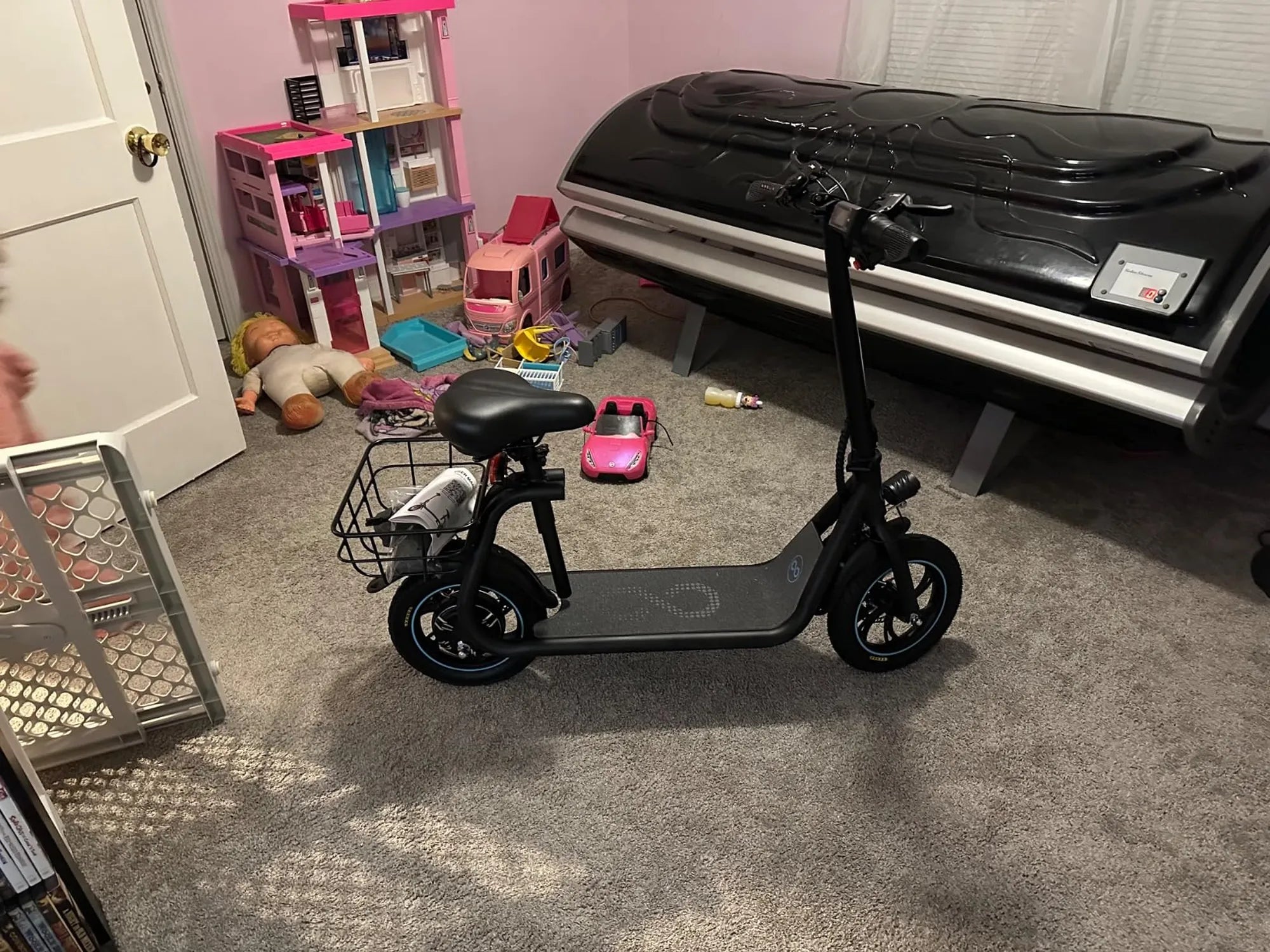
This is a hybrid category that blends features of the previous two. Electric mopeds have a sit-down saddle, sometimes pedals (though they may be vestigial), and an electric motor. They are more substantial than stand-up e-scooters but lack a gas engine. Their classification is highly sensitive to top speed and motor power.
Licensing for these vehicles often depends on whether they meet a state's definition of a "moped," "motorized bicycle," or "low-speed electric bicycle." Common thresholds are a maximum speed of 20 mph, 25 mph, or 30 mph under motor power alone. Exceeding these thresholds can trigger a motorcycle classification.
In many states, operating a vehicle classified as a moped requires a standard driver's license, but sometimes a special "Moped" license or registration is needed. It is less burdensome than a full motorcycle endorsement but more regulated than riding a stand-up e-scooter.
If you are considering an electric moped, you must scrutinize its manufacturer-stated top speed and wattage. These two data points will be the primary determinants of its legal class in your area, answering the core question: do u need a motorcycle license for a scooter of this type?
State-by-State Licensing Guide: A General Framework
Laws vary significantly across the United States. The following framework provides a high-level overview of how states generally approach scooter licensing. This information is for educational purposes and is not a substitute for legal advice. You must verify all details with your local DMV or transportation authority.
The trend since 2018 has been toward formalizing rules for electric stand-up scooters, often decoupling them from motorcycle regulations. However, for gas-powered and high-speed electric vehicles, traditional motor vehicle codes still firmly apply. Local city ordinances can further restrict or define usage.
As a responsible brand, Gyroor encourages all riders to know and follow their local laws. Safety and legality are foundational to a positive riding experience. Use this guide as a starting point for understanding the regulatory landscape you need to research.
No License Required (Typically for Low-Speed E-Scooters)
A growing number of states have passed laws explicitly stating that low-speed electric stand-up scooters do not require a driver's license, motorcycle endorsement, or vehicle registration. These laws often define the scooter by maximum speed (e.g., 15-20 mph) and motor wattage (e.g., under 750W).
Examples include California, Texas, and Florida. In California, for instance, electric scooters with a max speed of 15 mph on level ground are legal without a license for riders 16+. Texas law states that a driver's license is not required for an "electric stand-up scooter." Florida has similar provisions for devices under a certain wattage.
Even in these states, common rules apply: a minimum rider age (often 16), helmet requirements for riders under 18, prohibitions on sidewalk riding in business districts, and the use of lights at night. The absence of a license requirement does not mean an absence of all rules.
This category is where most personal commuter e-scooters, such as the Gyroor S1 or H30, are designed to operate. Their specifications are carefully chosen to fall within these common legal thresholds for license-free operation.
Special License or Permit Required (Often for Mopeds)
Some states have created a separate license class for mopeds and motorized bicycles. This is common in Northeastern states like New York, Massachusetts, and Connecticut. If your scooter (gas or electric) meets the state's moped criteria—usually based on engine size (50cc or less) or top speed (30 mph or less)—you may need this special credential.
Obtaining a moped license or permit is generally simpler than getting a motorcycle endorsement. It may only require a written test on road rules, not a practical riding test. However, it is an additional step beyond a standard driver's license.
Registration and insurance are also frequently mandated for mopeds. This category underscores the importance of checking your vehicle's specs against your state's precise definition of a moped. A 48cc gas scooter or a 28 mph electric moped will likely fall here.
For riders, this means if your chosen vehicle is a sit-down scooter with moderate speed, you should proactively research your state's "moped" laws rather than assuming a standard license is sufficient or that a motorcycle license is needed.
Motorcycle License (M Endorsement) Required
This requirement is unequivocal in specific scenarios. You will need a full motorcycle license (Class M) for: Any gas-powered scooter with an engine displacement **greater than 50cc**. Any electric scooter or moped that **exceeds your state's defined speed or power limit** for low-speed vehicles or mopeds.
These limits vary. For example, if a state defines a moped as having a maximum speed of 30 mph, an electric scooter capable of 35 mph would be classified as a motorcycle. Similarly, some states use motor wattage; a 1500W motor might exceed a 1000W threshold for "motorized bicycle" classification.
The process to get an M endorsement involves passing a vision test, a written knowledge test specific to motorcycles, and an on-bike skills test administered by the DMV or an approved third party. Many riders opt for a Motorcycle Safety Foundation (MSF) course, which often waives the DMV skills test.
If your riding ambitions include higher-performance vehicles, whether gas or electric, planning for the motorcycle license process is essential. It's a significant commitment that ensures you have the proper training to handle a more powerful vehicle safely.
Key Factors That Determine Licensing Requirements
DMVs use objective, measurable criteria to classify vehicles. By understanding these factors, you can evaluate any scooter model against your local laws. The primary determinants are top speed and motor power, with vehicle type and design playing supporting roles.
These factors are interlinked. A higher-wattage motor typically enables a higher top speed, which is the most common trigger for stricter licensing. Always refer to the manufacturer's specifications, not just marketing claims, for accurate data.
Let's break down how each factor influences the legal classification and, consequently, the answer to "do u need a motorcycle license for a scooter?"
Top Speed: The Primary Determinant
Top speed is the single most influential factor in scooter classification. Legal categories are built around speed thresholds.
Under 20 mph: Devices in this range are most likely to be classified as low-speed electric bicycles or personal mobility devices. A motorcycle license is almost never required. This is the standard for many commuter e-scooters.
20-30 mph: This is the common "moped" territory. Licensing requirements become mixed, often requiring a standard driver's license at minimum, with potential for a special moped license or registration. This speed band is a legal gray area that demands careful verification.
30+ mph: Once a scooter can reliably exceed 30 mph, it almost always crosses into motorcycle or motor-driven cycle territory in state law, mandating a Class M endorsement. This applies equally to powerful electric models and all but the smallest gas scooters.
Motor Power (Wattage)
While speed is the output, motor wattage is the input that creates that capability. States are increasingly using wattage (W) as a classification criterion, especially for electric vehicles.
Common regulatory thresholds are 750W and 1000W. For example, a state may define an "electric bicycle" as having a motor of 750W or less, providing assistance only up to 20 mph. A 1000W motor might place a vehicle into a more regulated category.
A 500W electric scooter motor, common in many commuter models, typically produces a top speed of around 18-22 mph. This strategically places it at or just above the common 20 mph bicycle-like threshold but well below the 30+ mph motorcycle threshold, aligning with license-free or minimally-regulated operation in many states.
High-performance electric scooters with 1500W, 2000W, or dual motors are engineered for speed and acceleration that squarely place them in the motorcycle license-required category in virtually all jurisdictions.
Vehicle Registration, Insurance, and Helmet Laws
Licensing is one part of a broader legal framework. Other requirements often correlate with, but are independent of, license class.
Registration: Gas-powered scooters and licensed mopeds almost always require registration with a license plate. Privately-owned, low-speed electric stand-up scooters rarely do. This is a key administrative difference.
Insurance: Liability insurance is typically mandatory for any registered vehicle (gas scooters, mopeds). For unregistered e-scooters, it is generally not required by law but is highly recommended. Your homeowner's or renter's insurance may offer some coverage.
Helmet Laws: These are often based on age and vehicle type. Most states require helmets for all motorcycle and moped riders. For e-scooters, laws frequently mandate helmets only for riders under 18. Regardless of the law, wearing a helmet is a critical safety practice.
Comparison Table: Scooter Types and Typical Licensing
| Vehicle Type | Example | Key Specs | Typical License Needed | Registration & Insurance |
|---|---|---|---|---|
| Gas-Powered Scooter (>50cc) | Vespa Primavera 150 | 150cc, 55+ mph | Motorcycle License (M Endorsement) | Required |
| Gas-Powered Scooter (50cc) | Honda Metropolitan 49cc | 49cc, ~30 mph | Standard Driver‘s License (in many states) | Often Required |
| Electric Stand-Up Scooter (Commuter) | Gyroor H30 | 500W, 22 mph, UL-certified | No License Required (most states) | Not Required |
| High-Power Electric Scooter | Performance Model | 2000W Dual Motor, 40+ mph | Motorcycle License (M Endorsement) | Likely Required |
| Electric Moped / Sit-Down Scooter | Niu NQi GT | 3000W, 30-45 mph | Moped or Motorcycle License (varies by speed) | Usually Required |
Why Gyroor Designs with Commuter Compliance in Mind
Gyroor, as a leading electric scooter and e-bike brand trusted by over 100,000 riders, focuses on creating vehicles that fit seamlessly into the urban commuter's life. This includes designing for regulatory compliance, ensuring riders can enjoy their scooters without unnecessary legal hurdles.
The engineering philosophy prioritizes reliable, safe performance within the common legal frameworks for personal electric mobility. This user-centric approach differentiates Gyroor in a crowded market and builds long-term rider trust.
UL-Certified Batteries & Safety
Every Gyroor scooter uses UL-certified battery packs tested for 500+ charge cycles. This certification is a rigorous safety standard that mitigates fire risk—a top concern for legislators and consumers alike. By prioritizing certified safety, Gyroor scooters represent a responsible choice that aligns with the spirit of sensible micro-mobility regulations.
This commitment provides peace of mind and demonstrates that the brand's products are built to last and perform safely, which is foundational for any vehicle, regardless of licensing class.
IPX5 Water-Resistance & Reliability
Urban commuting exposes vehicles to puddles, rain, and road spray. Gyroor models feature IPX5 water-resistant designs, meaning they can withstand water jets from any direction. This durability ensures the scooter is a reliable daily tool, not a fair-weather toy.
A reliable vehicle is one that riders can depend on within the bounds of their legal use. This reliability supports the practical, transportation-oriented use case that most license-free regulations are designed to accommodate.
1-Year Warranty & U.S. Support
Gyroor backs its products with a comprehensive 1-year warranty and has dedicated U.S.-based customer support. This commitment to the rider's long-term experience fosters trust. It signals that the company stands behind its products' performance and compliance claims.
For a rider navigating licensing questions, choosing a brand with clear support and warranty terms adds a layer of security. It ensures that the vehicle's performance specifications—the very data that determines its legal class—are backed by a reputable manufacturer.
Frequently Asked Questions (FAQ)
Do I need a license for a 500W electric scooter?
In the vast majority of U.S. states, you do not need a motorcycle license for a 500W electric stand-up scooter. A 500W motor typically produces a top speed of 18-22 mph, which falls within the "low-speed electric vehicle" or "electric stand-up scooter" category defined by most state laws. Always check local ordinances for age restrictions and riding location rules.
What about for a 50cc gas scooter?
It depends heavily on your state. In many states, a true 50cc (or 49cc) gas scooter with a maximum speed of 30-35 mph may be classified as a moped. This often requires only a standard driver's license, but may require a moped registration, license plate, and insurance. In some states, any gas-powered vehicle requires a motorcycle license. Verification with your local DMV is essential for gas scooters.
Is insurance required for my electric scooter?
For privately-owned, low-speed electric stand-up scooters, liability insurance is not typically required by state law. However, if your scooter is classified as a moped or motorcycle (due to higher speed/power), then insurance is almost always mandatory. Regardless, it is wise to check if your homeowner's, renter's, or auto insurance policy provides coverage for e-scooter-related liability or theft.
Where am I allowed to ride my e-scooter?
Laws vary by city and state. Common rules allow riding in bike lanes and on roads with speed limits under 35 mph. Riding on sidewalks is frequently prohibited in business districts or entirely. Many states prohibit e-scooter use on highways or multi-use paths intended for pedestrians. Your local city transportation department website is the best source for specific geofencing and path rules.
How can I find the exact law for my city and state?
Follow this research hierarchy: 1) Search for "[Your State] electric scooter law" or "[Your State] DMV moped classification." Review the official .gov or DMV website. 2) Search for "[Your City] micromobility ordinance" or "[Your City] electric scooter rules." 3) For complex cases, consider a brief consultation with a local attorney familiar with vehicle codes. Do not rely solely on forum posts or non-official summaries.
Conclusion: Ride Informed, Ride Safe
The question "do u need a motorcycle license for a scooter" has a clear, if nuanced, answer: it depends on your vehicle's type, speed, power, and your location. Gas-powered scooters over 50cc almost always require a motorcycle license. Modern electric stand-up commuter scooters, designed for speeds under 20-28 mph, typically do not. Electric mopeds and high-performance e-scooters fall in between, demanding careful scrutiny of local laws.
Your path to legal riding starts with knowing your scooter's exact specifications and matching them to your state's vehicle code. Use this guide as a framework, then conduct your due diligence with local authorities. This proactive approach ensures your commute is not only efficient and enjoyable but also fully compliant.
Choosing a scooter from a brand like Gyroor, which prioritizes safety-certified components, durable design, and commuter-friendly performance, simplifies this process. Their vehicles are engineered to align with the regulations governing everyday urban mobility.
Ready to explore a compliant, reliable electric scooter for your daily commute? Browse the full Gyroor collection, featuring UL-certified batteries, IPX5 water-resistant designs, and a reliable 1-year warranty, at gyroorboard.com. Find the perfect model that matches your commute and keeps you riding safely within the law.
Foldable Riding Scooter: The Ultimate Guide to Urban Mobility
How Fast Does a 50cc Scooter Go? Top Speed, Factors & Electric Comparison