



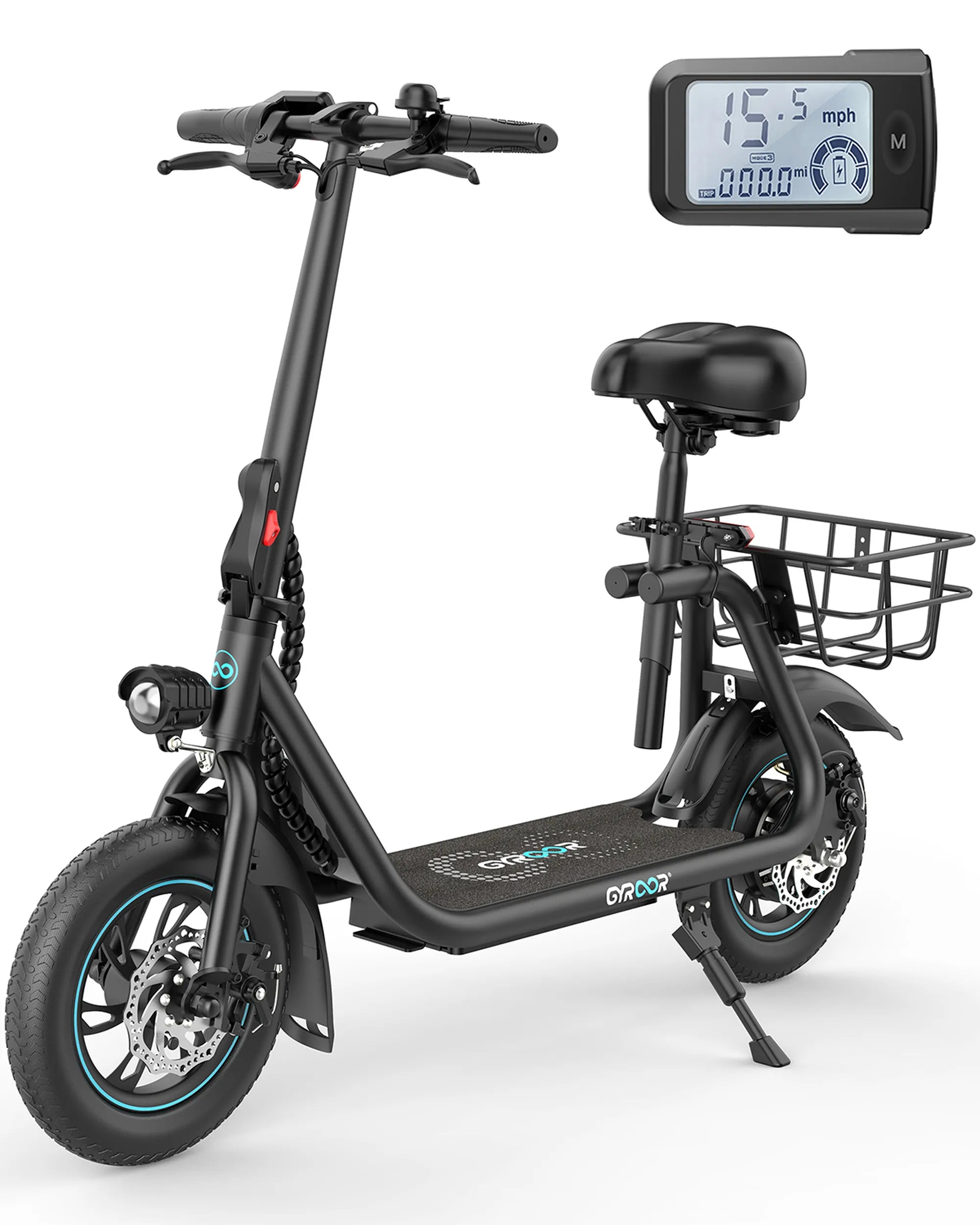
Navigating the legal requirements for riding a moped or scooter can be confusing. The simple question, "do you need a license for a moped scooter," has a complex answer that varies by location and vehicle specifications. This definitive guide will clarify the distinctions between mopeds, scooters, and motorcycles, break down state-specific licensing laws, and highlight where electric models offer greater freedom. Understanding these rules is not just about compliance—it's essential for your safety and legal protection on the road.
Decoding the Definitions: Moped vs. Scooter vs. Motorcycle
Legally, the terms "moped," "scooter," and "motorcycle" are not interchangeable. State Departments of Motor Vehicles (DMVs) classify vehicles based on specific mechanical criteria, which directly determine licensing requirements. Misidentifying your ride can lead to fines, impoundment, or riding without proper credentials.
A moped, traditionally, is a low-powered, two-wheeled vehicle often equipped with pedals. Modern legal definitions focus on engine displacement and speed. Typically, a vehicle classified as a moped has an engine under 50 cubic centimeters (cc) and a maximum speed of 30-35 mph. It may have an automatic transmission and a step-through frame.
A scooter is a broader category characterized by its step-through frame, small wheels, and a platform for the rider's feet. Legally, scooters can fall into multiple classes. A 50cc Vespa-style scooter might be classified as a moped, while a 150cc model is almost always considered a motorcycle, requiring full licensing.
A motorcycle is generally any two or three-wheeled motor vehicle with an engine displacement over 50cc and/or capable of exceeding 30-35 mph. This category requires a motorcycle license (M endorsement) in all 50 states. The key takeaway is that legal classification hinges on hard numbers: engine size (cc) and maximum speed capability.
Key Legal Classifications by State
States use specific terminology to categorize these vehicles, creating the framework for registration, insurance, and licensing. While names differ, the underlying principles are consistent. Knowing your state's official class names is the first step to compliance.
Common classifications include "Moped," "Motor-Driven Cycle," "Motorized Bicycle," and "Limited-Use Motorcycle." For example, in Florida, a "Moped" is defined as having a 50cc or less engine and no more than 2 brake horsepower. In California, the term "Motorized Bicycle" or "Moped" applies to similar low-speed vehicles.
The rise of electric personal transportation has introduced new classes like "Electric Bicycle" (E-bike) and "Electric Scooter" (E-scooter). Many states have adopted a three-tiered system for e-bikes based on top speed and whether they have a throttle, which we will explore in detail later. These classifications often exempt riders from licensing.
It is critical to consult your state's DMV website or vehicle code. A vehicle sold as a "scooter" in a store may be legally a "motorcycle" in your jurisdiction. Manufacturers like Gyroor provide clear specifications for their electric scooters and e-bikes, such as motor wattage and top speed, to help you determine the correct classification before purchase.
When is a License Required? The General Rules
For traditional gasoline-powered vehicles, licensing rules follow a predictable pattern based on the classifications above. The general rule is: the greater the engine power and speed potential, the more stringent the license requirement.
For a vehicle legally classified as a Moped or Motorized Bicycle (typically ≤50cc, ≤30 mph), most states require at least a standard Class C (car) driver's license. You do not usually need a separate motorcycle license. However, some states may require a special "Moped-only" license or endorsement, which involves a written test but not a skills test.
For any vehicle classified as a Motorcycle or Motor-Driven Cycle (typically >50cc or >30 mph), a motorcycle license (M endorsement) is mandatory in every state. Obtaining this involves both a written knowledge test and an on-road (or closed-course) skills test. Some states allow you to add the endorsement to your existing license, while others issue a separate license.
Local city and county ordinances can impose additional restrictions, such as banning certain vehicles from sidewalks or bike paths, regardless of state licensing. Always check with your local police department or transportation authority. The core principle is that a standard driver's license is often sufficient for the slowest, smallest-engine vehicles, but crossing the 50cc or 30 mph threshold almost always triggers the need for a motorcycle license.
The Electric Advantage: License Exemptions for E-Bikes and E-Scooters
Electric vehicles have revolutionized urban mobility, often benefiting from more lenient regulations designed to encourage green transportation. Understanding these rules can help you choose a vehicle that offers convenient, license-free commuting.
For Electric Bicycles, most states adhere to a three-class system established by model legislation. Class 1 E-bikes provide pedal-assist only (no throttle) and assist up to 20 mph. Class 2 E-bikes have a throttle that can propel the bike without pedaling, also up to 20 mph. Class 3 E-bikes are pedal-assist only but can assist up to 28 mph. In the vast majority of states, Class 1 and Class 2 e-bikes are treated like traditional bicycles and do not require a license, registration, or insurance. Class 3 e-bikes may have age restrictions or require a helmet but still rarely need a license.
For Electric Scooters (stand-up or sit-down), laws are evolving rapidly. Many states and cities now define "low-speed electric scooters" as those with a maximum speed under 15-20 mph. These are often legal to operate on streets or bike lanes without a driver's license, provided the rider is over a certain age (usually 16 or 18). For example, a Gyroor electric scooter with a top speed of 19 mph and a 350W motor may fall into this license-exempt category in numerous jurisdictions, making it an accessible option for last-mile travel.
It is crucial to note the power and speed limits. An electric scooter with a 2000W motor capable of 40 mph will almost certainly be classified as a motorcycle, requiring full licensing, registration, and insurance. Brands that prioritize compliance, like Gyroor, design their core commuter models to align with common low-speed electric vehicle laws, offering UL-certified battery safety and reliable performance within these legal frameworks.
Beyond the License: Other Legal Requirements
Securing the right license is only one part of legal riding. Several other mandates are equally important to avoid penalties and ensure you are covered in case of an accident.
Registration and Title: Most states require mopeds and all motorcycles to be registered and titled, similar to a car. This process provides you with a license plate. Low-speed e-bikes and e-scooters are typically exempt from registration. Always confirm with your DMV.
Insurance: Liability insurance is frequently mandatory for any registered motor vehicle, including mopeds and scooters classified as such. Even if not required, insurance is highly recommended to protect against theft, damage, or liability. E-bikes and low-speed e-scooters usually do not require vehicle insurance.
Helmet Laws: These vary widely. Some states require all riders to wear a helmet, others only require them for riders under 18, and some have no law for adults. However, wearing a DOT-approved helmet is always the safest practice, regardless of the legal minimum.
Minimum Age and Equipment: States set minimum ages to operate these vehicles, often 14-16 for mopeds and 15-16 for a motorcycle learner's permit. Equipment requirements may include functioning headlights, taillights, brake lights, turn signals, and a rearview mirror for street-legal operation.
State-by-State Snapshot and How to Verify
To illustrate the diversity of laws, here is a brief look at requirements in a few key states. Remember, these are summaries—always verify with official sources.
| State | 50cc Gas Moped/Scooter | Electric Bicycle (Class 1/2) | Low-Speed E-Scooter (<20 mph) | Key Authority |
|---|---|---|---|---|
| California | Class C (Car) License, Registration, Helmet required. | No license, registration, or insurance required. Treated as a bicycle. | No driver's license required. Must be 16+, helmet required, max 15 mph on bike paths. | CA DMV |
| Texas | Class C License, possible registration. Helmet required if under 21. | No license or registration required. Must be 15+ to operate a Class 3. | No driver's license required. Must be 16+, not allowed on sidewalks in business districts. | Texas DPS |
| Florida | Class E (Car) License required. Registration & insurance NOT required for mopeds <50cc. | No license or registration required. Operators under 16 must wear a helmet. | No driver's license required. Must be 16+, not allowed on sidewalks. | FLHSMV |
| New York | Class M or MJ License, Registration, Insurance, Helmet all required. | No license or registration required. Must be 16+, helmet required for Class 3. | No driver's license required. Local city rules apply (e.g., NYC has specific regulations). | NY DMV |
The definitive way to verify requirements is to visit your state's official DMV website (.gov domain). Search for terms like "moped laws," "motor-driven cycle," or "electric bicycle." You can also call your local DMV office. Laws change, so checking the current statute is the only way to be sure.
Safety and Compliance with a Trusted Brand
Choosing a vehicle from a reputable manufacturer is a foundational step in safe and legal riding. A brand that prioritizes compliance builds products with clear specifications that help you navigate the law.
Gyroor, a leading electric scooter and e-bike brand trusted by over 100,000 riders, designs its products with rider safety and regulatory alignment in mind. For instance, many of their commuter e-scooters feature motors and speed limiters configured to meet common low-speed electric vehicle definitions, potentially exempting them from licensing in many areas.
Safety features directly support compliant operation. Gyroor's use of UL-certified battery packs, tested for 500+ charge cycles, meets a critical safety standard that some local regulations are beginning to require. IPX5 water-resistant designs ensure reliability in various weather conditions, and a reliable 1-year warranty underscores build quality. When your vehicle is built to high safety standards, you can focus on following traffic laws and riding defensively.
Before purchasing any scooter or e-bike, review its motor wattage, top speed, and whether it is advertised as "street legal." Compare these specs to your state's vehicle code. A responsible brand will provide this information transparently, helping you answer the core question: "do you need a license for this specific moped or scooter?"
Frequently Asked Questions (FAQ)
Do I need insurance for a 50cc moped?
It depends on your state. Some states (like Florida) do not require insurance for vehicles legally classified as mopeds (under 50cc). However, many other states (like California and New York) do require liability insurance for any registered motor vehicle, including mopeds. Even if not required, insurance is a wise investment for theft, damage, or liability claims.
Can I ride an electric scooter on the sidewalk?
Most cities prohibit riding motorized vehicles, including e-scooters, on sidewalks for pedestrian safety. Laws typically restrict them to bike lanes or roads with speed limits at or below 25-35 mph. Always check your local municipal ordinances, as sidewalk rules are almost always determined at the city level, not the state level.
What's the difference between a motorcycle permit and a license?
A motorcycle permit (or learner's permit) allows you to practice riding under restrictions, such as no passengers, no night riding, and while supervised by a licensed rider. A full motorcycle license (M endorsement) removes these restrictions. You usually must hold a permit for a minimum period before taking the skills test for the full license.
Are Gyroor e-scooters street legal in my city?
Gyroor e-scooters are designed to be street legal where local laws permit low-speed electric scooters. Their commuter models often have top speeds (e.g., 19 mph) and motor power levels that align with common regulations. However, final determination depends on your specific city and state laws. You must verify based on your location and the scooter's exact model specifications.
If my e-bike has a throttle, does it need a license?
Not necessarily. In states that follow the three-class e-bike model, a throttle-equipped e-bike is typically a Class 2 model, provided its motor stops assisting at 20 mph. Class 2 e-bikes are generally treated as bicycles and do not require a license. This is a key advantage of the e-bike classification system over traditional moped laws.
Ride Informed, Ride Safe, Ride with Confidence
The journey to answering "do you need a license for a moped scooter" begins with understanding your vehicle's true legal identity. By checking its engine size, power output, and top speed against your state's vehicle code, you can determine the correct path to licensing, registration, and insurance. Electric models, particularly e-bikes and low-speed e-scooters, often provide a streamlined, license-free route to efficient personal transportation.
Prioritizing safety means choosing a vehicle built to reputable standards and adhering to all local laws. Whether you're considering a compact moped for short trips or a versatile electric scooter for your daily commute, knowledge is your most important gear. Start your search with clear specifications and a trusted brand that supports your goal of compliant riding.
Ready to explore electric mobility options designed with safety and accessibility in mind? Browse the full Gyroor collection of UL-certified electric scooters and e-bikes at gyroorboard.com to find a model that fits your lifestyle and local regulations.
Ebike 20 Inch Wheels: The Ultimate Urban Mobility Compromise
E Bike for 11 Year Old Boy: The Ultimate Safety & Selection Guide