


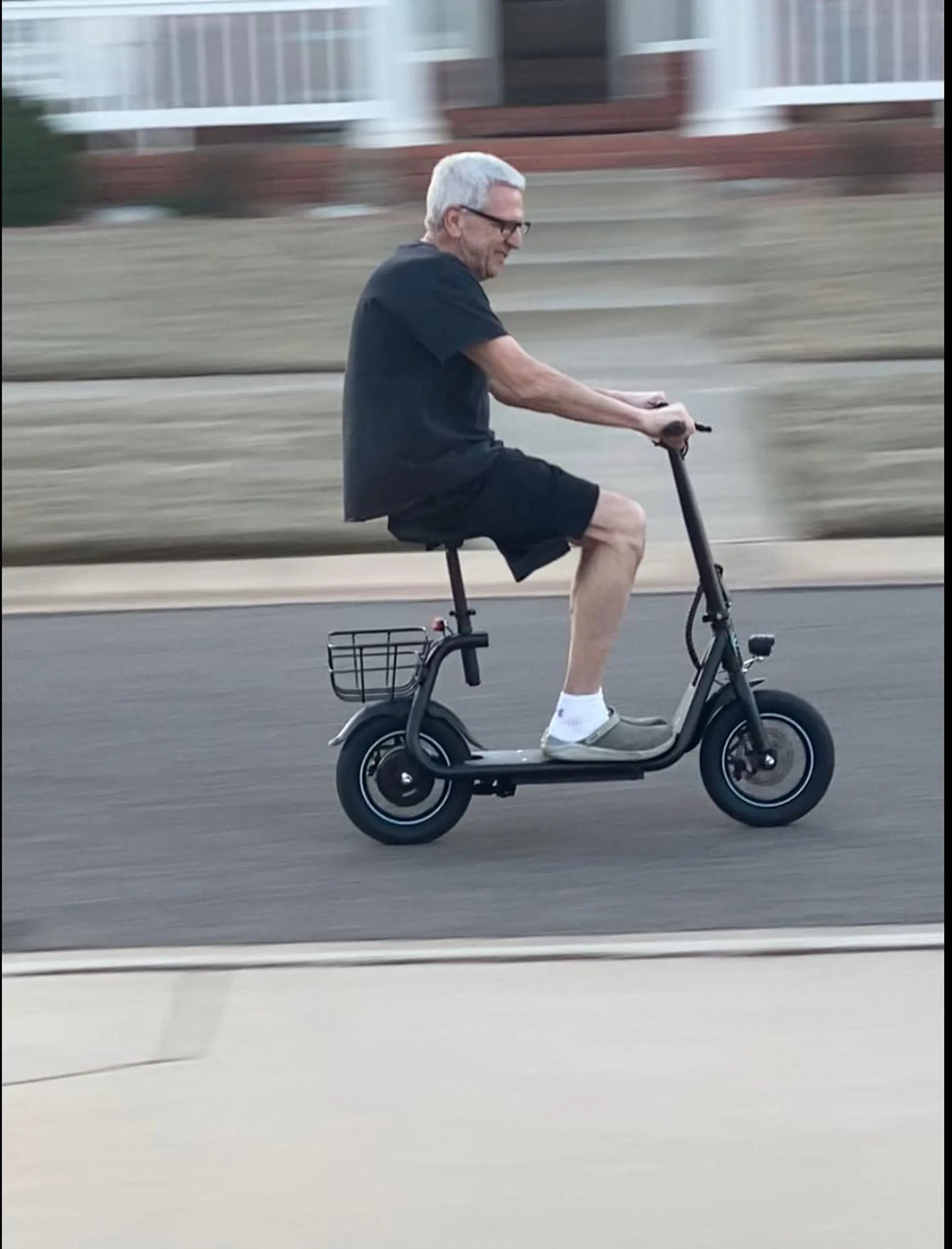
Introduction to 49cc Scooter Registration
If you're considering a 49cc scooter for convenient, fuel-efficient transportation, your first legal question is likely, 'does a 49cc scooter need to be registered?' The answer is not a simple yes or no. It is a complex question governed by a patchwork of state and local laws that hinge on how your jurisdiction classifies these small-engine vehicles.
This article provides a definitive, data-driven guide to navigating these regulations. We will dissect the critical legal classifications, provide a detailed state-by-state analysis, and walk you through the entire compliance process. Understanding these rules is not just about avoiding fines—it's about ensuring your safety and legal protection on the road.
A 49cc scooter, named for its 49-cubic-centimeter engine displacement, is popular for its balance of power and accessibility. Its engine size often places it in a special legal category, separate from larger motorcycles. The core determination of whether your 49cc scooter needs to be registered rests on whether your state labels it as a 'moped,' 'motor-driven cycle,' or a full 'motorcycle.'
Understanding the Legal Classification: Moped vs. Motorcycle
The single most important factor in determining registration requirements is your state's legal definition. Most states use a combination of engine size, maximum speed, and transmission type to create categories. A vehicle classified as a 'moped' or 'motorized bicycle' typically faces less stringent rules than one classified as a 'motorcycle' or 'motor-driven cycle.'
Common criteria for the moped classification include an engine displacement of 50cc or less (which includes all 49cc models), an automatic transmission, and a maximum speed capability between 25 and 35 miles per hour. For example, California defines a moped as having an engine under 50cc and a maximum speed of 30 mph on flat ground. If a scooter can exceed these limits, it may be bumped into a motorcycle class.
This classification dictates everything: registration, licensing, insurance, and where you can legally ride. The distinction exists because mopeds are seen as lower-risk, beginner-friendly vehicles. It's crucial to consult your state's vehicle code, not the manufacturer's marketing, for the official definition that applies to you.
Misclassification is a common pitfall. Assuming your 49cc scooter is automatically a moped can lead to tickets and impoundment if it doesn't meet all criteria, such as the speed governor requirement. Always verify based on your specific model's capabilities and your state's exact legal language.
State-by-State Breakdown: Registration Requirements
Registration laws for 49cc scooters vary dramatically across the United States. The landscape can be broadly divided into three categories: states that require full registration, states that require a special moped registration or plate, and states with no registration requirement.
In many states, if your 49cc scooter is classified as a moped, it does not require standard automobile registration. Instead, you may need to obtain a specific 'moped plate,' 'moped sticker,' or 'moped certificate of title.' States like Florida and Michigan follow this model. You still must tithe the vehicle and pay associated fees, but the process is distinct from registering a car or motorcycle.
Other states, however, require full registration for any motorized vehicle operated on public roads, regardless of engine size. Pennsylvania, for instance, requires all motorcycles and motor-driven cycles (which include 49cc scooters) to be registered and titled. There is no separate 'moped' classification that exempts them.
A handful of states, like Alabama, have no state-level registration requirement for vehicles under 50cc. However, this is rare, and local city or county ordinances may impose their own rules. The table below provides a clear, comparative overview of key state policies.
| State | Classification for 49cc | Registration Required? | Special Notes |
|---|---|---|---|
| California | Moped (if ≤30 mph) | Yes, Moped Registration | Requires a special moped plate and VIN verification. |
| Texas | Motorcycle | Yes, Full Registration | All motor-driven cycles require a title, registration, and license plate. |
| Florida | Motorized Scooter | Yes, Tag Required | Must have a valid license plate; insurance is not mandatory for registration. |
| New York | Limited Use Motorcycle | Yes, Full Registration | Classified as a motorcycle, requiring registration, insurance, and inspection. |
| Illinois | Motorized Pedalcycle | No State Registration | Must be titled, but no registration or plate is issued at the state level. |
| Ohio | Motorized Bicycle | No | No certificate of title, registration, or license plate is required. |
This table illustrates the critical need to check your specific state's laws. Relying on generalizations can result in non-compliance.
The Registration Process: What You Need to Know
If your state requires registration, you'll need to navigate your local Department of Motor Vehicles (DMV) or equivalent agency. The process is straightforward if you come prepared with the correct documentation. Being organized can save you hours of frustration.
The cornerstone document is proof of ownership. For a new scooter, this is the Manufacturer's Certificate of Origin (MCO or MSO). For a used scooter, you need the properly assigned title from the previous owner. Always ensure the VIN on the document matches the VIN stamped on your scooter's frame, typically located near the stem or on the floorboard.
You will also need a completed application for title/registration, a bill of sale showing the purchase price (for tax purposes), and valid government-issued photo ID. Many states require a VIN inspection by a DMV official or law enforcement officer to confirm the scooter isn't stolen and matches the paperwork.
Be prepared to pay fees, which usually include a title fee, registration fee, and sales tax. Some states also charge specific plate fees. The total can range from $50 to over $200. Contact your DMV ahead of time or visit their website to download forms and get a precise fee schedule. Never assume the process is the same as registering a car.
Beyond Registration: Licensing, Insurance, and Safety Laws
Registration is only one pillar of legal compliance. Licensing, insurance, and adherence to safety laws are equally important. These requirements are often interlinked with your scooter's classification.
In most states, operating a registered moped requires at least a valid regular driver's license (Class C). You do not need a motorcycle endorsement (Class M). However, states like Tennessee require a 'Class M' designation on your license for any motor-driven cycle, which includes 49cc scooters. A handful of states offer a separate 'moped license' for those without a standard driver's license.
Insurance requirements also vary. States that require full motorcycle registration often mandate liability insurance. For moped-classified scooters, insurance may not be legally required, but it is overwhelmingly recommended. If you cause an accident, you are personally liable for property damage and medical bills. A good policy protects your assets.
Safety laws are non-negotiable. Helmet laws are state-specific; some require them for all riders, others only for minors. Regardless of the law, wearing a DOT-approved helmet is the single most effective safety measure. Furthermore, 49cc scooters are almost never legal on sidewalks or bicycle paths—they are considered motor vehicles and must obey all traffic laws on the roadway.
Why Compliance Matters: Risks and Responsibilities
Failing to properly register and license your 49cc scooter carries significant consequences. It's a risk that far outweighs the minor hassle and cost of compliance. Law enforcement is trained to spot unregistered vehicles, especially in urban areas where scooters are common.
The immediate risk is financial. You can be issued a costly ticket for operating an unregistered vehicle, driving without a proper license, and lacking insurance. Fines can easily exceed $500. In many jurisdictions, police have the authority to impound your scooter on the spot, leading to hundreds more in towing and storage fees to retrieve it.
In the event of an accident, non-compliance can be catastrophic. If you are uninsured and at fault, you are personally responsible for all damages. If you are not properly licensed, your auto insurance (if you have any) may deny coverage entirely. Furthermore, if your scooter is unregistered, you may face difficulties in pursuing a claim against another driver, even if they were at fault.
Compliance is a fundamental responsibility as a road user. It ensures you are identifiable, insured, and knowledgeable about the rules of the road. This protects you, your passengers, and everyone else sharing the street. It's the foundation of safe and legal riding.
Frequently Asked Questions (FAQ)
Do I need a motorcycle license for a 49cc scooter?
Typically, no. In most states where the scooter is classified as a moped, a standard driver's license is sufficient. However, several states, including Texas and New York, classify 49cc scooters as motorcycles or motor-driven cycles, which do require a motorcycle license (Class M) or endorsement. Always check your specific state's DMV website.
Is insurance mandatory for a registered 49cc moped?
It depends on state law and classification. If your state requires standard vehicle registration, it likely also requires minimum liability insurance. For mopeds with a special plate, insurance may not be legally mandated. However, from a practical and financial protection standpoint, carrying liability insurance is highly advised regardless of the legal minimum.
Can I ride a 49cc scooter on bike paths or sidewalks?
Almost universally, no. Legally, a 49cc scooter is a motor vehicle. Motor vehicles are prohibited from bicycle paths and sidewalks for the safety of pedestrians and cyclists. You must operate your scooter on the roadway, obeying all traffic signals and lane markings, just as you would in a car.
Where can I find the exact law for my state?
The only authoritative source is your state's official government website. Search for '[Your State] Department of Motor Vehicles (DMV)' or '[Your State] Department of Transportation (DOT).' Look for sections on vehicle classification, moped laws, or motorcycle registration. Do not rely on forum posts or unofficial summaries, as laws change frequently.
What if I only ride my scooter on private property?
If the scooter is never operated on public roads, streets, or highways, state registration and licensing requirements generally do not apply. The laws govern operation on public thoroughfares. However, you should still secure your title for proof of ownership.
Exploring Electric Alternatives: The Gyroor Advantage
For riders seeking simplicity, the evolving world of electric scooters presents a compelling alternative with often clearer regulations. Leading electric scooter and e-bike brands like Gyroor offer models that provide similar utility to a 49cc gas scooter but fall under different, and sometimes less restrictive, legal frameworks in many jurisdictions.
Many Gyroor electric scooters, with their powerful yet efficient motors and UL-certified battery packs, are designed for urban commuting. In numerous states and cities, lower-speed electric scooters (e.g., those with a max speed under 20 mph) may not require registration, licensing, or insurance, classifying them as 'electric stand-up scooters' governed by local micro-mobility ordinances.
This can significantly reduce the administrative burden for riders. You still must follow local rules regarding where you can ride, helmet use, and age restrictions, but you avoid the DMV process for registration and titling. It's a trade-off between the longer range of gas and the regulatory simplicity of electric.
Choosing between a 49cc gas scooter and an electric model like those from Gyroor involves weighing factors like range needs, local fuel costs, environmental preferences, and, critically, the legal landscape. An electric model with a top speed of 28 mph might be registration-free, while a 49cc gas scooter capable of 35 mph requires full compliance. Always verify based on the specific product's specifications and your local laws.
Your Path to Legal and Enjoyable Riding
The question, 'does a 49cc scooter need to be registered,' has a definitive answer: it depends entirely on your location and your scooter's specifications. The key is proactive research. Start with your state's DMV website, understand the classification, and gather the necessary documents before you hit the road. Treat licensing, insurance, and safety gear as non-optional components of responsible ownership.
This diligence ensures your riding experience is focused on freedom and fun, not anxiety over the next traffic stop. Whether you choose a traditional 49cc model or explore modern electric alternatives from trusted brands, prioritizing legality is the first step to countless miles of safe, enjoyable transportation. Ready to explore your options? Browse the full Gyroor collection of electric scooters and e-bikes, known for their UL-certified batteries, IPX5 water-resistant designs, and reliable 1-year warranty, at gyroorboard.com.
Phone Stand for Scooter: The Essential Guide to Safer, Smarter Riding
Scooter with Two Back Wheels: The Ultimate Stability Guide