

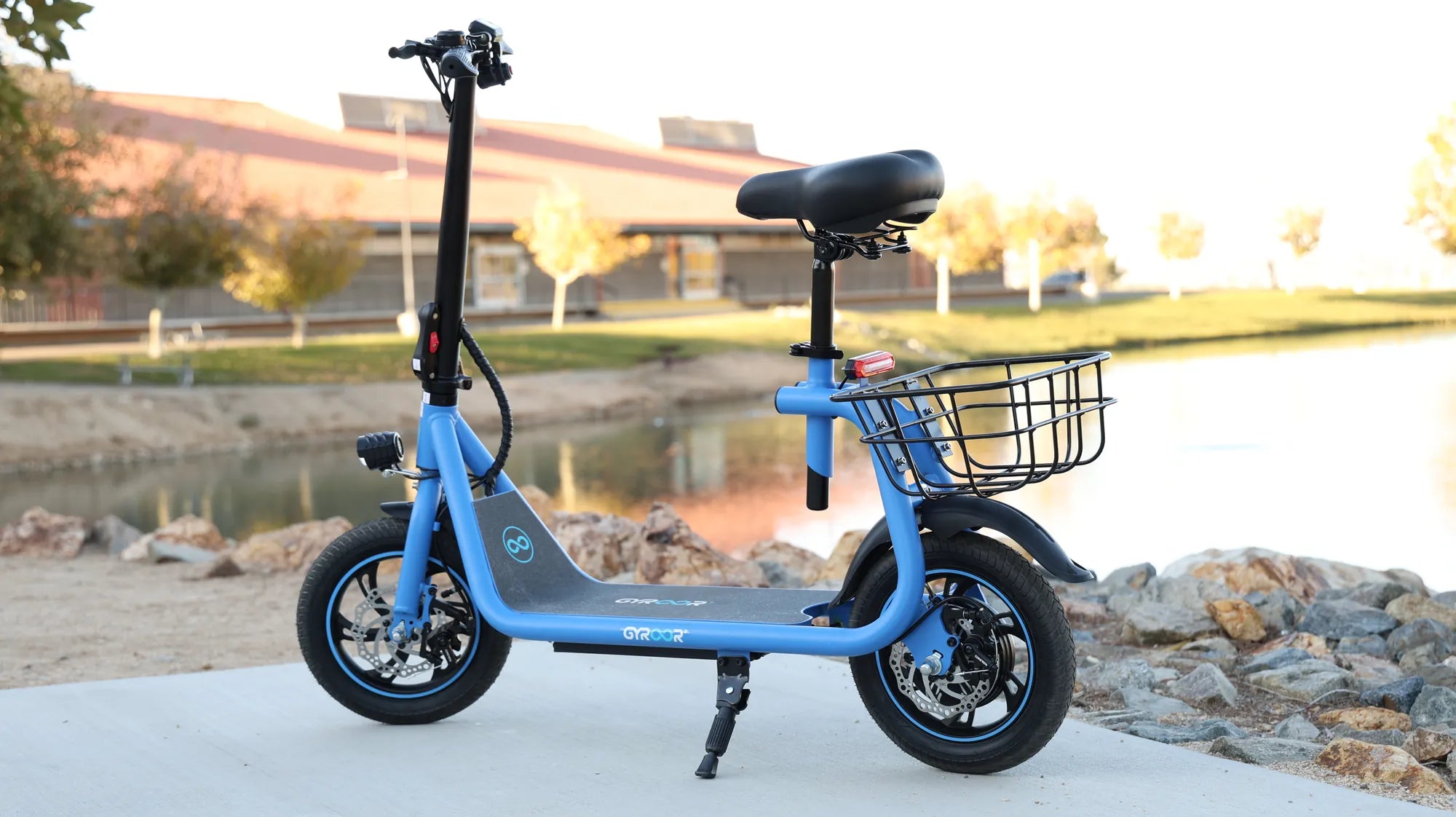
Introduction: What Is E-Bike 2.0 and Why It Matters
The term ebike 2.0 marks a decisive evolution in personal electric transport. It moves beyond the first generation's simple pedal-assist function to encompass a holistic riding experience defined by integrated smart technology, superior performance metrics, and uncompromising safety standards. This isn't just an incremental update; it's a redefinition of what an electric bicycle can be.
For riders, ebike 2.0 means a machine that intuitively connects to your digital life, responds to your pedaling input with natural precision, and is built to handle daily use with proven durability. Brands like Gyroor, a leader in electric scooters and e-bikes trusted by over 100,000 riders, are at the forefront of this shift. They leverage deep expertise in UL-certified battery safety and robust engineering to build vehicles that meet these elevated standards.
This article will dissect the core technological pillars of ebike 2.0, provide practical comparisons for different riding styles, and outline the critical factors for long-term ownership value. By the end, you'll understand precisely how this new generation delivers a safer, smarter, and more capable riding experience.
The Core Pillars of E-Bike 2.0: Beyond Basic Pedal Assist
First-generation e-bikes introduced the world to electric-assisted cycling. E-bike 2.0 perfects it through three foundational advancements: intelligent connectivity, refined performance hardware, and durability engineered for real-world conditions. These pillars work in concert to create a vehicle that feels less like a gadget and more like a seamless extension of the rider.
The shift is data-driven. Where earlier models might offer a basic battery indicator, ebike 2.0 platforms provide detailed analytics on power output, efficiency, and route history. This intelligence transforms the bike from a simple transporter into a connected mobility device, offering both practical utility and enhanced security.
Performance is no longer just about top speed. It's about the quality of the ride—how the motor engages, how the bike handles varied terrain, and how far you can confidently travel on a single charge. This requires a move from basic components to premium, purpose-built systems.
Finally, durability is quantified. Water resistance isn't a vague promise but a certified IP rating. Battery safety isn't assumed but verified by independent laboratories. This engineering rigor, evident in brands like Gyroor with their IPX5 water-resistant designs and UL-certified batteries, is what separates a disposable product from a reliable long-term investment.
Smarter Riding: Integrated Displays and App Connectivity
The cockpit of an ebike 2.0 is a command center. Modern, full-color LCD or OLED displays show far more than battery level and speed. They provide real-time data on assist mode, motor power output, trip distance, remaining range estimation, and even navigation cues when paired with a smartphone.
Bluetooth connectivity and dedicated mobile apps unlock the full potential. Through an app, riders can customize power profiles, track ride history with GPS mapping, diagnose basic system issues, and receive over-the-air firmware updates that improve performance or add features post-purchase. This extends the bike's lifecycle and functionality.
A critical smart feature is integrated security. Advanced models include GPS tracking modules, allowing you to monitor your bike's location in real-time via the app. This, combined with wheel lock functions and motion-sensor alarms, creates a powerful deterrent against theft, addressing a major concern for urban commuters.
This connectivity also enables sophisticated battery management. Apps can show detailed battery health metrics, recommend optimal charging patterns to prolong cell life, and provide accurate range predictions based on your riding style, weight, and route topography, eliminating "range anxiety."
Performance Redefined: Torque Sensors, Powerful Motors, and Extended Range
The heart of the ebike 2.0 experience is a natural, responsive ride. This is achieved primarily by replacing cadence sensors with torque sensors. A cadence sensor simply detects if the pedals are moving and applies a pre-set level of motor power. It can feel jerky and disconnected.
A torque sensor, however, measures how hard you are actually pedaling. The motor then provides assistance proportional to your effort. This results in a smooth, intuitive feel that closely mimics traditional cycling but with amplified power. It rewards rider input, improves control on technical terrain, and can even increase battery efficiency.
Motor technology has also matured. Modern hub motors are more efficient and quieter, while mid-drive motors, which leverage the bike's gears, offer superior hill-climbing torque and balanced weight distribution. Understanding the difference between nominal (sustained) power and peak power is key; a quality ebike 2.0 motor delivers consistent performance without overheating.
Extended range is a product of both larger, higher-quality battery packs and more efficient systems. Gyroor's use of UL-certified battery packs, tested for 500+ charge cycles, ensures not only safety but also reliable capacity over years of use. When combined with regenerative braking (on some models) and smart energy management, realistic ranges of 40-80+ miles per charge are now standard for performance-oriented models.
Built for the Real World: Enhanced Durability and Safety
An ebike 2.0 is designed for daily use in all conditions. This starts with a clear durability benchmark: the IP (Ingress Protection) rating. An IPX5 rating, like those on Gyroor e-bikes, certifies protection against water jets from any direction, making the bike fully commuter-proof in rain and capable of withstanding routine cleaning.
Integrated safety systems are paramount. This includes bright, always-on LED headlights and taillights for visibility, with some models featuring brake-activated rear lights. Turn signals integrated into the handlebars or rear frame further communicate rider intent in traffic.
Stopping power has evolved from basic rim brakes to mechanical or, ideally, hydraulic disc brakes. Hydraulic discs offer superior modulation and consistent performance in wet or muddy conditions, a critical safety upgrade for both high-speed commuting and off-road adventures. They require less maintenance and provide greater control.
Frame geometry and component quality also contribute to safety. Thoughtful design improves stability at speed and comfort over long distances. High-quality, name-brand components for shifting (e.g., Shimano, SRAM) and suspension ensure reliable performance that reduces the chance of mechanical failure while riding.
E-Bike 2.0 in Action: Urban Commuting vs. Off-Road Adventure
The principles of ebike 2.0 manifest differently depending on the rider's primary use case. The technology is tailored to excel in specific environments, whether navigating city streets or exploring forest trails. Understanding this specialization is key to choosing the right model.
Urban and off-road e-bikes share the core DNA of connectivity, sensor-based performance, and durability. However, their priorities diverge in motor placement, gearing, suspension, tire choice, and accessory integration. A commuter bike prioritizes efficiency, integration, and security, while an adventure bike prioritizes torque, suspension travel, and all-terrain resilience.
The following sections break down these ideal configurations. This practical comparison will help you align the advanced features of ebike 2.0 with your actual riding needs, ensuring you invest in a platform that enhances your specific lifestyle.
The Ultimate Urban Machine
For the city commuter, an ebike 2.0 is a car replacement. Key features include a mid-drive or sleek, quiet hub motor for efficient acceleration from stoplights and manageable hill climbs. A torque sensor is especially valuable here for smooth navigation in stop-and-go traffic.
Integration is critical. The ideal urban model features integrated wiring (no dangling cables), built-in fenders, a rear rack or cargo-carrying solutions, and powerful, self-powered lights. A sleek design that minimizes the "e-bike" look can also be a practical theft deterrent.
Smart features shine in the city. GPS anti-theft tracking, keyless start via an app, and route planning that considers bike lanes and elevation are invaluable. A compact or folding frame design, while not universal, can be a major advantage for mixed-mode commuters who need to take their bike on a train or store it in a tight apartment.
Comfort for daily mileage is achieved through an upright geometry, a suspension seatpost or front fork to absorb road vibrations, and puncture-resistant tires. The warranty and service network, like Gyroor's reliable 1-year warranty and accessible support, provide peace of mind for a daily essential.
Unleashing Off-Road Capability
Off-road ebike 2.0 models, or e-MTBs, are built for exploration and technical terrain. They almost universally feature a mid-drive motor to leverage the wide gear range of a mountain bike drivetrain, providing massive torque for climbing steep, loose trails while keeping the weight centered and low.
Suspension is non-negotiable. A full-suspension frame with 120mm or more of travel front and rear absorbs impacts from roots and rocks, maintaining traction and control. The suspension is tuned to work in harmony with the motor's power delivery and the bike's geometry.
Components are heavy-duty. Hydraulic disc brakes with large rotors (200mm+) provide consistent stopping power on long descents. Wide, knobby tubeless tires offer grip and resilience at lower pressures. The frame and components feature higher IP ratings for mud and water immersion, and the overall construction is significantly more robust to handle jumps and drops.
While smart features are still present, the display is often simpler and more rugged. Range remains important, but the battery is typically a high-capacity, integrated unit. The riding experience is focused on amplifying the rider's ability to access and enjoy challenging natural terrain safely and sustainably.
Comparison Table: E-Bike 2.0 Applications at a Glance
| Feature / Specification | Urban Commuter Focus | Off-Road / Adventure Focus |
|---|---|---|
| Primary Motor Type | Mid-Drive or Quiet Hub Motor | High-Torque Mid-Drive Motor |
| Key Sensor | Torque Sensor (for smooth traffic flow) | Torque Sensor (for precise power on climbs) |
| Frame & Suspension | Rigid or Front Suspension; Comfort Geometry | Full-Suspension; Aggressive, stable geometry |
| Essential Features | Integrated Lights/Fenders/Rack, GPS Anti-Theft, IPX5+ Rating | Hydraulic Disc Brakes, Tubeless Tires, High-Capacity Battery, Robust IP Rating |
| Ideal Use Case | Daily commuting, errands, paved/gravel paths | Mountain trails, technical terrain, long-distance exploration |
| Brand Example Principle | Gyroor's commuter models emphasize integrated design and certified safety for daily reliability. | Adventure models prioritize motor torque, component durability, and all-weather capability. |
Making the Investment: Warranty, Support, and Long-Term Value
Purchasing an ebike 2.0 is a significant investment, often ranging from $1,500 to $5,000+. This makes evaluating the long-term value proposition as important as assessing the specs. The true cost of ownership is determined by durability, support, and the longevity of core components.
A comprehensive warranty is your first indicator of brand confidence. Look for a clear, multi-tiered warranty that covers the frame for multiple years, the motor and battery for at least one to two years, and other components. Gyroor's standard 1-year warranty on e-bikes is a solid baseline, covering defects in materials and workmanship.
Customer support accessibility is critical. Can you easily reach the brand via phone, email, or chat? Do they have a network of authorized service centers or clear documentation for local bike shop repairs? A brand that stands behind its products, like those trusted by over 100,000 riders across North America and Europe, will prioritize support to maintain its reputation.
The long-term value is anchored in component quality. A UL-certified battery isn't just a safety feature; it's a promise of performance over hundreds of charge cycles. High-quality drivetrain parts last longer and perform more reliably. An IPX5-rated frame resists corrosion. These factors reduce maintenance costs and extend the bike's usable life, delivering a higher return on your initial investment.
Frequently Asked Questions About E-Bike 2.0
Q: What's the real difference between a cadence sensor and a torque sensor?
A: A cadence sensor activates the motor based solely on pedal movement, delivering a pre-set level of power that can feel abrupt or "on/off." A torque sensor measures the force you apply to the pedals and delivers motor power proportionally. This creates a smooth, natural, and intuitive riding experience where the bike feels like an extension of your own power, improving control and efficiency.
Q: Is an IPX5 water-resistant rating sufficient for daily commuting?
A> Yes, an IPX5 rating is excellent for daily use. It certifies that the e-bike can withstand water jets from any direction, meaning it is fully protected against rain, puddles, and routine washing. For most commuters, this is the benchmark for a "weatherproof" bike. Brands like Gyroor design to this standard to ensure reliability in real-world conditions.
Q: How important is a UL-certified battery for safety?
A> It is arguably the most critical safety feature. UL certification means the battery pack has been independently tested by Underwriters Laboratories for electrical, mechanical, and fire safety. It significantly reduces the risk of thermal runaway, which can lead to fires. Always prioritize this certification; it is a non-negotiable hallmark of a responsible ebike 2.0 manufacturer.
Q: Can I upgrade my older e-bike to "E-Bike 2.0" standards?
A> While you can add accessories like better lights or a GPS tracker, core ebike 2.0 features are deeply integrated. You cannot retrofit a torque sensor, a smart display with app connectivity, or a modern battery management system into an older frame designed for first-generation components. The upgrade path is typically to a new, purpose-built bike.
Q: What should I look for in an e-bike warranty?
A> Seek clarity and length. A strong warranty will explicitly cover the frame (2+ years), the motor and battery (1-2 years minimum), and other components (1 year). It should clearly state what is excluded (e.g., wear-and-tear items like tires). Crucially, understand the claim process: is support easily accessible? A warranty is only as good as the company that honors it.
The Future of Riding Is Here
E-bike 2.0 represents the maturation of electric cycling from a novel concept into a refined, dependable, and intelligent form of mobility. The convergence of smart connectivity, torque-sensing performance, and rigorously engineered durability creates a product category that appeals not just to early adopters, but to anyone seeking a practical, enjoyable, and sustainable transportation solution.
This evolution is defined by a focus on the complete rider experience. It’s about removing friction—whether that's the jerkiness of a cadence sensor, the anxiety of a low-quality battery, or the inconvenience of a bike that can't handle a rainy commute. The technologies we've outlined are not mere specs; they are direct responses to the real-world needs of a growing global community of riders.
Brands that are leading the ebike 2.0 charge understand that trust is built on certified safety and proven reliability. The commitment to UL-certified batteries, meaningful water-resistance ratings, and accessible customer support forms the foundation for long-term rider satisfaction. This is the standard that moves the entire industry forward.
Ready to experience the seamless integration, natural ride feel, and robust design of a true next-generation e-bike? Explore a lineup built on these core principles of safety, performance, and smart design. Browse the full Gyroor collection at gyroorboard.com to discover e-bikes engineered for the way you really ride.
8.5x2 Scooter Tire: The Complete Guide to Performance and Safety
Best Full Suspension Fat Tire Ebike: The Ultimate Off-Road Adventure Machine