

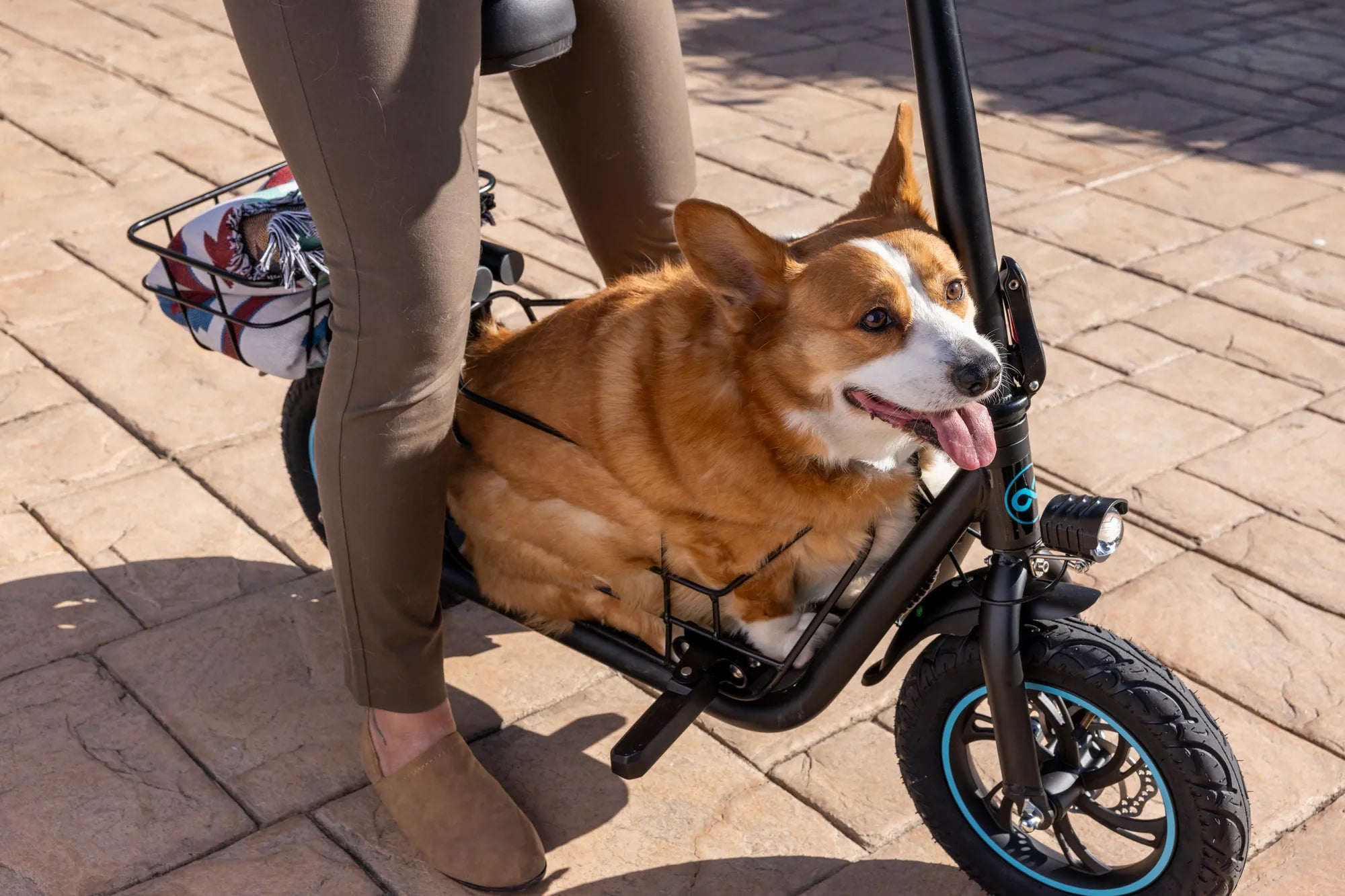
Understanding the Fully Electric Bicycle (E-Bike)
An e-bike fully electric represents the pinnacle of integrated personal electric mobility. It is a complete, self-contained system where the motor, battery, controller, and display work in seamless harmony to provide propulsion. Unlike basic electric-assist bicycles, a fully realized e-bike offers a comprehensive riding experience, capable of handling diverse terrains and distances with consistent power.
The core distinction lies in the system's completeness and capability. A fully electric bike is designed from the ground up as an electric vehicle, not merely a bicycle with an add-on kit. This means optimized frame geometry for battery placement, balanced weight distribution, and components engineered to handle the stresses of electric power. The integration is key to performance and safety.
These systems typically offer multiple modes of operation, including pure throttle-on-demand for effortless starts and hill climbing, and pedal-assist (PAS) for extended range and a more active riding experience. The quality of these components and their integration directly determines the bike's reliability, range, and overall rider satisfaction. Choosing a well-integrated e-bike fully system is the first step toward a transformative commuting or recreational tool.
Key Components of a Fully-Featured E-Bike
A fully electric bicycle is defined by the synergy of its key components. Each part must be of sufficient quality and properly integrated to create a reliable, high-performing machine. The motor provides the thrust, the battery supplies the energy, the controller acts as the brain, and the interface keeps the rider informed and in control.
Neglecting any one component compromises the entire system. For instance, a powerful motor paired with a small, low-quality battery will lead to short range and potential battery failure. Understanding these parts is essential for making an informed purchase and ensuring you get a true e-bike fully capable of meeting your needs.
The Heart: Motor Types and Placement
The motor is the primary source of propulsion. There are two main types: hub motors and mid-drive motors. Hub motors are located within the center of the front or rear wheel. They are generally simpler, more affordable, and require less maintenance. A rear hub motor provides better traction, while a front hub can offer a more bicycle-like feel but may slip on loose surfaces.
Mid-drive motors are mounted at the bike's crank and pedal area. They leverage the bicycle's existing gears, making them exceptionally efficient, especially on hills. This placement centralizes weight and provides a more natural, balanced riding feel. For demanding off-road or hilly terrain, a mid-drive motor is often the superior choice for a fully capable e-bike.
The Lifeline: Battery Capacity and Management
The battery is the energy reservoir. Its capacity is measured in watt-hours (Wh), calculated by multiplying voltage (V) by amp-hours (Ah). A higher Wh rating generally means a longer potential range. For a commuter e-bike fully equipped for daily use, a battery of 500Wh or more is a practical starting point.
Beyond capacity, the Battery Management System (BMS) is critical. A smart BMS protects against overcharging, over-discharging, short circuits, and temperature extremes. It ensures cell balance for longevity. Brands like Gyroor prioritize safety by using UL-certified battery packs, which have undergone rigorous testing for safety and durability, a non-negotiable feature for peace of mind.
The Brain: Controller and Display Interface
The controller is the central processing unit. It interprets signals from the throttle, pedal-assist sensor, and brake sensors to regulate power delivery from the battery to the motor. A high-quality controller ensures smooth acceleration, responsive pedal-assist, and efficient energy use.
The display is the user's command center. Modern displays show speed, battery level (often as a percentage for accuracy), assist level, trip distance, and sometimes even real-time power output. An intuitive interface allows riders to easily switch between modes, control pedal-assist intensity, and activate integrated features like lights, making the e-bike fully controllable and customizable.
Why "Fully" Matters: Advantages of a Complete E-Bike System
Investing in a fully integrated electric bicycle system unlocks benefits that partial or poorly integrated solutions cannot match. The advantages extend beyond simple motorized assistance to redefine the utility, comfort, and freedom of cycling. A complete system is greater than the sum of its parts, delivering a reliable and enjoyable experience every time you ride.
The core benefit is predictability. When components are designed to work together, you get consistent performance, optimized efficiency, and fewer points of failure. This integration translates directly into tangible advantages for the rider, from the daily commute to weekend adventures.
Effortless Commuting and Hill Climbing
The most immediate advantage is the elimination of sweat and strain from urban travel. A fully electric bike with a robust motor (e.g., 500W or 750W) allows you to arrive at your destination refreshed, regardless of headwinds or distance. Throttle mode is perfect for accelerating from stops without pedaling.
Hills become trivial. A capable e-bike fully system provides steady, powerful assistance that flattens inclines. This expands your viable commuting radius and makes cycling a realistic option in hilly cities, opening up routes you might have previously avoided on a traditional bike.
Extended Range and Exploration Freedom
A high-capacity battery, managed by an efficient controller and motor system, unlocks true exploration. Ranges of 40-60 miles on a single charge are achievable with moderate pedal assist, allowing for longer recreational rides, round-trip commutes without charging, and discovering new trails.
This freedom transforms the bicycle from a short-distance tool into a legitimate car replacement for many errands and journeys. The anxiety of running out of power is minimized with a properly sized battery, encouraging more frequent and adventurous use of your e-bike fully equipped for the task.
Reliability and Peace of Mind
Integrated systems from reputable manufacturers are built to last. Water resistance is a key feature; for example, Gyroor models often carry an IPX5 rating, meaning they can withstand water jets from any direction, making them safe to ride in rain and through puddles.
This reliability is backed by warranties. A comprehensive 1-year warranty on the frame, motor, and battery, as offered by trusted brands, provides significant peace of mind. Knowing your investment is protected, and that the components are UL-certified for safety, allows you to focus on the ride, not potential problems.
Choosing Your Fully-Featured E-Bike: A Data-Driven Guide
Selecting the right e-bike fully suited to your needs requires matching specifications to your primary use case. The following guide breaks down key considerations for different rider profiles. Use this framework to compare models and identify the features that matter most for your lifestyle.
Always prioritize the integration and quality of components over any single high spec. A 1000W motor is useless if paired with a cheap battery that fails in six months. Look for brands that disclose detailed component specs and safety certifications.
| Use Case | Priority Specs | Key Features | Recommended Motor/Battery |
|---|---|---|---|
| Urban Commuter | Range, Comfort, Practicality | Fenders, rack, lights, comfortable saddle, upright geometry | 500W-750W Hub / 48V 15Ah+ (720Wh+) |
| Off-Road Enthusiast | Torque, Durability, Suspension | Knobby tires, long-travel suspension, durable frame, hydraulic brakes | 750W+ Mid-Drive / 48V 17Ah+ (816Wh+) |
| Eco-Conscious Rider | Efficiency, Sustainability, Longevity | Efficient motor (mid-drive), regen braking, eco modes, UL-certified battery | High-efficiency Mid-Drive / Large capacity with smart BMS |
For the Urban Commuter: Priority on Range & Comfort
The urban commuter needs reliability above all. Look for a motor in the 500W to 750W range, providing ample power for stop-and-go traffic and moderate hills. A battery capacity of at least 48V 15Ah (720Wh) is recommended for a dependable 25-40 mile range, accounting for real-world variables.
Practical features are non-negotiable. Integrated front and rear lights are essential for safety. Full-length fenders keep you clean in wet conditions. A rear rack allows for carrying bags or groceries. A step-through or comfortable crossbar frame facilitates easy mounting and dismounting in street clothes.
For the Off-Road Enthusiast: Priority on Torque & Durability
Off-road riding demands torque and resilience. A mid-drive motor is often the best choice here, as it leverages the bike's gearing to provide massive climbing power and better weight distribution. A motor rated at 750W or higher is typical for serious trail use.
The frame and components must be rugged. Look for a sturdy aluminum or carbon frame, front suspension (or full suspension for aggressive trails), and hydraulic disc brakes for consistent stopping power in all conditions. High-quality, air-sprung suspension and wide, knobby tires are essential for traction and control. Water and dust resistance (IP ratings) are critical for trail durability.
For the Eco-Conscious Rider: Priority on Efficiency & Sustainability
This rider chooses an e-bike to reduce their carbon footprint, so the bike's own efficiency and lifecycle matter. A mid-drive motor is typically the most energy-efficient, providing more miles per watt-hour. Some models offer regenerative braking, which recaptures a small amount of energy during braking to slightly extend range.
The most significant sustainability factor is battery longevity. A UL-certified battery from a brand like Gyroor, designed for 500+ charge cycles, means the pack will last for years before needing replacement, reducing waste. Choosing a brand with a strong warranty and a reputation for durable builds ensures the entire vehicle has a long, useful life.
Essential FAQs About Fully Electric Bikes
Prospective buyers often have practical questions about ownership, regulations, and performance. Here are detailed answers to the most common queries to help you make an informed decision about your e-bike fully electric purchase.
1. What's the real-world range I can expect?
Advertised range is a maximum under ideal conditions. Real-world range depends on rider weight, wind, terrain, tire pressure, and most importantly, the level of pedal assist or throttle use. A practical formula: divide the battery's watt-hour (Wh) rating by 20 for throttle-heavy use, or by 10 for moderate pedal assist. A 720Wh battery thus offers roughly 36 miles (throttle) to 72 miles (PAS). Always plan for a 20-30% buffer.
2. Do I need a license or insurance to ride one?
In most of the US and EU, properly classified e-bikes do not require a license, registration, or insurance. They are categorized into three classes: Class 1 (PAS only, up to 20 mph), Class 2 (throttle-assisted, up to 20 mph), and Class 3 (PAS only, up to 28 mph). Most e-bike fully models from major brands like Gyroor are Class 2 or configurable to be street-legal. Always check your local regulations, as they can vary by state or municipality.
3. How do I maintain the battery for maximum lifespan?
Proper care can double your battery's life. Avoid fully draining it; try to recharge when it reaches 20-30%. For long-term storage (over a month), charge it to about 60%. Use only the manufacturer-provided charger. Store the battery in a cool, dry place, avoiding extreme heat or freezing temperatures. Never expose the battery to direct impact or puncture.
4. Can it get wet?
This depends on the IP (Ingress Protection) rating. A rating of IPX5 or higher, common on quality models like those from Gyroor, means the electrical components are protected against water jets from any direction. You can confidently ride in rain and through puddles. However, submerging the bike (e.g., in a deep stream) is not advised. Always dry the bike after a wet ride and avoid high-pressure sprays directly at connectors or the display.
5. How much maintenance does an e-bike require compared to a regular bike?
An e-bike requires all the same maintenance as a regular bicycle: chain lubrication, brake adjustment, tire pressure checks, and periodic drivetrain cleaning. The electrical components themselves are largely maintenance-free. The key is to keep connections clean and dry and to have any electrical issues diagnosed by a qualified technician or the manufacturer. The added weight and power mean brakes and tires may wear slightly faster.
The Future is Fully Electric
The e-bike fully electric represents more than a trend; it is a fundamental shift in personal urban mobility and recreation. By providing a seamless blend of human power and electric assistance, it removes barriers to cycling, promotes sustainable transportation, and reintroduces the joy of riding to a wider audience. The technology has matured to offer reliable, safe, and highly capable machines suitable for nearly every rider.
Your choice of brand and model is an investment in this future. Opting for a fully integrated system from an established brand with a track record of safety, like Gyroor—trusted by over 100,000 riders—ensures you receive a product built with UL-certified batteries, water-resistant engineering, and backed by a solid warranty. This investment guarantees not just immediate performance, but long-term satisfaction and reliability.
Ready to experience the freedom and capability of a fully realized electric bicycle? Explore a range of models engineered for performance, safety, and durability. Browse the full Gyroor collection at gyroorboard.com to find the perfect e-bike fully equipped for your next adventure.
How Tall is a 250cc Dirt Bike in Feet? The Complete 2024 Guide
Ebike Battery Long Distance: The Ultimate Guide to Maximizing Range