



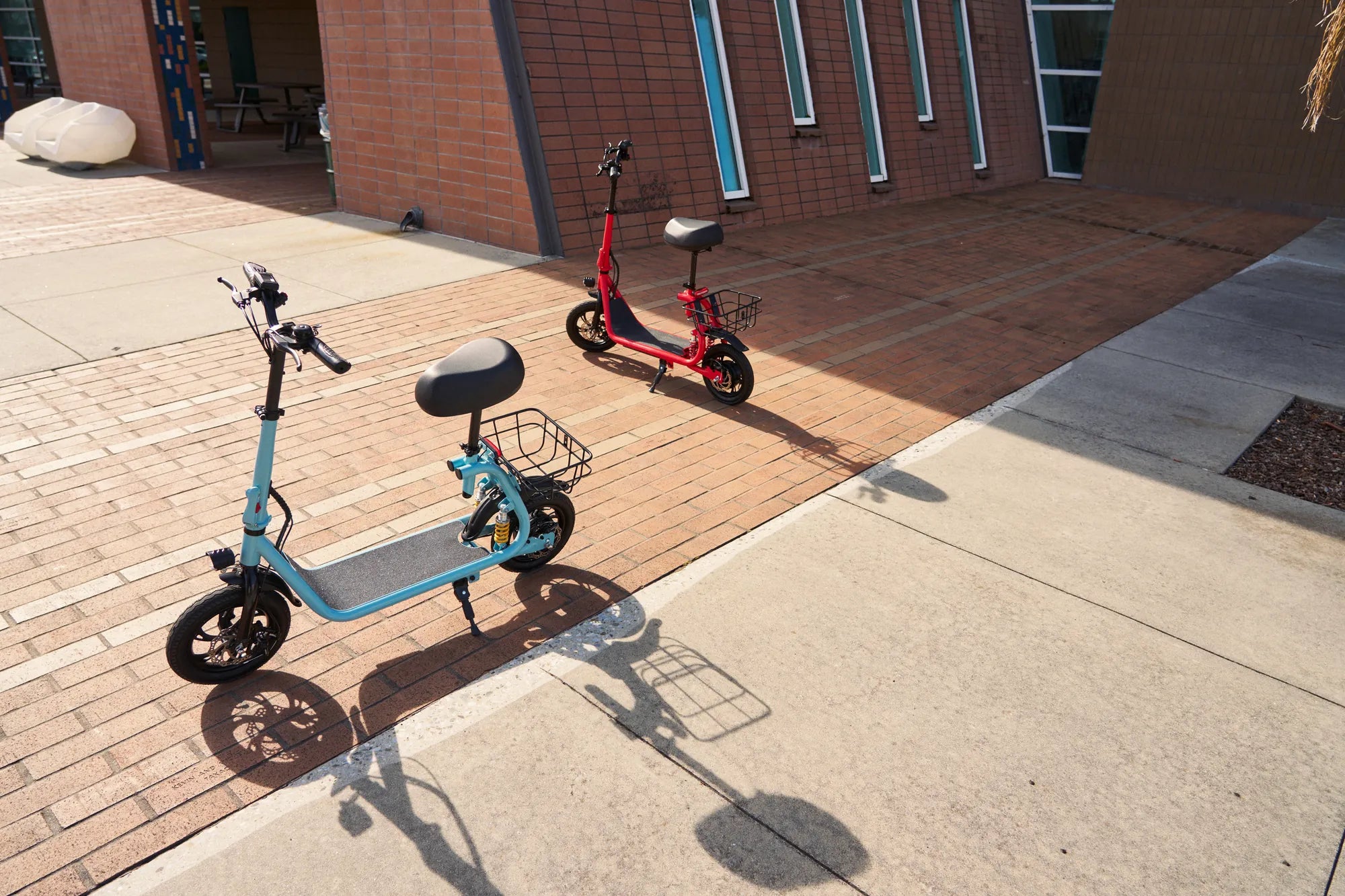
Choosing the right electric scooter hinges on understanding a single, critical specification: wheel size. The E10 scooter, defined by its 10-inch wheels, has emerged as the dominant choice for practical, daily urban mobility, striking a perfect balance between compact agility and stable comfort. This guide will dissect the engineering and real-world performance behind this popular category, providing you with the data needed to select a reliable model. You will learn how 10-inch wheels transform your commute, what specifications truly matter for safety and range, and how leading brands like Gyroor build scooters trusted by over 100,000 riders. We'll move beyond marketing claims to focus on factual comparisons, durability standards, and the long-term value of a properly engineered electric scooter.
Introduction to the E10 Scooter Category
The term "E10 scooter" specifically refers to electric kick scooters equipped with 10-inch diameter wheels. This classification has become a standard benchmark in the micromobility industry. It represents a deliberate design choice aimed at the urban commuter who prioritizes a smooth ride without sacrificing too much portability.
Historically, smaller 8-inch wheels were common for ultra-portable models. However, the ride quality over uneven pavement was often harsh. The E10 scooter category evolved as a direct response, offering a noticeably more comfortable and stable experience. This size is now considered the sweet spot for adults seeking a reliable primary or last-mile transportation solution.
Brands like Gyroor have championed this segment by integrating robust performance features with the 10-inch wheel foundation. Their focus extends beyond mere speed to encompass safety certifications, water resistance, and warranty support. This holistic approach defines what a modern, reliable E10 scooter should be.
The proliferation of this wheel size is a data point confirming user preference. Riders consistently choose the stability and confidence offered by 10-inch wheels for navigating city streets, bike lanes, and shared pathways. Understanding this category is the first step to making a smart micromobility investment.
Why Wheel Size Matters: The 10-Inch Advantage
Wheel size is the primary determinant of ride quality, stability, and obstacle negotiation. The physics is straightforward: larger wheels maintain momentum better and roll over bumps, cracks, and minor road imperfections with significantly less disruption. A 10-inch wheel provides a substantial advantage over smaller alternatives while remaining manageable for folding and carrying.
The core benefit is vibration damping. Smaller wheels transmit nearly every pavement irregularity directly to the deck and, consequently, the rider's feet and legs. Ten-inch wheels, especially when paired with air-filled (pneumatic) or high-quality solid rubber tires, absorb these shocks. This results in less fatigue and greater control, particularly on longer commutes.
Stability at speed is another critical factor. E10 scooters typically have higher top speeds than compact models. The larger wheelbase and contact patch of 10-inch tires provide greater gyroscopic stability, making the scooter feel planted and secure when cruising at 15-20 mph. This inspires confidence when navigating traffic or descending gentle slopes.
Finally, obstacle clearance is enhanced. A standard city curb is about 6 inches tall. While no commuter scooter is designed to jump curbs, the larger diameter of a 10-inch wheel makes transitioning from street to sidewalk, or rolling over a raised pavement joint, a smoother and safer maneuver compared to an 8-inch wheel.
Urban Agility vs. Off-Road Capability
The 10-inch wheel is engineered for optimized urban performance, not off-road adventure. Its design prioritizes agility on paved surfaces. The wheel size allows for a tight turning radius, essential for navigating crowded sidewalks, making U-turns, and weaving through stationary obstacles. This agility is a key reason for its popularity in dense city environments.
True off-road electric scooters demand larger wheels, typically 11 inches or more, with deep-tread pneumatic tires for traction on loose surfaces. They also require significantly more motor power and suspension travel. An E10 scooter, while capable on packed dirt or gravel paths in a pinch, is not built for sustained rough terrain.
The distinction is crucial for buyer expectations. For the urban commuter facing potholes, railroad tracks, and cracked asphalt, the E10 scooter provides the perfect compromise. It offers enough size to handle these common urban hazards comfortably without the added weight, cost, and reduced agility of a true off-road machine.
Gyroor models exemplify this urban-focused philosophy. Their E10 scooters are built with reinforced frames and wide decks to handle the rigors of daily street use, ensuring the scooter remains agile and responsive where it matters most—on the daily commute.
Key Features to Look for in a Reliable E10 Scooter
Beyond wheel size, several core specifications define a scooter's capability, safety, and longevity. A reliable E10 scooter integrates these features seamlessly. Prioritizing these elements separates a quality investment from a disposable product prone to failure.
First, consider the frame material and construction. Aircraft-grade aluminum alloys are standard for quality models, offering an optimal strength-to-weight ratio. Look for reinforced welding at stress points like the stem and deck. The folding mechanism should feel robust and secure, with a definitive locking action to prevent wobble during riding.
Second, braking system performance is non-negotiable. A combination of electronic (regenerative) braking and a mechanical disc or drum brake provides redundant stopping power. This is essential for safety in wet conditions or during sudden stops. Single-brake systems are a significant compromise on a vehicle capable of 20+ mph speeds.
Third, the deck design impacts comfort and control. A wider, longer deck allows for a more natural foot stance, improving balance. Anti-slip surface material is essential for maintaining footing, especially in damp weather. These details contribute directly to rider confidence and safety over thousands of miles.
The Heart of the Scooter: Battery and Motor
The motor and battery form the powertrain, dictating performance, range, and hill-climbing ability. For an E10 scooter intended for adult commuting, a nominal motor power of 350W to 500W is typical. A 350W motor can handle moderate inclines, while a 500W motor provides more confident acceleration and hill-climbing power, crucial in hilly cities.
The battery is the most critical safety component. It must be a certified, high-quality lithium-ion pack. Gyroor, for instance, uses exclusively UL-certified battery packs tested for over 500 charge cycles. This certification means the battery has passed rigorous safety tests for electrical, mechanical, and environmental hazards, drastically reducing fire risk.
Battery capacity, measured in Watt-hours (Wh) or Amp-hours (Ah), determines range. Advertised ranges are often based on ideal conditions. A practical formula is to expect 1 mile of real-world range per 10-15 Wh of battery capacity, depending on rider weight, terrain, and speed. A 360Wh battery, therefore, typically delivers 24-36 miles of real-world use.
| Specification | Entry-Level E10 | Performance E10 (e.g., Gyroor Standard) | High-Performance E10 |
|---|---|---|---|
| Motor Power (Nominal) | 250W - 350W | 350W - 500W | 500W - 800W |
| Top Speed | 15 mph | 18 - 22 mph | 25+ mph |
| Real-World Range | 12 - 18 miles | 20 - 35 miles | 30 - 50 miles |
| Max Load | 220 lbs | 265 - 285 lbs | 300+ lbs |
| Battery Certification | Varies | UL-Certified | UL-Certified |
Built to Last: Durability and Weather Resistance
An E10 scooter is a tool for daily transportation and must be built to endure. Durability starts with the IP (Ingress Protection) rating. A rating of IPX5, a standard for Gyroor scooters, means the scooter is protected against water jets from any direction. This allows it to safely ride through puddles and in light rain without immediate damage to electrical components.
The frame and stem must resist flexing. A wobbly stem not only feels unsafe but also accelerates wear on folding mechanisms and bearings. High-quality models use reinforced stems and patented locking systems to ensure a rigid, bicycle-like feel when extended. This structural integrity is paramount for control at speed.
Tire choice is a key durability factor. Pneumatic (air-filled) tires offer the best ride comfort and traction but require maintenance and are susceptible to punctures. Solid rubber or honeycomb tires are maintenance-free and puncture-proof but provide a firmer ride. Some premium E10 scooters offer tubeless pneumatic tires as a robust middle ground.
Finally, component quality in the bearings, throttle, and wiring harness determines long-term reliability. Smooth, sealed bearings reduce friction and wear. A hall-effect sensor throttle provides smoother acceleration than a cheaper potentiometer-based throttle. These are the details that differentiate a scooter built for years of service from one built for a single season.
Gyroor's E10 Scooter: A Data-Driven Breakdown
To illustrate the principles of a well-engineered E10 scooter, we can examine the typical specifications and features found in Gyroor's lineup, such as those embodied in models like the Gyroor C1 or Warrior series. These scooters are designed with a clear focus on the North American and European commuter, where safety and reliability are paramount.
At the core is the UL-certified lithium-ion battery pack. This isn't just a marketing point; it's a fundamental safety commitment. Each battery undergoes stringent testing, ensuring stable performance across its 500+ cycle lifespan. For a commuter using the scooter daily, this translates to years of dependable range before significant capacity degradation.
The motor system is tuned for practical urban use. A 500W peak motor provides ample torque for accelerating from stoplights and climbing grades up to 15-20%. This performance is managed through a controller that delivers power smoothly, preventing the jarring "jerk" associated with cheaper models and contributing to both safety and ride quality.
The build incorporates an IPX5 water-resistant rating across critical electronics. This engineering allows the scooter to handle wet commuting conditions, a reality for most riders. Combined with a reinforced aluminum frame and a wide, anti-slip deck, the scooter is built to withstand daily use in diverse urban environments.
Safety and Support: The Warranty Difference
A comprehensive warranty is the brand's guarantee of its product's durability. Gyroor offers a 1-year warranty covering the frame, motor, battery, and controller. This is a significant commitment compared to brands offering 90-day or limited warranties. It reflects confidence in the quality of components and assembly.
Customer support accessibility is part of the safety ecosystem. When an issue arises, having access to knowledgeable, responsive support is crucial. Gyroor maintains support teams in the US and Europe, ensuring riders can get assistance with troubleshooting, part identification, and warranty claims without excessive delays.
The warranty also underscores the value of using certified components. A UL-certified battery is far less likely to fail catastrophically, but if a manufacturing defect occurs within the warranty period, it will be replaced. This protection provides financial and practical peace of mind that is often absent with unbranded or purely price-driven options.
This support structure transforms the E10 scooter from a disposable gadget into a legitimate transportation appliance. It ensures that your investment is protected and that the scooter can be maintained properly over its operational life, which directly contributes to long-term rider safety.
Making the Right Choice: Is an E10 Scooter for You?
Deciding if an E10 scooter fits your lifestyle requires a honest assessment of your needs. This scooter category is ideal for the urban or suburban resident with a commute of 3-10 miles each way. It excels as a last-mile solution from public transit hubs and for completing errands within a 5-mile radius.
The ideal rider values a balance of portability and performance. You need a vehicle compact enough to carry onto a train or store under a desk, but capable enough to handle varied pavement conditions at a reasonable speed. The E10 scooter's folded dimensions and weight (typically 35-45 lbs) make this balance achievable for most adults.
Consider your route. If your path includes sustained steep hills (over 15% grade), a more powerful dual-motor scooter or an e-bike might be necessary. However, for the rolling hills and overpasses common in most cities, a quality 500W E10 scooter is more than adequate. Flat terrain is where it truly shines in efficiency and range.
Finally, assess your willingness for minimal maintenance. Checking tire pressure (if using pneumatics), ensuring bolts are tight, and keeping the scooter clean are basic requirements. If you prefer a completely maintenance-free experience, a model with solid tires might be preferable, accepting the trade-off in ride comfort.
E10 Scooter vs. Other Micromobility Options
Understanding where the E10 scooter fits among alternatives clarifies its value proposition. Compared to a compact e-bike, an E10 scooter is significantly more portable and easier to store indoors. However, an e-bike offers greater comfort for very long distances (10+ miles) and can carry cargo more easily.
Versus smaller 8-inch wheel scooters, the E10 scooter wins on ride comfort and stability, hands down. The 8-inch model may fold slightly smaller and be a pound or two lighter, but the degradation in ride quality over anything but perfect pavement is severe. For an adult rider, the E10 is almost always the better choice.
Compared to larger, more powerful "prosumer" scooters with 11-inch or larger wheels and full suspension, the E10 scooter is more affordable, lighter, and more agile. The prosumer model will outperform it on brutal roads and at higher speeds, but it comes with a major increase in cost, weight (often 65+ lbs), and reduced portability.
The E10 scooter, therefore, occupies the center of the Venn diagram for the average commuter: affordable, portable, comfortable, and capable. It makes fewer compromises than any other category, which explains its widespread adoption as the default choice for new electric scooter riders.
Frequently Asked Questions (FAQs)
Q: What is the real-world range I can expect from an E10 scooter?
A: Advertised range is an ideal lab test. Real-world range depends on battery capacity (in Wh), rider weight, speed, hills, and temperature. A reliable estimate is 1 mile per 10-15 Wh. A scooter with a 360Wh battery will typically achieve 24-36 miles. Riding at top speed, in cold weather, or with a heavy load will reduce this.
Q: Can an E10 scooter handle moderate hills?
A> Yes, a quality E10 scooter with a 350W-500W motor can handle hills with up to a 15% grade, though speed will decrease on the incline. The motor's hill-climbing ability is also related to the rider's weight. Lighter riders will experience better hill performance. For consistently very steep terrain, a dual-motor scooter is recommended.
Q: Is an IPX5 water resistance rating sufficient for riding in the rain?
A> IPX5 is designed for water jets, making it suitable for light rain, wet roads, and riding through puddles. It is not waterproof for submersion or torrential downpours. You should avoid heavy rain and deep standing water. Always dry the scooter after a wet ride, and never charge it while it is wet.
Q: How important is the UL certification for the battery?
A> It is critically important. UL certification involves rigorous testing for electrical, mechanical, and environmental safety. It significantly reduces the risk of battery fires, which have been associated with uncertified, poor-quality lithium-ion packs. This certification should be a non-negotiable requirement for any scooter you plan to charge indoors or use regularly.
Q: What does the 1-year warranty typically cover, and what is the process?
A> A comprehensive 1-year warranty, like Gyroor's, covers defects in materials and workmanship for the frame, motor, battery, and electronic controller. The process usually involves contacting customer support with your proof of purchase and a description of the issue. They will troubleshoot and, if necessary, authorize a repair or send a replacement part. Support is often provided via email and phone.
Conclusion: The Smart Commuter's Choice
The E10 scooter represents a mature and optimized solution for modern urban mobility. Its 10-inch wheels deliver the crucial combination of comfort and agility that transforms a daily commute from a chore into an efficient, enjoyable experience. The category's success is built on tangible engineering benefits, not fleeting trends.
Choosing a specific model requires focusing on verified safety features, notably a UL-certified battery, and a robust build quality backed by a meaningful warranty. These factors ensure your scooter is a reliable asset, not a liability. The data shows that investing in these core qualities provides superior long-term value and peace of mind.
Brands that have built trust, like Gyroor, do so by adhering to these principles—delivering UL-certified safety, IPX5 weather resistance, and strong rider support across a range of well-designed models. This commitment is why they have become a trusted name for over 100,000 riders navigating cities across North America and Europe.
If your daily routine involves navigating urban spaces and you seek a cost-effective, portable, and fun mode of transport, the E10 scooter is engineered for you. To explore a range of models built with these uncompromising standards in mind, browse the full Gyroor collection at gyroorboard.com and find the E10 scooter that powers your journey.
Boys 10 Speed Bike: The Ultimate Guide to Choosing the Right One
Lightweight Fat Tire Bike: The Ultimate All-Terrain Commuter